Tool discovery

What type of AI tool
are you looking for?

Search the active catalog with LambdaBase AI Search, or keep browsing the popularity-ordered directory below.

Submitted search queries and interaction metrics may be analyzed to improve result quality. Do not include personal or confidential information

Browse popular tools.

Screenshot of TTSFree
TTSFree
AI Text-to-Speech Unknown

TTSFree is a web-based text-to-speech platform that converts written text into natural-sounding speech using AI-powered voices. It supports over 140 languages and offers a wide selection of voices, including both standard and premium neural voices. Users can simply enter text, choose a language and voice, and instantly generate audio that can be played online or downloaded as MP3 files for offline use. The service is designed to be user-friendly, requiring no software installation or technical expertise.\n\nThe free tier allows unregistered users to convert up to 500 characters per session, with additional voice options and higher character limits available after logging in. Premium voice packs are locked behind a paywall, accessible via a paid subscription. TTSFree also includes a speech-to-text feature, enabling bidirectional audio-text conversion. The interface provides a straightforward text input box, language and voice selectors, and a convert button.\n\nUnder the hood, TTSFree utilizes advanced speech synthesis models to deliver realistic intonation and pacing. While the exact technology is undisclosed, the presence of 'Neural2' and 'Standard' voice names suggests leveraging cloud-based TTS engines. The service caters to a global audience with dedicated pages for many languages, and it emphasizes accessibility and ease of use for personal and professional applications.\n\nOverall, TTSFree is a convenient online tool for generating high-quality spoken audio from text without the need for complex setups or costly software. Its freemium model balances basic free functionality with premium features for power users.

Solves

TTSFree addresses the need for a simple, accessible, and free method to convert text into lifelike speech across numerous languages, enabling content creators, educators, and individuals to produce audio versions of written material without specialized software or hardware.

Screenshot of AI Pet Video Generator Powered by Seedance

Pet Video Generator Powered by Seedance 2.5 AI is a web-based service that turns a single photo of a cat or dog into a cinematic short video. Users upload a clear, well-lit image of their pet and describe the desired scene in plain language, such as 'my cat as a kung fu master' or 'my dog in an office meeting.' The platform’s AI then optimizes the prompt and generates a motion-filled, high-resolution video using the Seedance 2.5 image-to-video model, all without requiring any editing skills. The free tier provides one generation and download per week with no watermark, making it accessible for casual users. Paid subscriptions unlock more monthly credits, additional modes, and dedicated support. All plans include free prompt optimization, ensuring a straightforward experience where the only input needed is a photo and an idea.

Solves

Simplifies the creation of fun, high-quality pet videos from still photos, eliminating the need for video editing expertise or expensive software while producing shareable, cinematic clips in minutes.

Screenshot of loki-mode
loki-mode
AI Agents Open Source

Loki Mode is an autonomous SDLC orchestrator that leverages 41 specialized AI agents distributed across eight swarms: engineering, operations, business, data, product, growth, review, and orchestration. It adopts the RARV (Reason-Act-Reflect-Verify) cycle to iteratively improve outputs and ensure robust software development from product requirements document to deployed product. The agents collaboratively handle tasks such as code generation, testing, deployment, business logic, data analysis, and growth hacking. The swarm architecture enables parallel and sequential processing, mimicking a full-stack development team. This open-source project aims to reduce human intervention in the software lifecycle, enabling faster prototyping and production-ready software. Loki Mode's RARV cycle enhances traditional agent frameworks by incorporating explicit reflection and verification steps, reducing errors and aligning outputs with business goals. It supports integration with various LLMs and can be customized for specific development workflows and technology stacks.

Solves

Loki Mode solves the bottleneck of manual software development by providing an AI-driven orchestrator that autonomously transforms requirements into deployed products, coordinating all aspects of the SDLC through specialized agents.

Screenshot of shire
shire
AI Agents Open Source

Shire is an open-source platform that provides persistent workspaces for teams of AI agents. It enables inter-agent collaboration through dedicated mailboxes, a shared file system (shared drive), and full context preservation across sessions. By supporting popular coding agents such as Claude Code, OpenCode, and Pi Agent, shire allows multiple specialized agents to work together on complex tasks without losing state. The platform is self-hosted, giving users control over their agent infrastructure and data. Shire aims to solve the problem of fragmented AI agent workflows by offering a unified environment where context, files, and communication are maintained over time, making it ideal for long-running projects and multi-agent orchestration.

Solves

Shire addresses the challenge of isolated AI agent operations by providing a persistent shared workspace with inter-agent mailboxes, a shared drive, and context preservation, enabling seamless collaboration and continuity across sessions.

Screenshot of ORCH
ORCH
AI Agents Open Source

ORCH is an open-source command-line interface runtime that enables developers to orchestrate multiple AI coding assistants—specifically Claude Code, OpenAI Codex, and Cursor—as typed agent teams. It introduces a state machine to manage agent interactions, ensuring coherent, goal-driven collaboration. The tool includes a terminal user interface (TUI) for real-time monitoring and control. By assigning specific roles and states, ORCH allows teams of AI agents to work on complex software engineering tasks such as code generation, refactoring, debugging, and review. The goal-oriented architecture helps break down high-level objectives into manageable steps, with state transitions that reflect progress. This approach aims to improve reliability and output quality compared to ad-hoc use of individual AI tools. ORCH is designed to run locally, giving developers full control over their environment and data. It is open source, allowing customization and community contributions. While it depends on external services like Claude and Codex, the orchestration logic runs on the user's machine. The project is actively developed on GitHub, aiming to streamline AI-assisted development workflows. Its typed agent approach ensures that each agent operates within defined boundaries, reducing errors and improving synergy. The TUI provides insights into the state machine, enabling developers to understand and debug the collaboration process.

Solves

ORCH solves the challenge of coordinating multiple AI coding assistants (Claude Code, Codex, Cursor) to work together reliably on complex software development tasks. It provides a state-machine-driven orchestration layer with goal management and a terminal UI, enabling structured, multi-agent collaboration that goes beyond the capabilities of individual tools.

Screenshot of Agon
Agon
AI Agents Open Source

Agon is an autonomous research system that orchestrates multiple AI agent loops to mimic a scientific research workflow. It coordinates a scientist agent for ideation, a coder agent for implementing experiments, and an auditor agent for verification, enabling automated generation of research ideas, proposals, and experimental code. The system is designed as an open-source project, allowing users to run it locally or in their own environments. By chaining these agent loops, Agon aims to streamline the research process from initial topic exploration to concrete experimental results. Agon leverages large language models to power each agent, ensuring that the generated ideas, code, and audits are contextually relevant and coherent. It is particularly useful for accelerating early-stage research prototyping in fields like machine learning and data science, where experimentation can be codified.

Solves

Agon addresses the slow and manual nature of academic and industrial research by automating the ideation, proposal writing, and experimental coding phases. It reduces the time from concept to experimental validation, allowing researchers to explore more ideas rapidly.

Screenshot of ralph-orchestrator
ralph-orchestrator
AI Agents Open Source

Ralph Orchestrator is an open-source tool for orchestrating AI agents using a hat-based loop mechanism. It ensures that agents continuously perform tasks until completion, eliminating the need for manual intervention in multi-step AI workflows. The hat metaphor represents the current task or role assigned to an agent, and the orchestrator manages the passing of hats among agents to achieve complex goals. This design simplifies the coordination of multiple AI agents, making it easier to build autonomous systems that can reason, plan, and execute actions iteratively. By keeping agents in a loop until done, Ralph Orchestrator aims to provide a robust foundation for agentic AI applications.

Solves

Coordinating multiple AI agents to work together on complex tasks without human intervention, ensuring tasks are completed by keeping agents in a loop until finished.

Screenshot of Orkas
Orkas
AI Agents Open Source

Orkas is an open-source, local-first desktop application that functions as an AI workforce, orchestrating multiple specialist agents to accomplish complex goals. At its core, a commander agent decomposes high-level objectives into sub-tasks and dispatches them to specialized agents, which can operate in parallel or sequentially. Each agent possesses isolated skills and memory, ensuring modular, secure, and efficient execution. The platform supports both cloud-based and local large language models, offering a 'bring your own key' (BYOK) model for providers like OpenAI, as well as a fully offline local mode for maximum privacy and cost control. Orkas provides a visual desktop interface for configuring and monitoring multi-agent workflows, emphasizing extensibility and transparency. Its architecture is designed to integrate external tools and data sources, making it suitable for a wide range of automation tasks. As an open-source project hosted on GitHub, it encourages community contributions and customization, aiming to democratize access to multi-agent AI systems for developers, researchers, and power users.

Solves

Manually decomposing and executing complex multi-step goals across different domains often requires juggling multiple tools and systems. Orkas automates this by providing a unified multi-agent framework that breaks down objectives, assigns them to specialist agents, and orchestrates their parallel or sequential execution, reducing cognitive load and enabling efficient, private, and cost-effective task automation.

Screenshot of ClawTeam
ClawTeam
AI Agents Open Source

ClawTeam is an open-source agent swarm intelligence framework that enables full task automation with a single command. It orchestrates multiple AI agents to collaborate using swarm intelligence, where agents collectively break down complex objectives into subtasks and execute them autonomously. The system leverages distributed problem-solving, allowing agents to communicate, coordinate, and adapt to achieve goals without manual intervention. By providing a unified command-line interface, ClawTeam simplifies the deployment of multi-agent systems. Users define their task or goal, and the swarm automatically manages the workflow, from planning to execution. This reduces the need for manual orchestration and enables rapid automation of diverse, multi-step processes. The tool is designed for extensibility, allowing integration with various language models and external services. Its swarm architecture can scale from a few agents to large collectives, making it suitable for both simple scripts and complex enterprise workflows. As an open-source project, it encourages community contributions and customization to fit specific automation needs.

Solves

It eliminates the complexity of manually coordinating multiple AI agents to complete a task by providing a single-command interface that initiates a swarm of agents capable of autonomously planning, collaborating, and executing tasks.

Screenshot of toryo
toryo
AI Agents Open Source

Toryo is an open-source command-line tool that functions as an intelligent orchestrator for multiple AI coding agents. It is designed to manage and improve the output of various AI assistants by automatically delegating tasks based on trust scores, ensuring that only high-quality code changes are retained through a novel quality ratcheting mechanism using git commit and revert operations. The tool integrates with popular AI agents such as Claude Code, Aider, Gemini CLI, and local models via Ollama, allowing developers to leverage different AI strengths for code generation, editing, and review. At its core, toryo employs a trust-based delegation system: it maintains a trust score for each agent based on past performance, assigning tasks preferentially to more reliable agents. When an agent completes a task, toryo evaluates the output; if the change meets a certain quality threshold, it is committed to git, effectively ratcheting up the codebase quality. If the output is unsatisfactory, the change is reverted, and the task is retried using a "Ralph Loop" strategy that can fall back to other agents or prompt for user input. This iterative cycle allows developers to automate and refine code generation workflows, reducing manual oversight while ensuring the codebase continuously improves. The tool is particularly useful in multi-agent development environments where consistency and quality control are critical. By combining version control with agent orchestration, toryo provides a safety net that prevents degraded code from entering the repository. Toryo is written to be extensible and can be integrated into existing development pipelines. Its open-source nature allows customization and community contributions, making it a flexible solution for teams experimenting with agentic workflows in software engineering.

Solves

Toryo addresses the challenge of managing and quality-controlling outputs from multiple AI coding assistants by automating delegation based on trust scores, automatically reverting low-quality changes via git, and retrying tasks until satisfactory results are achieved.

Screenshot of V2Fun
V2Fun
AI 3D Model Generator Unknown

V2Fun is an AI-powered 3D creation platform that enables users to generate production-ready 3D models from text, images, or video without any modeling skills. The platform integrates AI image generation, 3D model generation, automatic rigging, and character animation into a single browser-based workflow, eliminating the need for multiple tools. A built-in prompt optimizer enriches user inputs with spatial perspective, PBR materials, and texture parameters to improve output quality. The platform is designed for speed, scalability, and cost efficiency, claiming up to 100x faster delivery and 100x cost reduction compared to traditional 3D production pipelines. It supports diverse use cases from education to industrial design, gaming, film, and XR content.

Solves

V2Fun addresses the steep learning curve, high cost, and long production times associated with traditional 3D modeling by providing an accessible AI-driven tool that generates 3D assets in seconds from simple inputs.

Screenshot of KidVoice
KidVoice
AI Voice Generator Unknown

KidVoice is an AI-powered kid voice generator that transforms text into natural child and teen speech. It offers a library of over 50 youthful voices across multiple languages, enabling creators to produce dialogue, narration, and character lines for various media projects. The tool combines text-to-speech with permitted voice cloning, allowing users to guide voice output with a reference clip when the preset library is not specific enough. The entire workflow—from voice selection and script writing to generation, preview, and audio download—happens in a single browser-based workspace, making it accessible without technical setup. KidVoice is designed for creators who need youthful voices quickly, such as for short videos, educational content, game prototypes, and music sketches. Its multilingual support (10 languages) and creator-safe practices emphasize responsible use, including requiring permission for cloned voices.

Solves

KidVoice solves the challenge of obtaining authentic child and teen voiceovers without hiring voice actors, enabling fast creation of natural-sounding youthful speech for content projects through an intuitive text-to-speech and voice cloning platform.

Screenshot of kodo
kodo
AI Agents Open Source

Kodo is an autonomous multi-agent coding orchestrator that coordinates multiple AI-powered coding agents, such as Claude Code, Codex, and Gemini CLI, to collaboratively complete software development tasks. It structures work into iterative cycles, assigning sub-tasks to different agents, collecting their outputs, and then subjecting those outputs to independent verification steps. This verification ensures that each agent's contribution meets quality standards before integration, reducing errors and inconsistencies.\n\nThe orchestrator operates by breaking down high-level coding objectives into smaller, manageable work items, dispatching them to the most suitable agent based on the task context, and then merging the results. By leveraging multiple AI models, kodo aims to exploit the individual strengths of each system, such as Claude's nuanced reasoning, Codex's code generation proficiency, or Gemini's broad knowledge, to produce more robust and accurate codebases.\n\nKodo is designed to run as a command-line tool, making it accessible for developers to integrate into their existing toolchains. It is open source, inviting community contributions and customization, and it supports flexible configuration to adapt to different project requirements and agent setups. The independent verification cycle is a key differentiator, acting as a built-in quality gate that mimics code review processes, thus enhancing the reliability of autonomously generated code.

Solves

Kodo addresses the challenge of effectively directing multiple AI coding agents to work together on a single software project, ensuring coherent output and maintaining code quality through automated verification instead of relying on a single agent's output.

Screenshot of T-Shirt Design AI
T-Shirt Design AI
AI T Shirt Design Unknown

T-Shirt Design AI is a web-based AI-powered t-shirt design generator that transforms text prompts into print-ready artwork. Users describe their design idea in plain English, optionally include a slogan, and the AI creates a custom graphic in about 60-90 seconds. The tool supports various artistic styles such as vintage, line art, bold typography, cartoon mascot, and more. A live preview allows users to see the design on different garment types and colors, making it easy to visualize the final product before downloading. The platform offers up to 9 preset art styles and supports 6 garment types including crew neck, V-neck, tank top, long sleeve, raglan, and women's fitted. Reference images can be uploaded to guide the style. The final output is a transparent 300 DPI PNG at 4500×5400 pixels, ready for Direct-to-Garment (DTG) and screen printing, with no watermark and commercial use included on paid plans. A free trial is available after Google sign-in, providing one design and its print-ready file. Paid plans start at $19 per month for 300 credits, with a pay-as-you-go model. The tool is built for ease of use, requiring no design software or mockup templates, and aims to serve both casual creators and professional designers in the custom apparel industry.

Solves

T-Shirt Design AI enables users to quickly create professional, print-ready t-shirt designs without any graphic design skills or specialized software. It reduces the time and cost associated with hiring designers or learning complex tools, making custom apparel creation accessible to everyone.

Screenshot of Mantlecore AI
Mantlecore AI
AI Agent Unknown

Mantlecore is a managed cloud platform that gives AI agents their own persistent computer with a browser, files, and memory. Users pick from supported open-source agents like Agent Zero or Hermes, choose an AI model (e.g., GPT), and launch a workspace in one click—no coding, downloads, or infrastructure setup needed. The agent runs autonomously, performs multi-step tasks, and delivers completed work such as reports, analyses, or code. The platform handles provisioning, security, and maintenance, eliminating the typical DevOps overhead of renting servers, installing Docker, configuring networking, and managing SSL certificates. Workspaces are private; data does not leave the user's environment. Users interact in plain English, delegating tasks that range from deep research and data analysis to content creation and software development. Mantlecore targets the gap between simple chat AI (which only suggests) and complex self-hosted AI agents (which require technical expertise). It provides immediate access to powerful agent capabilities, enabling non-technical users to leverage autonomous AI for real work outcomes. Use cases include competitive research, sales data analysis, automated report generation, landing page building, and more.

Solves

Mantlecore bridges the gap between conversational AI that only suggests and the complexity of self-hosting AI agents. It provides instant, no-code access to autonomous AI agents with persistent memory, full tool access, and private execution, letting users delegate multi-step tasks and receive actionable results instead of just suggestions.

Screenshot of claude-flow
claude-flow
AI Agents Open Source

Claude-flow is an open-source tool designed for deploying multi-agent swarms with coordinated workflows. It enables users to orchestrate multiple AI agents to work together on complex tasks, facilitating distributed problem-solving and automation. The project aims to simplify the creation and management of agent swarms, allowing for scalable and efficient execution of coordinated workflows. By leveraging the concept of swarms, claude-flow can handle tasks that require collaboration among several AI agents, potentially improving performance and reliability through parallelization and specialization. It provides a framework for defining agent roles, communication patterns, and task decomposition, making it suitable for research and development in multi-agent systems. As an open-source project, it encourages community contributions and customization.

Solves

Coordinates multiple AI agents in a swarm to collaboratively accomplish complex tasks that surpass the capabilities of any single agent.

Screenshot of MartinLoop
MartinLoop
AI Agents Open Source

MartinLoop is an open-source control plane designed to manage AI coding agents with safety and accountability. It introduces hard budget stops to prevent runaway costs when agents autonomously generate or modify code. It incorporates verifier gates that automatically check the correctness and quality of code produced by agents before it is accepted. The system also provides rollback evidence, allowing developers to revert changes easily if an agent makes a mistake, and generates inspectable run receipts that serve as an audit trail of all actions taken by the AI. This makes it suitable for integrating AI coding assistants into production workflows where reliability and cost control are paramount. MartinLoop aims to bridge the gap between experimental AI coding tools and enterprise-grade software development by offering a structured oversight layer.

Solves

AI coding agents can produce incorrect or insecure code, consume excessive API credits, and act without accountability. MartinLoop solves these issues by enforcing budget limits, verifying outputs, enabling rollback, and providing audit trails.

Screenshot of Crop.photo - Bulk Image Resizer
Crop.photo - Bulk Image Resizer
AI Crop Image Unknown

Crop.photo is an AI-powered bulk image editing platform that streamlines the process of cropping, resizing, background removal, and more for e-commerce, fashion, photography, and other industries. It offers a comprehensive suite of tools including smart cropping, content-aware resizing, AI fashion model generation, product photography, video generation, headless face cropping, listing analysis, and banner automation. The platform provides reusable AI recipes that allow users to define and automate complex editing workflows without the need for manual prompts, enabling consistent results across large volumes of images. With integrations like Shopify and support for various marketplace specifications, Crop.photo helps businesses accelerate their image production pipelines, reduce manual effort, and maintain brand consistency.

Solves

Manually editing large batches of product images for e-commerce and other uses is time-consuming, inconsistent, and error-prone. Crop.photo uses AI to automate bulk cropping, resizing, background removal, and other image edits, ensuring fast, consistent, and high-quality output that meets marketplace and channel requirements.

Screenshot of orc
orc
AI Agents Open Source

Orc is a hierarchical multi-agent orchestrator designed to coordinate multiple AI coding agents for complex software development tasks. It employs a top-down planning and task decomposition approach, breaking high-level objectives into smaller, manageable subtasks. Each subtask is assigned to an agent with an isolated worktree, ensuring that different agents do not interfere with each other's code changes. After completion, a review pipeline evaluates the quality of the output before integration. This orchestration framework aims to enable large-scale collaborative coding by AI, mimicking a team of developers working on different parts of a project under supervision. Orc is built to work with various AI models and can be integrated into existing development workflows.

Solves

Orc addresses the challenge of coordinating multiple AI coding agents to collaborate on a single software project without conflicts. In the absence of orchestration, AI agents might overwrite each other's work or produce inconsistent code. Orc provides a structured system for task decomposition, isolated execution, and quality review, enabling reliable multi-agent software development.

Screenshot of Naimi
Naimi
AI Presentation Generator Unknown

Naimi is an AI-powered platform that enables users to create interactive web proposals, pitch decks, reports, and more, personalized for each client. It integrates with Claude or ChatGPT to generate tailored content, allowing sales teams, agencies, and freelancers to produce customized business documents efficiently. Users can start from a range of templates or a blank page, with the output being a live web page that includes interactive elements like calculators, forms, and tracked client links. No installation is required for clients, as all interactions happen via a simple URL. The platform also offers a self-hosted option for organizations needing data control and compliance, and a free GitHub kit for developers who want to build custom presentation solutions. Naimi streamlines the proposal process by combining AI content generation with real-time engagement tracking, helping businesses close deals faster.

Solves

Static, generic proposals and presentations fail to engage clients and often require manual customization. Naimi solves this by using AI to generate personalized, interactive web-based documents that adapt to each recipient, with built-in tracking to measure client interest and accelerate sales cycles.

Screenshot of LoopTroop
LoopTroop
AI Agents Open Source

LoopTroop is a local GUI orchestrator designed for managing long-running AI coding tasks. It coordinates multiple large language models (LLMs) in a council to plan complex coding operations, which are then executed using OpenCode within isolated git worktrees. This isolation ensures that changes can be tested and reviewed without affecting the main codebase. The tool incorporates 'Ralph-style' recovery loops inspired by iterative retry mechanisms, automatically retrying failed steps (referred to as 'beads') with fresh context to improve success rates. The graphical interface provides real-time oversight, allowing developers to monitor, intervene, and review the AI's progress. By combining council-based consensus, safe execution environments, and persistent recovery, LoopTroop aims to make autonomous multi-step code generation reliable and practical for real-world projects.

Solves

LoopTroop addresses the challenge of orchestrating autonomous AI coding agents for complex, multi-file tasks that often fail due to error propagation. Without robust orchestration, LLM-based code generation can produce inconsistent or broken results. LoopTroop's council planning and recovery loops mitigate these issues by coordinating multiple models and retrying failures, thus raising the success rate of long-running code tasks.

Screenshot of gastown
gastown
AI Agents Open Source

Gastown is an open-source multi-agent orchestration system designed to coordinate multiple AI agents in accomplishing complex tasks. It features persistent work tracking, enabling long-running or multi-step processes to be monitored and resumed reliably. The system provides a framework for defining agent behaviors, managing inter-agent communication, and ensuring task completion through stateful tracking. It is suitable for building autonomous agent-based applications where reliability and coordination across multiple agents are critical.

Solves

Gastown solves the problem of coordinating multiple AI agents in complex, long-running tasks by providing a persistent work tracking mechanism. It ensures that agent states and task progress are preserved, allowing recovery from failures and enabling reliable orchestration of distributed agent workflows.

Screenshot of ralph-tui
ralph-tui
AI Agents Open Source

ralph-tui is an open-source terminal-based orchestration tool for AI coding agents. It allows users to define task lists and have one or more AI agents autonomously execute those tasks, focusing on software development activities such as code generation, bug fixing, and refactoring. The tool provides a text-based user interface (TUI) for monitoring agent progress, managing tasks, and controlling agent behavior. It is designed to streamline autonomous coding workflows by coordinating multiple agents in a single session. Built to run locally, ralph-tui gives developers full control over the orchestration process without relying on external services. It integrates with underlying large language models (LLMs) to power the agents, and users can configure which models to use. The task list approach enables step-by-step execution of complex software engineering tasks, reducing manual intervention. The tool is particularly useful for prototyping and iterative development, allowing users to offload repetitive coding chores to AI. Its open-source nature encourages community contributions and customization, and it can be extended to support additional agent behaviors or task types.

Solves

ralph-tui addresses the challenge of managing and coordinating AI coding agents to autonomously complete complex, multi-step software tasks. Without such orchestration, developers would need to manually chain together agent calls or write custom scripts, leading to fragmented and inefficient workflows.

Screenshot of Fusion
Fusion
AI Agents Open Source

Fusion is an open-source, multi-node, multi-platform agent orchestrator designed to coordinate AI agents across distributed environments. It introduces a kanban board for visual task management, allowing teams to track progress of agent-driven tasks in a familiar agile-style interface. The orchestrator enforces a structured plan-review-execute workflow with gating mechanisms, ensuring that each step is validated before proceeding, which improves the reliability and quality of autonomous agent operations. Additionally, Fusion leverages per-task git worktrees to isolate each agent's workspace, preventing conflicts and enabling parallel execution of hierarchical missions.

Solves

Fusion addresses the challenge of managing complex, multi-agent workflows that span multiple nodes and platforms by providing structured orchestration with visual task tracking, workflow gates, and isolated execution environments.

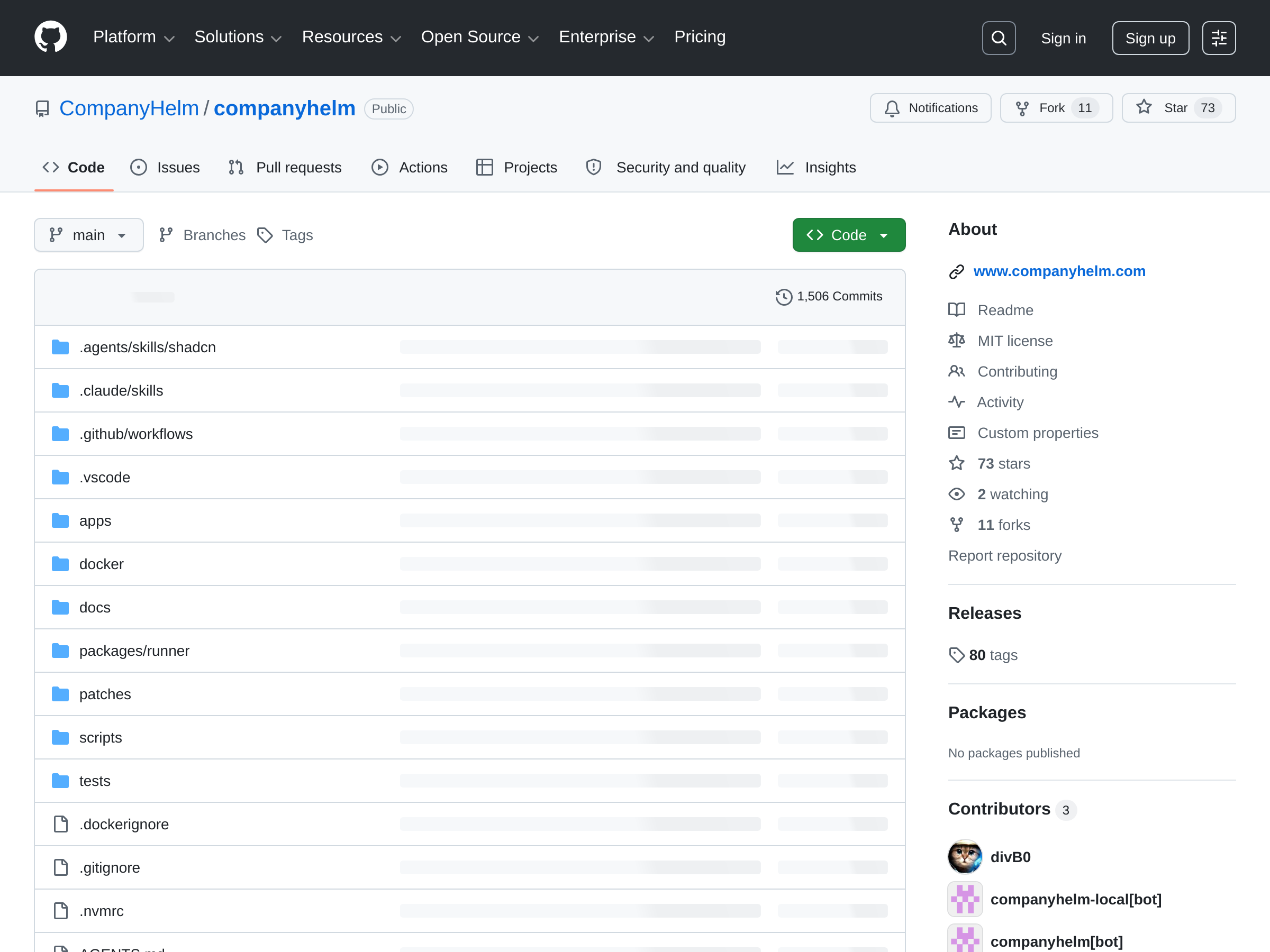
Screenshot of CompanyHelm
CompanyHelm
AI Agents Open Source

CompanyHelm is a distributed multi-agent orchestrator that facilitates task management and agent-to-agent conversations. It provides a framework for coordinating multiple AI agents, enabling them to collaborate on complex tasks in a decentralized manner. The system is designed to orchestrate agent interactions, assign tasks, and manage the flow of information between agents, making it suitable for building scalable AI-driven applications. As an open-source project hosted on GitHub, it allows developers to integrate it into their own systems and customize its behavior to suit specific use cases.

Solves

CompanyHelm solves the challenge of coordinating multiple AI agents in a distributed environment, enabling efficient task delegation, inter-agent communication, and collaborative problem-solving without central bottlenecks.

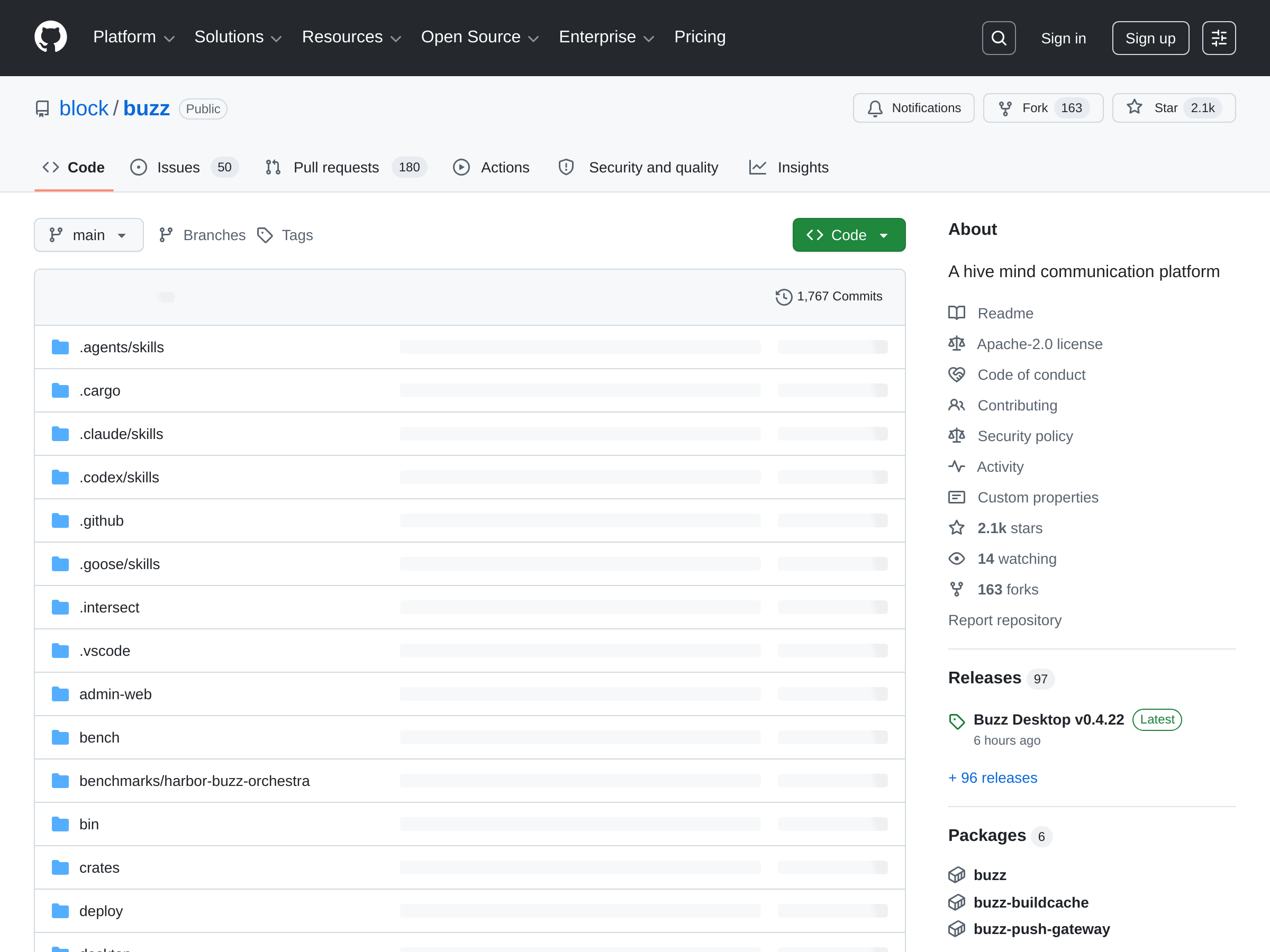
Screenshot of buzz
buzz
AI Agents Open Source

buzz is an open-source, self-hosted workspace developed by Block that facilitates seamless collaboration between humans and AI agents. It operates on the Nostr protocol, allowing teams to deploy their own relay, ensuring full control over data, privacy, and infrastructure. The platform treats AI agents as first-class members, assigning them unique cryptographic keys and maintaining detailed audit trails for all actions. This design promotes transparency, accountability, and trust in mixed human-AI teams. Within buzz, agents can perform tasks such as opening repositories, sending messages, and engaging in shared channels alongside human participants. The decentralized architecture leverages Nostr to enable censorship-resistant communication, making it suitable for environments requiring robust privacy and autonomy. By self-hosting the relay, teams can customize the workspace to their needs and integrate with existing tools and APIs. buzz is positioned as a foundational layer for building collaborative AI applications where multiple agents and humans interact dynamically. Its focus on audit trails ensures that every agent decision is traceable, which is critical for compliance, debugging, and ethical oversight. The project is community-driven and open-source, encouraging contributions and extensions to expand its capabilities beyond basic messaging and repository access.

Solves

buzz solves the problem of creating a private, auditable, and decentralized collaboration environment for human-AI teams. Traditional platforms often centralize control and lack transparency, whereas buzz empowers users with self-hosted Nostr relays and agent-specific keys, ensuring secure, traceable interactions without reliance on third-party services.

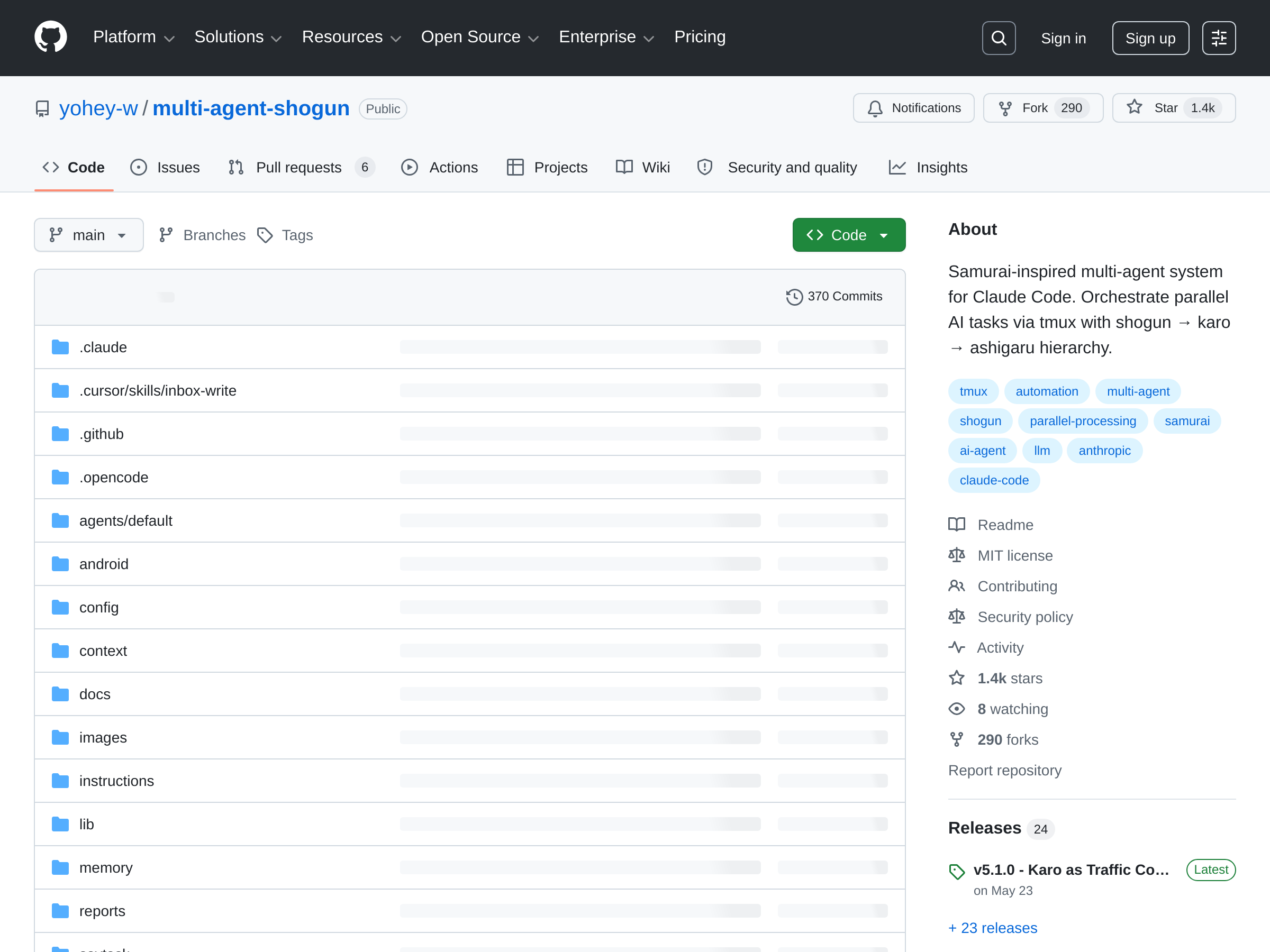
Screenshot of multi-agent-shogun
multi-agent-shogun
AI Agents Open Source

multi-agent-shogun is an open-source CLI tool that orchestrates multiple AI coding agents in parallel using a samurai-inspired hierarchy. It leverages tmux to manage terminal sessions, enabling a shogun (commander) to coordinate karo (elders) which in turn manage ashigaru (foot soldiers) - the actual AI agents. This design allows for running up to 10 agents simultaneously without any API cost for the coordination itself, as all inter-agent communication happens locally through tmux buffers. The tool supports popular AI coding assistants like Claude Code, OpenAI Codex, GitHub Copilot, and Kimi. By assigning tasks to multiple agents in parallel, it can accelerate code generation, debugging, and review processes. The hierarchical structure ensures organized task delegation and result aggregation, mimicking a feudal chain of command. Designed for developers and AI researchers, multi-agent-shogun enables experimentation with multi-agent systems in a lightweight, terminal-based environment. Since the coordination is done via tmux, there is no need for additional server infrastructure or paid orchestration services, making it an accessible option for comparing outputs from different AI models on the same coding task. While still in early development, the project demonstrates a novel approach to agent orchestration by combining system-level process management with a clear organizational metaphor. It is particularly suited for use cases like parallel code generation, multi-perspective code review, and automated testing across different AI models.

Solves

It addresses the challenge of coordinating multiple AI coding agents without incurring API costs for inter-agent communication, by using a local tmux-based hierarchy that manages parallel execution and result aggregation.

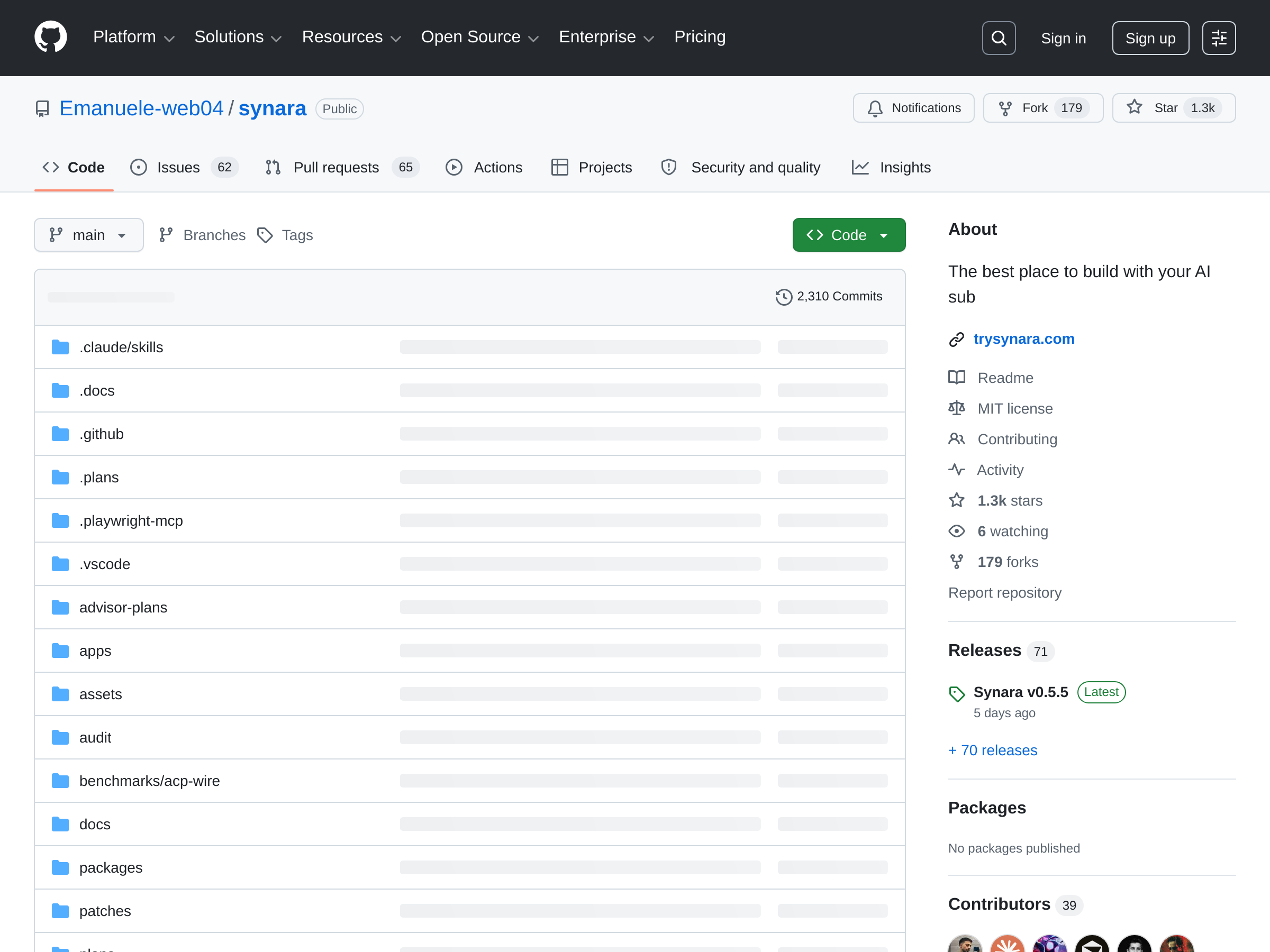
Screenshot of synara
synara
AI Agents Open Source

Synara is an open-source desktop application that provides a graphical user interface for running and managing AI coding agents on local development projects. It allows developers to coordinate multiple AI agents from a single workspace, streamlining software development workflows. The tool offers a unified environment where users can spawn AI agents, assign tasks, track progress, and review code modifications, all while keeping data local for privacy and control. As AI-assisted programming becomes more prevalent, Synara aims to simplify the orchestration of diverse coding agents, reducing context switching and enhancing productivity for developers experimenting with or relying on agent-driven code generation. Being open source, Synara fosters community contributions and customization, making it accessible for individuals and teams looking to incorporate AI agents into their software lifecycle without vendor lock-in.

Solves

Managing and orchestrating multiple AI coding agents across local development projects can be cumbersome without a centralized interface. Synara provides a GUI desktop workspace that simplifies the execution, monitoring, and coordination of these agents, ensuring data remains local and secure while improving developer workflow efficiency.

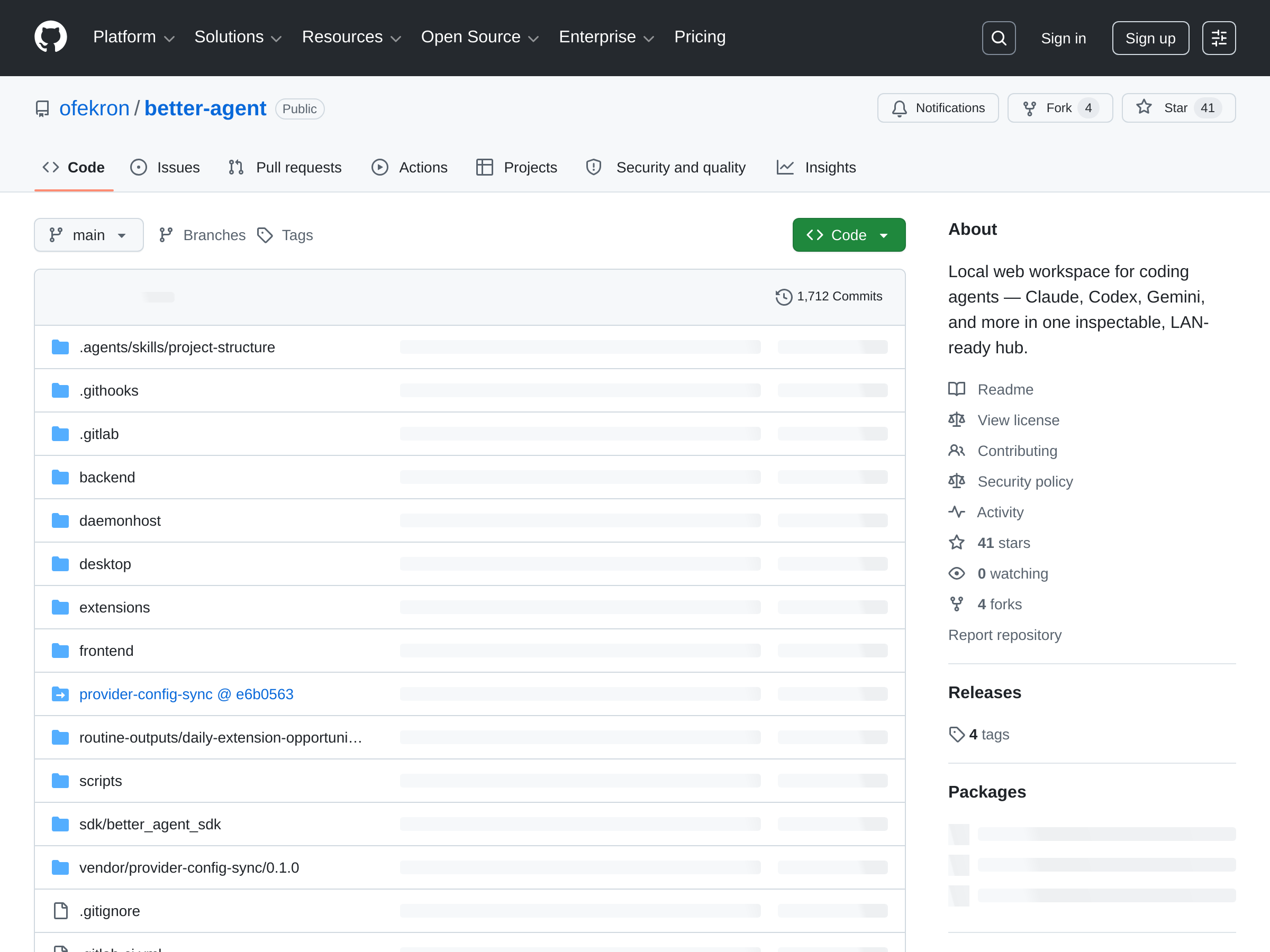
Screenshot of Better Agent
Better Agent
AI Agents Open Source

Better Agent is an open-source, local web-based workspace designed to run and supervise AI agent sessions natively using models like Claude, Codex, and Gemini. It enables users to create and manage multiple agents that can work on tasks in parallel, delegating subtasks across agents for efficient collaboration. The platform provides a persistent state layer, so all agent sessions, conversations, and intermediate outputs are saved and can be resumed after restarts or interruptions. A built-in approval system allows users to review and authorize agent actions before they are executed, adding a critical safety layer for autonomous workflows. The workspace also includes file system access, enabling agents to read, write, and modify project files directly, and features a web UI for real-time supervision and fine-grained control over each agent. The tool is tailored for local deployment, giving users full ownership of their data and execution environment, with no reliance on external cloud services.

Solves

Better Agent solves the challenge of orchestrating and overseeing multiple AI agents in a local environment while maintaining state across sessions, enabling parallel task execution, and providing manual review checkpoints. Without such a framework, multi-agent setups often become brittle, lose context on restart, and lack user oversight, making them unsuitable for complex or long-running projects.

Screenshot of poopleanswer
poopleanswer
Games Unknown

PoopleAnswer is a companion website for the daily word-ladder game Poople, providing the shortest solution path for each puzzle. The site updates automatically when a new puzzle goes live, displaying the optimal sequence of valid words that transforms the given starting word into POOP. The solution is computed using breadth-first search (BFS) to guarantee the minimal number of steps (par). Beyond the daily answer, PoopleAnswer offers a step-by-step reveal feature that lets users uncover one row at a time. Each step shows which letters match the target word POOP, acting as a hint without an immediate full spoiler. The site also includes Poople Unlimited, a practice mode that generates random starting words for endless word-ladder training, complete with hints, undo, and a shortest-path reveal. An archive of all past Poople puzzles is maintained, allowing players to review previous games and learn common patterns such as vowel swaps. The site provides solving tips and frequently asked questions, covering topics like how to work backwards from POOP and how to share results. It is a one-stop resource for players who want to maintain their streak, improve their word-ladder skills, or quickly find an answer when stuck. The platform updates its content daily and is accessible via any web browser without requiring an account. It positions itself as a reliable, spoiler-capable guide with a user-friendly interface that emphasizes clarity and speed for solving the daily challenge.

Solves

PoopleAnswer addresses the frustration players experience when stuck on a Poople word-ladder puzzle by providing the shortest path solution, subtle hints, and an unlimited practice mode. It eliminates trial-and-error guesswork and helps users maintain streaks without compromising the opportunity to learn solving strategies.

Screenshot of OpenTypeless
OpenTypeless
AI Transcription Unknown

OpenTypeless is a free, open-source AI voice typing application for Windows, macOS, and Linux that enables users to dictate speech directly into any desktop application. It combines real-time speech-to-text transcription with optional AI-powered text polishing, allowing spoken words to be automatically refined for context, grammar, and style. The app integrates with a wide range of AI providers for both transcription (e.g., Deepgram Nova-3, AssemblyAI, OpenAI Whisper, Groq Whisper, GLM-ASR) and text polishing (e.g., OpenAI, Google Gemini, DeepSeek, Claude, Ollama). This modular approach gives users control over their preferred AI services and processing options, including local models via Ollama. Designed to boost productivity, OpenTypeless features a global hotkey to activate dictation from anywhere, supporting 99 languages. It includes app-aware text formatting that detects the active application (covering 71 apps like Gmail, Slack, Google Docs, Cursor, etc.) and adjusts the output style accordingly—be it professional emails, casual chat, meeting notes, or technical comments. The tool processes audio locally where possible, but can also leverage cloud services for enhanced accuracy. As an open-source project, it is freely available for all to use, modify, and distribute.

Solves

It eliminates the need for manual typing by converting spoken language into polished, context-appropriate text in real time, directly within any desktop application.

Screenshot of AI Graffiti Generator
AI Graffiti Generator
Ai Generative Media Unknown

The AI Graffiti Generator is an online platform that enables users to create graffiti-style visuals from text or images. It combines a free text editor with an AI-powered studio, allowing anyone to generate names, tags, posters, stickers, and mural-style artwork without requiring design skills. The tool offers a range of preset styles and fonts, from bubble and wildstyle to stencil and 3D chrome, and supports customization of text size, rotation, and spacing. Users can start by entering text or uploading an image, then choose from preset graffiti styles or custom fonts. The free text editor provides fine control over the lettering, while the AI Studio can generate more complex compositions, such as incorporating characters or backgrounds. Generated designs can be previewed, enhanced, and exported as PNG or JPG files. New users receive free credits to experiment with AI features, with additional credit packs available through paid plans. The generator is suitable for designers, content creators, small brands, street-art enthusiasts, and hobbyists looking for quick, authentic graffiti aesthetics. It can be used to create logos, social media graphics, merchandise mockups, wall art concepts, and stickers. The platform also includes a gallery of example outputs to inspire users and demonstrate the range of possible creations.

Solves

Creating professional-looking graffiti art typically requires artistic skill or expensive software. The AI Graffiti Generator removes these barriers by providing an intuitive online tool that turns text or image prompts into customizable graffiti designs in seconds, making street-art style accessible to everyone.

Screenshot of AI Yard Design Studio
AI Yard Design Studio
AI Landscape Generator Unknown

AI Yard Design Studio is a web-based AI-powered landscape design platform that allows users to upload a photo of their outdoor space and instantly generate high-resolution landscape visualizations. It supports a wide variety of areas including front yards, backyards, patios, side yards, garden retreats, and pool/spa designs. Users can select from multiple design styles such as Modern Minimalist, Mediterranean, American Traditional, and more. The tool is climate-aware, tailoring plant and material suggestions to the user's location. The platform offers a 'Best quality' mode that produces a comprehensive 3-part design sheet. This includes a clean final design preview, a numbered overlay identifying key plants and features, and a detailed DIY planning list. The planning list provides climate-appropriate plant names, quantities, and light requirements, along with brief hardscape notes, making it easy for homeowners to implement designs themselves. Users start with free credits for quick, lower-resolution previews and can upgrade by purchasing credit packs for higher-res outputs (up to 4K) and access to the full planning sheets. The interface includes tools to fine-tune generated designs, view them at full size, and download or share the results. The service is entirely cloud-based and requires no software installation.

Solves

AI Yard Design Studio simplifies professional-grade landscape design by enabling homeowners and designers to generate climate-appropriate, high-resolution landscape visualizations and actionable DIY plans from a simple photo upload, eliminating the need for expensive software or extensive horticultural knowledge.

Screenshot of DealDraft AI
DealDraft AI
AI Contract Generator Unknown

DealDraft AI is an artificial intelligence-powered platform designed to streamline the entire contract lifecycle for independent professionals and small firms. It offers an integrated environment where users can generate, negotiate, and sign contracts using AI assistance. The platform likely provides a library of contract templates that can be customized through conversational or guided interfaces, enabling users to draft legally sound agreements without extensive legal expertise. By automating repetitive drafting tasks, DealDraft AI aims to reduce the time and cost associated with manual contract creation. The negotiation module probably facilitates real-time collaboration, allowing parties to suggest and track changes, while AI features help in understanding and revising clauses. Finally, electronic signature capabilities enable seamless execution, potentially complying with legal standards such as the ESIGN Act and eIDAS. Although detailed technical documentation and a GitHub repository are not publicly available, the service appears to be a cloud-based SaaS offering with a focus on simplicity and accessibility for non-enterprise users.

Solves

Independent professionals and small firms often struggle with the complexity, cost, and time required to create, negotiate, and finalize contracts. Traditional methods involve manual drafting, back-and-forth emails, and expensive legal consultations. DealDraft AI addresses these challenges by providing an all-in-one AI-driven solution that automates contract generation, simplifies negotiation, and integrates e-signatures, making professional contract management accessible and efficient.

Screenshot of VlogMe
VlogMe
AI Avatar Generator Unknown

VlogMe is an AI-powered video creation platform that streamlines end-to-end video production. Users interact with an AI director via a chat interface to describe their video idea, goals, and constraints. The AI generates a complete script and a multi-scene production plan, which the user can review, refine, and approve before rendering. The platform supports a variety of workflows including text-to-video, image-to-video, talking avatars, video restyling, upscaling, lip-syncing, and motion transfer. It integrates multiple state-of-the-art AI models for video, image, and avatar generation, allowing users to choose the best engine for each task. VlogMe also provides tools for adding voiceovers, music, captions, and effects, and enables scene-by-scene editing, so individual elements can be adjusted without regenerating the entire video. The final output can be created in popular formats and aspect ratios for social media, ads, tutorials, and more.

Solves

VlogMe simplifies professional-quality video creation by converting natural language ideas into fully produced, editable videos, eliminating the need for advanced video editing skills or manual coordination of multiple tools.

Screenshot of ArchOne AI
ArchOne AI
Space Design Apps Unknown

ArchOne AI is an AI-powered design visualization platform that helps users explore interior, exterior, and landscape concepts by transforming photos, sketches, renders, or reference images into design visuals. It enables rapid comparison of material palettes, lighting moods, furniture layouts, facade updates, plantings, hardscapes, and other design elements. The platform is not a CAD or BIM tool; it focuses on conceptual exploration and client-ready visual options rather than construction documentation, structural analysis, or procurement. It serves as a creative workspace for designers and homeowners to experiment with design directions before committing to detailed production.

Solves

Design exploration traditionally requires multiple revision cycles, consuming significant time and money. ArchOne AI accelerates this process by generating visual concepts from photos in minutes, allowing users to quickly compare and communicate design ideas without costly back-and-forth.

Screenshot of ShortMind
ShortMind
Long Video To Short Video AI Unknown

ShortMind is an AI-powered video clipping platform that automatically converts long-form videos into multiple short, viral-ready clips. It uses artificial intelligence to identify high-potential moments such as emotional peaks, punchy quotes, and key insights, then cuts them into platform-optimized shorts. The tool predicts virality with a Viral Score (0-100) based on hooks, emotion, and trends, and automatically generates engaging titles, dynamic captions, descriptions, and hashtags to maximize discoverability. ShortMind offers intelligent reframing that auto-detects and centers subjects, adapting clips to 9:16, 1:1, and 4:5 aspect ratios for TikTok, YouTube Shorts, Instagram Reels, and other social platforms. Its built-in editor allows users to trim, crop, add captions, overlay B-roll, change fonts, and adjust aspect ratios without third-party tools. Finally, users can organize, schedule, and publish clips to multiple platforms with a single click, making it suitable for creators, brands, and teams aiming to efficiently scale their short-form video content.

Solves

Traditional video editing for social media is time-consuming, requiring hours of manual scrubbing, trimming, captioning, and reformatting for each platform. ShortMind automates this process using AI to instantly generate dozens of platform-ready short clips from a single long video, enabling creators to dramatically increase their output and testing capacity without needing professional editing skills or large teams.

Screenshot of ReelyArt
ReelyArt
AI Graphic Design Unknown

ReelyArt is an AI-powered Web3 design platform that enables creators to generate social-ready visuals for NFT and crypto projects without any design experience. It offers four integrated AI tools: an Editor that builds complete social posts from text prompts, a Studio for image-to-image generation and custom headers, a Content Studio for memes, stickers, and animated GIFs from uploaded PFPs, and a Lab that creates cinematic scene cards from any NFT collection using live OpenSea data. The platform provides a free tier with 20 credits upon signup, with paid plans available for scaling monthly credit usage. Over 3,000 AI images, 200 animated GIFs, and 1,000 memes and stickers have been created by its users, reflecting its adoption among Web3 creators. ReelyArt simplifies the visual content creation process for NFT artists, community managers, and crypto marketers by automating design tasks that would typically require graphic design software and skills. Its templates and AI-driven generation produce professional assets quickly, helping users maintain an active social media presence and engage their communities. With features like tier list visualization, collage creation, and a library of templates, the platform caters to the specific needs of Web3 branding, from Discord banners to Twitter headers, making it a one-stop solution for Web3 visual content.

Solves

ReelyArt solves the challenge of creating professional-grade digital art and social content for Web3 communities without requiring graphic design expertise, saving time and reducing the barrier to producing high-quality NFT visuals, memes, banners, and animations.

Screenshot of ColoringDaily
ColoringDaily
AI Coloring Book Generator Unknown

ColoringDaily is an AI-powered platform for generating printable coloring pages from text prompts or uploaded photos. It offers multiple artistic styles such as classic, simple, cartoon, cute, anime, adult easy, detailed, and mandala, and supports various page ratios. Users can also create editable name or phrase coloring pages using customizable templates. The service is free to use with watermark-free output and provides a starter credit of 20 after sign-in, with additional credits available through a pricing plan. A built-in AI colorizer can automatically add color to generated or uploaded line art. Beyond generation, the platform hosts a free library of nearly 10,000 ready-to-print coloring pages across diverse categories like cats, dogs, dinosaurs, flowers, unicorns, dragons, and seasonal themes.

Solves

ColoringDaily eliminates the need for manual drawing skills or pre-made coloring books by enabling users to instantly generate unique, high-quality coloring pages from simple text descriptions or personal photos, making custom coloring activities accessible to anyone.

Screenshot of Corrath
Corrath
AI API Unknown

Corrath is an AI gateway that acts as a transparent, high-performance proxy between applications and large language model (LLM) providers. It provides deterministic security filtering, spending controls, and automated failover to protect LLM-powered applications from adversarial threats, budget overruns, and provider outages. The platform integrates via a unified API endpoint, enabling developers to route requests to multiple model backends (including OpenAI, Anthropic, Google, Mistral, and DeepSeek) without changing application code. Key features include real-time prompt injection neutralization, granular per-key spending limits, and a sub-5ms latency circuit breaker that dynamically reroutes traffic during provider downtimes. Corrath also offers cost forecasting, HMAC-SHA256 webhook alerts for threat and cost anomalies, and a dashboard for monitoring request distributions, token spend, and threat categories. Designed for enterprise production environments, Corrath claims 99.99% uptime SLA and processes over 500,000 protected requests and 10 million tokens. It supports multiple project spaces, vaulted API keys, and role-based access controls (RBAC) in higher tiers. An enterprise plan offers on-premise deployment and dedicated support.

Solves

Direct integration with LLM APIs exposes applications to prompt injection attacks, budget-busting runaway completions, provider outages that crash services, and compliance risks from leaked PII or credentials. Corrath eliminates these risks by sitting as a secure, low-latency proxy that inspects every request and enforces security, cost, and availability policies.

Screenshot of HairstylesPro
HairstylesPro
AI Hairstyle Unknown

HairstylesPro is an AI-powered virtual hairstyle try-on platform that allows users to upload a personal photo and instantly preview over 500 realistic haircuts and styles. The platform offers curated collections for women, men, and children, including categories such as bob, short, medium, long, over 50, men, guys, and boys. Users can compare different looks side-by-side and save their preferred style to show a hairstylist. In addition to hairstyle previews, the service includes an AI hair color changer and AI makeup try-on tool. The platform emphasizes user privacy: uploaded photos expire after 10 hours and are not permanently stored. A free trial credit is available upon sign in, enabling users to test the service before committing to a paid plan.

Solves

Many individuals feel uncertain about how a new haircut or color will suit them before visiting a salon. HairstylesPro addresses this by using artificial intelligence to generate realistic hairstyle visualizations on the user's own photo, reducing the risk of dissatisfaction and improving communication with hairstylists.

Screenshot of Brainrot Shorts
Brainrot Shorts
AI Video Generator Unknown

Brainrot Shorts is an AI-powered video generation studio designed for creating viral faceless short-form videos. It offers a text-to-video pipeline that automatically assembles hypnotic gameplay backgrounds, natural AI voiceovers, and word-by-word captions into 9:16 vertical videos optimized for platforms like TikTok, Instagram Reels, and YouTube Shorts. Users can choose from multiple faceless formats including Reddit story narrations, Italian brainrot character skits, character explainers, satisfying fruit videos, texting story dramas, and simple voice-over videos. The platform also includes learn-mode studios for educational content, enabling users to turn documents like PDFs, slide decks, or notes into narrated explainer videos or quizzes. With AI script writing, a library of characters and voices, and customizable caption styles, creators can produce content with minimal effort. The generated videos are watermark-free on paid plans, and the service supports API access and a web editor for further customization. Brainrot Shorts caters to casual and professional creators with tiered subscription plans, offering varying limits on exports, AI voice minutes, and AI credits per month. It aims to democratize the creation of engaging, algorithm-friendly short videos without requiring video editing skills or on-camera presence.

Solves

Brainrot Shorts addresses the challenge of producing engaging, viral short-form video content quickly and easily, especially for creators who prefer to remain off-camera. It automates the entire video creation process—scripting, voiceover, background, and captions—eliminating the need for complex video editing software, voice talent, or design skills, while ensuring the final product is optimized for social media algorithms.

Screenshot of Luddi
Luddi
AI Game Generator Unknown

Luddi is an AI-powered game generator that enables users to create playable HTML5 games simply by describing their game idea in natural language. The platform uses artificial intelligence to quickly build a functional game, which can be played instantly in the browser, shared with others, or remixed to create variations. It features an explorer section where users can discover and play games created by the community, a studio for creating new games, and project management to save and organize creations. Luddi aims to democratize game creation, making it accessible to people without programming or game design skills. By leveraging AI, it reduces the time and effort required to prototype simple games, catering to hobbyists, educators, and anyone wanting to experiment with interactive entertainment. The service supports remixing, allowing users to take an existing game and modify it, fostering a collaborative and iterative creative environment. While the exact technical underpinnings are not disclosed, Luddi likely employs generative AI models to produce game code, assets, and logic based on textual prompts. The platform's focus on HTML5 ensures broad compatibility across devices and browsers, enabling seamless sharing and play. A pricing page exists, but details are not publicly available without signing in, suggesting a tiered model possibly including free and paid options. Overall, Luddi is positioned as a tool for rapid, no-code game prototyping and casual creation.

Solves

Luddi solves the barrier to entry for game creation by allowing anyone to generate playable HTML5 games from text descriptions, eliminating the need for coding, design, or extensive development time.

Screenshot of Seedance 2.0
Seedance 2.0
AI Video Generator Unknown

Seedance 2.0 is a multimodal AI video generation model built by ByteDance. It creates 1080p video with native audio from text, images, and reference files in a single pass. Ranked among the top AI video models globally, it powers text-to-video, image-to-video, reference-guided generation, video editing, and beat-sync workflows, all in one browser workspace. The model supports text-to-video generation with synchronized audio including dialogue, sound effects, and ambient sound. Image-to-video animation brings static photos to life with natural motion, optionally with user-defined first and last frames. Additionally, Seedance 2.0 accepts up to 12 reference inputs such as images, video clips, and audio files to precisely control style, motion, and composition. Built-in video editing allows users to upload clips and apply AI-driven edits through natural language descriptions, retaining original audio or switching to AI-generated sound. A beat-sync feature automatically matches camera cuts and transitions to uploaded music, ideal for music videos and social content. Lip-sync capability supports over 8 languages for realistic character speech.

Solves

Seedance 2.0 enables users to generate professional-quality 1080p videos with synchronized audio from simple text or image inputs, eliminating the need for filming equipment, editing software, or separate audio production tools.

Screenshot of SoulVid
SoulVid
AI Video Generator Unknown

SoulVid is an all-in-one AI video generation platform that enables users to create short dramas and music videos entirely through a chat-based interface. It unifies scriptwriting, storyboarding, video synthesis, voice generation, lip-syncing, and editing into a single cloud-based tool, eliminating the need for traditional production software or specialized hardware. Users describe their story ideas in natural language, and the platform generates a script, professional storyboards, and synchronized video clips with dynamic visual effects, all within minutes. The tool supports video lengths from 1 to 10 minutes and exports in MP4 format with HD and 2K resolutions, making it suitable for platforms like TikTok, YouTube Shorts, and Instagram Reels.

Solves

SoulVid solves the complexity and technical barriers of video production by providing an integrated AI studio that converts text descriptions into complete, edited videos with minimal user effort. It replaces the need for multiple disjointed tools and specialized skills, allowing creators to produce narrative-driven content quickly.

Screenshot of TheCartoonist.Studio
TheCartoonist.Studio
AI Cartoon Generator Unknown

TheCartoonist.Studio is an AI-powered photo-to-cartoon web application that transforms user-uploaded portraits into studio-quality cartoons. Unlike generic AI filters, it uses a proprietary FaceCap™ engine developed by a caricature artist with 12 years of hand-drawn experience, ensuring high likeness and a natural, non-artificial style. The service offers a free, no-signup preview, allowing users to see their cartoon instantly before purchasing a high-resolution download pack that includes 4K PNG files, desktop and mobile wallpapers, and print-ready assets. The platform is built with a strong emphasis on privacy, complying with GDPR, CCPA, UK GDPR, PIPEDA, and PIPA standards, and processes images without storing them permanently. The entire workflow—upload, cartoonization, and download—takes under 30 seconds, making it accessible for casual users and professionals alike.

Solves

It provides an instant, affordable way to obtain personalized, high-quality cartoon portraits without requiring artistic skill or commissioning a custom caricature, while avoiding the generic look of typical AI filters.

Screenshot of AI GAZOU
AI GAZOU
AI Image Generator Unknown

AI Gazou is an online platform that generates images from Japanese text prompts. Users can create photos, illustrations, social media graphics, and other visual content by describing their desired scene, style, and composition in natural Japanese. The service eliminates the need for English translation often required by other AI image generators, making it accessible to Japanese-speaking users. A built-in prompt gallery provides example prompts and results, allowing users to learn effective prompt structures and adapt them to their needs. The platform supports both text-to-image and reference image-based generation, enabling iterative refinement by adjusting prompts and comparing results. Users can specify aspect ratios, lighting, color palettes, and even reserve space for text overlays. AI Gazou offers a free credit system upon registration, allowing users to try the service without immediate payment. Generated images are intended for use as free stock visuals for blogs, social media, presentations, and other projects, though the platform advises checking underlying model usage terms for commercial applications.

Solves

Finding free stock images that exactly match a specific vision is often time-consuming and frustrating. AI Gazou solves this by letting users describe what they want in Japanese and receive a custom-generated image, bypassing the need to search through existing libraries or translate prompts into English. This is particularly useful for Japanese speakers who seek precise control over image elements like composition, style, and cultural context.

Screenshot of aiOS
aiOS
AI Agent Unknown

aiOS is a unified AI operating system designed to automate business operations across marketing, sales, support, and content creation. It leverages over 1200 agentic skills, routing tasks to models like Claude and GPT to produce finished deliverables—not drafts. Users can point it at a website or an idea, and within minutes it maps the business, drafts branded posts, and sets up an AI team. The platform operates autonomously, executing tasks such as designing carousels, filming videos, writing emails, and managing ads, then reporting back via text message. A dashboard displays specialists for support, sales, ads, content, ops, and email, each showing live activity and resolved tasks. Security is a priority, with SOC 2-aligned controls, AES-256 encryption, tenant isolation, and a strict policy against using customer data for model training. Priced at $20 per month, aiOS aims to replace multiple standalone tools with a single subscription.

Solves

Businesses struggle with fragmented AI tools and manual workflows for marketing, sales, and operations. aiOS provides a single AI employee that autonomously executes end-to-end tasks, delivering finished work and reducing the need for multiple subscriptions and prompt engineering.