Tool discovery

What type of AI tool
are you looking for?

Search the active catalog with LambdaBase AI Search, or keep browsing the popularity-ordered directory below.

Submitted search queries and interaction metrics may be analyzed to improve result quality. Do not include personal or confidential information

Browse popular tools.

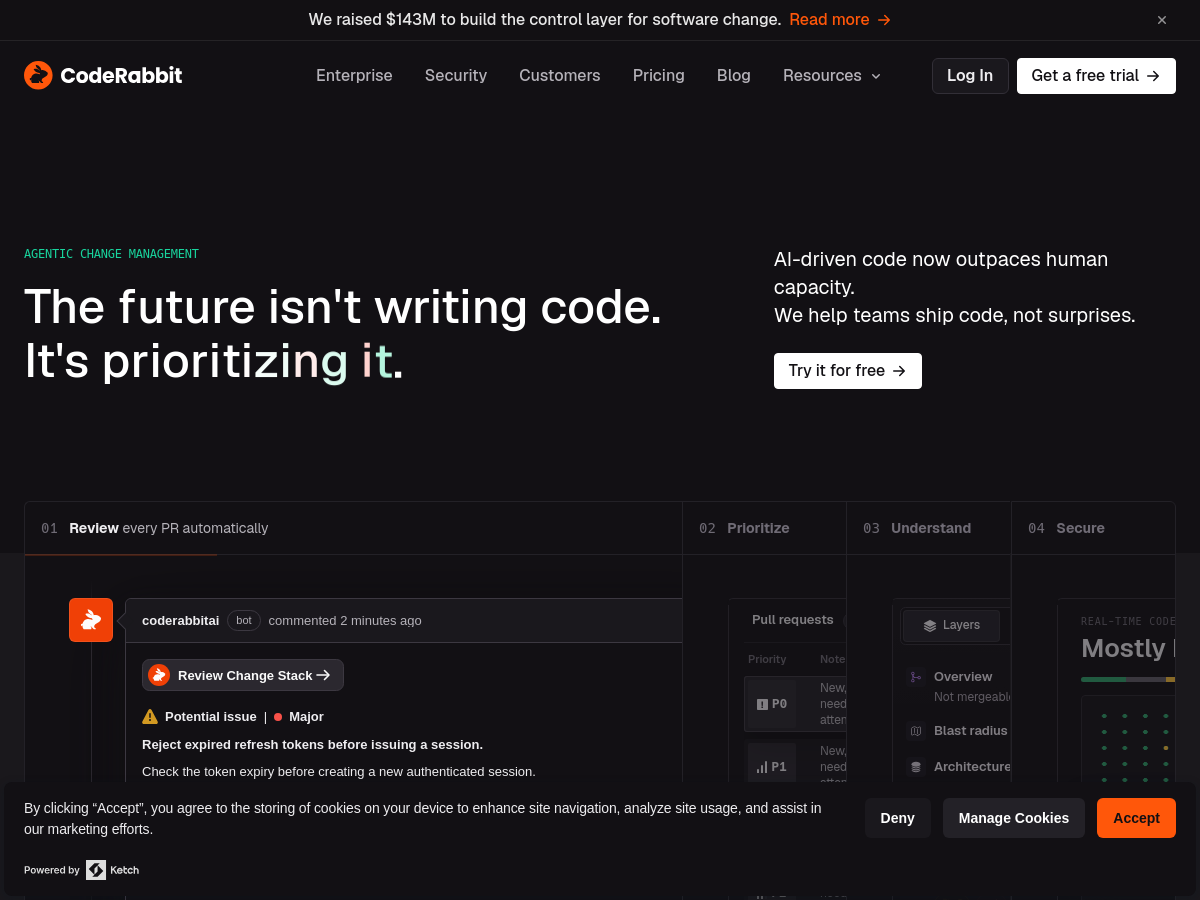
Screenshot of CodeRabbit
CodeRabbit
Code reviews Freemium

CodeRabbit is an AI-first pull request reviewer that automates code review for GitHub and GitLab repositories. It provides context-aware feedback, line-by-line code suggestions, and real-time chat to help developers understand and improve every pull request. The platform is designed to handle the growing volume of AI-generated code, offering a control layer for software change that includes review, prioritization, understanding, and security scanning. CodeRabbit raised $143M to build this agentic change management platform, positioning itself as an essential tool for modern development teams that need to ship code without surprises. The service integrates directly into existing Git workflows, automatically commenting on PRs with potential issues, committable suggestions, and risk assessments. It also offers a dashboard for prioritizing pull requests based on factors like risk, reward, effort, and complexity, enabling teams to focus on the most critical changes first. Additionally, CodeRabbit provides real-time codebase health monitoring, including dependency vulnerability detection with fix-ready suggestions, and architecture overviews to help developers grasp the impact of changes. With a freemium pricing model, CodeRabbit is accessible to individual developers and startups while offering enterprise-grade features for larger organizations.

Solves

Manual code review cannot keep pace with the increasing volume and complexity of AI-generated code, leading to missed bugs, security vulnerabilities, and bottlenecks in the development workflow. CodeRabbit solves this by automating the review process, providing instant, context-aware feedback on every pull request, prioritizing changes by risk and impact, and scanning for dependency vulnerabilities, so teams can ship code faster and with greater confidence.


Screenshot of Notis
Notis
AI/ML Freemium

Notis is an autonomous AI assistant designed to act as your virtual intern, accessible via simple messaging. By sending voice notes, texts, or even emails, users can delegate a wide range of repetitive tasks to Notis, which then processes the request and integrates with popular productivity and content tools to complete the work. It positions itself as a fire-and-forget solution, allowing founders and teams to offload busy work and focus on high-impact activities. With a freemium model, Notis is used by over 17,000 founders, indicating its appeal to the startup community. The core functionality revolves around understanding natural language instructions and executing them across connected apps. For instance, users can dictate meeting notes, and Notis will organize them into structured summaries and save them to Notion or Google Docs. It can also transform voice memos into actionable tasks in project management tools, draft and publish social media posts complete with generated images and copy, and turn rough ideas into blog posts or newsletters ready for publication. Additionally, it can act as a thought partner by challenging ideas or playing devil's advocate. Notis integrates with a variety of third-party services, including note-taking apps, task managers, social media platforms, and email, creating a seamless workflow from a single chat interface. This eliminates the need to switch between multiple tools and manually transfer information, thereby streamlining daily operations for busy professionals.

Solves

Busy professionals, especially founders and entrepreneurs, often spend hours on low-value but necessary tasks such as taking meeting notes, organizing to-do lists, creating social media content, and drafting communications. This time could be better spent on strategic planning and core business activities. Notis solves this problem by providing an AI-driven assistant that automates these tasks with minimal input. Users simply speak or type their needs, and Notis handles the execution—formatting notes, populating task lists, generating content, and even posting to social media. This drastically reduces the cognitive load and manual effort required for daily busy work.

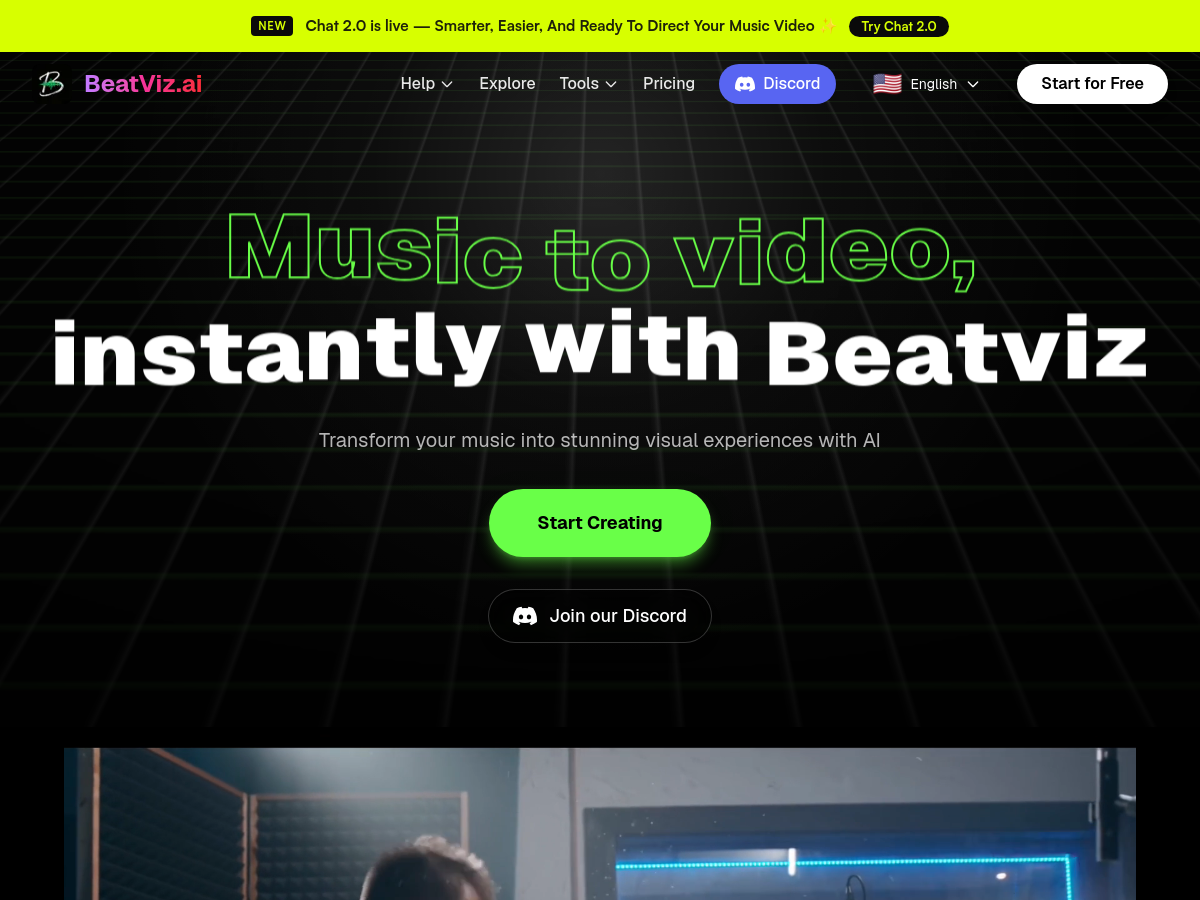
Screenshot of freebeat AI
freebeat AI
Videos Free

Freebeat AI is a music studio application designed for Mac users. It appears to be a comprehensive tool that allows users to generate and manipulate music, potentially using AI technology. The application's capabilities and features are not explicitly stated in the provided information, but its categorization as a music studio suggests that it offers a range of tools and functionalities for music creation and editing. Given its description as a 'Music Studio on Your Mac,' it is likely that Freebeat AI provides users with a user-friendly interface and a variety of features to produce and customize music. The application's AI capabilities may enable users to generate music automatically or assist in the music creation process. However, without more detailed information, the full extent of Freebeat AI's features and capabilities remains uncertain. The application is available for free, which may indicate that it is intended for hobbyists or individuals who want to explore music creation without committing to a paid subscription. Overall, Freebeat AI seems to be a versatile tool that can help users create and edit music on their Mac devices. The application's AI technology may provide users with new and innovative ways to approach music creation, and its free pricing makes it accessible to a wide range of users. As a music studio application, Freebeat AI likely includes features such as audio editing, music generation, and sound manipulation, although the specific details of these features are not provided. The application's focus on music creation and its availability on Mac devices suggest that it is designed to be a powerful and user-friendly tool for music enthusiasts. With its AI capabilities and free pricing, Freebeat AI has the potential to be a valuable resource for musicians and music creators.

Solves

Musicians and music enthusiasts often struggle with the time-consuming and labor-intensive process of creating and editing music. Freebeat AI solves this problem by providing a comprehensive music studio application that allows users to generate and manipulate music using AI technology. By offering a range of tools and features for music creation and editing, Freebeat AI enables users to produce high-quality music efficiently and effectively. The application's AI capabilities may also assist users in overcoming creative blocks or exploring new sounds and styles, making it a valuable resource for musicians and music creators.

Screenshot of Jason AI
Jason AI
Sales Unknown

Jason AI is an AI-powered Sales Development Representative (SDR) agent developed by Reply.io. It is designed to automate and scale B2B outbound sales outreach. The platform leverages a database of over 1 billion real-time B2B prospects to identify ideal customers and personalize communication across multiple channels, including email, LinkedIn, and other touchpoints. Jason AI learns about a company's product and target strategy, then autonomously sources leads, crafts personalized messages, and manages follow-up sequences to book meetings. Key capabilities include multichannel sequences, smart lead sourcing, triple-verification to protect sender reputation, campaign strategy setup, approval mode for human oversight, multilingual outreach, and intent signal detection. The AI agent also handles prospect replies, schedules meetings, and can be monitored via a mobile app (Jason AI App) available on Google Play. The solution is used by over 250 companies across various industries, with case studies showing significant improvements in pipeline generation. Jason AI is positioned as an 'agentic-friendly' assistant that feels human but works with superhuman efficiency, reducing manual busywork for sales teams.

Solves

Jason AI solves the challenge of scaling personalized B2B outbound sales without increasing headcount. It automates lead sourcing, prospect research, message personalization, and follow-up, enabling sales teams to book more meetings while focusing on closing deals. The tool reduces manual effort in creating and managing outreach campaigns across multiple channels.

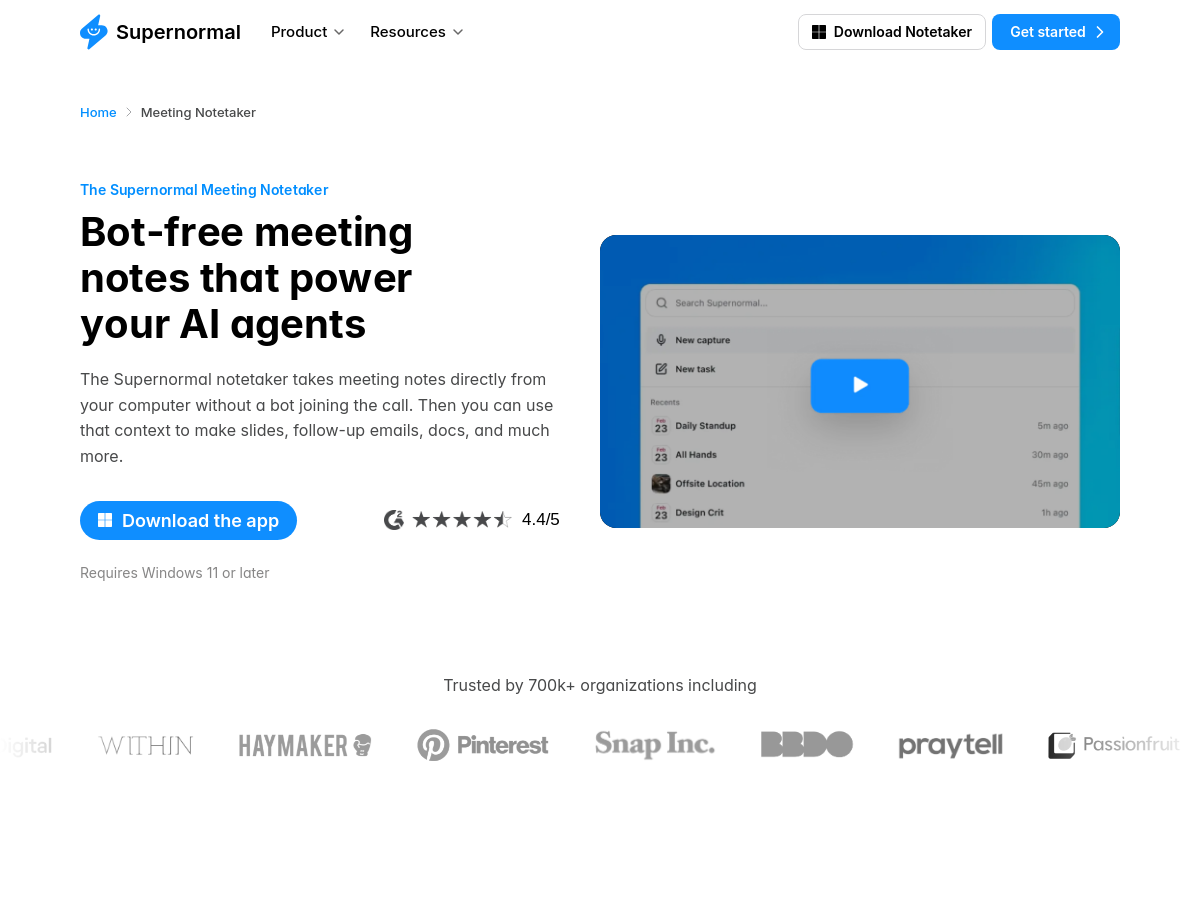
Screenshot of Supernormal App
Supernormal App
Productivity Free

Supernormal App is an AI-powered meeting notetaker that captures meetings without a bot, then turns them into deliverables. The app runs quietly in the background, allowing users to stay focused on their meetings. After a meeting, Supernormal opens, enabling users to prompt agents to produce work based on what was discussed, such as generating slides, follow-up emails, documents, calendar invites, and more. The app is trusted by 700k+ organizations and has a 4.4/5 rating on G2. Supernormal's meeting notetaker works in three steps: download and set up in minutes, automatically take meeting notes, and use agents to complete every post-meeting task. The app is available for Mac and Windows and can be downloaded for free. Supernormal's AI technology streamlines post-meeting work, helping users draft job descriptions, follow-ups, and acting as a repository for all the information captured in calls. The app is non-obtrusive and pulls out the most important, work-related details from meetings. Supernormal has been praised by users for making their lives easier, improving their workflow, and strengthening their tech stack. The app's agents feel like an extension of the internal team, and it normalizes remote work, removing meeting FOMO. Overall, Supernormal App is a powerful tool for anyone looking to optimize their meeting workflow and increase productivity. The app's features and capabilities make it an essential tool for professionals, teams, and organizations. With its ease of use, flexibility, and effectiveness, Supernormal App is a game-changer for meeting management and productivity. The app's ability to integrate with other work tools and its personalized post-meeting suggestions make it a valuable asset for anyone looking to streamline their workflow and get more done in less time. Supernormal App is a must-have for anyone who wants to take their meeting productivity to the next level.

Solves

Professionals and teams often struggle with taking meeting notes, remembering action items, and following up on tasks. Supernormal App solves this problem by providing an AI-powered meeting notetaker that captures meetings without a bot, then turns them into deliverables, streamlining post-meeting work and increasing productivity. The app helps users stay organized, focused, and on top of their work, making it an essential tool for anyone looking to optimize their meeting workflow.

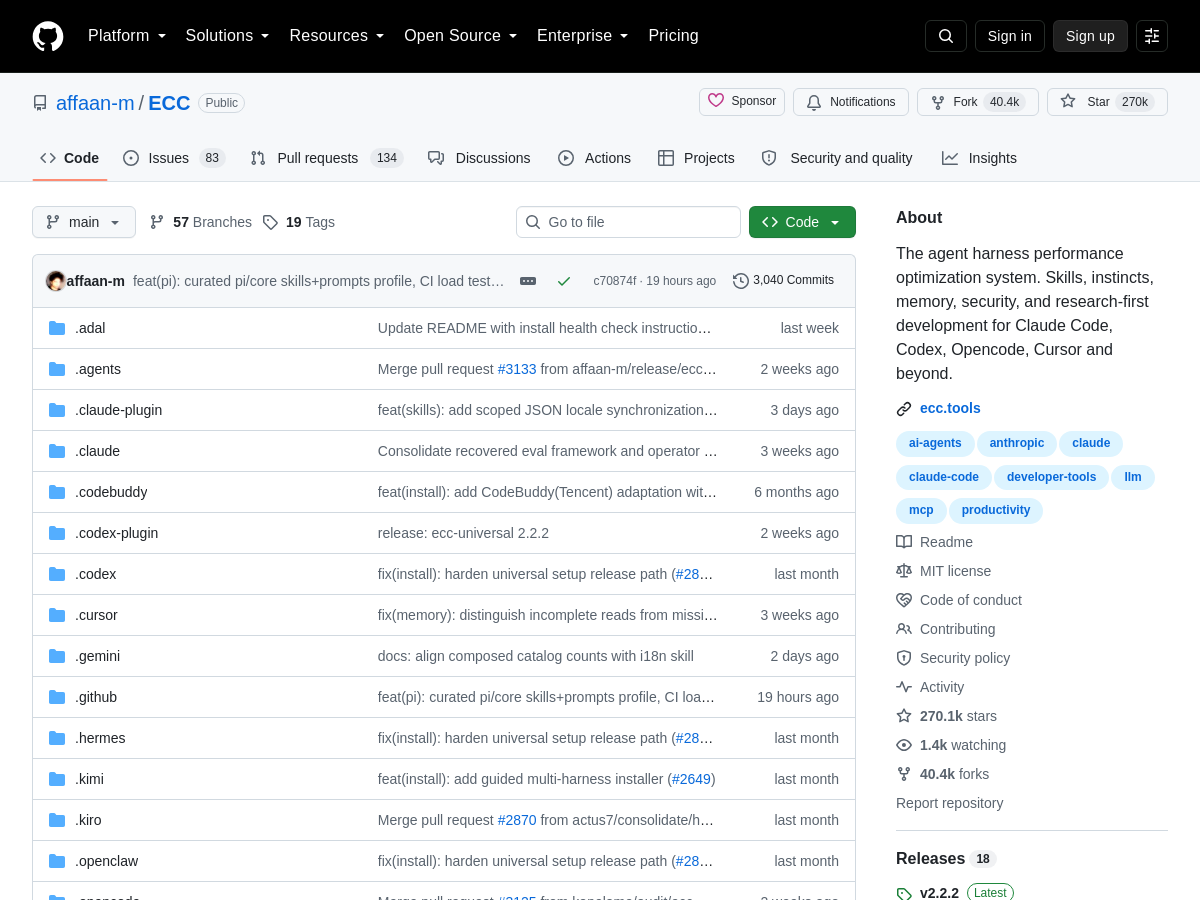
Screenshot of ECC
ECC
AI Agents Open Source

ECC is an open-source project that appears to be an agent harness performance optimization system. It is designed to work with various AI models and platforms, including Claude Code, Codex, Opencode, and Cursor. The project aims to provide a robust and efficient system for optimizing the performance of these models. ECC features skills, instincts, memory, security, and research-first development, making it a comprehensive solution for AI model optimization. The project is hosted on GitHub and has a large community of contributors, with over 270,000 stars and 40,000 forks. The latest commit was made on September 30, 2026, and the project has a total of 3,040 commits. ECC is written in a variety of programming languages, including JavaScript and Python, and uses several technologies such as GitHub Actions and Docker. The project's documentation is extensive and includes a README file, a wiki, and several issue trackers. Overall, ECC is a complex and sophisticated open-source project that has the potential to make a significant impact in the field of AI model optimization.

Solves

ECC solves the problem of optimizing the performance of AI models, which is a critical issue in the field of artificial intelligence. Many AI models are computationally intensive and require significant resources to run, which can lead to performance issues and slow down the development process. ECC provides a solution to this problem by offering a robust and efficient system for optimizing the performance of these models, allowing developers to focus on building and improving their AI models rather than worrying about performance issues.
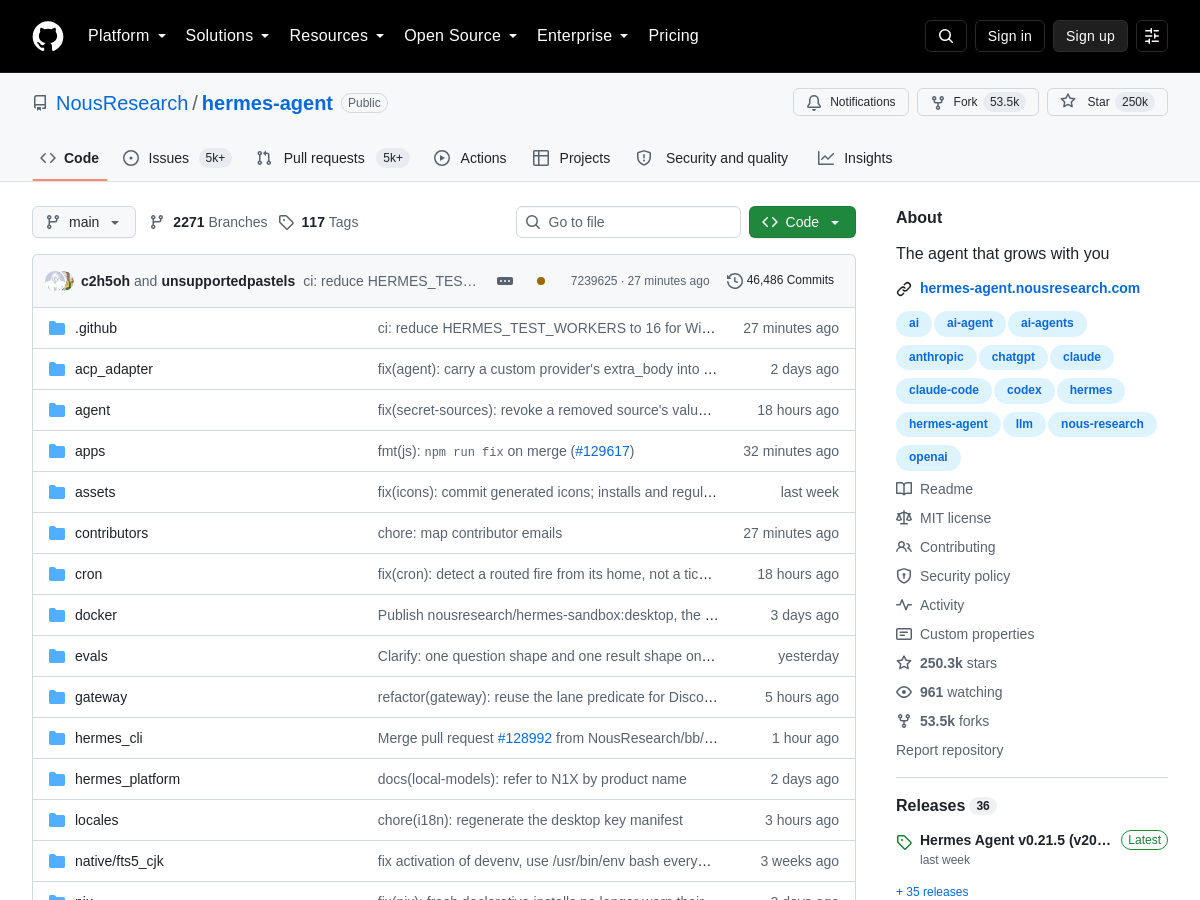
Screenshot of Hermes Agent
Hermes Agent
AI Agents Open Source

Hermes Agent is a self-improving AI agent built by Nous Research. It has a built-in learning loop that creates skills from experience, improves them during use, and searches its own past conversations. The agent can be run on various platforms, including Linux, macOS, Windows, and Android, and supports multiple messaging platforms such as Telegram, Discord, Slack, WhatsApp, and Signal. Hermes Agent also has a terminal interface and supports various tools and integrations, including Nous Portal, OpenRouter, and OpenAI. The agent has a closed learning loop, which means it can curate its own memory and improve its skills over time. It also has a scheduling system, which allows users to schedule tasks and automate workflows. Additionally, Hermes Agent has a research-ready mode, which allows users to generate batch trajectories and compress them for training the next generation of tool-calling models.

Solves

Hermes Agent solves the problem of creating a personalized and self-improving AI assistant that can learn from experience and adapt to user needs. It provides a flexible and customizable platform for users to interact with various tools and services, and automates workflows and tasks. The agent's ability to learn and improve over time makes it a valuable tool for users who want a personalized and efficient AI assistant.

Screenshot of Voicetype AI
Voicetype AI
Transcription Freemium

VoiceType AI is a freemium desktop dictation tool that uses AI speech-to-text to let users write by voice in any application. It advertises dictation speeds up to 360 words per minute and a 99.7% accuracy score, while automatically formatting and improving the transcribed text. The tool is designed for people who spend significant time writing emails, documents, messages, and other text-based content, with the goal of saving 1-2 hours per day. VoiceType AI works system-wide, so users can dictate directly into their favorite apps instead of being limited to a dedicated editor. It includes voice-driven editing and auto-formatting features to refine dictated text. The product is offered under a freemium model with a free trial and paid plans, and the website reports more than 65,000 users.

Solves

VoiceType AI solves the productivity bottleneck of manual typing by enabling users to dictate text with AI-powered speech recognition in any application. It transcribes, edits, and auto-formats spoken words, helping users write faster and reduce daily writing time by 1-2 hours.

Screenshot of ChatPlayground AI
ChatPlayground AI
LLM comparison Unknown

ChatPlayground AI is a web-based platform designed to streamline how users interact with and evaluate multiple large language models. Instead of subscribing to each AI service individually, the platform provides a single interface through which users can access popular models such as ChatGPT, Claude, Gemini, Perplexity, DeepSeek, and others. Its primary focus is side-by-side comparison, allowing users to pose a question once and receive responses from several models simultaneously, making it easier to assess output quality, tone, and relevance. This approach reduces the friction of switching between multiple AI chat interfaces and helps users quickly identify which model best suits a particular need. By aggregating top AI models under one subscription, ChatPlayground aims to reduce the cost and complexity of using multiple AI assistants. The platform is marketed as a cost-effective alternative to paying $20 per month for each separate service, offering comparable access for a similar price. This value proposition appeals to individuals and organizations that rely on a variety of AI models for different tasks, such as content creation, programming support, research, and business analysis. The service also functions as an evaluation tool for benchmarking model performance on custom prompts, enabling data-driven decisions when selecting an AI provider. The interface is built around simplicity and efficiency, emphasizing quick access to multiple AI outputs without requiring users to maintain separate accounts for each provider. ChatPlayground positions itself as a practical environment for exploring the strengths and weaknesses of each model, making it valuable for anyone who wants to stay current with the rapidly evolving AI landscape while avoiding vendor lock-in. Its design focuses on comparison and collaboration, providing a workspace where users can experiment with different models side by side and share insights with teams.
Solves

ChatPlayground solves the problem of evaluating and choosing among multiple AI models by aggregating them into one platform, enabling side-by-side comparisons without needing multiple subscriptions or constantly switching between different AI chat interfaces.

Screenshot of MagicSlides.app AI PPT Maker

MagicSlides.app is an AI-powered presentation maker that transforms any input—text, topic, PDF, YouTube video, and more—into professional slide decks in seconds. It leverages advanced AI (Gemini) to structure content, select designs, and generate visually appealing slides automatically. The platform supports over 136 languages, making it accessible to a global audience, and has been used to create millions of presentations. Trusted by professionals at companies like Google, Spotify, and Salesforce, MagicSlides offers a seamless experience from idea to finished deck. The tool provides multiple conversion modes, including Text to PPT, Topic to PPT, PDF to PPT, YouTube to PPT, and an AI Pitch Deck Generator. Users can also interact with an AI chat assistant directly within the editor to create slides from scratch, add or clone slides, and refine content for better clarity and impact. Design assistance features offer recommendations on colors, layouts, and imagery, allowing even non-designers to produce polished presentations. Generated slides can be edited online or downloaded for use in PowerPoint or Google Slides, ensuring compatibility with existing workflows. MagicSlides follows a simple three-step process: input an idea or content, let the AI generate slides, and then download or present. The interface is designed for speed and ease of use, eliminating the manual effort of designing and structuring presentations. The freemium pricing model allows casual users to try the tool with basic features, while premium plans unlock advanced customization, higher usage limits, and additional template libraries. Overall, MagicSlides.app aims to democratize presentation creation by making it as simple as typing a prompt. Whether for business reviews, educational lectures, or startup pitches, the AI PPT Maker provides a fast, intelligent way to produce decks that look professionally designed, saving hours of work and enabling users to focus on their message rather than formatting.

Solves

Many professionals, educators, and students spend excessive time creating presentations from scratch, grappling with design choices, slide structure, and content organization. This often leads to inconsistent results and delays. MagicSlides solves this by automating the entire presentation creation process—users simply provide a topic, text, or media, and the AI instantly generates a complete, visually appealing slide deck. This eliminates the need for manual design skills and repetitive formatting, allowing anyone to produce professional-quality presentations in seconds.

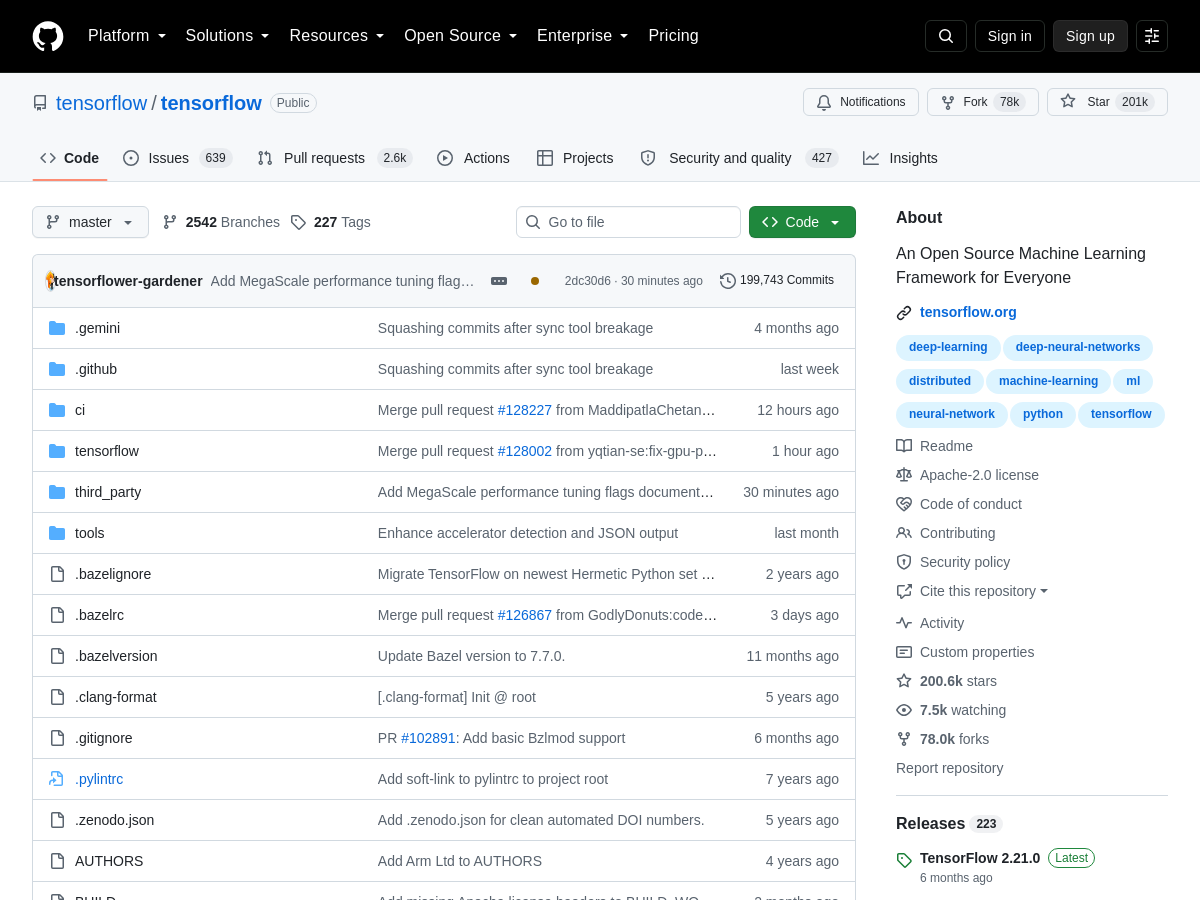
Screenshot of Tensorflow
Tensorflow
Framework Open Source

TensorFlow is an open-source machine learning framework developed by Google. It provides a comprehensive and flexible ecosystem of tools, libraries, and community resources for researchers and developers to build and deploy machine learning-powered applications. TensorFlow was originally developed for research in machine learning and neural networks, but it has become a versatile framework that can be used in various areas. The framework provides stable Python and C++ APIs, as well as a non-guaranteed backward compatible API for other languages. TensorFlow supports a wide range of platforms, including Linux, Windows, macOS, and mobile devices. It also provides tools for visualization, debugging, and optimization of machine learning models. TensorFlow has a large community of developers and users, and it is widely used in industry and academia for various applications, including computer vision, natural language processing, and robotics. The framework is constantly evolving, with new features and updates being added regularly. TensorFlow is licensed under the Apache License 2.0, which allows for free use, modification, and distribution of the software. Overall, TensorFlow is a powerful and flexible framework that provides a wide range of tools and resources for building and deploying machine learning-powered applications. TensorFlow has a wide range of applications, including but not limited to, image and speech recognition, natural language processing, and predictive modeling. It also provides a wide range of tools and APIs for building and deploying machine learning models, including but not limited to, TensorFlow Core, TensorFlow Lite, and TensorFlow.js. TensorFlow also provides a wide range of pre-built estimators and tools for common machine learning tasks, including but not limited to, linear regression, logistic regression, and neural networks. TensorFlow also provides a wide range of tools and APIs for visualization and debugging of machine learning models, including but not limited to, TensorBoard and TensorFlow Debugger.
Solves

TensorFlow solves the problem of building and deploying machine learning-powered applications by providing a comprehensive and flexible ecosystem of tools, libraries, and community resources. It allows researchers and developers to easily build and deploy machine learning models, and provides a wide range of tools and APIs for visualization, debugging, and optimization of these models. TensorFlow also provides a wide range of pre-built estimators and tools for common machine learning tasks, making it easier for developers to build and deploy machine learning-powered applications. Additionally, TensorFlow provides a wide range of platforms and devices that it can run on, making it a versatile framework that can be used in various areas.

Screenshot of AutoGPT
AutoGPT
LLM Open Source

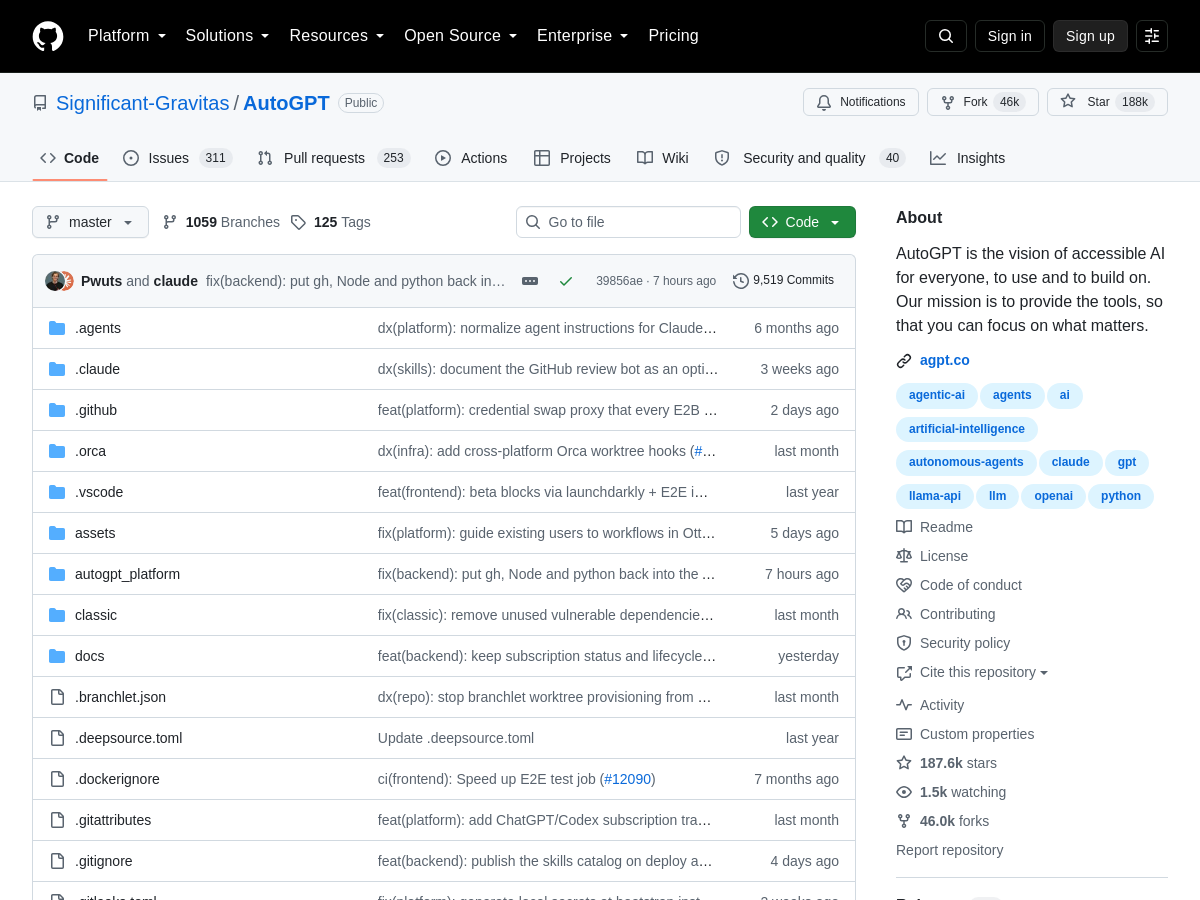
AutoGPT is an open-source platform that enables users to build, deploy, and run AI agents that can carry out complete workflows. The platform provides a range of features, including a visual builder, a marketplace for pre-built agents, and integration with over 45 platforms and hundreds of AI models. AutoGPT allows users to describe an outcome in plain English or shape every step in the visual builder, then run the agent on demand, on a schedule, or from a trigger. The platform is available in both a managed and self-hosted version, with the managed version providing a public signup and managed infrastructure, and the self-hosted version requiring users to provide their own infrastructure and model API keys. AutoGPT has a large community of contributors and users, and is licensed under the Polyform Shield and MIT licenses. The platform has a range of use cases, including executive operations, sales, marketing, engineering, customer support, and research. AutoGPT provides a range of benefits, including increased productivity, improved accuracy, and enhanced decision-making. The platform is highly customizable, with users able to build and deploy their own agents using a range of tools and integrations. Overall, AutoGPT is a powerful and flexible platform that enables users to automate a wide range of tasks and workflows, and is suitable for use in a variety of industries and applications. AutoGPT also provides a range of features for developers, including a API, a SDK, and a range of tools for building and deploying agents. The platform has a large ecosystem of developers and users, and is widely used in a range of industries, including finance, healthcare, and technology. AutoGPT is constantly evolving, with new features and updates being added regularly, and has a strong focus on community engagement and support.

Solves

AutoGPT solves the problem of automating repetitive and time-consuming tasks, and enables users to focus on higher-level tasks and decision-making. The platform provides a range of benefits, including increased productivity, improved accuracy, and enhanced decision-making, and is suitable for use in a variety of industries and applications. By providing a range of features and tools for building and deploying AI agents, AutoGPT enables users to automate a wide range of tasks and workflows, and is a powerful and flexible platform for automating business processes.

Screenshot of Firecrawl
Firecrawl
AI Agents Open Source

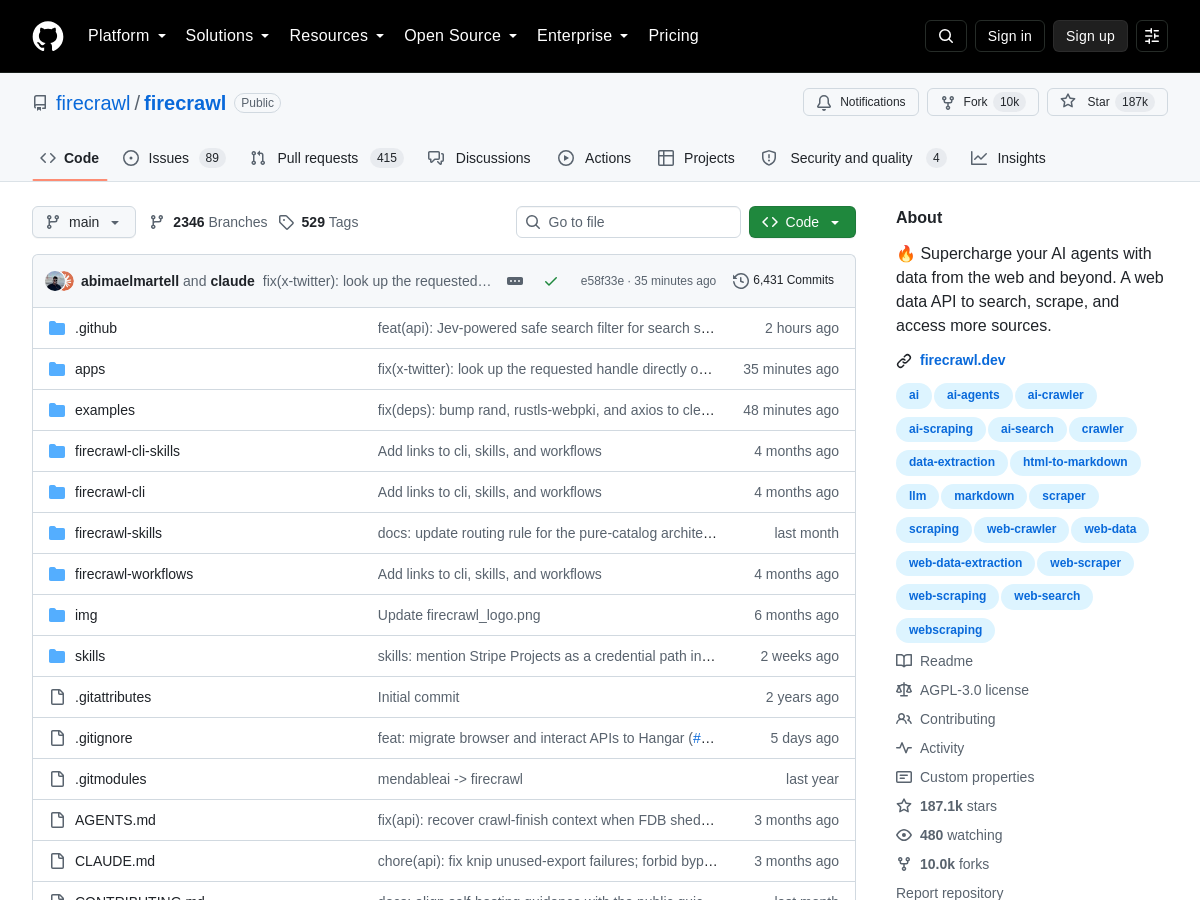
Firecrawl is a web data API that allows users to search, scrape, and interact with the web at scale. It provides a range of features, including search, scrape, interact, agent, crawl, map, and batch scrape. The API is designed to be easy to use and provides a range of SDKs for different programming languages, including Python, Node.js, Go, Java, Elixir, Rust, Ruby, and .NET. Firecrawl is open source and available as a hosted service, and it is licensed under the AGPL-3.0 license. The API is designed to be highly reliable and fast, with a P95 latency of 3.4s across millions of pages. It also provides a range of features for working with AI agents, including autonomous data gathering and interaction with web pages.

Solves

Firecrawl solves the problem of extracting data from the web in a reliable and efficient manner. It provides a range of features that make it easy to search, scrape, and interact with web pages, and it is designed to be highly scalable and reliable. This makes it an ideal solution for businesses and organizations that need to extract large amounts of data from the web, such as those in the fields of market research, competitive intelligence, and data science.

Screenshot of Younet
Younet
Agents Freemium

Younet is a platform designed to help users build personalized AI agents by connecting their data and knowledge. It enables the creation of advanced AI models that possess the user's unique expertise, aiming to power the next generation of business applications. The platform supports agent orchestration and automation, allowing businesses to build agentic solutions from idea to enterprise scale. Users can select from existing AI agents or create custom agents. The platform highlights features such as a chat interface without an agent, support for GPT-5 Nano, a large number of connectors (over 3000+ according to the homepage), and a skills system. These components suggest a modular approach to extending agent capabilities and integrating external data sources. Younet offers a freemium pricing model, making it accessible for individuals and startups to experiment, with the potential to scale for enterprise use. The website emphasizes building an 'agentic business', indicating a focus on automating workflows and operations through AI agents.

Solves

Younet addresses the challenge of creating AI agents that are personalized with an individual's or organization's unique knowledge and expertise, rather than relying solely on generic models. It provides a unified platform for orchestrating multiple AI agents, automating business processes, and connecting to diverse data sources, thereby enabling businesses to build next-generation, agent-driven applications.

Screenshot of Everything Claude Code
Everything Claude Code
AI Agents Open Source

Everything Claude Code (ECC) is an open-source agent harness performance optimization system designed to augment AI coding assistants like Claude Code, Codex, Opencode, and Cursor. It provides a structured set of skills, instincts, memory management, security enhancements, and a research-first development approach to improve the overall output quality and efficiency of these agents. By integrating ECC, users can equip their coding agents with predefined capabilities that streamline complex development tasks, enforce best practices, and maintain context across sessions. The system acts as a middleware layer between the user and the AI coding agent, injecting optimized prompts, rules, and configurations that guide the agent's behavior. Instead of relying solely on the agent's default reasoning, ECC offers curated templates and strategies that have been refined for performance in real-world software engineering scenarios. This includes mechanisms for retaining project knowledge, automatically applying security checks, and fostering a more analytical, research-oriented process before generating code. ECC is cross-platform in the sense that it is compatible with multiple leading AI coding agents, making it a versatile tool for developers who frequently switch between assistants or want to standardize their workflow across different environments. Its open-source nature allows for community contributions and customizations, enabling teams to tailor the harness to their specific needs and tech stacks.

Solves

AI coding agents often lack consistent high-level reasoning, memory, and domain-specific skills, leading to suboptimal code generation and security oversights. ECC addresses this by providing a performance optimization harness that equips these agents with enhanced skills, persistent memory, and proactive security measures, resulting in more reliable, efficient, and research-informed code development.

Screenshot of Ollama
Ollama
LLM Open Source

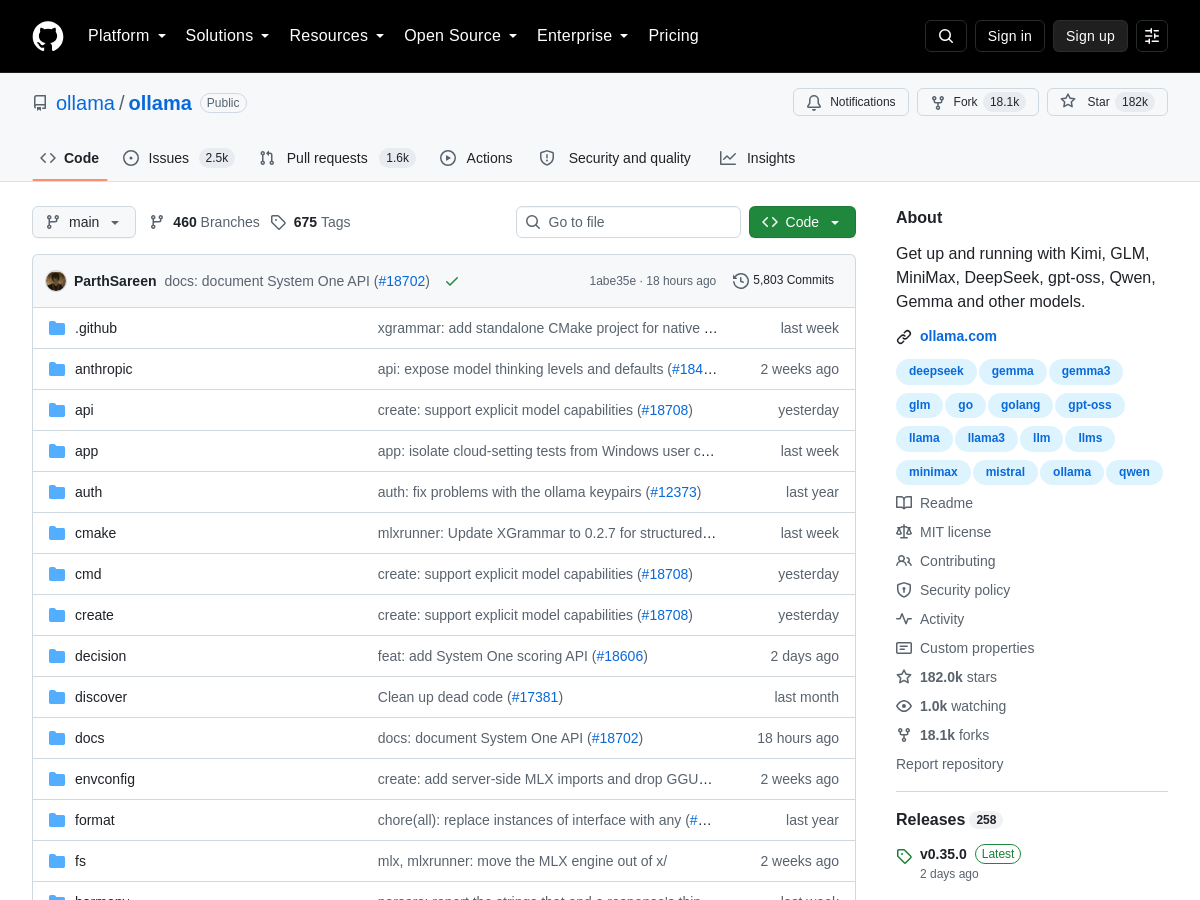
Ollama is an open-source project that allows users to get up and running with various models such as Kimi, GLM, MiniMax, DeepSeek, gpt-oss, Qwen, Gemma, and others. The project provides a simple way to download and install these models, and also offers a range of libraries and APIs for developers to integrate these models into their applications. Ollama has a large community of developers and users who contribute to the project, and it has been widely adopted in various industries such as healthcare, finance, and manufacturing. The project also provides a range of tools and resources for developers, including a REST API, Python and JavaScript libraries, and a range of community-built integrations and plugins. Overall, Ollama is a powerful and flexible platform for building and deploying AI models, and it has the potential to revolutionize the way we approach AI development and deployment.

Solves

Ollama solves the problem of making it difficult for developers to get started with AI models, by providing a simple and easy-to-use platform for downloading, installing, and integrating these models into their applications. It also solves the problem of fragmentation in the AI ecosystem, by providing a unified platform for developers to work with multiple models and frameworks. Additionally, Ollama solves the problem of lack of community and support for AI developers, by providing a large and active community of developers and users who contribute to the project and provide support and resources to each other.

Screenshot of MagicLight
MagicLight
Video Unknown

MagicLight is an AI-powered video generation platform that enables users to transform text prompts, scripts, and stories into complete, watchable videos up to 50 minutes in length. Unlike many AI video tools that produce short, disconnected clips, MagicLight focuses on long-form, multi-scene content with smooth animations and consistent visual storytelling. The platform offers a library of story templates tailored to various genres such as kids' stories, explainer videos, animated cartoons, religious narratives, and jingles, providing a structured starting point for creators. Users can also convert images to video or generate videos directly from simple text inputs. Under the hood, MagicLight integrates a range of generative AI models—including Google VEO 3, Sora 2, Midjourney, and others—to render high-quality visuals and animations. Key features include AI-powered characters that maintain continuity across scenes, automatic scene transitions with cinematographic adjustments, and a free tier that requires no credit card to get started.

Solves

Content creators, educators, marketers, and storytellers often struggle to produce polished, long-form video content without extensive editing skills or high production budgets. Existing AI video generators typically output short, low-coherence clips that require significant manual assembly. MagicLight solves this by automating the creation of complete, long-duration videos with consistent characters, natural motion, and seamless scene transitions, allowing users to focus on narrative rather than technical video editing.

Screenshot of Prompts.Chat
Prompts.Chat
LLM Open Source

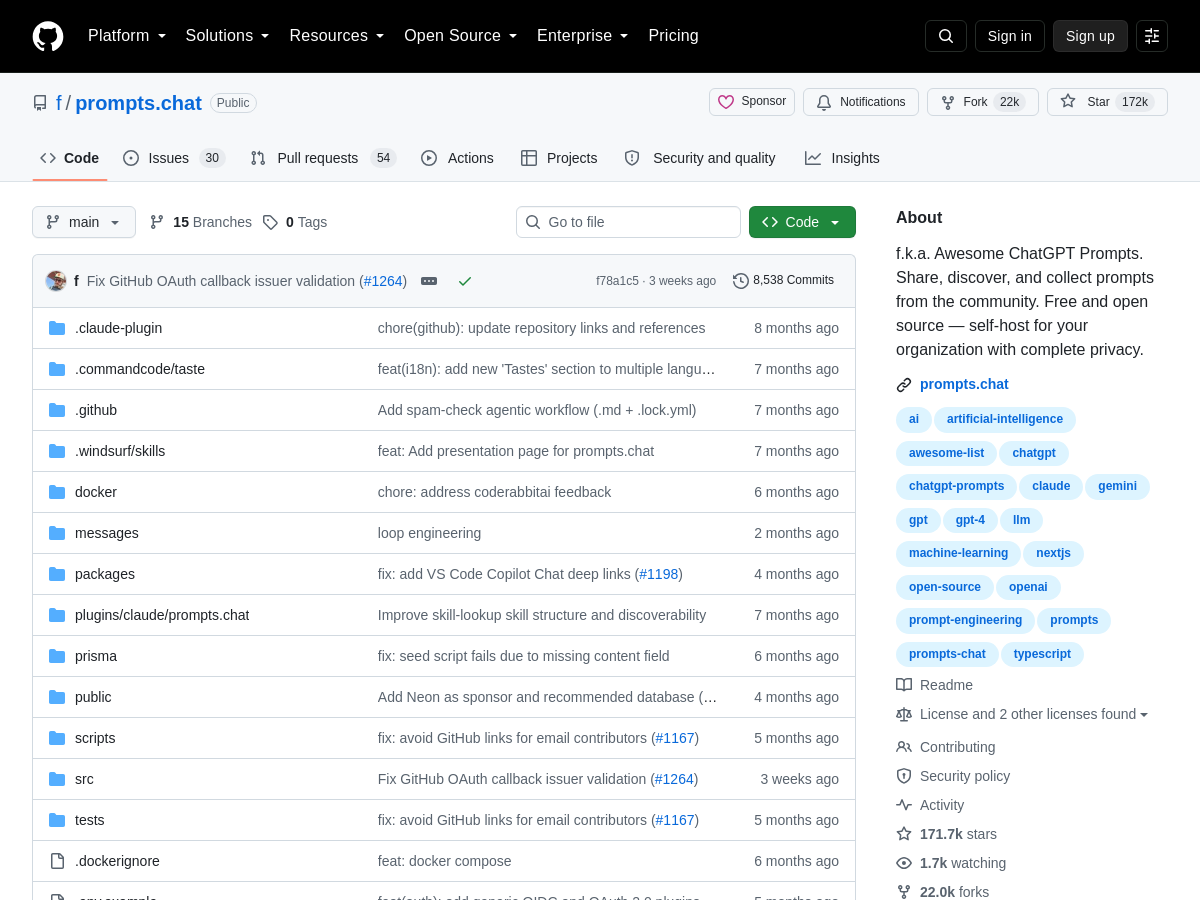
Prompts.Chat is an open-source project that provides a curated collection of prompts for AI chat models. It was originally created for ChatGPT but works with any modern AI assistant. The project allows users to browse, contribute, and self-host their own private prompt libraries with custom branding, themes, and authentication. It also features an interactive book on prompt engineering, a game-based adventure for kids to learn how to communicate with AI, and various integrations such as CLI, Claude Code Plugin, and MCP Server. The project is dual-licensed under the MIT License for source code and site-authored content, and CC0 1.0 Universal for prompt content and data.

Solves

The problem that Prompts.Chat solves is the lack of a comprehensive and curated collection of prompts for AI chat models. Many users struggle to find effective prompts to get the most out of their AI assistants, and Prompts.Chat provides a solution by offering a large library of prompts that can be browsed, contributed to, and self-hosted. This solves the problem of prompt discovery and creation, making it easier for users to get started with AI chat models and achieve their desired outcomes.

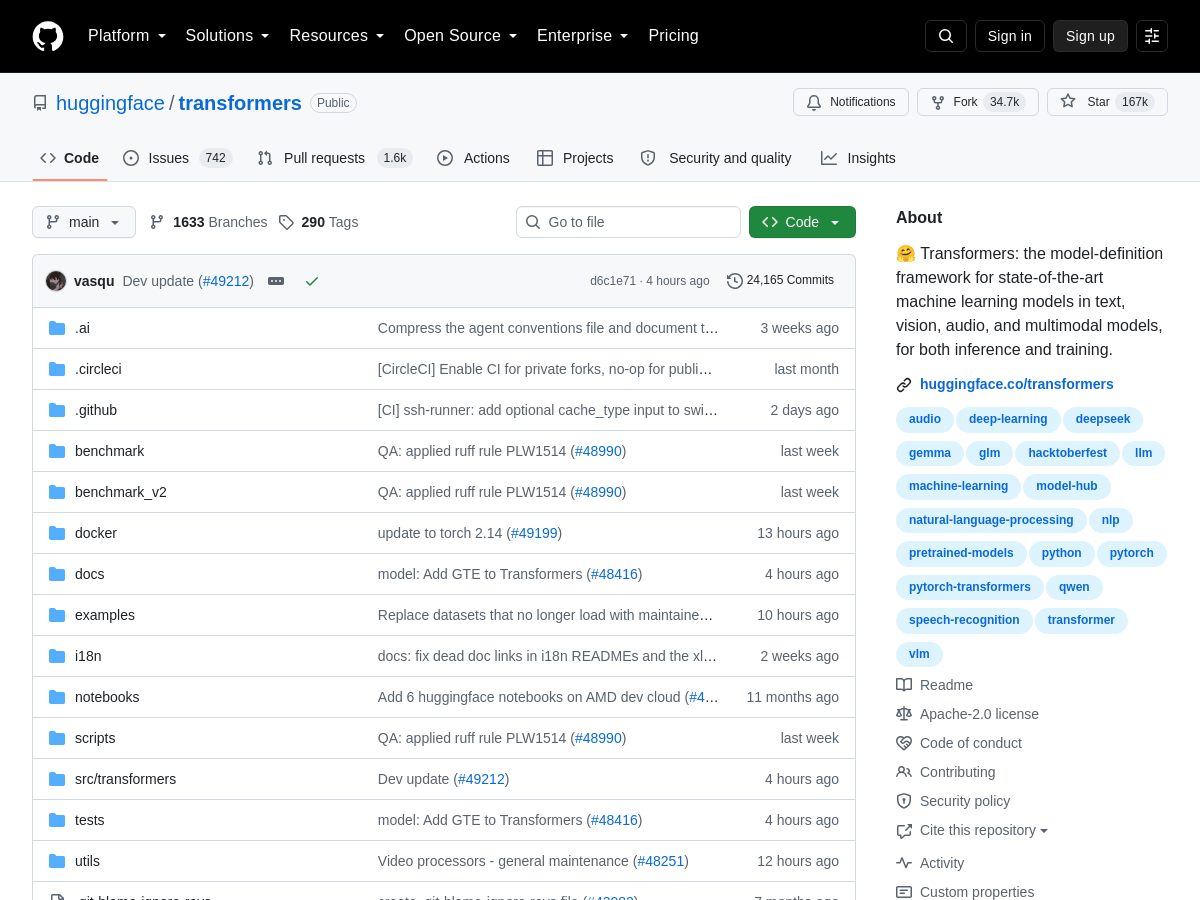
Screenshot of Transformers
Transformers
Voice & Audio Open Source

In addition to its features and resources, Transformers also provides a number of benefits, including easy-to-use state-of-the-art models, lower compute costs, and a smaller carbon footprint. It also provides a way to choose the right framework for every part of a model's lifetime, and to easily customize a model or an example to specific needs. Furthermore, Transformers provides a way to share trained models instead of training from scratch, which can reduce compute time and production costs. It also provides a way to move a single model between PyTorch/JAX/TF2.0 frameworks at will, and to pick the right framework for training, evaluation, and production. Overall, Transformers is a powerful and flexible library that provides a wide range of tools and resources for working with machine learning models. It is designed to be easy to use, with a low barrier to entry for researchers, engineers, and developers, and it provides a simple and customizable way to use pretrained models. With its large community of users and contributors, and its wide range of features and resources, Transformers is a valuable tool for anyone working with machine learning models.

Solves

Transformers solves the problem of providing a unified and easy-to-use way to work with machine learning models, particularly in the areas of natural language understanding and generation, computer vision, audio, video, and multimodal tasks. It provides a centralized model definition that can be used across different frameworks and libraries, making it easier to share and reuse models. Additionally, Transformers provides a way to reduce compute costs and carbon footprint by sharing trained models instead of training from scratch, and it provides a way to easily customize models to specific needs. Overall, Transformers provides a powerful and flexible solution for working with machine learning models, and it has been widely adopted in the research and production communities.

Screenshot of Stable Diffusion Webui
Stable Diffusion Webui
Image Gen Open Source

Stable Diffusion Web UI by AUTOMATIC1111 is a browser-based interface for the Stable Diffusion deep learning model, enabling text-to-image and image-to-image generation on consumer hardware. It provides a feature-rich environment with support for various sampling methods, inpainting, outpainting, and batch processing. The UI is designed to be extensible through a modular extension system, allowing users to add new functionalities and customize workflows. It supports multiple models, including custom trained checkpoints, LoRAs, and textual inversions, giving users fine-grained control over generation parameters. The project is actively maintained with contributions from a large open-source community, making it one of the most popular frontends for Stable Diffusion.

Solves

It lowers the barrier to entry for using Stable Diffusion by providing a user-friendly graphical interface instead of command-line tools, making advanced image generation accessible to non-programmers and power users alike.

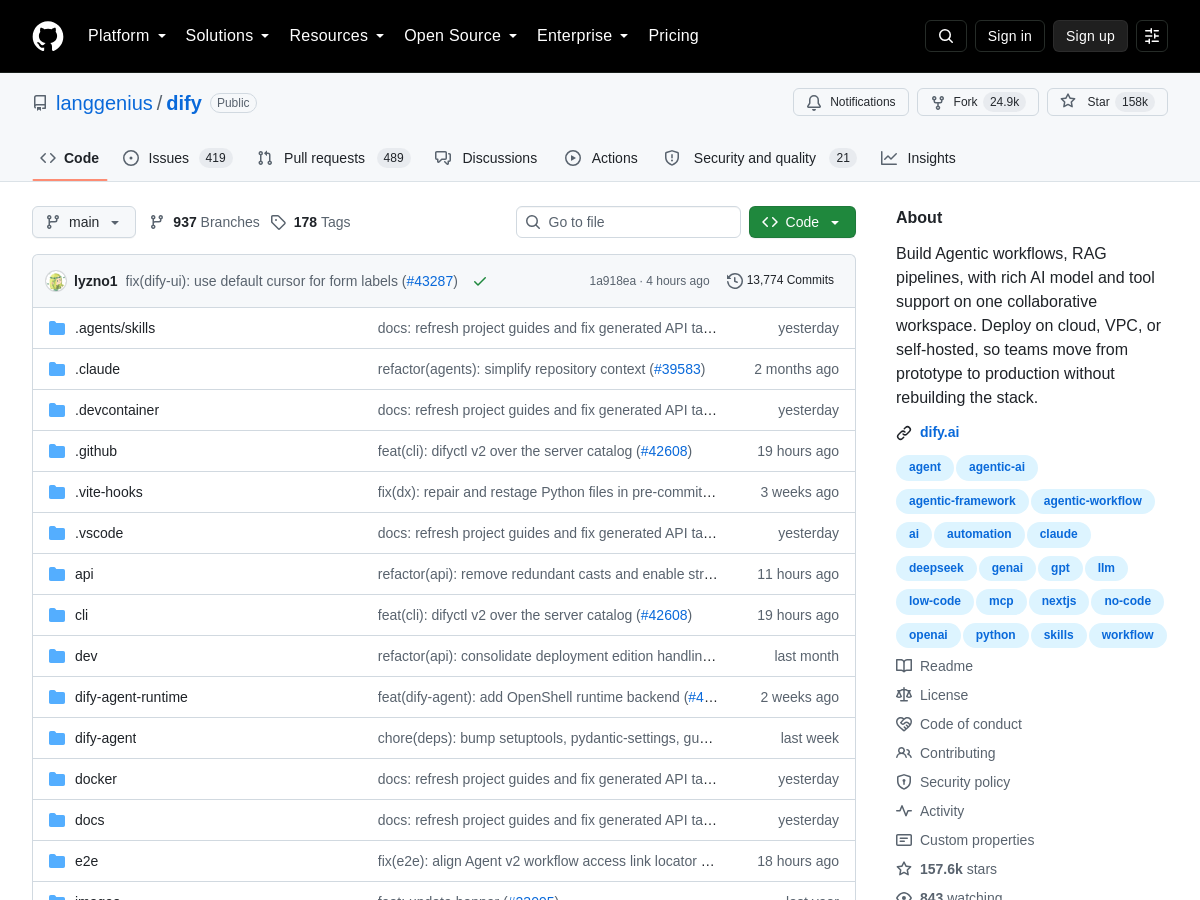
Screenshot of Dify
Dify
LLM Open Source

Dify is an open-source LLM app development platform that provides a comprehensive set of tools for building, testing, and deploying AI workflows. It offers a visual canvas for designing workflows, seamless integration with hundreds of proprietary and open-source LLMs, and a range of features such as prompt IDE, RAG pipeline, agent capabilities, and LLMOps. Dify also provides a backend-as-a-service, allowing users to effortlessly integrate Dify into their own business logic. The platform is highly customizable, with advanced setup options for configuration, observability, and deployment. Dify is available in both cloud and self-hosted versions, with a community edition and an enterprise edition that offers additional features such as SSO, RBAC security, and enterprise support SLAs. The platform has a large and active community, with a wide range of resources available for learning and troubleshooting, including documentation, FAQs, and community discussions. Dify is licensed under the Dify Open Source License, based on Apache 2.0 with additional conditions. Overall, Dify is a powerful and flexible platform for building and deploying AI applications, with a wide range of features and resources available to support users. Dify's key features include its intuitive interface, comprehensive model support, and extensive RAG capabilities. The platform also offers a range of tools and resources for developers, including a prompt IDE, agent capabilities, and LLMOps. With its highly customizable architecture and large community of users and contributors, Dify is an ideal choice for anyone looking to build and deploy AI applications. Whether you're a developer, a data scientist, or a business user, Dify provides a comprehensive set of tools and resources to support your AI development needs. From building and testing AI workflows to deploying and managing AI applications, Dify is a powerful and flexible platform that can help you achieve your goals. With its advanced features, customizable architecture, and large community of users and contributors, Dify is an ideal choice for anyone looking to build and deploy AI applications.

Solves

Dify solves the problem of building and deploying AI applications by providing a comprehensive set of tools and resources for developers, data scientists, and business users. With its intuitive interface, comprehensive model support, and extensive RAG capabilities, Dify makes it easy to build, test, and deploy AI workflows, and to manage and optimize AI applications over time. By providing a backend-as-a-service and a range of advanced features such as LLMOps and agent capabilities, Dify also makes it easy to integrate AI into existing business logic and to deploy AI applications at scale. Overall, Dify helps users to overcome the challenges of building and deploying AI applications, and to achieve their goals in AI development.

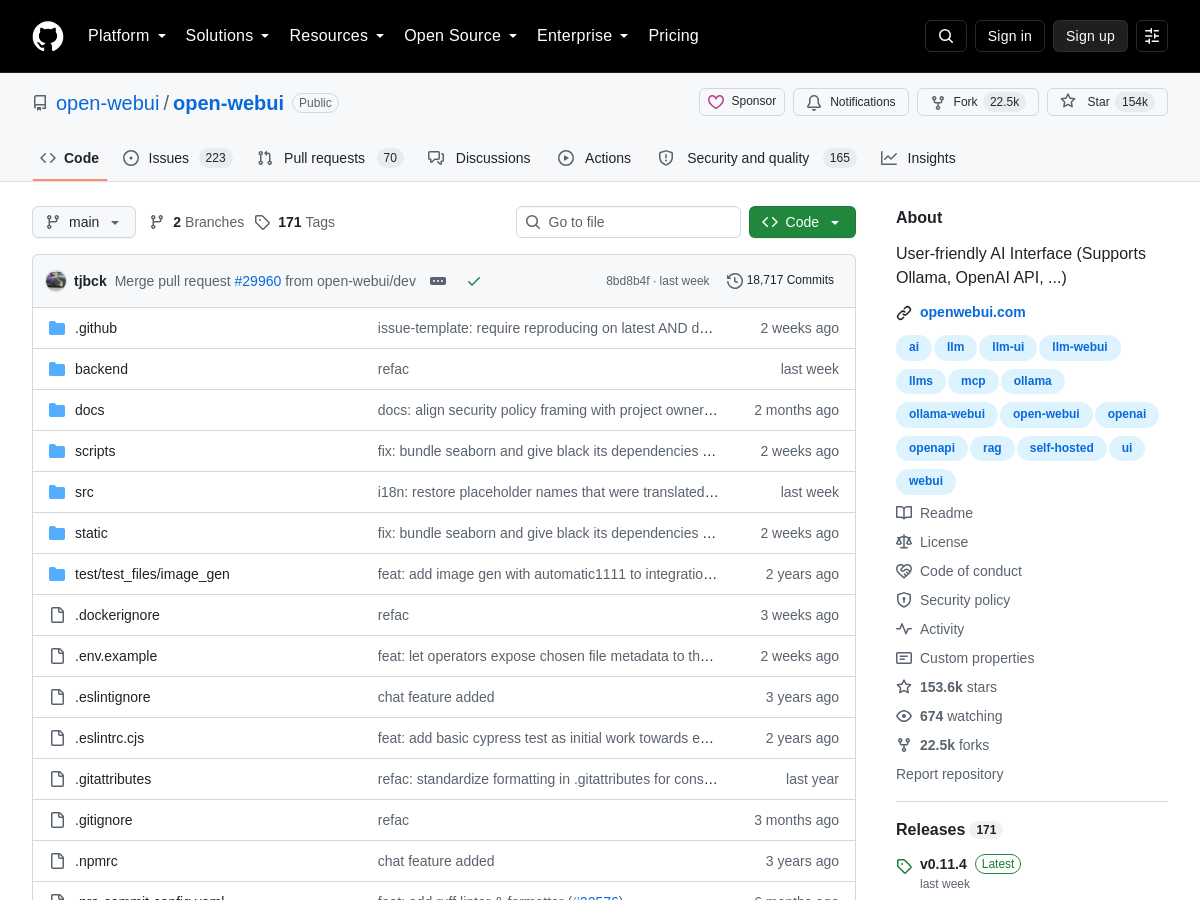
Screenshot of Open Webui
Open Webui
LLM Open Source

Open WebUI is a self-hosted AI platform that is extensible, feature-rich, user-friendly, and built to run entirely offline. It supports Ollama and OpenAI-compatible APIs, giving users a powerful, provider-agnostic interface for both local and cloud-based models. The platform offers a wide range of features, including effortless setup, broad model and API integration, granular RBAC and user groups, plugin support, models and agents, agentic execution, notes, channels, persistent memory, live workflow and message flow, calendar and AI scheduling, automations, responsive design and PWA, full Markdown and LaTeX support, hands-free voice/video call, persistent artifact storage, local RAG integration, web search for RAG, web browsing capability, image generation and editing, multi-model conversations, usage analytics and model evaluation, flexible database and storage, advanced vector database support, enterprise authentication and provisioning, cloud-native file integration, production observability, horizontal scalability, multilingual support, continuous updates, and transparent security process. Open WebUI can be installed using pip, Docker, or other methods, and it offers various configuration options and troubleshooting guides. The project is licensed under multiple licenses, including the Open WebUI License, and it has a responsible disclosure program for security vulnerabilities.

Solves

Open WebUI solves the problem of providing a user-friendly, self-hosted AI platform that can integrate with various models and APIs, offering a wide range of features and capabilities. It addresses the needs of users who want to have control over their AI infrastructure, customize their experience, and ensure the security and privacy of their data. By providing a flexible and extensible platform, Open WebUI enables users to build and deploy their own AI models, automate tasks, and collaborate with others in a seamless and efficient way.

Screenshot of Langflow
Langflow
AI Agents Open Source

Langflow is an open-source visual framework for building AI-powered agents and workflows. It provides a drag-and-drop interface that allows users to design complex LLM applications by connecting components such as language models, vector stores, tools, and data sources. With Langflow, users can experiment with different model configurations, chain together multiple steps of reasoning, and integrate with external APIs and services. Langflow supports a wide range of popular AI models and services, including those from OpenAI, Anthropic, and HuggingFace, as well as local models. It comes with a comprehensive set of pre-built components that cover common tasks like text generation, retrieval-augmented generation (RAG), agents with tool use, and multi-modal processing. Users can also create custom components using Python, and share or import flows as JSON files. Once a flow is designed, Langflow allows deployment as a REST API endpoint or as a standalone Python application, making it easy to integrate AI capabilities into existing products. The platform includes a chat interface for immediate testing and debugging, and a marketplace for community-contributed templates and components. It can be self-hosted or used via a cloud offering, and is designed to be both a prototyping sandbox and a production-ready backend for AI features. Langflow is built on top of the LangChain ecosystem, leveraging its abstractions for chains, agents, and memory, while adding a visual layer to simplify the development process. It is actively developed with a large community and frequent updates, aiming to make AI agent development accessible to both developers and non-technical users.

Solves

Developers and data scientists often face a steep learning curve and repetitive boilerplate when building LLM-based applications, especially when orchestrating multiple steps, tools, and models. Langflow solves this by offering a visual, low-code environment that abstracts away the underlying complexity, enabling rapid prototyping, testing, and deployment of AI agents and workflows without deep coding expertise.

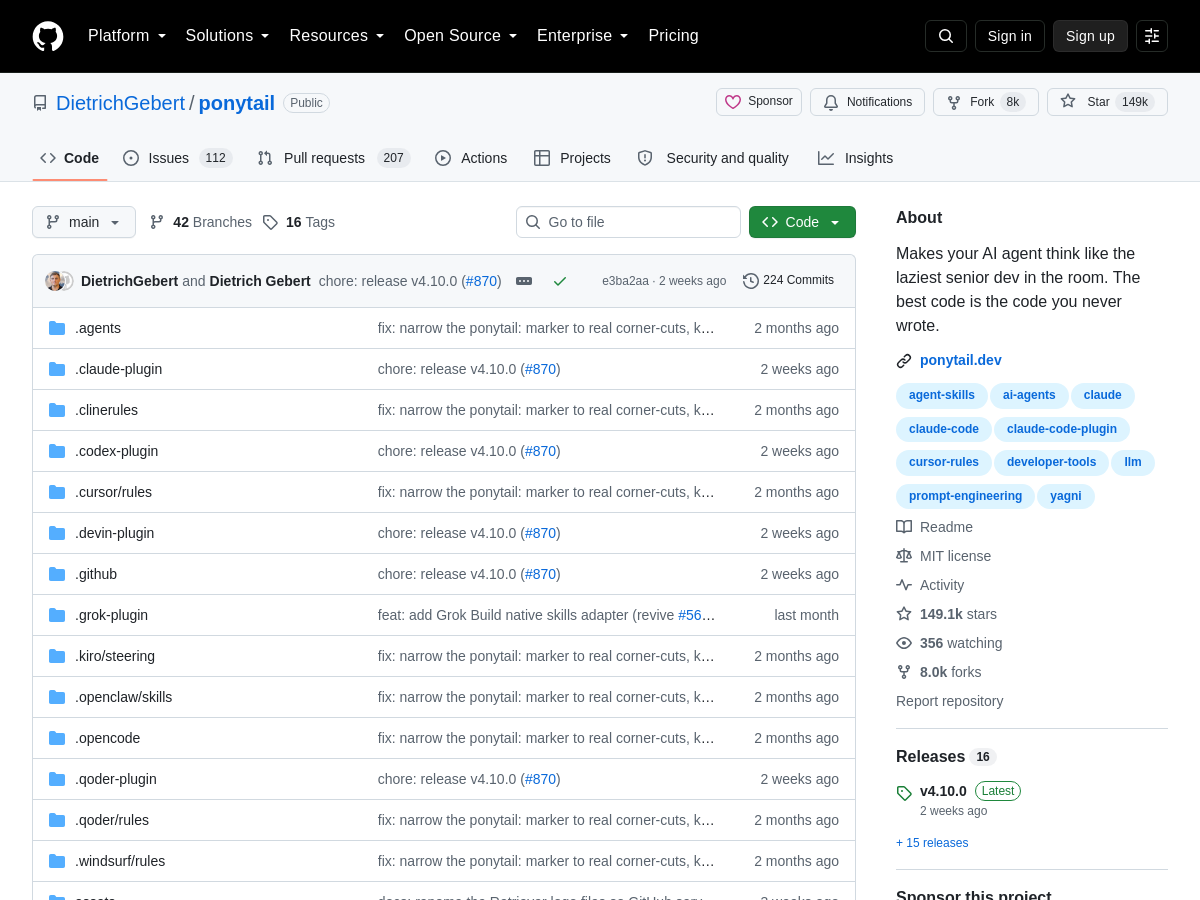
Screenshot of Ponytail
Ponytail
AI Agents Open Source

Ponytail is an open-source project that integrates with various AI agents and coding tools to promote minimal and efficient coding practices. It is designed to think like a lazy senior developer, writing only the necessary code to solve a problem. Ponytail achieves this through a set of rules that prioritize simplicity, reusability, and safety. The project provides a range of features, including code review, auditing, and debt management, to help developers write better code. Ponytail supports multiple platforms, including Claude Code, Codex, GitHub Copilot, and others, making it a versatile tool for developers. The project is licensed under the MIT license and has gained significant attention, with over 149,000 stars on GitHub.

Solves

Ponytail solves the problem of inefficient and overly complex code by providing a set of rules and guidelines that promote minimalism and simplicity. It helps developers avoid writing unnecessary code, reducing the risk of bugs, errors, and security vulnerabilities. By integrating with popular AI agents and coding tools, Ponytail makes it easy for developers to adopt better coding practices and write more efficient code.

Screenshot of Langchain
Langchain
AI Agents Open Source

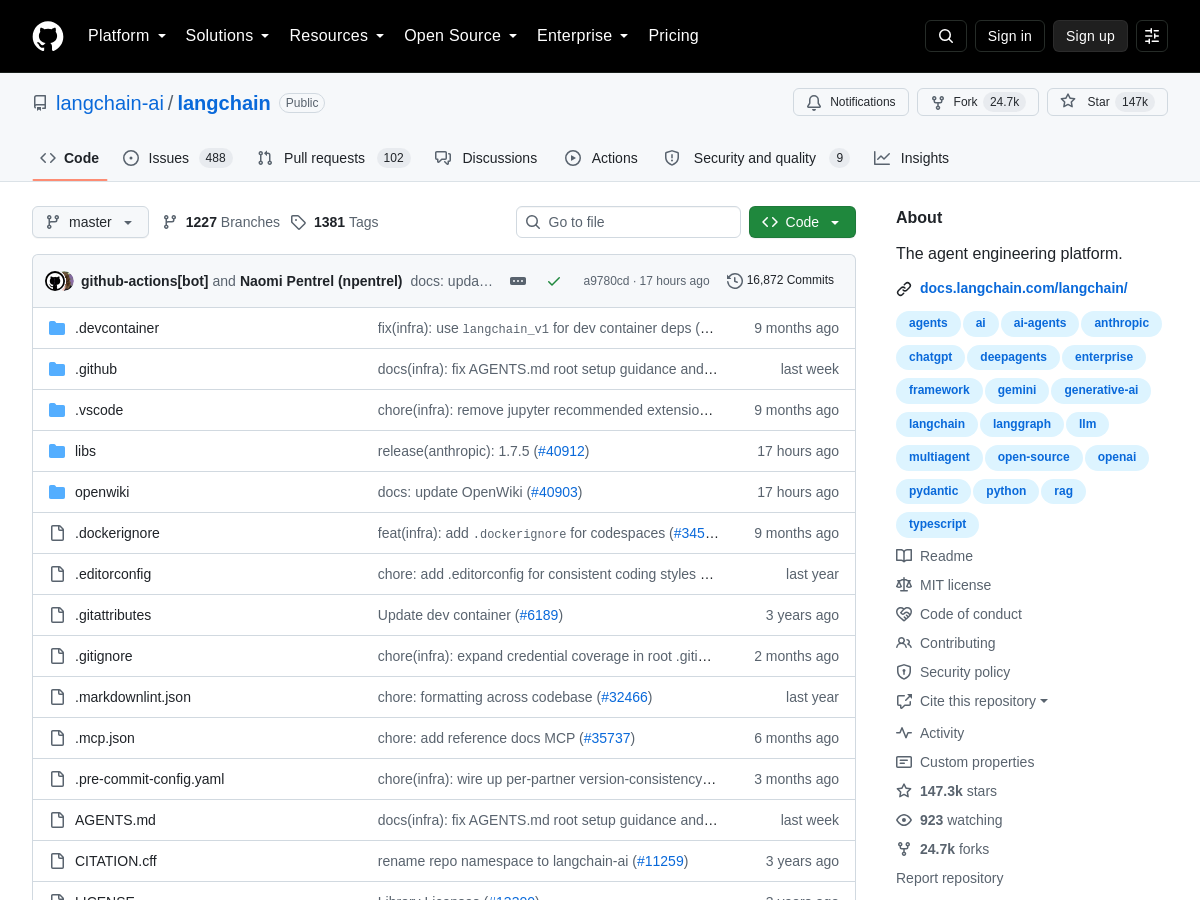
Langchain is an open-source agent engineering platform that enables developers to build and deploy AI-powered agents. The platform provides a set of tools and libraries for creating, training, and deploying agents that can interact with various environments and systems. Langchain is designed to be highly customizable and extensible, allowing developers to create agents that can perform a wide range of tasks, from simple automation to complex decision-making. The platform is built on top of a modular architecture, which makes it easy to integrate with other systems and tools. Langchain also provides a set of pre-built agents and templates that can be used as a starting point for building custom agents. The platform is actively maintained and updated by a community of developers, which ensures that it stays up-to-date with the latest advancements in AI and machine learning. Overall, Langchain is a powerful tool for building and deploying AI-powered agents, and its open-source nature makes it accessible to a wide range of developers and organizations. Langchain's documentation is also well-maintained, with a focus on providing clear and concise instructions for getting started with the platform. The platform's community is active and engaged, with many contributors and users sharing their experiences and knowledge. Langchain's architecture is designed to be scalable and flexible, making it suitable for a wide range of applications and use cases. The platform's use of AI and machine learning enables it to provide advanced capabilities, such as natural language processing and computer vision, which can be used to build sophisticated agents. Langchain's open-source nature also makes it possible for developers to customize and extend the platform to meet their specific needs.

Solves

Langchain solves the problem of building and deploying AI-powered agents, which can be time-consuming and require significant expertise. By providing a set of tools and libraries for creating, training, and deploying agents, Langchain makes it easier for developers to build and deploy AI-powered agents, without requiring extensive knowledge of AI and machine learning. This enables organizations to automate tasks, improve efficiency, and make better decisions, without having to invest significant resources in building custom AI solutions. Additionally, Langchain's open-source nature makes it accessible to a wide range of developers and organizations, which can help to drive innovation and adoption of AI-powered agents.

Screenshot of ThumbnailCreator.com
ThumbnailCreator.com
YouTube thumbnails Freemium

ThumbnailCreator.com is an AI-powered tool designed to help users create eye-catching YouTube thumbnails in seconds. The platform utilizes face-aware generation, style cloning, and instant variations to generate high-quality thumbnails that can boost click-through rates. With its user-friendly interface, users can easily create stunning thumbnails that capture the essence of their YouTube videos. The tool is particularly useful for content creators, marketers, and small business owners who want to increase their online visibility and engagement. ThumbnailCreator.com offers a range of features, including a vast library of templates, fonts, and graphics, as well as the ability to upload custom images and logos. The platform also provides a preview feature, allowing users to see how their thumbnail will look before publishing it. Overall, ThumbnailCreator.com is a powerful tool that can help users take their YouTube marketing to the next level. The platform is constantly evolving, with new features and updates being added regularly to improve the user experience. With its ease of use, flexibility, and high-quality output, ThumbnailCreator.com is an excellent choice for anyone looking to create professional-looking YouTube thumbnails. The tool's AI technology ensures that the thumbnails generated are not only visually appealing but also optimized for better performance. This means that users can expect to see an increase in their video's click-through rate, engagement, and overall visibility. Furthermore, the platform's instant variations feature allows users to generate multiple thumbnail options in seconds, making it easier to find the perfect one for their video. The tool's face-aware generation feature also ensures that the thumbnails generated are contextually relevant and attention-grabbing. In addition to its core features, ThumbnailCreator.com also offers a range of customization options, including the ability to add text, shapes, and other graphics to the thumbnail. This allows users to personalize their thumbnails and make them stand out from the crowd. Overall, ThumbnailCreator.com is a powerful and user-friendly tool that can help users create high-quality YouTube thumbnails that drive engagement and increase their online visibility.

Solves

Content creators, marketers, and small business owners often struggle to create eye-catching YouTube thumbnails that capture the essence of their videos and drive engagement. This can be a time-consuming and challenging task, especially for those without extensive design experience. ThumbnailCreator.com solves this problem by providing an easy-to-use platform that utilizes AI technology to generate high-quality thumbnails in seconds. With its range of features and customization options, users can create stunning thumbnails that boost their click-through rates and increase their online visibility.

Screenshot of Spec Kit
Spec Kit
AI/ML Open Source

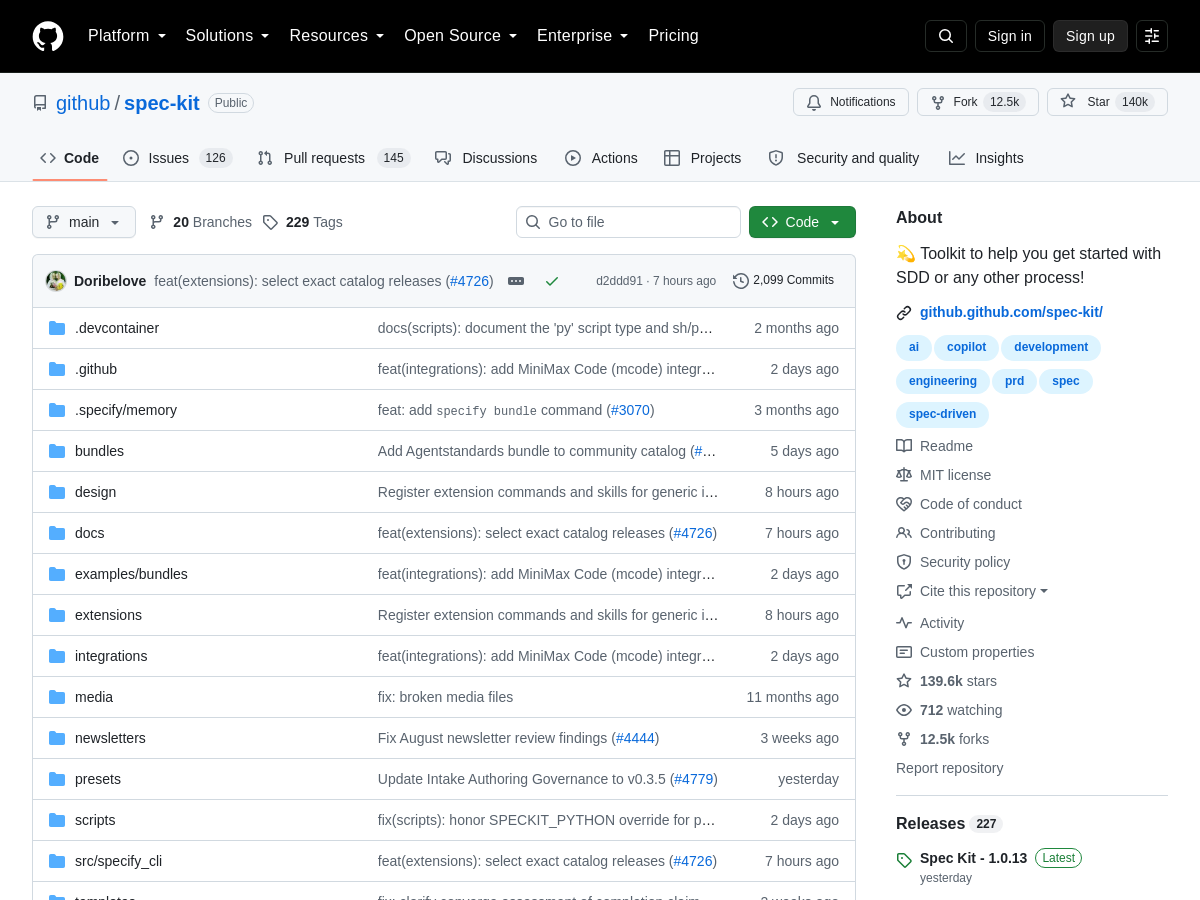
Spec Kit is an open-source toolkit designed to provide structured processes, reusable templates, and documented outcomes for AI coding agents. It offers three primary processes: Spec-Driven Development (SDD), bug fixing, and idea assessment. SDD is a core feature that helps define requirements, create a specification, plan, and implement a project. Bug fixing and idea assessment are opt-in extensions that can be installed separately. The toolkit supports customization through extensions, presets, workflows, and bundles, allowing users to adapt the processes to their specific needs. Spec Kit is built to work with AI coding agents and provides a command-line interface for setup and interaction. The project is actively maintained, with a strong focus on community involvement and contribution.

Solves

Spec Kit solves the problem of disorganized and inefficient software development processes by providing a structured approach to building, fixing, and assessing projects. It helps developers and teams work more effectively with AI coding agents, ensuring that projects are well-planned, implemented, and tested. By using Spec Kit, users can improve the quality and maintainability of their code, reduce errors, and increase productivity.

Screenshot of ComfyUI
ComfyUI
Model Serving Open Source

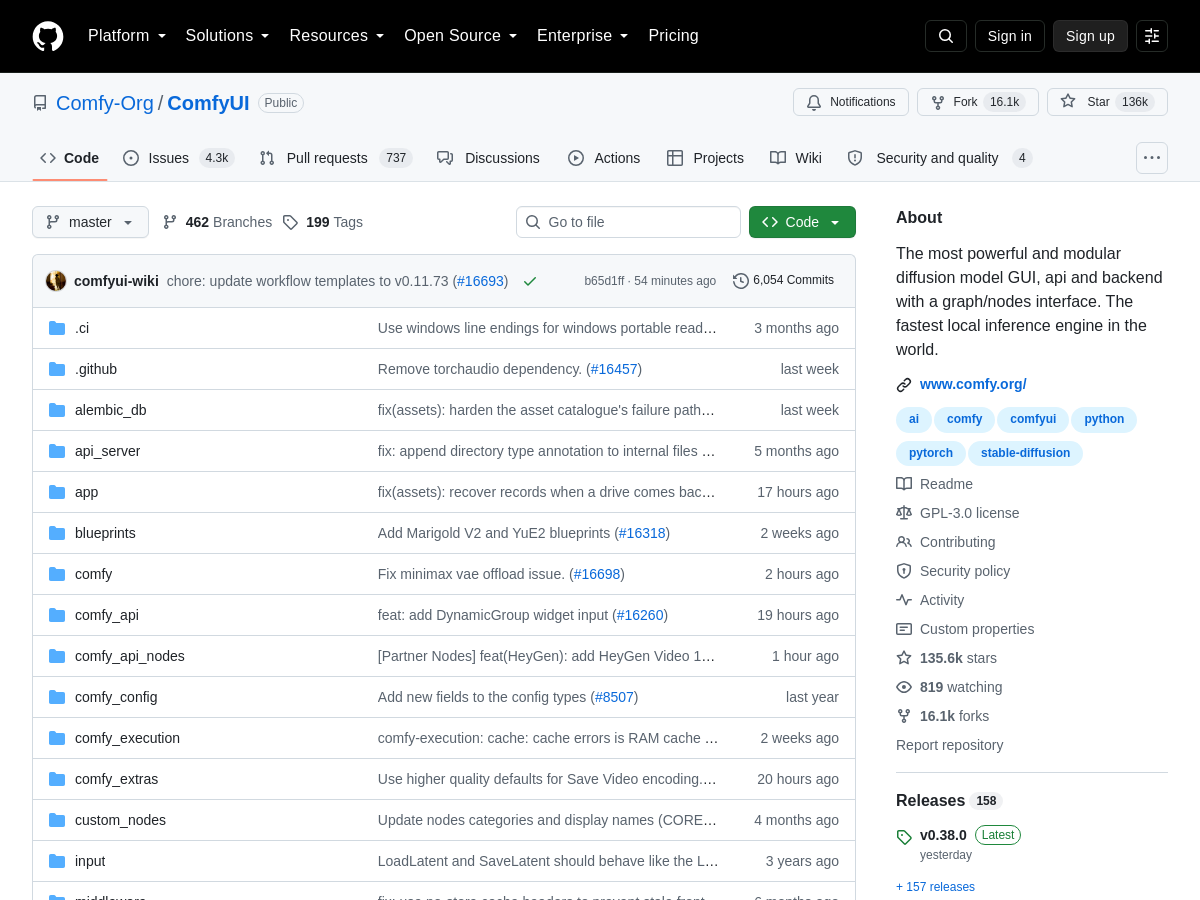
ComfyUI is a powerful and modular AI engine for content creation. It provides a visual node graph interface that empowers creatives to generate images, videos, 3D models, audio, and more. The tool natively supports the latest open-source state-of-the-art models and is optimized for local consumer hardware. ComfyUI also offers a range of features, including reusable subgraphs, workflow templates, App Mode, and a local API for integrating workflows into applications. Additionally, it supports saving and loading workflows as JSON, as well as recovering complete workflows and seeds from supported generated media. ComfyUI can be installed on various platforms, including Windows, Linux, and macOS, and offers a range of customization options, including the ability to extend the tool with custom nodes and configure additional model locations. The tool is designed to be user-friendly, with a simple and intuitive interface that makes it easy to get started with AI content creation. ComfyUI is a versatile tool that can be used for a wide range of applications, from generating images and videos to creating 3D models and audio. It is a powerful tool for anyone looking to create high-quality content using AI. ComfyUI is constantly evolving, with new features and updates being added regularly. The tool has a strong focus on community involvement, with a dedicated Discord channel and Matrix space for users to share their work, ask questions, and provide feedback. Overall, ComfyUI is a powerful and flexible tool that is well-suited for anyone looking to create high-quality content using AI.

Solves

ComfyUI solves the problem of creating high-quality content using AI by providing a powerful and modular engine that can be used to generate images, videos, 3D models, audio, and more. The tool is designed to be user-friendly, making it accessible to creatives who may not have extensive technical expertise. ComfyUI also provides a range of features and customization options, allowing users to tailor the tool to their specific needs and workflows. By providing a flexible and intuitive interface, ComfyUI makes it easy for users to create high-quality content using AI, without requiring extensive technical knowledge or expertise.

Screenshot of MoneyPrinterTurbo
MoneyPrinterTurbo
LLM Open Source

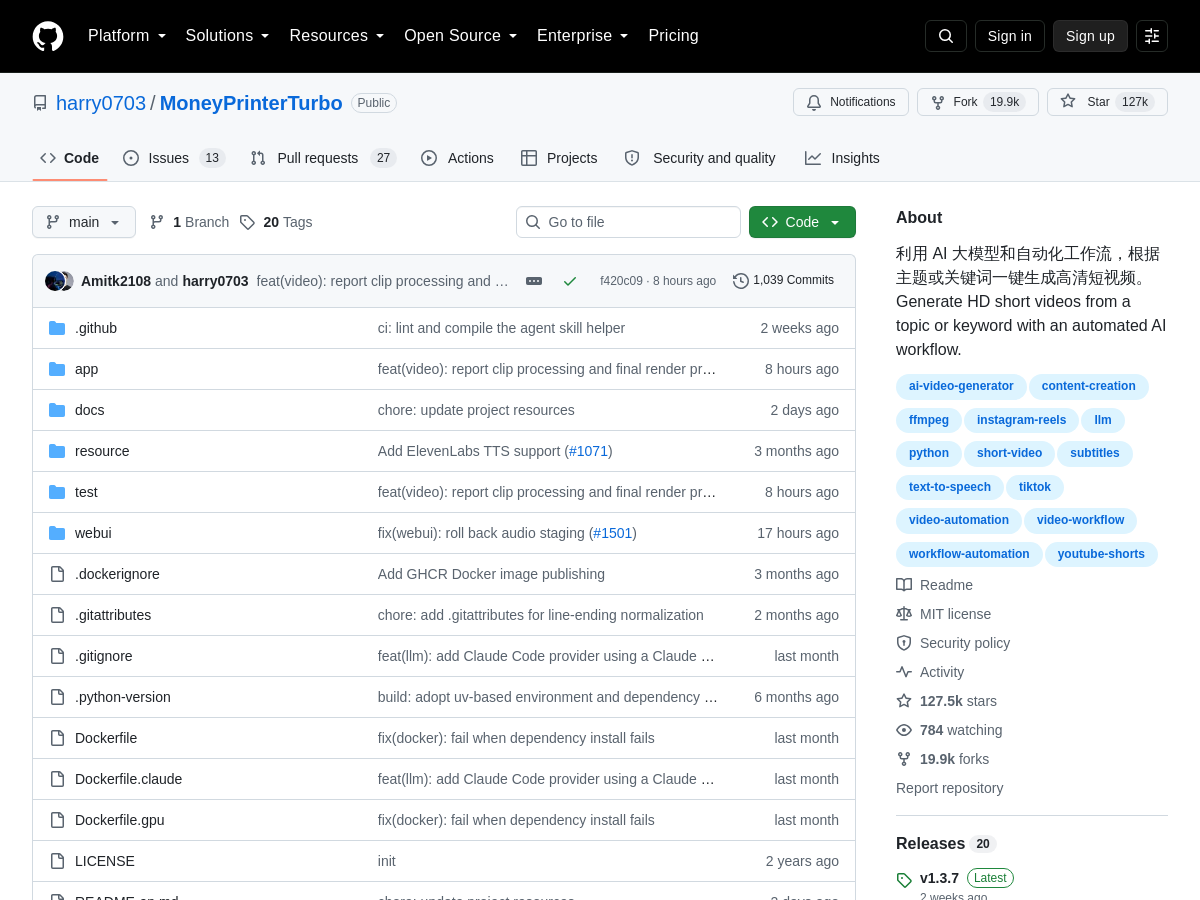
MoneyPrinterTurbo is an open-source project that utilizes AI large models and automated workflows to generate high-definition short videos based on a given topic or keyword. The project is hosted on GitHub and has gained significant attention, with over 127,000 stars. The tool is designed to streamline the video creation process, allowing users to produce high-quality videos with minimal effort. The project's automated workflow and AI-powered technology make it an attractive solution for content creators, marketers, and businesses looking to produce engaging video content. MoneyPrinterTurbo's features include the ability to generate videos from a topic or keyword, automated clip processing and final render progress reporting, and support for various text-to-speech (TTS) providers. The project is actively maintained, with regular updates and contributions from the community.

Solves

Content creators, marketers, and businesses often struggle with producing high-quality video content, which can be time-consuming and require significant resources. MoneyPrinterTurbo solves this problem by providing an automated solution for generating high-definition short videos based on a given topic or keyword, making it easier and more efficient to produce engaging video content.

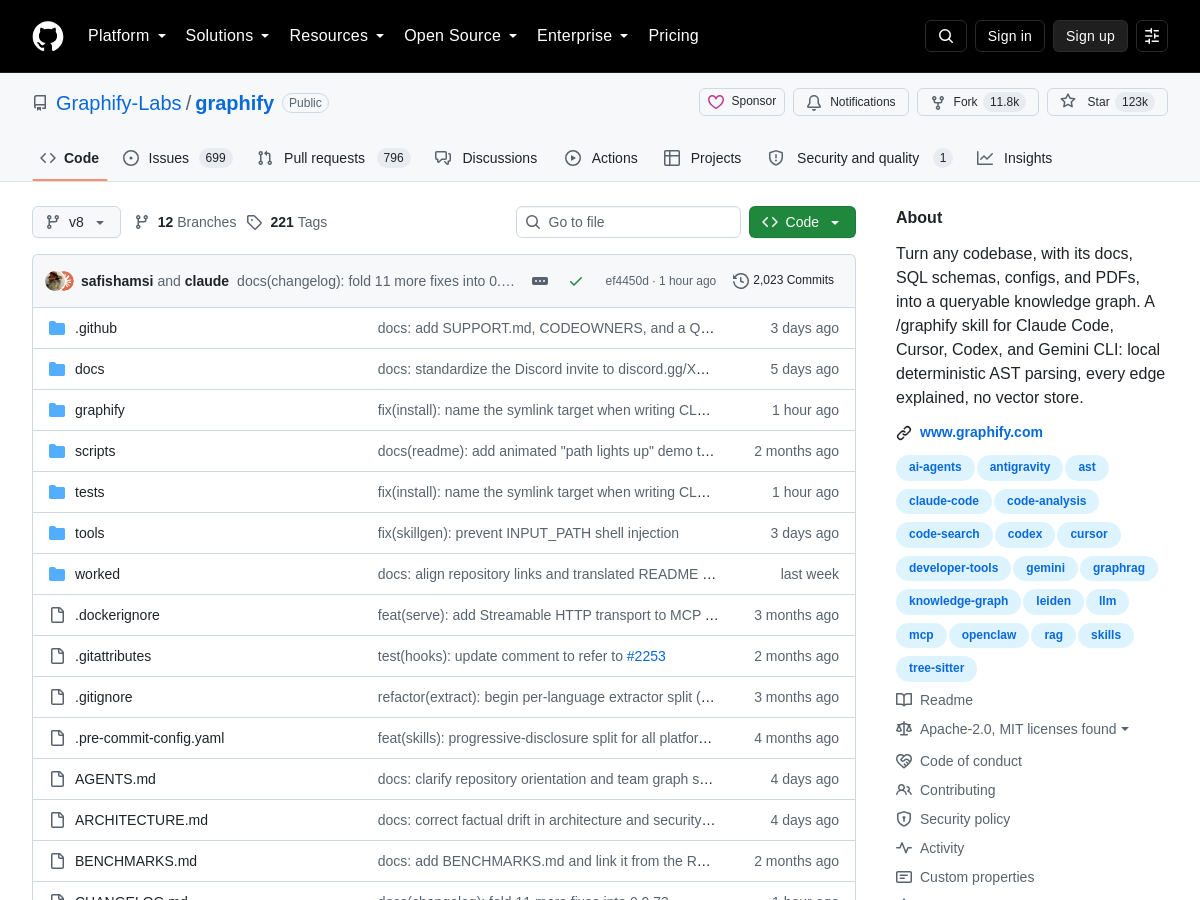
Screenshot of Graphify
Graphify
AI Agents Open Source

Graphify is an open-source tool that allows users to turn any codebase, along with its documentation, SQL schemas, configurations, and PDFs, into a queryable knowledge graph. It is designed to work with various tools such as Claude Code, Cursor, Codex, and Gemini CLI, providing local deterministic AST parsing and explanations for every edge in the graph. The tool does not rely on vector stores, making it a unique solution for codebase analysis and knowledge graph creation. Graphify is actively maintained, with a large community of contributors and a significant number of stars on GitHub, indicating its popularity and potential for further development. The project includes various features such as a skill for Claude Code, support for multiple file formats, and a robust set of tools for graph analysis and querying.

Solves

Developers and teams often face the challenge of understanding and navigating complex codebases, which can lead to decreased productivity and increased time spent on debugging and maintenance. Graphify solves this problem by providing a queryable knowledge graph that allows users to easily explore and understand the relationships between different components of the codebase, making it easier to identify issues, optimize code, and improve overall development efficiency.

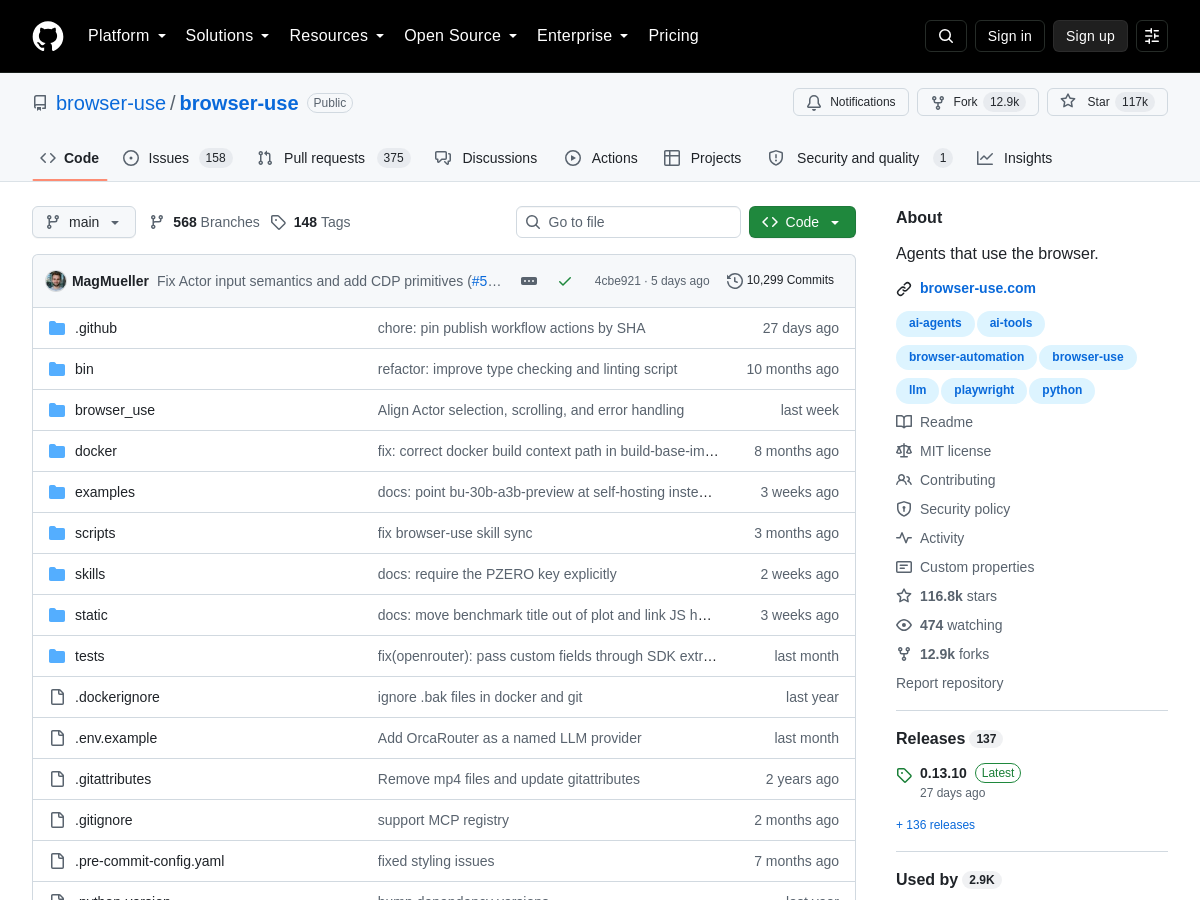
Screenshot of Browser Use
Browser Use
AI Agents Open Source

Browser Use is an open-source browser agent that enables AI to control your browser. It provides a Python library and a CLI for automating browser tasks, and also offers a fully hosted cloud solution for scaling up browser automation. The project includes a range of features, such as stealth browsers, CAPTCHA solving, and residential proxies, to help reduce bot detection and improve automation success rates. Browser Use supports a variety of models, including the BU2 model, which is optimized for browser automation, and also allows for custom tools and integrations. The project is licensed under the MIT License and is available on GitHub.

Solves

Browser Use solves the problem of automating browser tasks, such as filling out forms, clicking buttons, and extracting data, which can be time-consuming and prone to errors when done manually. It provides a way for AI agents to control the browser, allowing for more efficient and accurate automation of these tasks.

Screenshot of MiDash AI
MiDash AI
Trading Free

MiDash AI is a conversational AI trading platform that allows users to invest using natural language. Instead of traditional trading interfaces, users can have simple conversations with an AI investment assistant to analyze stocks, build portfolios, backtest strategies, and execute trades. The platform supports Saudi, US, and global markets, and is designed to remove barriers for both beginners and experienced investors. It provides access to 20 years of tick data and integrates with multiple brokers, enabling automated and informed decision-making. The platform is available for free, with a premium Pro tier that offers additional features. MiDash AI is marketed as a natural and intuitive way to engage with financial markets, requiring no coding or advanced technical knowledge. It emphasizes accessibility, making AI-powered investing available to a broad audience, from novices to professionals.

Solves

MiDash AI simplifies the investment process by replacing complex trading dashboards and technical analysis tools with a conversational AI interface. It helps users who lack coding or financial expertise to analyze markets, test strategies, and execute trades through natural language, reducing the learning curve and time required for informed investing.

Screenshot of Awesome Llm Apps
Awesome Llm Apps
LLM Open Source

Awesome LLM Apps is a curated, open-source repository containing over 100 ready-to-run AI agent and Retrieval-Augmented Generation (RAG) applications built on top of large language models. The project serves as a comprehensive resource for developers, ML engineers, and data scientists who want to quickly prototype, learn from, and customize LLM-powered solutions. Each application is self-contained, with clear instructions, allowing users to clone the repository and immediately run examples ranging from simple chatbots to complex multi-agent systems. The collection spans a wide spectrum of real-world use cases, including insurance claim intake, multi-agent web research teams, Python expert coding assistants, and advanced RAG pipelines. Applications leverage popular LLM frameworks and models such as OpenAI, LangChain, LlamaIndex, and others, demonstrating best practices in prompt engineering, tool integration, and agent orchestration. The repository is organized into thematic sections, making it easy to browse by topic or difficulty level. In addition to standalone applications, Awesome LLM Apps offers educational resources like a crash course on AI agent frameworks and a set of 'awesome agent skills' that showcase reusable, modular components for building sophisticated AI agents. With over 1,000 commits, 112k GitHub stars, and 16.6k forks, the project has a vibrant community and is actively maintained, ensuring that examples stay current with the rapidly evolving LLM ecosystem. By providing a solid foundation of working code, Awesome LLM Apps dramatically reduces the time and effort required to go from idea to a functional LLM application. Users can customize any app to fit their specific needs, add new capabilities, or integrate with their own data and APIs, making it an invaluable resource for both learning and accelerating development.

Solves

Developers and data scientists often struggle to find practical, end-to-end examples that demonstrate how to build, deploy, and scale LLM-based applications beyond simple demos. Awesome LLM Apps solves this by offering a large, diverse, and immediately usable collection of applications that cover real-world scenarios, including AI agents, RAG, and collaboration between multiple agents. It provides a launching pad that eliminates the initial setup and boilerplate, enabling users to focus on customizing and extending the solutions to their own use cases.

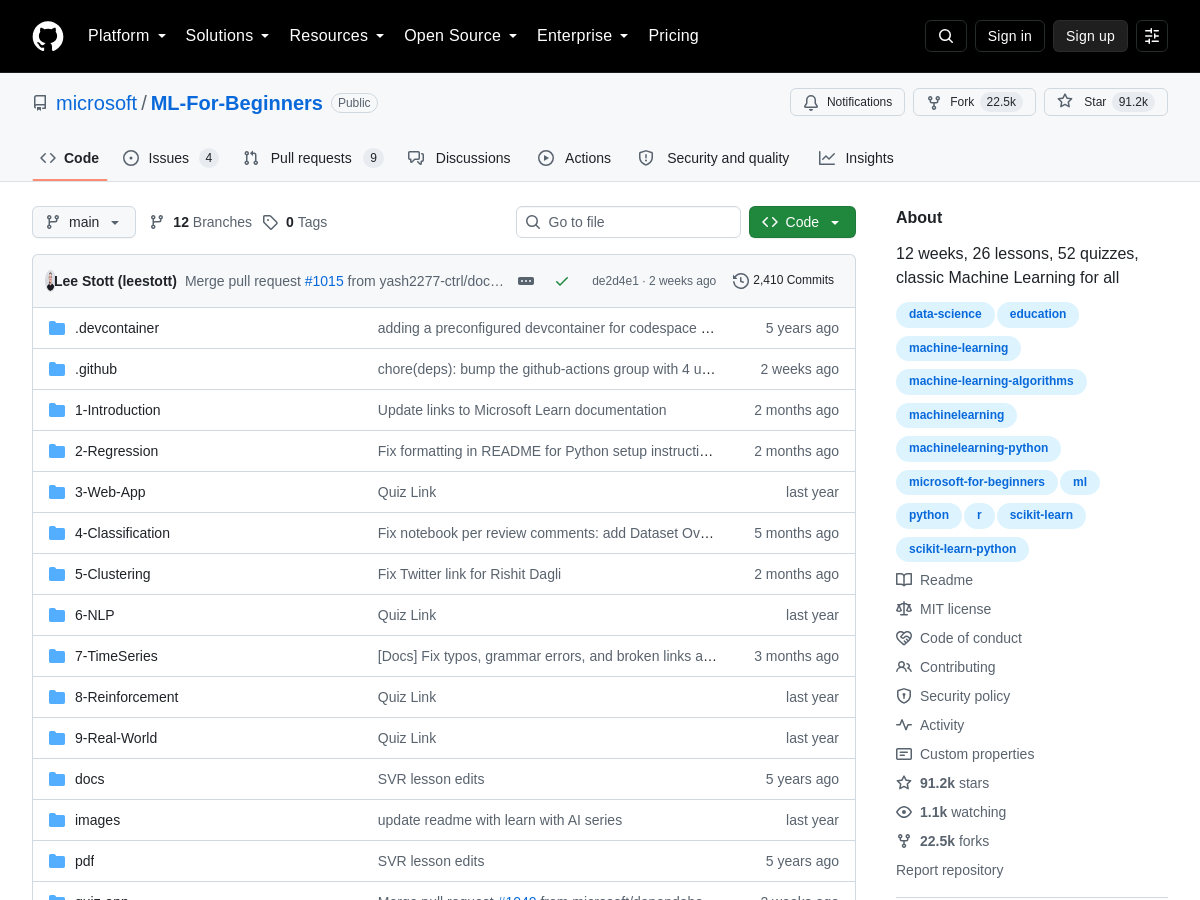
Screenshot of Generative Ai For Beginners
Generative Ai For Beginners
Prompt Engineering Open Source

Microsoft's Generative AI for Beginners is an open source course comprising 21 lessons that guide learners through the fundamentals of generative AI. The curriculum covers key concepts such as large language models, prompt engineering, responsible AI, and practical application development. Each lesson includes written explanations, code examples, and links to additional resources, making it suitable for self-paced study. The course is designed for developers and hobbyists who are new to generative AI, providing a structured path from basic concepts to building simple applications. It leverages popular tools and frameworks like OpenAI, Azure OpenAI, and Hugging Face, and includes hands-on exercises in Python. Hosted on GitHub under the MIT license, the repository is actively maintained by Microsoft and welcomes community contributions. It has become a popular starting point for anyone looking to enter the field of generative AI.

Solves

Provides a structured, beginner-friendly learning path for individuals who want to understand and apply generative AI concepts, bridging the gap between theoretical knowledge and practical implementation.

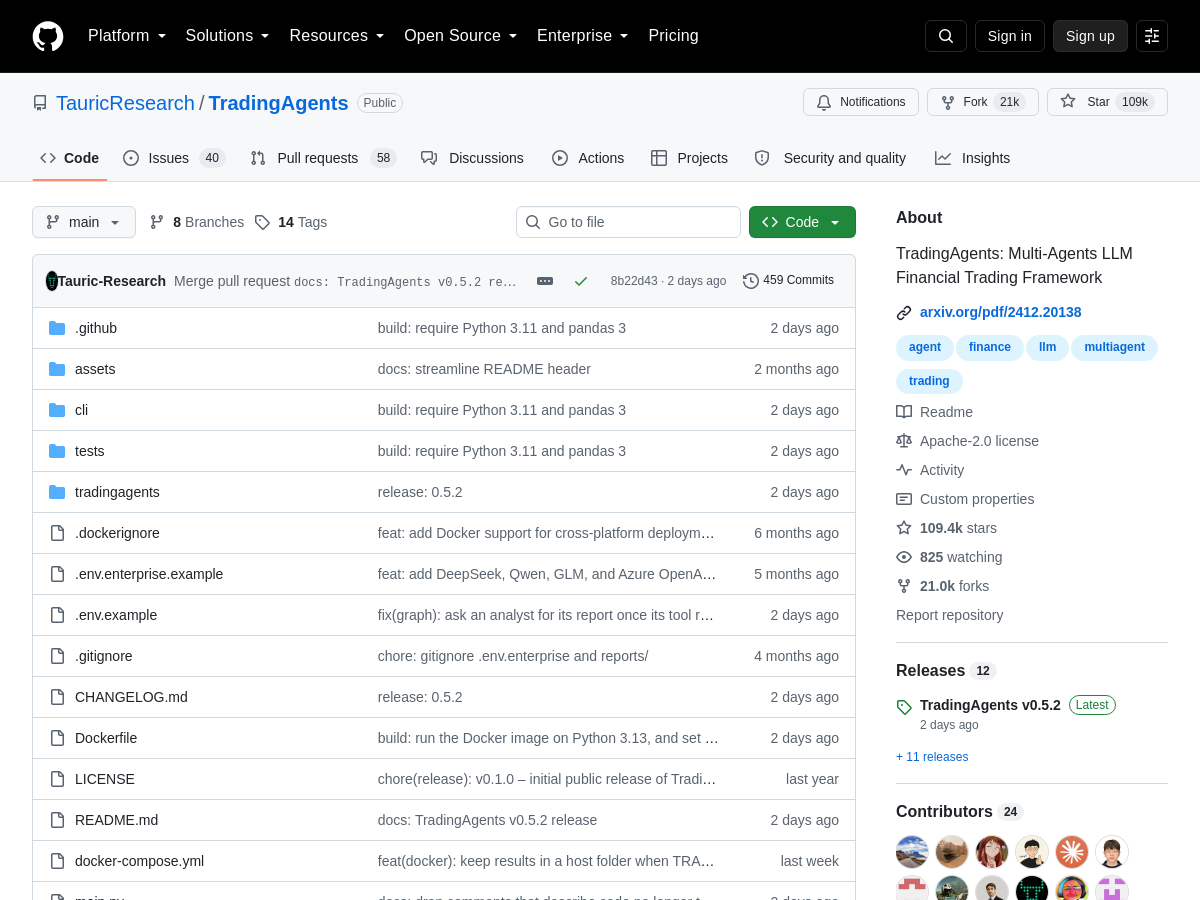
Screenshot of TradingAgents
TradingAgents
LLM Open Source

TradingAgents is a multi-agent trading framework that utilizes large language models (LLMs) to analyze market conditions and inform trading decisions. The framework consists of various agents, including a Fundamentals Analyst, Sentiment Analyst, News Analyst, Technical Analyst, Researcher Team, Trader Agent, and Risk Management and Portfolio Manager. These agents work together to evaluate market conditions, identify potential trading opportunities, and provide guidance on trading decisions. TradingAgents supports multiple LLM providers, including OpenAI, Google, Anthropic, and xAI, and allows users to configure their own LLMs and debate rounds. The framework also includes features such as checkpoint resume, memory log, and backtesting, which enable users to evaluate the performance of their trading strategies over time. TradingAgents is designed for research purposes and provides a flexible and modular architecture for building and testing trading strategies.

Solves

TradingAgents solves the problem of providing a comprehensive and flexible framework for building and testing trading strategies using large language models. It addresses the challenges of evaluating market conditions, identifying potential trading opportunities, and providing guidance on trading decisions. By utilizing multiple agents and LLMs, TradingAgents provides a robust and reliable framework for traders and researchers to develop and test their trading strategies.

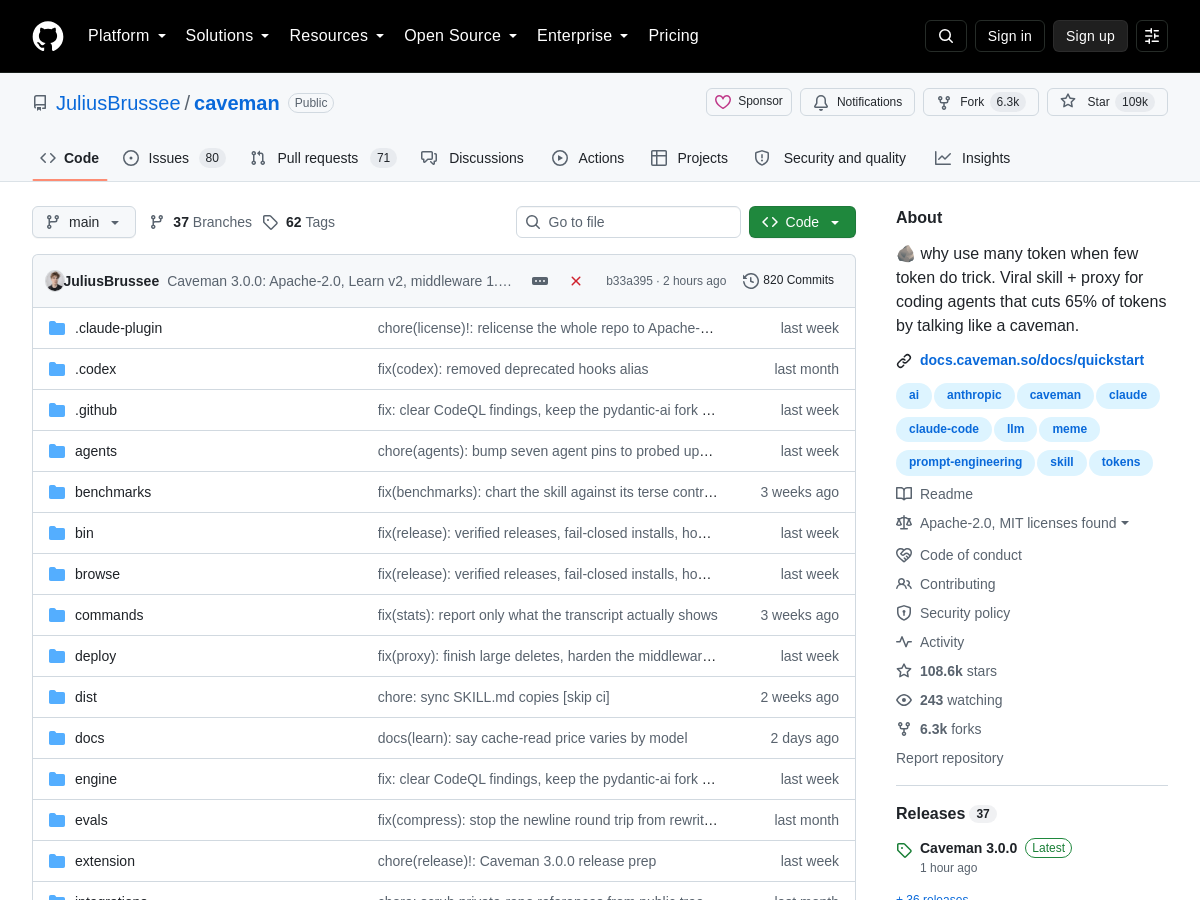
Screenshot of Caveman
Caveman
LLM Open Source

Caveman is an open-source project that provides a viral skill and proxy for coding agents. It is designed to reduce the number of tokens used in coding by talking like a caveman, which can cut 65% of tokens. The project is hosted on GitHub and has gained significant attention with over 109,000 stars. Caveman is licensed under the Apache-2.0 license and has a large community of contributors. The project includes various features such as a CLI, middleware, and launchers, and is designed to work with other tools and platforms. Caveman is a complex project with a large codebase and a wide range of features, and is intended for use by developers and coding agents. The project is actively maintained and updated, with new releases and features being added regularly. Overall, Caveman is a unique and innovative project that has the potential to revolutionize the way coding is done. The project's use of natural language processing and machine learning algorithms allows it to understand and generate code in a more human-like way, making it a valuable tool for developers and coding agents. With its large community of contributors and active maintenance, Caveman is a project that is worth watching and exploring further. The project's documentation and code are well-organized and easy to follow, making it accessible to developers of all levels. Whether you are a seasoned developer or just starting out, Caveman is definitely worth checking out. The project's potential to reduce the number of tokens used in coding and make coding more efficient is significant, and its use of AI and machine learning algorithms makes it a cutting-edge tool in the field of coding and software development. In addition to its technical features, Caveman also has a strong focus on community and collaboration, with a large and active community of contributors and users. This community-driven approach makes Caveman a great resource for developers who want to learn from and contribute to a larger community of like-minded individuals. Overall, Caveman is a powerful and innovative tool that has the potential to make a significant impact on the field of coding and software development.

Solves

Caveman solves the problem of inefficient coding by reducing the number of tokens used in coding. This is achieved through the use of natural language processing and machine learning algorithms, which allow the project to understand and generate code in a more human-like way. By talking like a caveman, Caveman is able to cut 65% of tokens, making coding more efficient and reducing the time and effort required to complete coding tasks. This is particularly useful for developers and coding agents who need to work with large amounts of code and want to improve their productivity and efficiency. With Caveman, developers can focus on the creative and high-level aspects of coding, rather than getting bogged down in the details of token management.

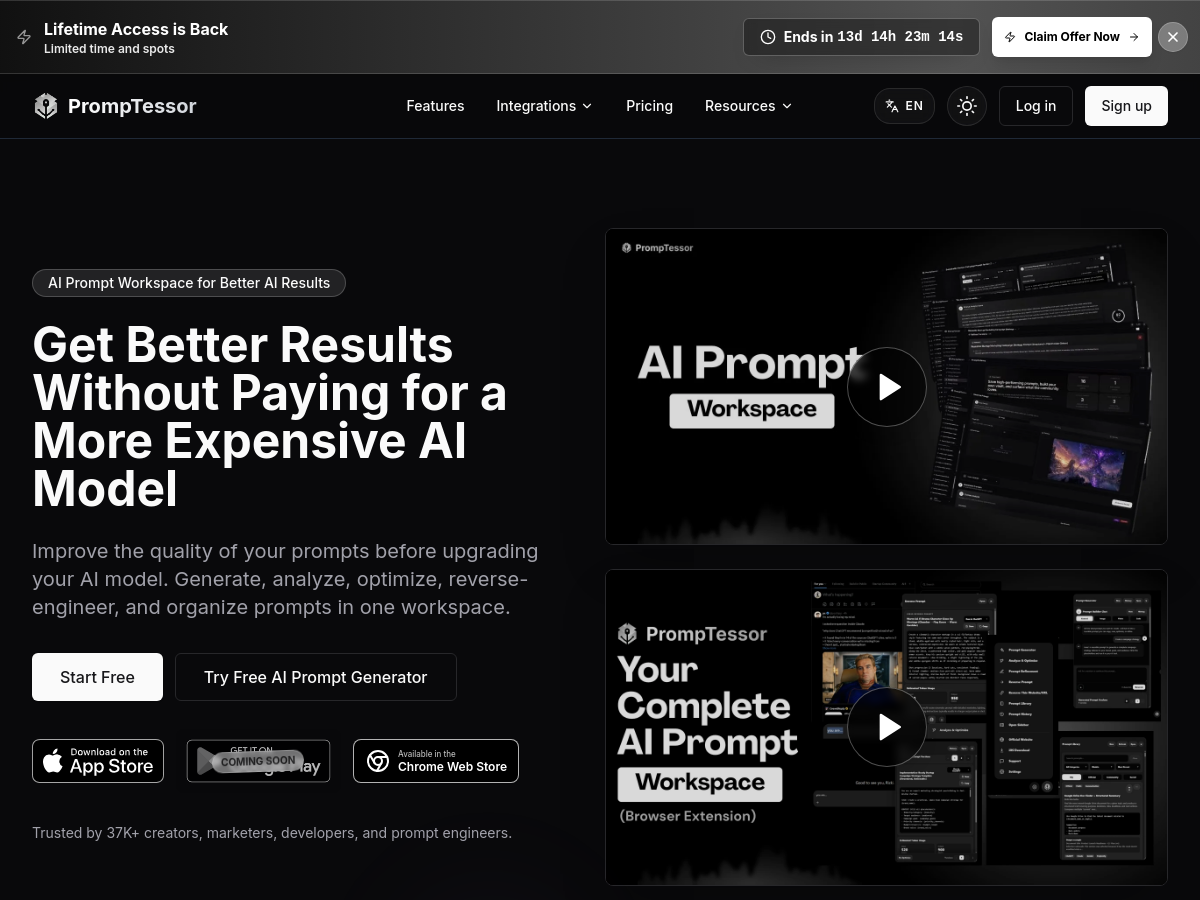
Screenshot of PrompTessor
PrompTessor
Prompts Free

PrompTessor is a web-based AI prompt workspace that helps users generate, analyze, optimize, refine, and reverse-engineer prompts for large language models such as ChatGPT, Claude, and Gemini. It bundles several prompt-engineering utilities into a single interface: a prompt generator that turns short ideas into structured prompts or reusable templates, an analyzer that highlights weaknesses in an existing prompt, an optimizer that rewrites rough prompts into higher-performing versions, and a refinement flow that iterates on prompts using feedback. A reverse-prompt feature converts images, videos, URLs, or text back into reusable prompts. The product also functions as a prompt management layer. Users can save generated and optimized prompts into a prompt library, organize them by project or category, and review version history across generations, optimizations, refinements, and reverse prompts. Multi-language support is advertised, with the workspace intended to understand prompts written in multiple languages and preserve their cultural context. Privacy-focused handling of prompt content is also claimed. PrompTessor is offered in a free tier and is accessible through the web app, an iOS app on the App Store, and a Chrome browser extension, with an Android version listed as coming soon. The vendor states that more than 37,000 creators, marketers, developers, and prompt engineers use the tool. No public GitHub repository, self-hosted deployment option, or documented public API is available, so it is best characterized as a closed, cloud-hosted SaaS product focused on prompt quality rather than model hosting.

Solves

Most people get poor results from AI models not because the model is weak but because their prompts are vague, unstructured, or missing context. PrompTessor addresses this by providing a workspace that generates, analyzes, optimizes, and refines prompts before users consider upgrading to a more expensive model, and by storing the resulting prompts in a reusable, versioned library so quality improvements are repeatable across projects and teams.

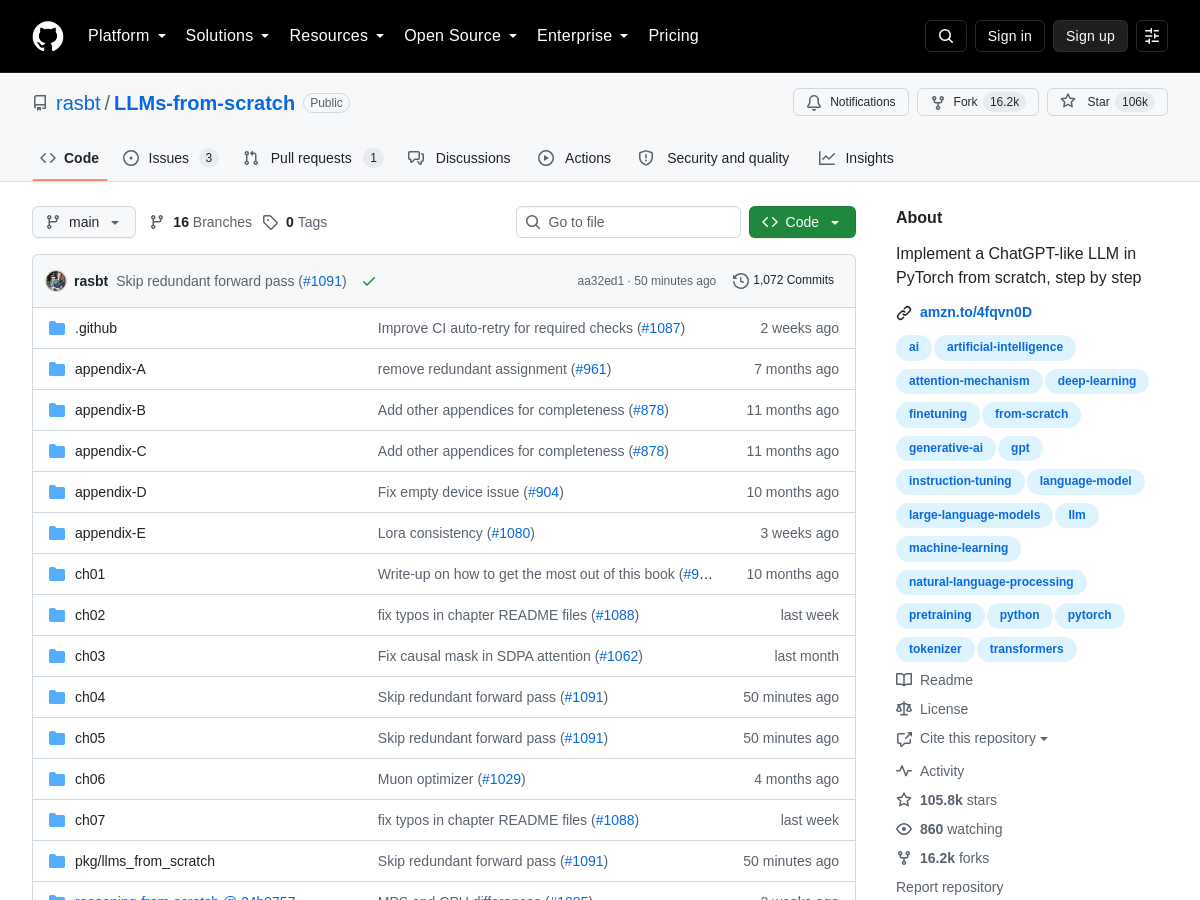
Screenshot of LLMs From Scratch
LLMs From Scratch
LLM Open Source

LLMs From Scratch is an open-source project that provides a step-by-step guide to implementing a ChatGPT-like Large Language Model (LLM) in PyTorch from scratch. The project is accompanied by a book, 'Build a Large Language Model (From Scratch)', which explains the concepts and code examples in detail. The project includes code for developing, pretraining, and finetuning a GPT-like LLM, as well as bonus materials such as exercises, quizzes, and additional code examples. The project is designed to run on conventional laptops and does not require specialized hardware. The code is well-structured and includes a table of contents, making it easy to navigate and understand. The project also includes a video course and a companion book, 'Build A Reasoning Model (From Scratch)', which can be used as a sequel to the original book.

Solves

The problem that LLMs From Scratch solves is the lack of understanding and transparency in the development of Large Language Models. By providing a step-by-step guide to implementing an LLM from scratch, the project enables developers and researchers to gain a deeper understanding of how LLMs work and how they can be improved. The project also provides a platform for experimenting with different architectures and techniques, which can lead to new breakthroughs in the field of natural language processing.

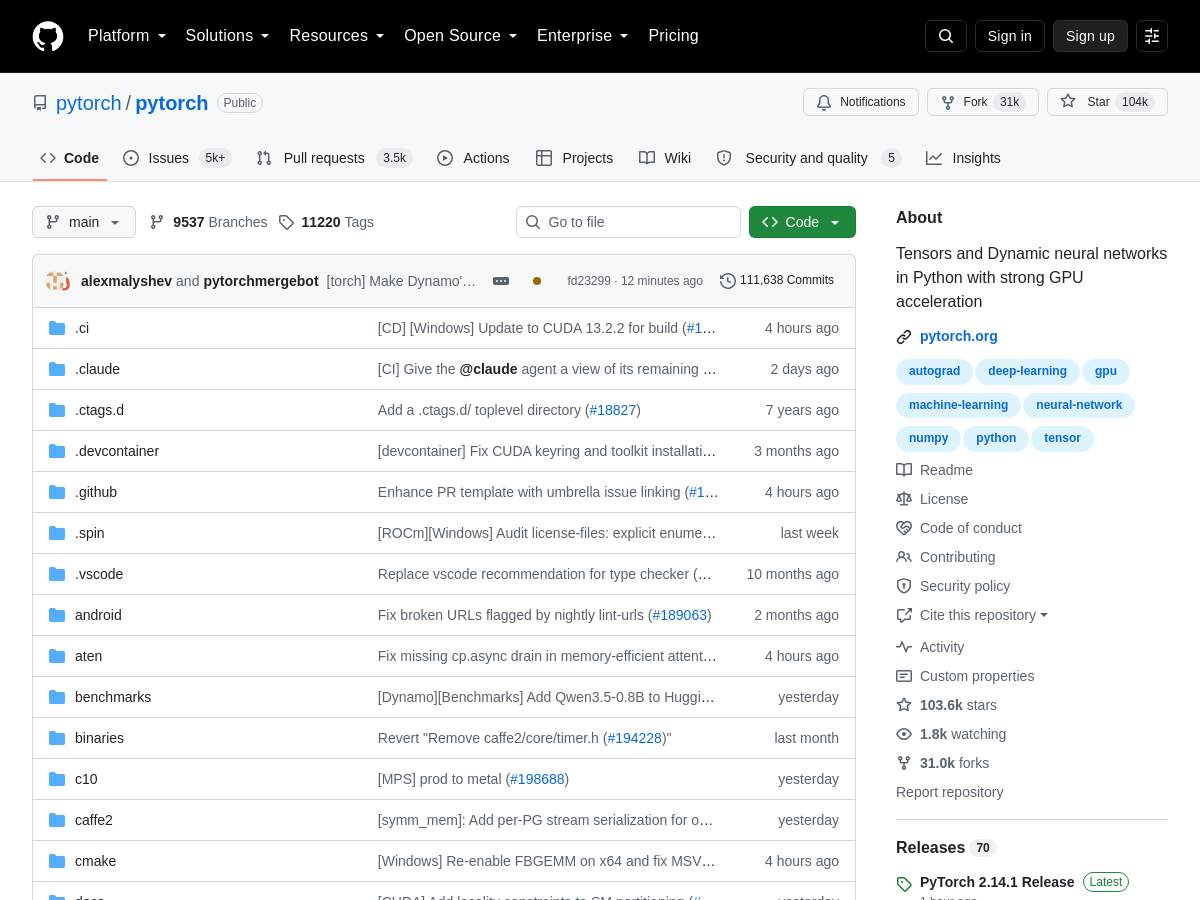
Screenshot of Pytorch
Pytorch
AI/ML Open Source

PyTorch is a Python package that provides two high-level features: tensor computation with strong GPU acceleration and deep neural networks built on a tape-based autograd system. It is designed to be deeply integrated into Python and allows users to write new neural network layers in Python itself, using favorite libraries and packages such as Cython and Numba. PyTorch has minimal framework overhead and integrates acceleration libraries such as Intel MKL and NVIDIA cuDNN to maximize speed. It also provides a wide variety of tensor routines to accelerate and fit scientific computation needs, including slicing, indexing, mathematical operations, linear algebra, and reductions. Additionally, PyTorch has a unique way of building neural networks using a technique called reverse-mode auto-differentiation, which allows for changing the way the network behaves arbitrarily with zero lag or overhead.

Solves

PyTorch solves the problem of providing a flexible and efficient way for researchers and developers to build and train deep learning models. It addresses the need for a dynamic computation graph, which allows for more flexibility and ease of use, especially for rapid prototyping and research. PyTorch also provides a solution for those who want to use Python as their primary language for deep learning, as it is designed to be deeply integrated into Python.

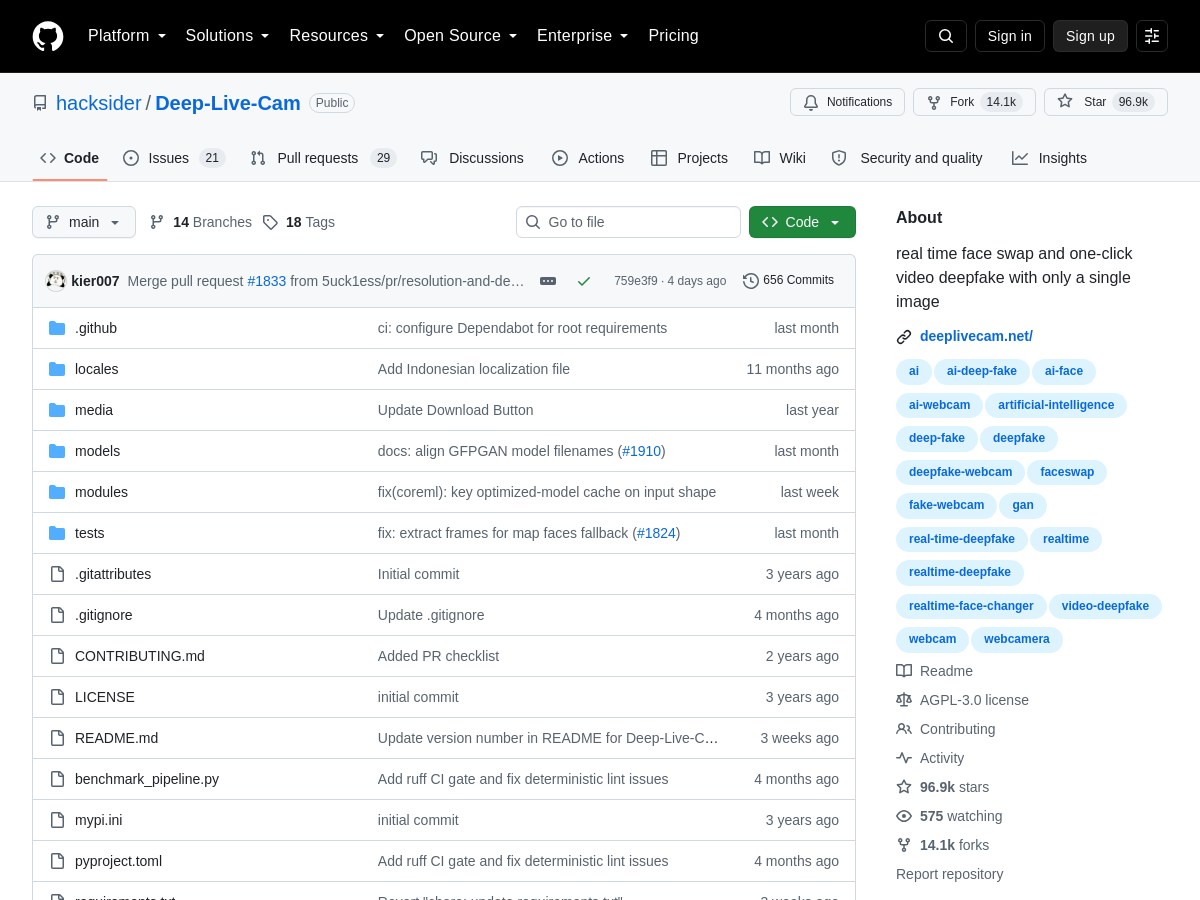
Screenshot of Deep Live Cam
Deep Live Cam
Image Gen Open Source

Deep Live Cam is an open-source software that enables real-time face swap and one-click video deepfake with only a single image. It is designed to be a productive tool for the AI-generated media industry, assisting artists in animating custom characters, creating engaging content, and using models for clothing design. The software includes built-in checks to prevent processing inappropriate media and is committed to preventative measures. It can be used for various purposes such as creating memes, live shows, and movies with any face in real-time. The software is available for Windows, Mac Silicon, CPU, NVIDIA, and AMD, and has a user-friendly interface. It also has a command-line interface for advanced users. Deep Live Cam has been featured in several press articles and has gained popularity among users.

Solves

Deep Live Cam solves the problem of creating realistic face swaps and deepfakes in real-time, making it easier for artists and content creators to produce high-quality content. It also addresses the issue of processing inappropriate media by including built-in checks and being committed to preventative measures. Additionally, it provides a user-friendly interface for non-technical users and a command-line interface for advanced users, making it accessible to a wide range of users.

Screenshot of Whacka
Whacka
Apps Freemium

Whacka is an AI-powered platform that enables users to create real, working apps from plain language descriptions, without requiring any coding knowledge. The platform uses AI to generate the interface, data, logic, and live link for the app, usually within a few minutes. Whacka provides a range of features, including built-in AI, push notifications, payments, team accounts, file uploads, and scheduled reminders. The platform also allows users to build, run, and watch their app in one place, with hosting, database, and AI included and already running. Whacka's goal is to make it possible for anyone to build an app, regardless of their technical expertise. The platform offers a free plan, as well as paid plans that add more build credits, a custom subdomain, data and code export, and priority support. Whacka also provides a range of resources, including a help center, guides, and a blog, to support users in building and using their apps. Overall, Whacka aims to democratize app development and make it accessible to a wider range of people. The platform's AI-powered approach and user-friendly interface make it an attractive option for individuals and businesses looking to create custom apps without the need for extensive coding knowledge. With its focus on ease of use and rapid development, Whacka has the potential to disrupt the traditional app development industry and open up new opportunities for innovation and creativity. Whacka's platform is designed to be flexible and adaptable, allowing users to build a wide range of apps, from simple tools and games to complex business applications and productivity suites. The platform's built-in AI and machine learning capabilities also enable users to create intelligent and interactive apps that can learn and adapt to user behavior. By providing a powerful and easy-to-use platform for app development, Whacka is empowering a new generation of creators and entrepreneurs to bring their ideas to life and share them with the world.

Solves

Whacka solves the problem of app development being inaccessible to people without coding knowledge. Traditional app development requires significant technical expertise and can be time-consuming and expensive. Whacka's AI-powered platform makes it possible for anyone to create a real, working app, regardless of their technical background. This democratization of app development has the potential to unlock a wide range of new opportunities and innovations, as people who may not have previously been able to create an app can now bring their ideas to life. By providing a user-friendly and accessible platform for app development, Whacka is helping to level the playing field and make it possible for anyone to participate in the app economy.

Screenshot of Puppeteer
Puppeteer
Dev Tools Open Source

Puppeteer is a Node.js library that provides a high-level API to control Chrome or Firefox via the DevTools Protocol or WebDriver BiDi. It can run browsers in headless or headed modes, allowing automation of page interactions, navigation, and content extraction. The library is maintained by the Chrome DevTools team and is widely used for browser automation, testing, and scraping. Puppeteer supports features such as generating screenshots and PDFs, automating form submissions and UI interactions, capturing performance traces, and testing modern web applications including single-page apps. It can also emulate devices, intercept network requests, and run in environments like CI systems. With its extensive API, developers can automate complex browser tasks with concise JavaScript code. The project is open source under Apache License 2.0 and is actively developed on GitHub, with frequent releases and a large community of contributors. It integrates with popular testing frameworks and can be used alongside other browser automation tools.

Solves

Puppeteer solves the challenge of programmatically controlling a web browser for tasks like automated testing, web scraping, and performance analysis, without requiring manual browser interaction or browser-specific drivers.

Screenshot of Vllm
Vllm
LLM Open Source

vLLM is a high-throughput and memory-efficient inference and serving engine for Large Language Models (LLMs). It is designed to provide fast and easy-to-use library for LLM inference and serving, with state-of-the-art serving throughput and efficient management of attention key and value memory. vLLM supports various decoding algorithms, including parallel sampling, beam search, and more, and provides seamless integration with popular Hugging Face models. It also supports tensor, pipeline, data, expert, and context parallelism for distributed inference, and provides efficient multi-LoRA support for dense and MoE layers. vLLM is flexible and easy to use, with a simple installation process using uv or pip, and provides a comprehensive documentation and community support.

Solves

vLLM solves the problem of inefficient and slow LLM inference and serving, which can be a major bottleneck in many natural language processing applications. By providing a high-throughput and memory-efficient engine, vLLM enables developers to deploy LLMs in a variety of scenarios, from research to production, and makes it easier to integrate LLMs into existing workflows and applications.

Screenshot of BeatViz AI
BeatViz AI
Music videos Free

BeatViz AI is a web-based platform that transforms songs into cinematic music videos using artificial intelligence. It automates the creative process of video production by planning scenes, shots, and visual styles based on the audio. Users simply upload a track and guide the AI through a chat interface, and the platform generates a beat-synced visual project incorporating advanced AI models such as Veo, Sora, Kling, Seedance, and image generators like Nano Banana and GPT Image 2. The platform offers three complementary creation modes. Chat acts as an AI music video director that produces a complete video from conversation prompts. Workflow provides a step-by-step guided approach for structuring projects, while Editor gives users full timeline-level control for refining every scene and sequence. This range spans from fully automatic generation to manual frame-level editing. Serving musicians, content creators, and visual artists, BeatViz AI advertises a low barrier to entry—many production tasks that traditionally require a film crew and editing software can be completed within minutes. The service follows a free-to-start pricing model, with additional tools for music analysis, cover creation, and music extension available as part of a "BeatViz Suite." Because it connects to models from well-known providers, the quality and style of output can vary as the underlying technologies evolve.

Solves

Creating professional-looking music videos historically requires video production skills, budget, and time. BeatViz AI eliminates these barriers by automating the direction, shot selection, and visual design, allowing musicians to produce beat-synced videos directly from an audio file.

Screenshot of ML For Beginners
ML For Beginners
AI/ML Open Source

ML For Beginners is a 12-week, 26-lesson curriculum designed to introduce students to machine learning. The curriculum is project-based, with a focus on hands-on learning and frequent quizzes to reinforce understanding. It covers a range of topics, including regression, classification, clustering, natural language processing, and time series forecasting. The curriculum is designed to be flexible and fun, with a common theme of exploring machine learning through world cultures. Each lesson includes a pre-lecture warmup quiz, written lesson, step-by-step guides, knowledge checks, a challenge, supplemental reading, assignment, and post-lecture quiz. The curriculum is primarily written in Python, but many lessons are also available in R. ML For Beginners is part of a larger series of courses, including Data Science for Beginners, AI for Beginners, and others.

Solves

ML For Beginners solves the problem of providing a comprehensive and accessible introduction to machine learning for students who are new to the field. It provides a structured learning path, with hands-on projects and quizzes to help students build a strong foundation in machine learning. The curriculum is designed to be flexible and fun, making it easier for students to stay engaged and motivated throughout the learning process.

Screenshot of OpenHands
OpenHands
AI/ML Open Source

OpenHands is an AI-driven development project hosted on GitHub. The project has gained significant attention with over 89,000 stars and 11,800 forks. OpenHands aims to leverage AI in software development, although the exact nature of its AI-driven approach is not explicitly stated in the provided information. The project's GitHub page lists various folders and files, including configuration, testing, and Docker-related files, indicating a complex and potentially versatile tool. OpenHands seems to be under active development, with recent commits and a large community of contributors. The project's focus on AI-driven development suggests it could be used for automating tasks, improving code quality, or enhancing development workflows. However, without more specific details, the full scope of OpenHands' capabilities and applications remains somewhat unclear. OpenHands is open-source, which means it is freely available for use, modification, and distribution. This openness, combined with its AI-driven approach, positions OpenHands as a potentially powerful tool for developers and organizations looking to integrate AI into their development processes. The community around OpenHands, including its contributors and users, plays a crucial role in its development and support, contributing to its growth and adoption. As an open-source project, OpenHands benefits from community contributions, which can lead to faster bug fixes, new feature implementations, and a broader range of applications. The project's use of AI suggests a forward-thinking approach to software development, potentially offering solutions to complex problems or improving existing development methodologies. Overall, OpenHands represents an intriguing example of how AI can be integrated into software development, with its open-source nature and active community contributing to its potential impact on the field.

Solves

Developers and organizations face numerous challenges in software development, including the need for efficient, high-quality code production, and the integration of AI into development workflows. OpenHands addresses these challenges by providing an AI-driven development platform that can automate tasks, improve code quality, and enhance development workflows. By leveraging AI, OpenHands helps solve the problem of inefficient development processes and the difficulty of integrating AI into existing workflows, making it a valuable tool for developers and organizations seeking to improve their software development capabilities.

Screenshot of Adkit v1.1.0
Adkit v1.1.0
AI Agents Freemium

Adkit v1.1.0 is a freemium software tool categorized under AI Agents. Its tagline, 'Like Ahref but for advertising,' positions it as an advertising intelligence and research platform, analogous to SEO tool Ahrefs but focused on advertising data, and designed to be used by both humans and AI agents. The official website linked to the tool, ecombriefs.io, currently presents EcomBriefs.io, which offers an AI visibility diagnostic for ecommerce. It checks whether an online store appears in AI answer engines such as ChatGPT, Perplexity, and Gemini, and delivers a manual professional PDF report within 24-48 hours. Because public documentation is limited, the exact feature set of Adkit v1.1.0 is not fully detailed in available sources; however, the positioning suggests capabilities for competitive advertising analysis, ad campaign research, and integration with AI agents for automated workflows.

Solves

Helps businesses and AI agents understand advertising competitive landscapes and/or verify AI-driven visibility for ecommerce stores; reduces manual research by providing structured insights or diagnostic reports.

Screenshot of Scrapling
Scrapling
Framework Open Source

Scrapling is an adaptive Web Scraping framework designed to handle everything from a single request to a full-scale crawl. It provides a comprehensive solution for web scraping, allowing users to extract data from websites efficiently. The framework is highly customizable and can be used for a wide range of applications, from simple data extraction to complex web scraping tasks. With its adaptive nature, Scrapling can handle different types of websites, including those with dynamic content, and provides features such as browser tab reuse and proxy rotation. The framework is also highly extensible, allowing developers to add their own custom features and functionality. Overall, Scrapling is a powerful tool for web scraping, providing a flexible and efficient solution for extracting data from the web. The framework is well-documented, with a comprehensive changelog and contributing guidelines, making it easy for developers to get started and contribute to the project. Additionally, Scrapling has a strong focus on community, with a Discord channel and GitHub discussions available for users to connect and share knowledge. With its robust features and active community, Scrapling is an ideal choice for developers looking for a reliable and efficient web scraping solution. The framework is constantly evolving, with new features and updates being added regularly, ensuring that it stays up-to-date with the latest web scraping trends and technologies. Furthermore, Scrapling is designed to be highly scalable, allowing it to handle large-scale web scraping tasks with ease, making it a great choice for businesses and organizations that require a robust web scraping solution. The framework's adaptive nature also allows it to handle anti-scraping measures, making it a great choice for users who need to extract data from websites that have implemented such measures. In summary, Scrapling is a powerful and flexible web scraping framework that provides a comprehensive solution for extracting data from the web. Its adaptive nature, customizable features, and strong focus on community make it an ideal choice for developers and businesses looking for a reliable and efficient web scraping solution.

Solves

Web scraping can be a challenging task, especially when dealing with complex websites or large-scale data extraction. Scrapling solves this problem by providing a comprehensive and adaptive web scraping framework that can handle everything from a single request to a full-scale crawl. With its customizable features and extensible architecture, Scrapling makes it easy for developers to extract data from websites efficiently, saving time and resources. Additionally, Scrapling's ability to handle anti-scraping measures and its focus on community make it a great choice for users who need to extract data from websites that have implemented such measures, providing a reliable and efficient solution for web scraping tasks.