Tool discovery

What type of AI tool
are you looking for?

Search the active catalog with LambdaBase AI Search, or keep browsing the popularity-ordered directory below.

Submitted search queries and interaction metrics may be analyzed to improve result quality. Do not include personal or confidential information

Browse popular tools.

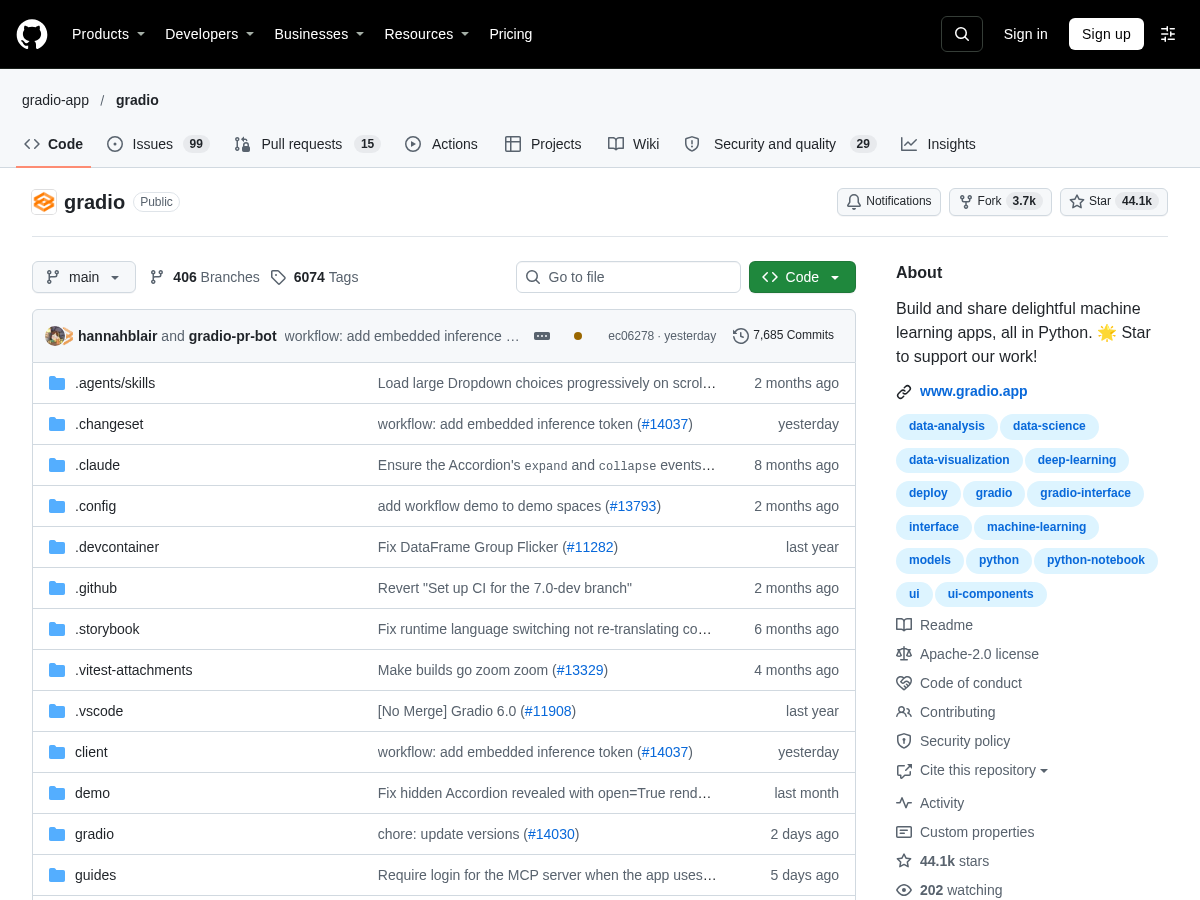
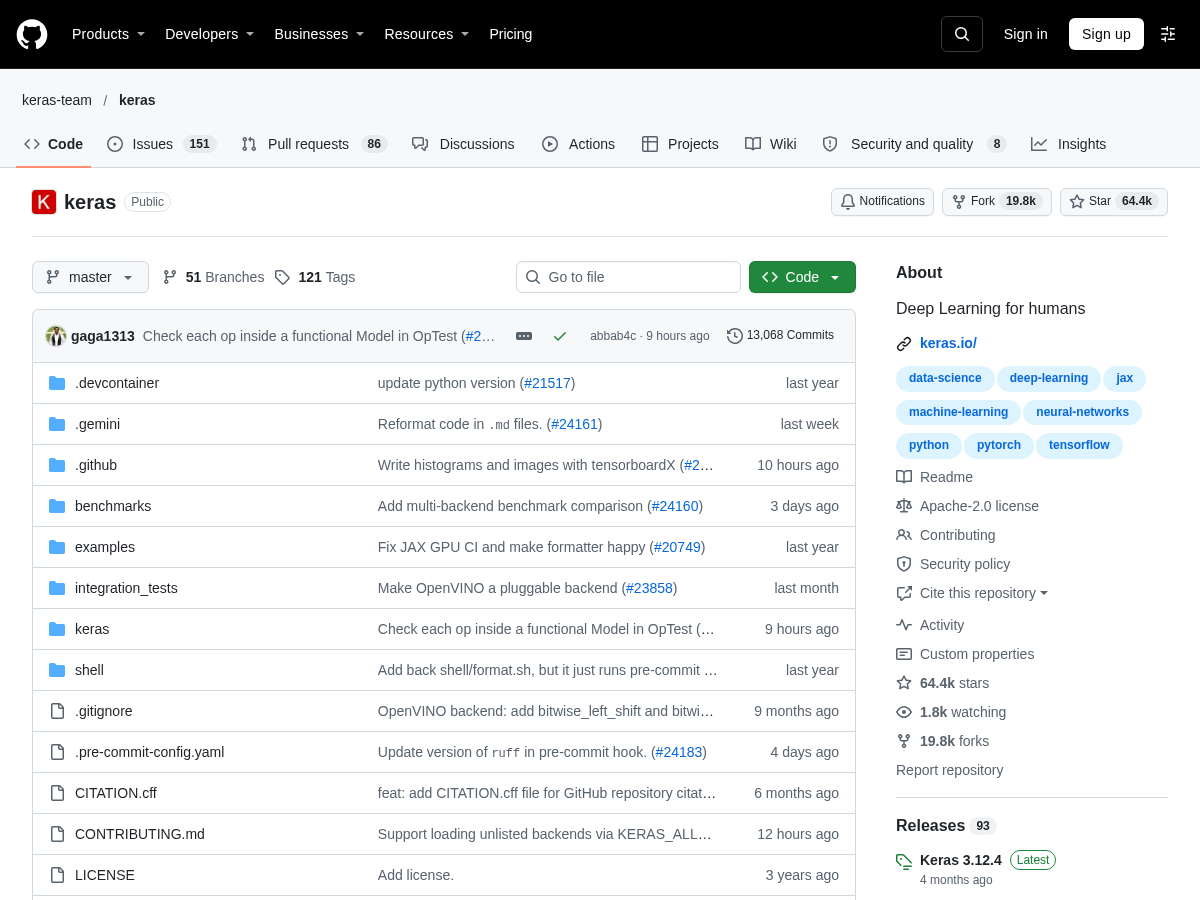
Screenshot of Keras
Keras
AI/ML Open Source

Keras is a multi-backend deep learning framework that supports JAX, TensorFlow, PyTorch, and OpenVINO. It provides a high-level UX for building and training models, making it easier to develop and deploy deep learning solutions. Keras 3 is designed to be a drop-in replacement for tf.keras, allowing users to run their existing code on top of any framework. It also provides a way to write custom components that can be used in low-level workflows in any framework, making it a great choice for developers who want to avoid framework lock-in. Keras 3 supports a wide range of applications, including computer vision, natural language processing, audio processing, timeseries forecasting, and recommender systems. It also provides a number of features, including accelerated model development, state-of-the-art performance, and datacenter-scale training. Overall, Keras is a powerful and flexible deep learning framework that can be used for a wide range of applications. Keras 3 is compatible with Linux and macOS systems, and can be installed using pip or by building from source. It also provides a number of configuration options, including the ability to export the environment variable KERAS_BACKEND or edit the local config file at ~/.keras/keras.json. The OpenVINO backend is an inference-only backend, meaning it is designed only for running model predictions using the model.predict() method. Keras 3 is intended to work as a drop-in replacement for tf.keras, and can consume datasets in any format, regardless of the backend being used.

Solves

Keras solves the problem of framework lock-in, allowing developers to write custom components that can be used in low-level workflows in any framework. It also provides a high-level UX for building and training models, making it easier to develop and deploy deep learning solutions. Additionally, Keras provides a way to run high-level Keras workflows on top of any framework, benefiting from the advantages of each framework. This makes it a great choice for developers who want to avoid framework lock-in and make their ML code future-proof.
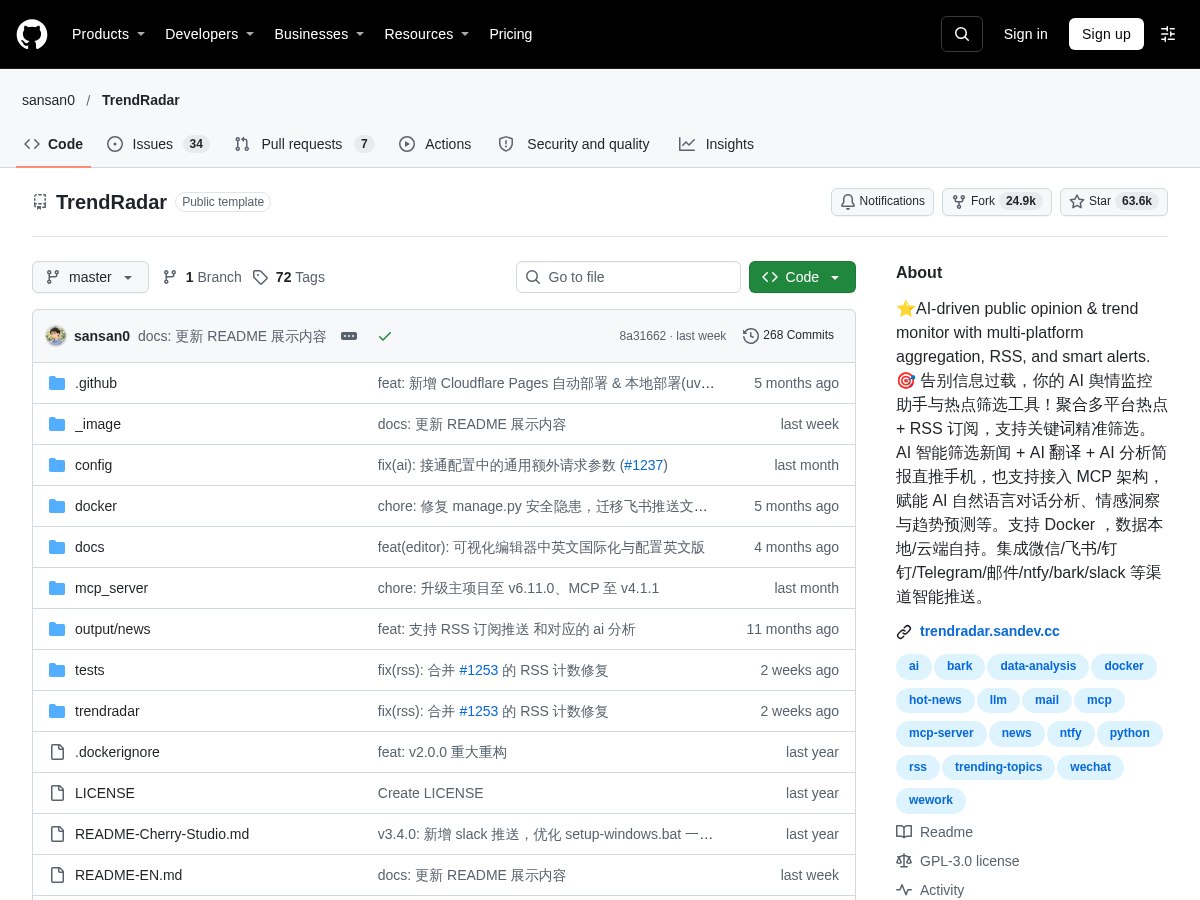
Screenshot of TrendRadar
TrendRadar
LLM Open Source

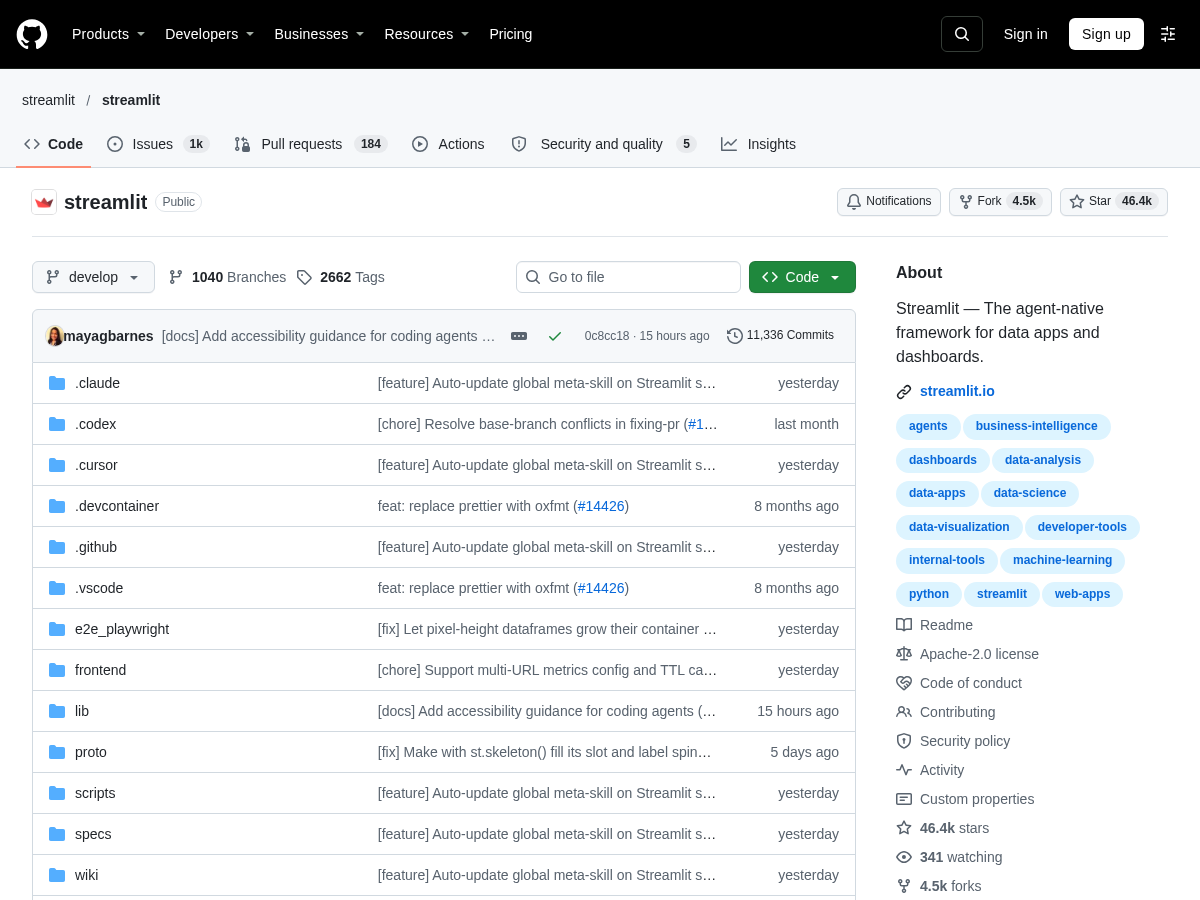
TrendRadar is an AI-driven public opinion and trend monitor that aggregates multi-platform hot topics and RSS subscriptions, supporting keyword-based filtering. It also features AI-powered news filtering, translation, and analysis briefs that can be pushed to mobile devices. Additionally, it supports integration with the MCP architecture, enabling AI-powered natural language conversation analysis, sentiment insights, and trend prediction. The project is built using Python and is deployed via Docker, with data stored locally or in the cloud. TrendRadar also integrates with various channels for smart push notifications, including WeChat, Feishu, DingTalk, Telegram, email, ntfy, bark, and Slack. The project has a strong focus on data analysis, with features such as hot news tracking, data visualization, and frequency word analysis. TrendRadar is an open-source project, licensed under the GPL-3.0 license, and has a large community of contributors and users.
Solves

TrendRadar solves the problem of information overload by providing a comprehensive platform for monitoring public opinion and trends across multiple platforms. It helps users to filter out irrelevant information and focus on the most important topics, using AI-powered tools to analyze and summarize the data. This makes it an essential tool for anyone looking to stay up-to-date with the latest news and trends, including researchers, marketers, and business professionals.

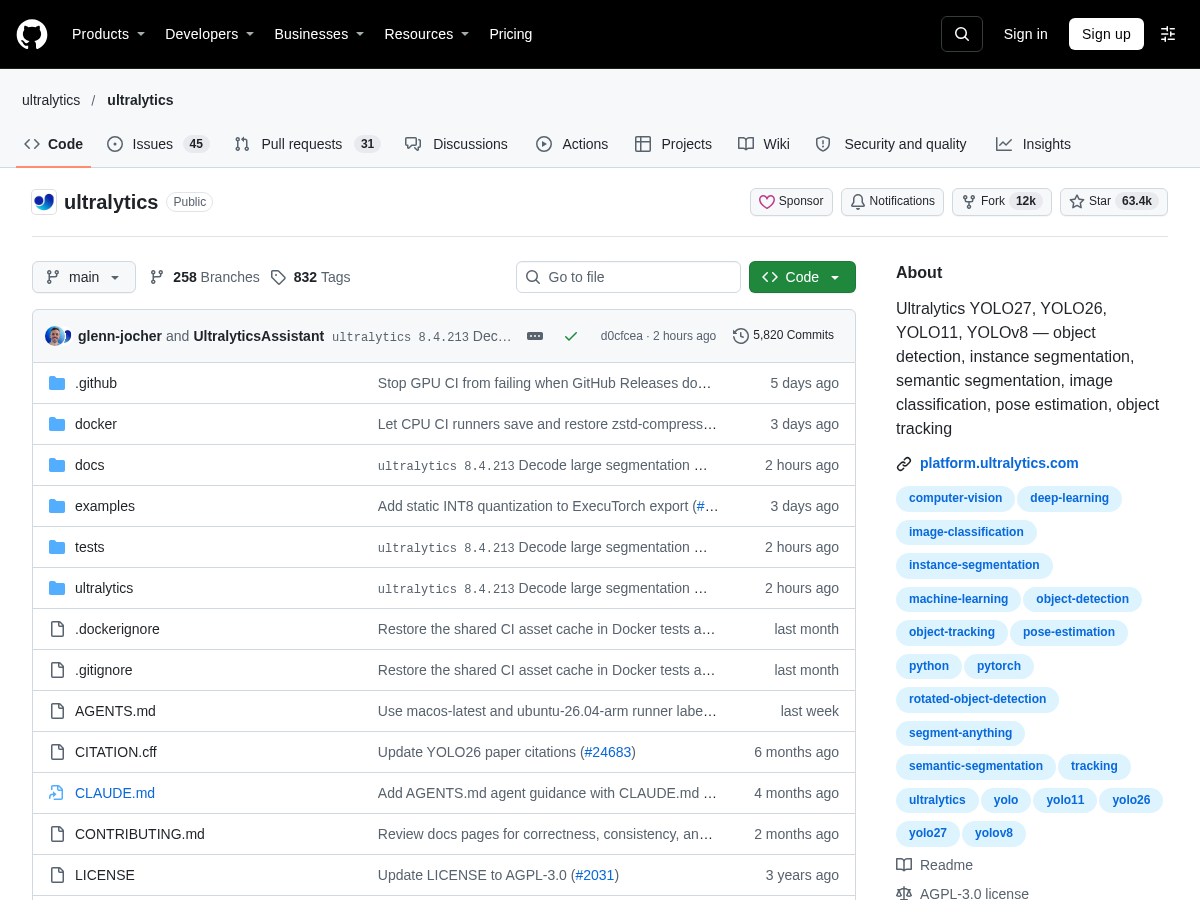
Screenshot of Ultralytics
Ultralytics
Image Gen Open Source

Ultralytics is an open-source project that provides a range of computer vision models, including YOLO27, YOLO26, YOLO11, and YOLOv8. These models are designed for object detection, instance segmentation, semantic segmentation, image classification, pose estimation, and object tracking. The project is built using PyTorch and provides a range of tools and resources for developers, including a GitHub repository, documentation, and a community forum. The models are highly customizable and can be used for a variety of applications, including autonomous vehicles, surveillance, and medical imaging. The project is actively maintained and updated, with new features and models being added regularly. The Ultralytics project is designed to be highly scalable and can be run on a variety of hardware platforms, including GPUs and CPUs. The project also provides a range of pre-trained models that can be used for a variety of tasks, including object detection and image classification. Overall, the Ultralytics project is a powerful tool for developers and researchers working in the field of computer vision. The project's GitHub repository provides a range of resources, including code, documentation, and issue tracking, making it easy for developers to get started and contribute to the project. The project's community forum also provides a space for developers to ask questions, share knowledge, and collaborate on projects. The Ultralytics project is highly customizable, allowing developers to modify the models and code to suit their specific needs. The project's pre-trained models can be used for a variety of tasks, including object detection, image classification, and pose estimation. The project's scalability and customizability make it a popular choice for developers and researchers working in the field of computer vision. The project's active maintenance and updates ensure that the models and code remain up-to-date and effective. The project's documentation and community forum provide a range of resources for developers, making it easy to get started and contribute to the project. The project's GitHub repository provides a range of tools and resources, including code, documentation, and issue tracking, making it easy for developers to collaborate and contribute to the project.

Solves

The Ultralytics project solves the problem of providing a range of computer vision models that are highly customizable and scalable. The project provides a range of tools and resources for developers, including pre-trained models, documentation, and a community forum. The project's models are designed to be highly effective and efficient, making them suitable for a variety of applications, including autonomous vehicles, surveillance, and medical imaging. The project's customizability and scalability make it a popular choice for developers and researchers working in the field of computer vision. The project's active maintenance and updates ensure that the models and code remain up-to-date and effective, providing a reliable solution for developers and researchers.

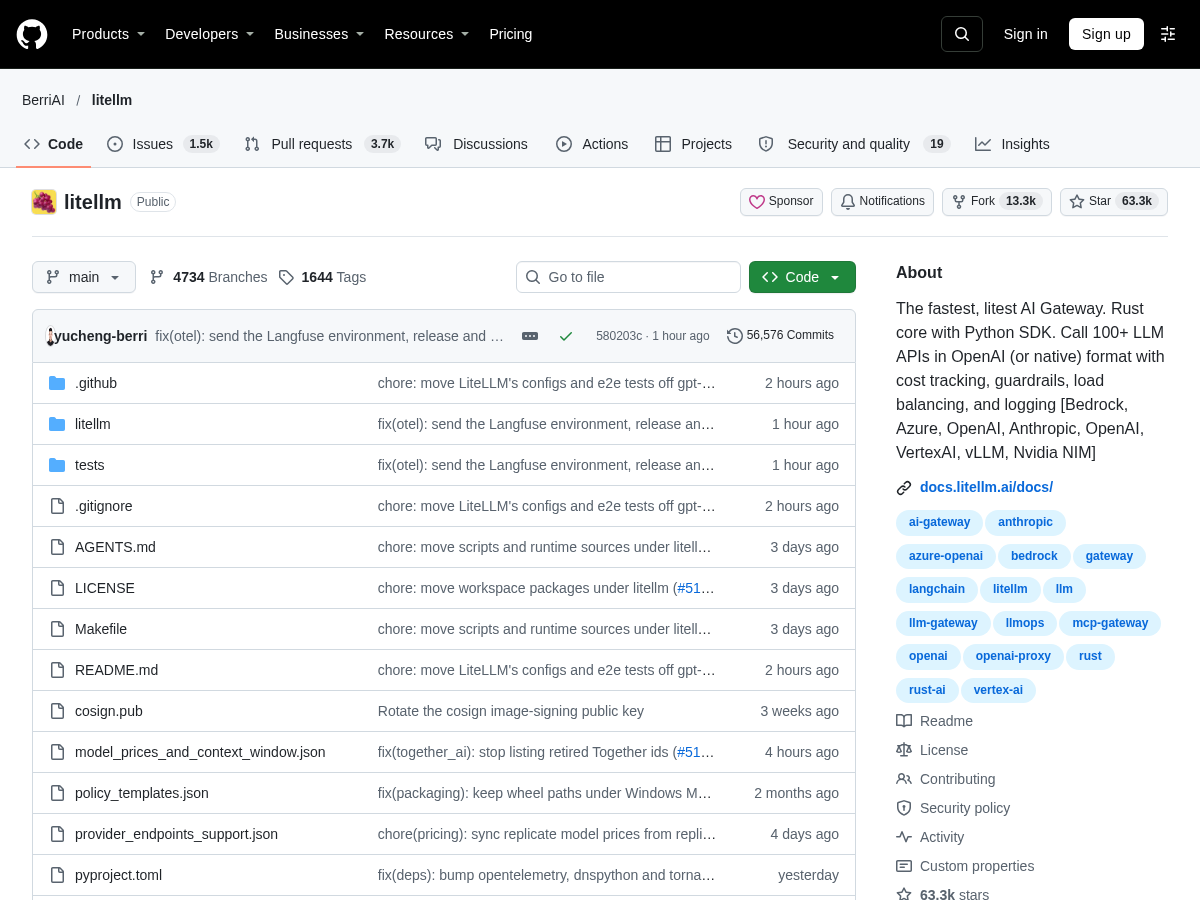
Screenshot of Litellm
Litellm
LLM Open Source

Litellm is an open-source AI Gateway that enables users to call over 100 LLM APIs in OpenAI or native format. It features a Rust core with a Python SDK, providing cost tracking, guardrails, load balancing, and logging capabilities. The tool supports various LLM APIs, including Bedrock, Azure, OpenAI, Anthropic, VertexAI, vLLM, and Nvidia NIM. Litellm is designed to be fast and lightweight, making it an ideal solution for developers and organizations looking to integrate AI capabilities into their applications. With its robust features and extensive support for various LLM APIs, Litellm has gained popularity among developers, with over 63,000 stars on GitHub. The project is actively maintained, with regular updates and contributions from the community. Litellm's documentation and resources are also available, making it easier for users to get started and integrate the tool into their projects. Overall, Litellm is a powerful and flexible AI Gateway that provides a comprehensive solution for developers and organizations looking to leverage the capabilities of LLM APIs. The tool's architecture is designed to be scalable and efficient, allowing it to handle large volumes of requests and provide reliable performance. Additionally, Litellm's support for multiple LLM APIs enables users to choose the best model for their specific use case, ensuring optimal results and performance. With its strong community support and extensive documentation, Litellm is an excellent choice for developers and organizations looking to integrate AI capabilities into their applications.

Solves

Developers and organizations face the challenge of integrating AI capabilities into their applications, which can be time-consuming and costly. Litellm solves this problem by providing a fast, lightweight, and scalable AI Gateway that enables users to call over 100 LLM APIs in OpenAI or native format. With its robust features and extensive support for various LLM APIs, Litellm makes it easier for developers and organizations to integrate AI capabilities into their applications, reducing the time and cost associated with developing and maintaining custom AI solutions.

Screenshot of Awesome Claude Skills
Awesome Claude Skills
AI Agents Free

Awesome Claude Skills is a curated GitHub repository maintained by ComposioHQ that serves as a community-driven index of Claude Skills, resources, and tools. Claude Skills are modular, reusable capabilities that extend the functionality of Anthropic's Claude AI assistant, enabling customization of workflows for specific tasks. The repository aggregates links to pre-built skills, tutorials, integration guides, and examples contributed by developers and AI enthusiasts. The repository is organized to help users quickly find skills across various categories, such as automation, data analysis, coding assistance, and third-party integrations. It includes sections for official Anthropic resources, community-created skills, and tools for building and deploying custom skills. The list is free and open source, allowing anyone to contribute via pull requests, ensuring the collection stays up-to-date with the rapidly evolving Claude ecosystem. As an "awesome" list, it follows the standard format of curated lists on GitHub, providing a table of contents and categorized links. It is particularly useful for developers and ML engineers who want to leverage Claude's capabilities beyond out-of-the-box usage, whether for personal projects or enterprise workflows. The repository is actively maintained and has gained traction in the AI community as a go-to reference for Claude customization.

Solves

Discovering and organizing Claude Skills and related resources can be time-consuming and fragmented. Awesome Claude Skills solves this by providing a centralized, curated list that helps users find, evaluate, and adopt Claude Skills quickly, reducing the effort required to customize Claude for specific workflows and accelerating development of AI-powered applications.

Screenshot of Base44 Superagents
Base44 Superagents
Task automation Free

Base44 Superagents is an AI-powered tool that allows users to build their own personal AI agents in minutes. These agents can handle various tasks such as managing emails, follow-ups, reports, analytics, and more, 24/7, without requiring any setup or technical expertise. The agents can be configured to perform tasks through plain language descriptions, and they can connect to various tools and services such as Google Calendar, Gmail, Drive, Socials, Discord, Slack, and more. The agents are designed to work proactively, executing tasks and making decisions within the user's goals, rather than just responding to queries like traditional chatbots. They can also remember and evolve over time, learning from conversations and preferences to become more useful. The Superagents are secure by default, with permissions-based access and sandboxing, ensuring that they only touch what the user explicitly allows. Overall, Base44 Superagents aims to provide a hassle-free and intuitive way for users to automate tasks and workflows, freeing up time for more important activities.

Solves

The problem that Base44 Superagents solves is the need for individuals and businesses to automate repetitive and time-consuming tasks, such as managing emails, follow-ups, and reports. Many people struggle with finding the time and resources to complete these tasks, which can lead to decreased productivity and efficiency. Base44 Superagents provides a solution to this problem by allowing users to create their own personal AI agents that can handle these tasks automatically, 24/7, without requiring any technical expertise or setup.

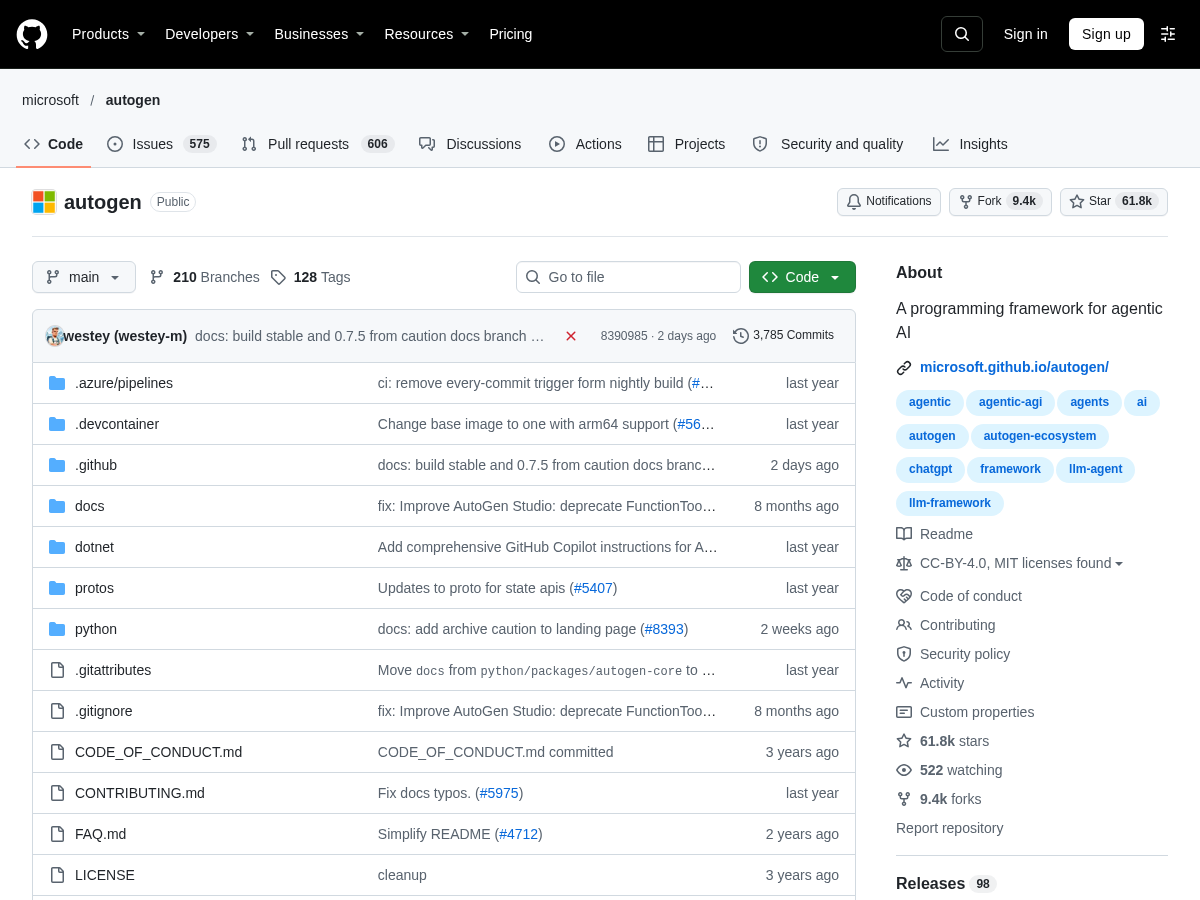
Screenshot of Autogen
Autogen
AI Agents Open Source

Autogen is a programming framework for agentic AI, designed to facilitate the development of AI-powered agents. The framework provides a set of tools and libraries that enable developers to build, train, and deploy AI models that can interact with their environment and make decisions autonomously. Autogen is built on top of a modular architecture, allowing developers to easily integrate and extend its functionality. The framework includes a range of features, such as support for multiple AI models, a flexible and customizable architecture, and a set of pre-built tools and libraries for common AI tasks. Autogen is designed to be highly scalable and can be used in a variety of applications, from simple chatbots to complex autonomous systems. The framework is also highly customizable, allowing developers to tailor it to their specific needs and use cases. Overall, Autogen provides a powerful and flexible platform for building and deploying AI-powered agents, and its open-source nature makes it accessible to a wide range of developers and organizations. Autogen has a large community of developers and users, with over 61,000 stars on GitHub and a active community of contributors. The framework is widely used in industry and academia, and has been used in a variety of applications, including natural language processing, computer vision, and robotics. Autogen is also highly extensible, with a large ecosystem of third-party libraries and tools available. The framework is designed to be easy to use and provides a simple and intuitive API, making it accessible to developers of all levels. Autogen is a rapidly evolving framework, with new features and updates being added regularly. The framework is also highly documented, with a comprehensive set of documentation and tutorials available.

Solves

Autogen solves the problem of building and deploying AI-powered agents, which can be complex and time-consuming. By providing a pre-built framework and set of tools, Autogen enables developers to quickly and easily build and deploy AI models, without requiring extensive expertise in AI or machine learning. This makes it possible for developers to focus on building applications and services, rather than spending time and resources on building and training AI models from scratch. Autogen also provides a high degree of customization and flexibility, allowing developers to tailor the framework to their specific needs and use cases. This makes it possible for developers to build a wide range of AI-powered applications and services, from simple chatbots to complex autonomous systems.

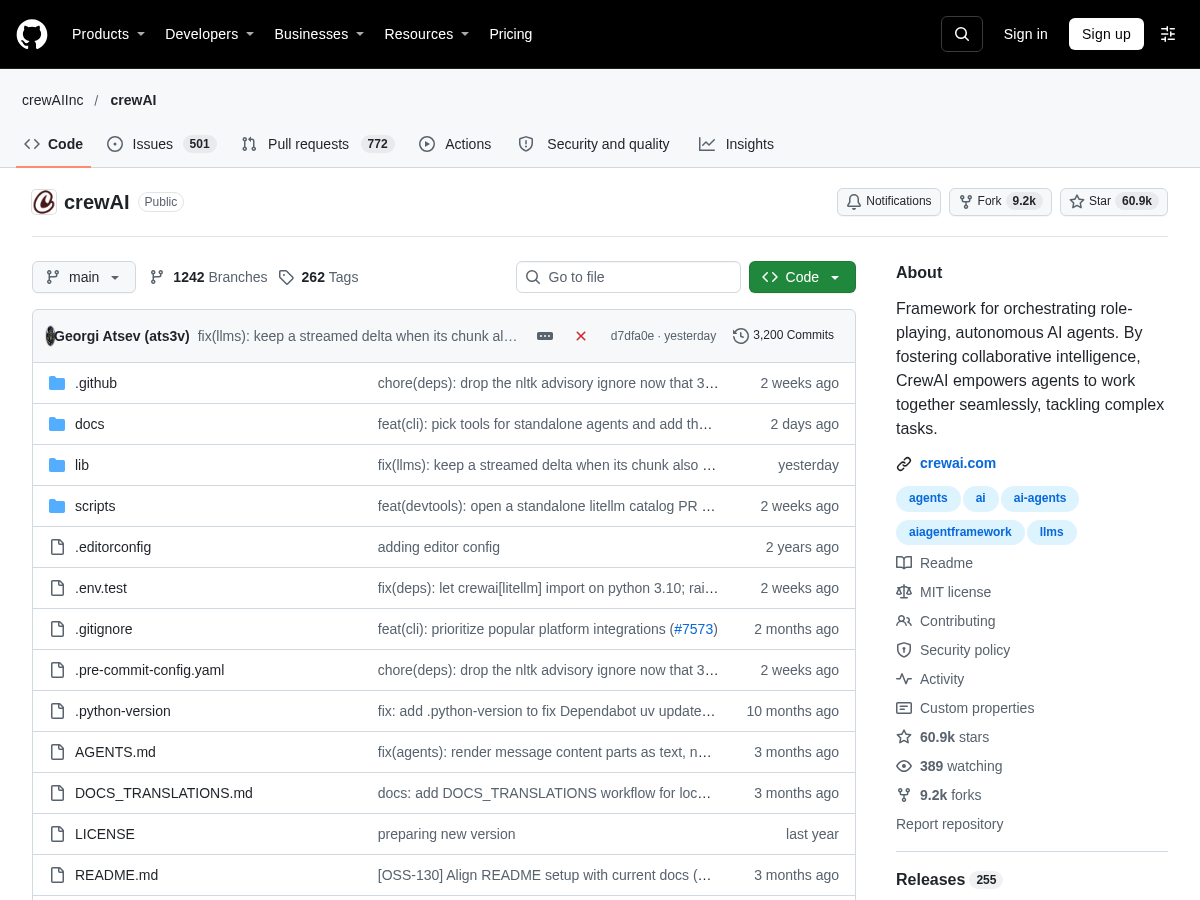
Screenshot of CrewAI
CrewAI
AI Agents Open Source

CrewAI is a framework for orchestrating role-playing, autonomous AI agents. By fostering collaborative intelligence, CrewAI empowers agents to work together seamlessly, tackling complex tasks. The framework is designed to facilitate the development of AI agents that can interact with each other and their environment in a flexible and adaptive manner. CrewAI provides a platform for building and deploying AI agents, allowing developers to focus on creating intelligent agents that can solve real-world problems. The framework includes tools for creating, managing, and deploying AI agents, as well as a set of APIs and interfaces for integrating with other systems and services. CrewAI is built on top of a modular architecture, allowing developers to easily extend and customize the framework to meet their specific needs. The framework is also designed to be highly scalable, allowing it to support large-scale deployments of AI agents. Overall, CrewAI provides a powerful and flexible platform for building and deploying AI agents, and has the potential to enable a wide range of innovative applications and use cases. CrewAI has a strong focus on collaborative intelligence, which enables agents to work together seamlessly and tackle complex tasks. The framework is highly customizable and can be extended to meet specific needs. CrewAI also provides a set of tools for creating, managing, and deploying AI agents, making it a comprehensive platform for AI development. The framework's modular architecture and scalability make it an ideal choice for large-scale deployments of AI agents. CrewAI's ability to facilitate the development of AI agents that can interact with each other and their environment in a flexible and adaptive manner makes it a powerful tool for a wide range of applications.

Solves

CrewAI solves the problem of developing and deploying AI agents that can work together seamlessly to tackle complex tasks. By providing a framework for orchestrating role-playing, autonomous AI agents, CrewAI enables developers to create intelligent agents that can interact with each other and their environment in a flexible and adaptive manner. This allows developers to focus on creating agents that can solve real-world problems, rather than having to build the underlying infrastructure from scratch. CrewAI's collaborative intelligence capabilities enable agents to work together to achieve common goals, making it an ideal solution for applications that require multiple agents to work together to achieve a specific objective.

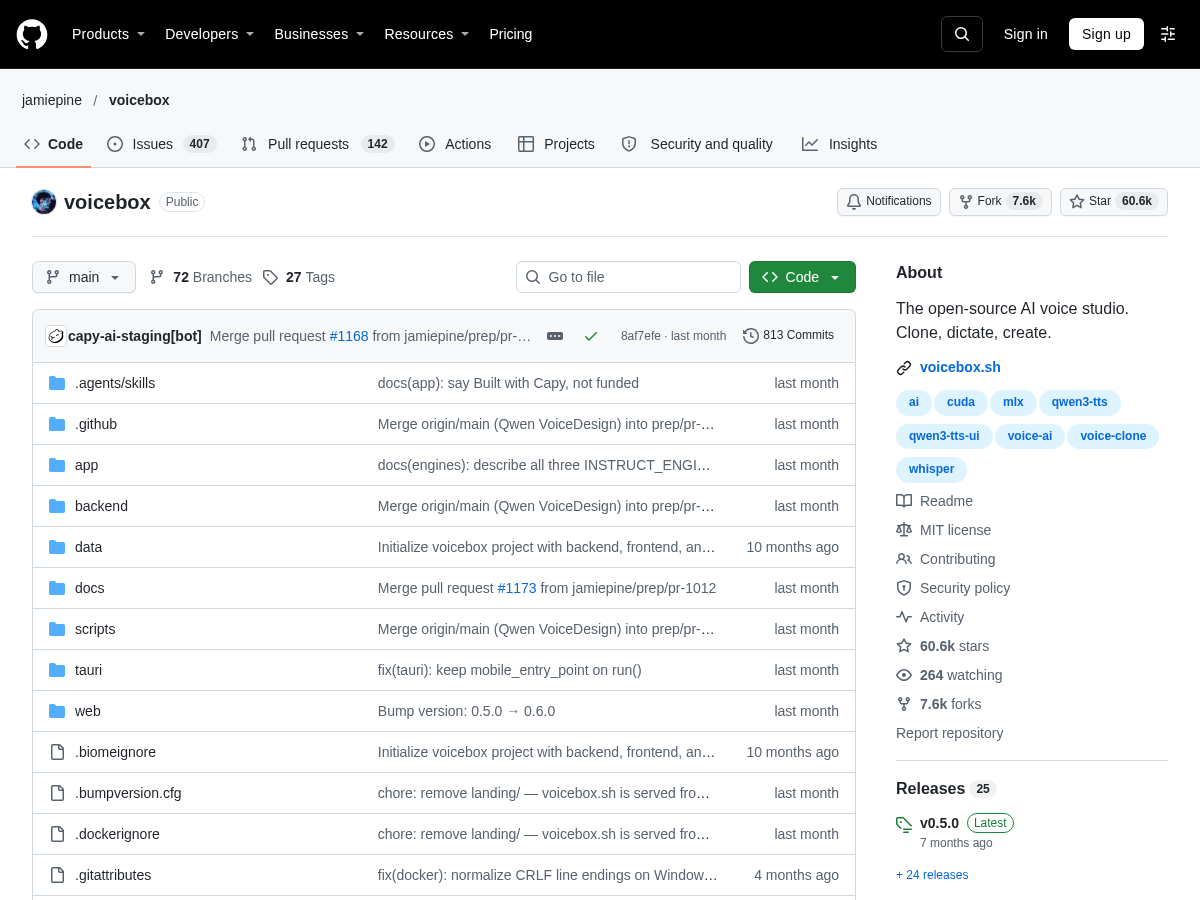
Screenshot of Voicebox
Voicebox
Voice & Audio Open Source

Voicebox is an open-source AI voice studio that allows users to clone, dictate, and create voices. It is a comprehensive platform that provides a range of features and tools for voice creation and manipulation. With Voicebox, users can create custom voices, clone existing voices, and even dictate text to create new voices. The platform is designed to be user-friendly and accessible, making it easy for users to get started with voice creation. Voicebox is built using a range of technologies, including AI and machine learning algorithms, and is designed to be highly customizable and flexible. The platform is constantly evolving, with new features and updates being added regularly. Overall, Voicebox is a powerful tool for anyone looking to create and manipulate voices, and its open-source nature makes it accessible to a wide range of users. Voicebox has a strong focus on community involvement, with a large and active community of developers and users who contribute to the platform and provide support to one another. The platform is well-documented, with a range of tutorials, guides, and other resources available to help users get started. Voicebox is a highly versatile platform, and can be used for a wide range of applications, from voice assistants and chatbots to audio production and post-production. The platform is designed to be highly scalable, and can be used by individuals, businesses, and organizations of all sizes. With its advanced features, customizable interface, and strong community support, Voicebox is an ideal choice for anyone looking to create and manipulate voices. The platform is constantly improving, with new features and updates being added regularly, and its open-source nature ensures that it will continue to evolve and improve over time.

Solves

Voicebox solves the problem of creating and manipulating custom voices, which can be time-consuming and difficult to do manually. With Voicebox, users can easily create custom voices, clone existing voices, and dictate text to create new voices, making it an ideal solution for anyone looking to create and manipulate voices. The platform is particularly useful for developers, businesses, and organizations that need to create custom voices for their applications, products, or services. By providing a range of features and tools for voice creation and manipulation, Voicebox makes it easy for users to create high-quality custom voices that meet their specific needs and requirements.

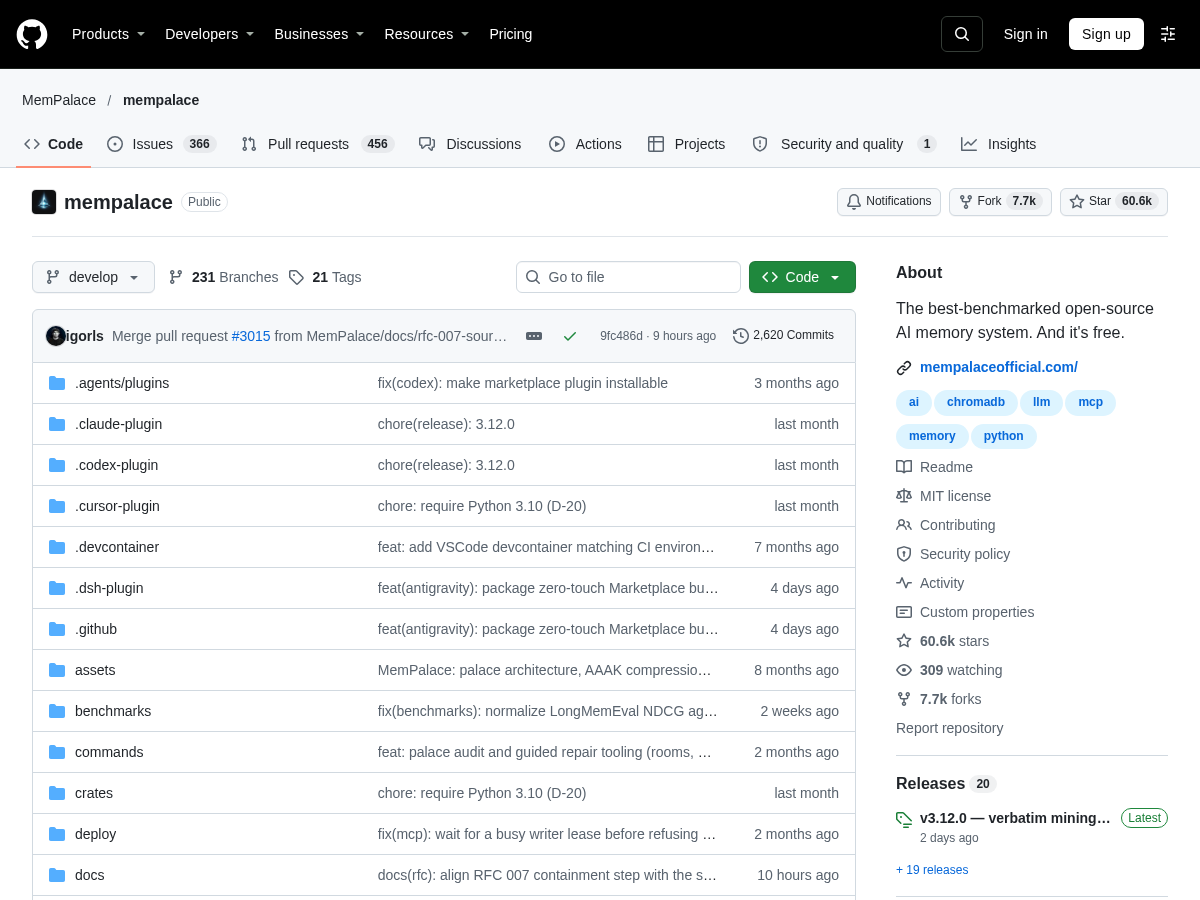
Screenshot of Mempalace
Mempalace
LLM Open Source

Mempalace is an open-source AI memory system that is designed to provide a robust and efficient way to store and retrieve information. The system is built on top of a palace architecture, which consists of wings, rooms, closets, and drawers. The palace structure is designed to mimic the human brain's ability to organize and store information, with each wing representing a specific topic or project, and each room representing a sub-topic or sub-project. The closets and drawers within each room are used to store specific pieces of information, such as verbatim transcripts or compressed data using the AAAK compression dialect. The system also includes a knowledge graph, which is a temporal entity-relationship triple store that allows for efficient querying and retrieval of information. The Mempalace system is designed to be highly scalable and can handle large amounts of data, making it suitable for a wide range of applications, from personal note-taking to large-scale enterprise data management. The system is also highly customizable, with a range of tools and plugins available to extend its functionality. Overall, Mempalace is a powerful and flexible AI memory system that has the potential to revolutionize the way we store and retrieve information. Mempalace has achieved a 96.6% Recall@5 on LongMemEval, which is the highest zero-API score published. It has also achieved 100% recall with optional Haiku rerank. The system is local, free, and does not require an API key. Mempalace has a range of features, including palace audit and guided repair tooling, which allows users to improve the organization of their palace and repair any issues that may arise. The system also includes a range of commands, such as `mempalace audit` and `mempalace instructions audit`, which provide users with a structured approach to auditing and repairing their palace. Overall, Mempalace is a highly advanced and powerful AI memory system that has the potential to greatly improve the way we store and retrieve information.

Solves

Mempalace solves the problem of information overload and disorganization, which is a common issue in today's digital age. With the vast amount of information available, it can be difficult to store and retrieve information in a efficient and effective manner. Mempalace provides a solution to this problem by providing a robust and efficient way to store and retrieve information, using a palace architecture and knowledge graph to organize and query information. This allows users to quickly and easily find the information they need, and to store and retrieve information in a way that is tailored to their specific needs and preferences.

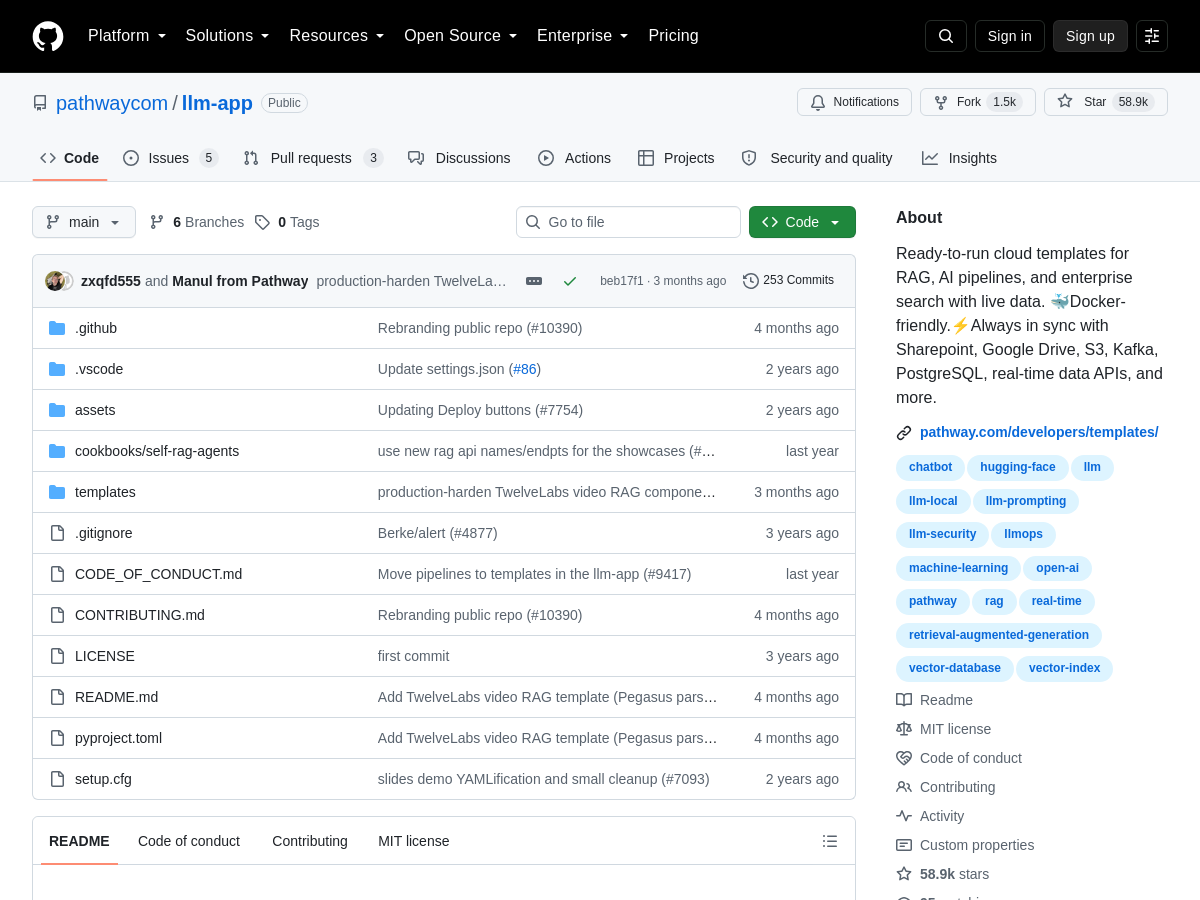
Screenshot of Llm App
Llm App
LLM Open Source

Llm App is an open-source project that provides ready-to-run cloud templates for RAG, AI pipelines, and enterprise search with live data. It is Docker-friendly and always in sync with various data sources such as Sharepoint, Google Drive, S3, Kafka, PostgreSQL, and real-time data APIs. The project has a wide range of applications and is suitable for developers, ML engineers, and data scientists. It has a large community of contributors and users, with over 58,000 stars on GitHub. The project is constantly evolving, with new features and updates being added regularly. It has a comprehensive documentation and a large collection of templates and examples, making it easy to get started and use. The project is also highly customizable, allowing users to tailor it to their specific needs and use cases. Overall, Llm App is a powerful and flexible tool for building and deploying AI-powered applications. It has a strong focus on enterprise search and RAG, and is well-suited for large-scale deployments. The project is also highly extensible, with a wide range of plugins and integrations available. With its large community and comprehensive documentation, Llm App is an ideal choice for developers and organizations looking to build and deploy AI-powered applications. The project is constantly improving, with new features and updates being added regularly. It is also highly secure, with a strong focus on security and compliance. The project has a wide range of use cases, including enterprise search, RAG, and AI-powered applications. It is suitable for a wide range of industries, including healthcare, finance, and manufacturing. Overall, Llm App is a powerful and flexible tool for building and deploying AI-powered applications.

Solves

Llm App solves the problem of building and deploying AI-powered applications, particularly in the areas of enterprise search and RAG. It provides a comprehensive set of tools and templates, making it easy to get started and use. The project is highly customizable, allowing users to tailor it to their specific needs and use cases. It also has a strong focus on security and compliance, making it suitable for large-scale deployments. With its large community and comprehensive documentation, Llm App is an ideal choice for developers and organizations looking to build and deploy AI-powered applications. The project is constantly improving, with new features and updates being added regularly, making it a reliable and trustworthy choice for building and deploying AI-powered applications.

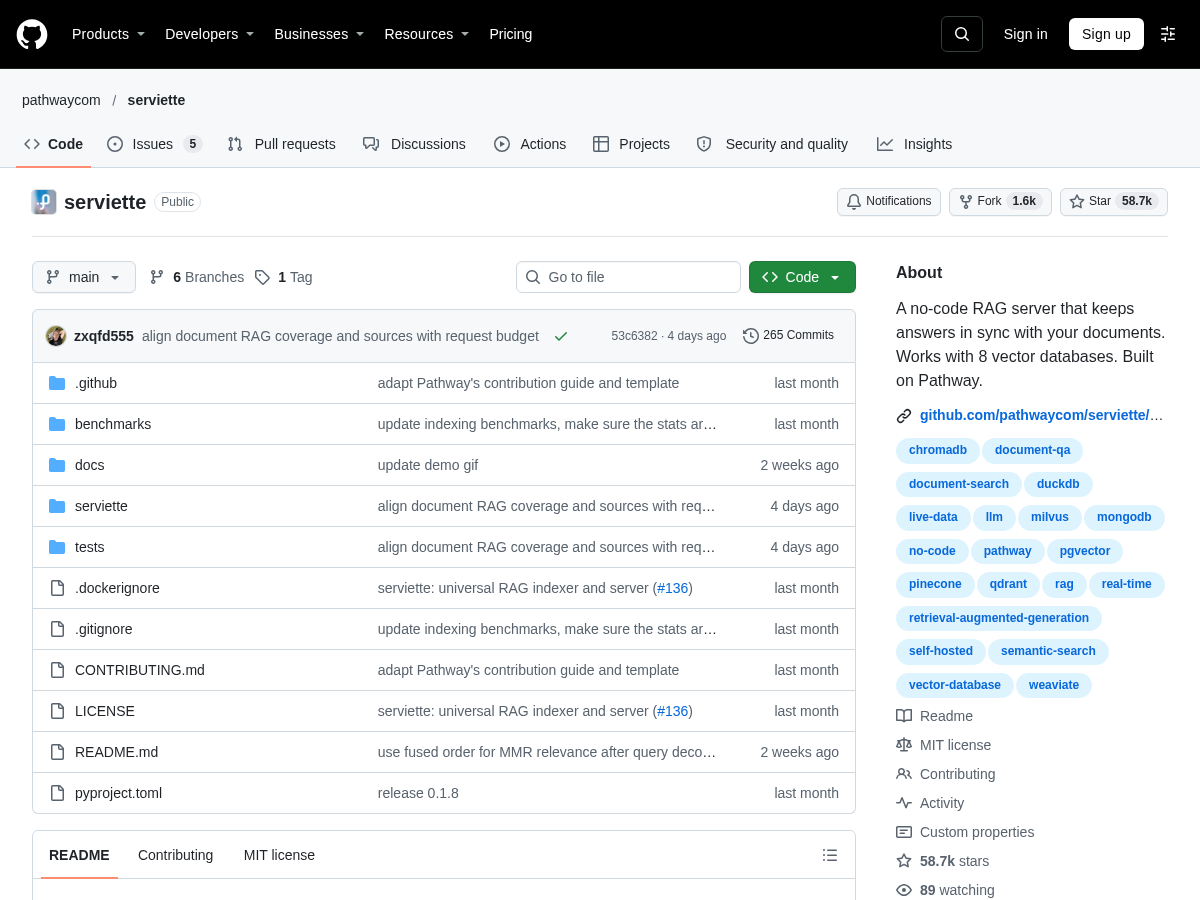
Screenshot of Serviette
Serviette
LLM Open Source

Serviette is a no-code RAG server that keeps answers in sync with your documents. It works with 8 vector databases and is built on Pathway. Serviette is designed to provide a question-answering assistant over an organization's documents, with sources cited and answers that follow the documents. It can be configured using a single YAML file and can be run using two commands. Serviette has several features, including live and incremental indexing, multiple sources, multimodal support, and decoupled and scalable architecture. It also has a web chat UI and a versioned REST API. Serviette is suitable for developers, data scientists, and business users who need to provide a question-answering assistant over their organization's documents.

Solves

Serviette solves the problem of providing a question-answering assistant over an organization's documents, with sources cited and answers that follow the documents. It is designed for developers, data scientists, and business users who need to provide a quick and accurate way to answer questions based on their organization's documents. Serviette keeps answers in sync with the documents, so any change to the documents is reflected in the answers within seconds.

Screenshot of Open Design
Open Design
AI Agents Open Source

Open Design is a local-first, open-source desktop application that serves as an alternative to Claude Design. It turns coding agents into a design engine, enabling the generation of prototypes, landing pages, dashboards, slides, images, and videos directly from agent prompts. The app runs natively on the desktop and keeps all data local, emphasizing privacy and control. Open Design integrates with popular coding agents such as Claude Code, Codex, Cursor, DeepSeek Harness, OpenCode, Hermes, and over 20 other CLIs through a bring-your-own-key (BYOK) model. It includes more than 259 skills and 142 design systems, supporting web, desktop, and mobile prototypes, as well as slide decks and media. Generated designs can be exported as real files in formats like HTML, PDF, PPTX, and MP4, making them ready for further use or sharing.

Solves

Open Design solves the problem of generating production-ready design artifacts from coding agents without relying on proprietary cloud design tools. It provides a local, open-source environment where developers can create prototypes, presentations, and media files and export them to standard formats, preserving full control and avoiding vendor lock-in.

Screenshot of Ai Agent Book
Ai Agent Book
LLM Open Source

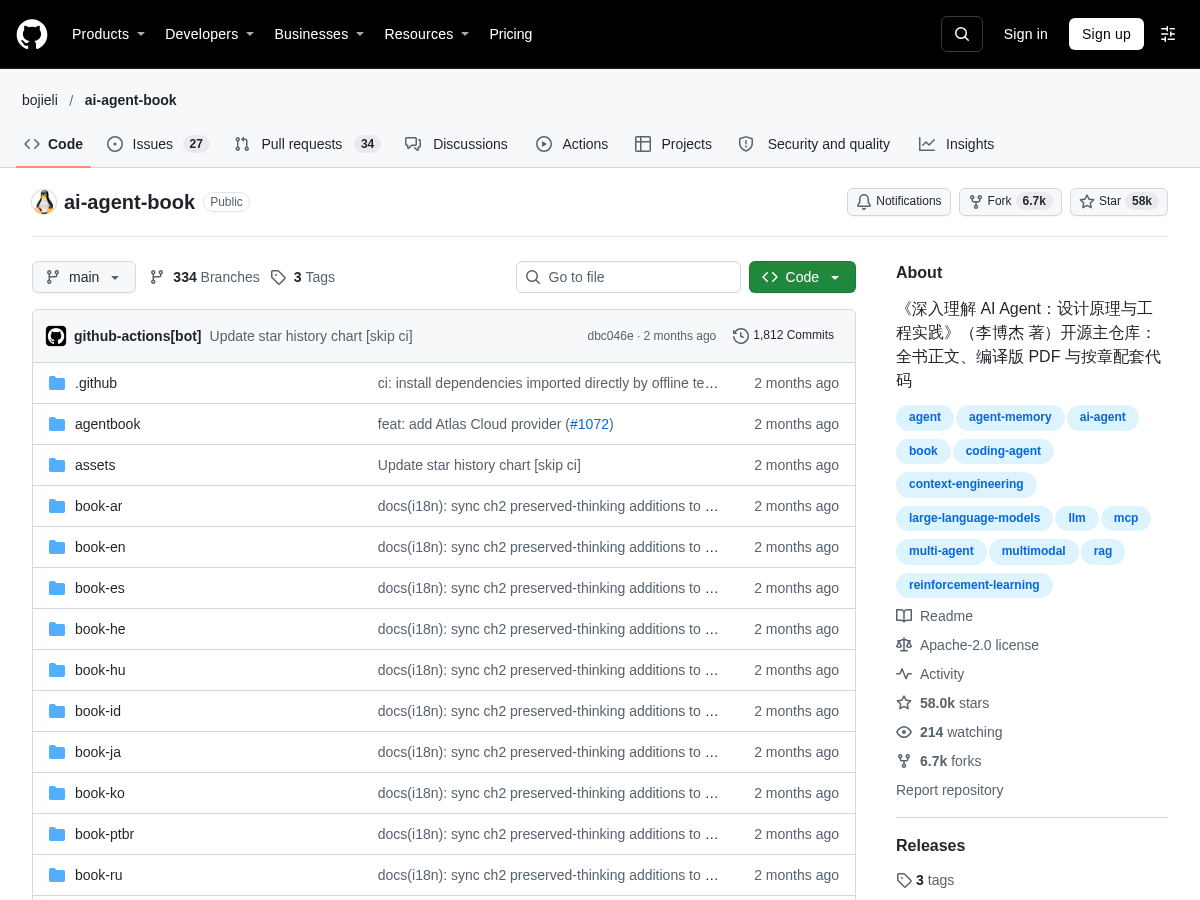
Ai Agent Book is an open-source repository for the book '深入理解 AI Agent:设计原理与工程实践' (In-Depth Understanding of AI Agents: Design Principles and Engineering Practices) by Li Bojie. The repository contains the full text of the book, compiled PDF versions, and accompanying code for each chapter. The book covers topics such as agent design, context engineering, large language models, and reinforcement learning. The repository is actively maintained, with regular updates and contributions from the community. The project has gained significant attention, with over 58,000 stars and 6,700 forks on GitHub. The repository also includes translations of the book in multiple languages, including Arabic, English, Spanish, Hebrew, Hungarian, Indonesian, Japanese, and Korean.

Solves

The problem that Ai Agent Book solves is the lack of comprehensive resources for understanding AI agents and their design principles. The book and accompanying code provide a thorough introduction to the subject, making it easier for developers, researchers, and students to learn about AI agents and their applications. By providing a free and open-source resource, Ai Agent Book democratizes access to knowledge about AI agents, enabling a broader range of people to learn about and contribute to the field.

Screenshot of Awesome Claude Code
Awesome Claude Code
LLM Open Source

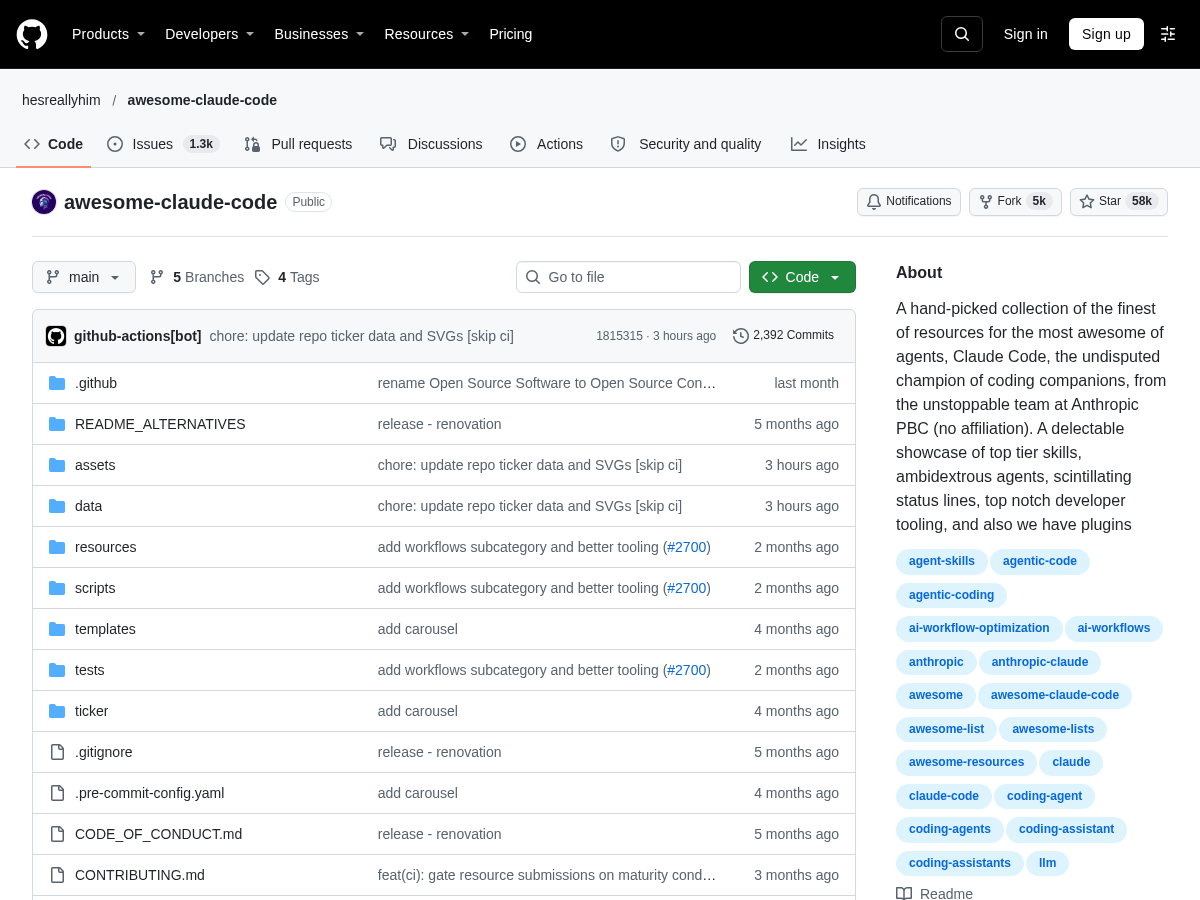
Awesome Claude Code is a hand-picked collection of the finest resources for Claude Code, a coding companion developed by Anthropic PBC. The project showcases top-tier skills, ambidextrous agents, scintillating status lines, top-notch developer tooling, and plugins. It is designed to provide a delectable showcase of resources for developers, making it easier for them to find and utilize the best tools and technologies. The project is constantly updated, with new resources and features being added regularly. With its focus on providing high-quality resources, Awesome Claude Code has become a popular destination for developers looking to improve their skills and stay up-to-date with the latest developments in the field. The project's resources are carefully curated, ensuring that only the most useful and relevant information is included. This makes it an invaluable resource for developers, saving them time and effort in finding the tools and technologies they need. Overall, Awesome Claude Code is a comprehensive and well-maintained project that provides a wide range of resources for developers, making it an essential tool for anyone looking to improve their coding skills. The project's commitment to quality and its focus on providing the best possible resources make it a standout in the world of coding companions. With its extensive collection of resources, Awesome Claude Code is an ideal starting point for developers looking to explore new technologies and improve their skills. The project's resources are organized in a logical and easy-to-follow manner, making it simple for developers to find what they need. Whether you're a seasoned developer or just starting out, Awesome Claude Code is a valuable resource that can help you achieve your goals. The project's community is also active and engaged, with contributors regularly updating and expanding the resources available. This ensures that the project stays relevant and up-to-date, providing developers with the latest information and tools. In addition to its extensive collection of resources, Awesome Claude Code also provides a range of tools and features that make it easy for developers to get started with coding. The project's focus on providing high-quality resources and its commitment to the developer community make it a valuable asset for anyone looking to improve their coding skills.

Solves

Developers often struggle to find the best resources and tools for their coding needs. With so many options available, it can be difficult to determine which resources are the most useful and relevant. Awesome Claude Code solves this problem by providing a carefully curated collection of the finest resources for Claude Code, making it easier for developers to find and utilize the best tools and technologies. By providing a comprehensive and well-maintained collection of resources, Awesome Claude Code saves developers time and effort, allowing them to focus on improving their coding skills and staying up-to-date with the latest developments in the field.

Screenshot of Private Gpt
Private Gpt
LLM Open Source

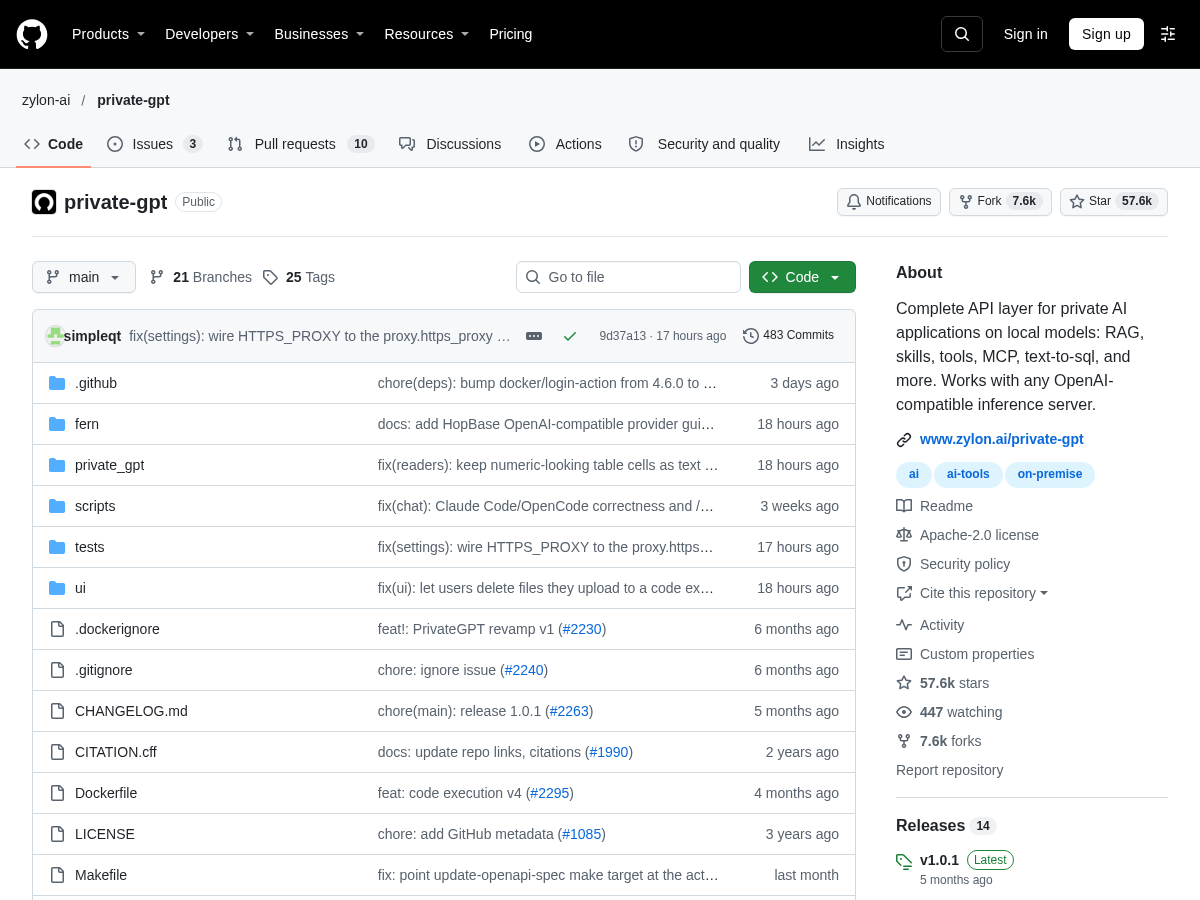
Private GPT is a complete API layer for private AI applications on local models, including RAG, skills, tools, MCP, text-to-sql, and more. It works with any OpenAI-compatible inference server, providing a flexible and customizable solution for developers and organizations. The API layer is designed to be highly extensible, allowing users to integrate their own models and tools seamlessly. With Private GPT, users can build a wide range of AI applications, from chatbots and virtual assistants to content generation and data analysis tools. The API is well-documented and easy to use, making it accessible to developers of all skill levels. Private GPT is also highly scalable, allowing it to handle large volumes of traffic and data with ease. Overall, Private GPT is a powerful tool for anyone looking to build private AI applications on local models. Private GPT has a strong focus on security and privacy, allowing users to keep their data and models secure and private. The API is constantly evolving, with new features and updates being added regularly. Private GPT is open-source, which means that users can contribute to the development of the API and help shape its future direction. The API has a large and active community of developers, which provides a wealth of resources and support for users. Private GPT is a highly customizable solution, allowing users to tailor the API to their specific needs and use cases. The API is also highly compatible with other tools and platforms, making it easy to integrate into existing workflows and systems.

Solves

Private GPT solves the problem of providing a secure and private API layer for AI applications on local models. Many organizations and developers need to build AI applications that require access to sensitive data and models, but they are hesitant to use public cloud-based services due to security and privacy concerns. Private GPT provides a solution to this problem by allowing users to build and deploy AI applications on their own local models, while still providing a flexible and customizable API layer. This allows users to keep their data and models secure and private, while still benefiting from the power and flexibility of AI technology.

Screenshot of Faceswap
Faceswap
AI/ML Open Source

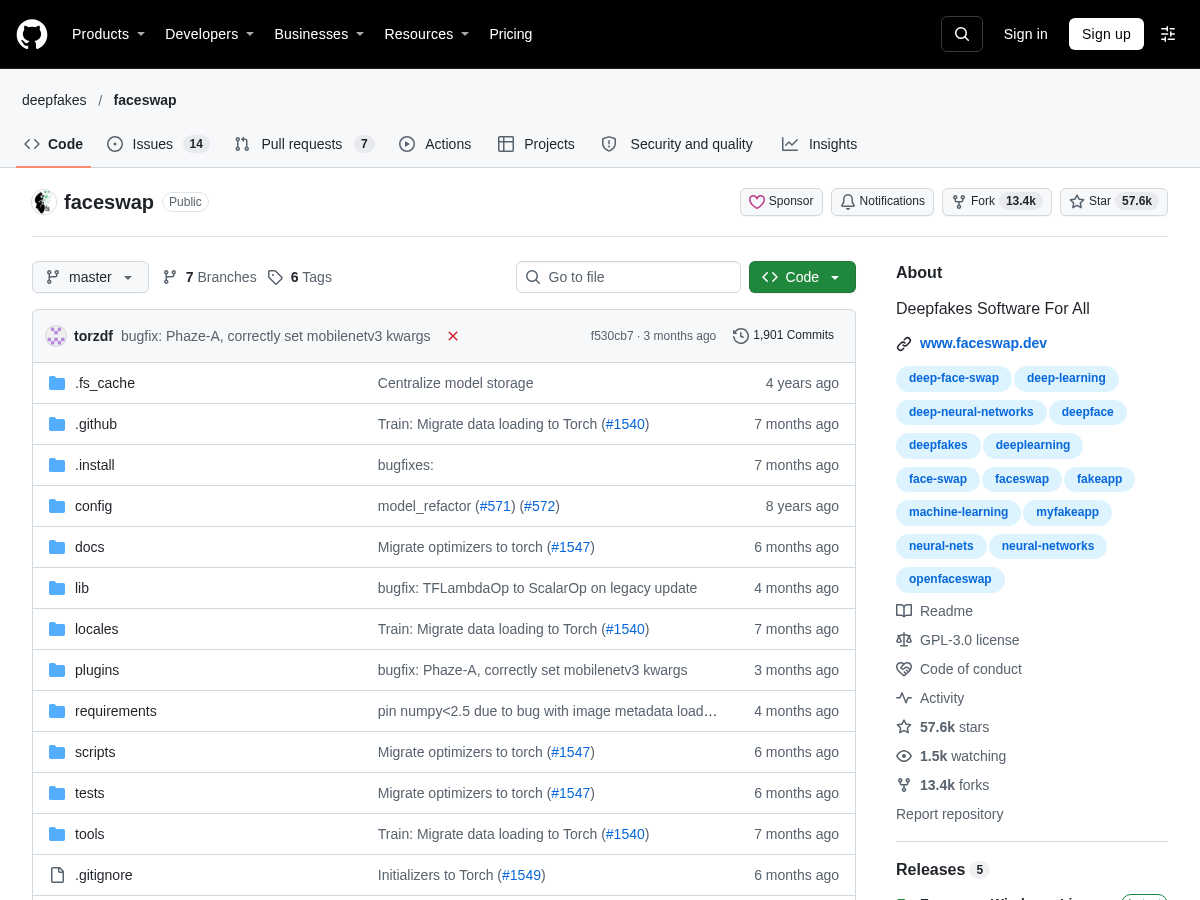
Faceswap is an open-source deepfake software that enables users to create realistic face swaps in videos and images. The project utilizes deep learning algorithms to analyze and manipulate facial features, allowing for seamless and convincing swaps. With its robust architecture and extensive community support, Faceswap has become a popular tool among developers, researchers, and enthusiasts alike. The software is designed to be highly customizable, with a wide range of configuration options and plugins available to tailor the face swapping process to specific needs. Faceswap's capabilities extend beyond simple face swaps, as it can also be used for tasks such as face detection, tracking, and manipulation. The project's GitHub repository provides extensive documentation, tutorials, and resources to help users get started and contribute to the community. Overall, Faceswap is a powerful and versatile tool that has democratized access to deepfake technology, enabling a wide range of applications in fields such as entertainment, education, and research. Faceswap's development is actively maintained, with regular updates and improvements being made to the software. The project's community is also very active, with many contributors and users sharing their knowledge, expertise, and creations. This has led to a vast array of use cases, from simple face swaps to complex video editing projects. The software's open-source nature has also facilitated the development of various plugins and extensions, further expanding its capabilities. In addition to its technical features, Faceswap has also sparked interesting discussions about the ethics and implications of deepfake technology, highlighting the need for responsible innovation and usage. As the project continues to evolve, it is likely to remain a leading platform for deepfake research and development, pushing the boundaries of what is possible with AI-generated content.

Solves

Faceswap solves the problem of creating realistic face swaps in videos and images, which can be time-consuming and require significant expertise using traditional video editing software. By leveraging deep learning algorithms, Faceswap provides a user-friendly and efficient solution for creating convincing face swaps, enabling a wide range of applications in fields such as entertainment, education, and research. The software's open-source nature and active community also ensure that it remains a dynamic and adaptable tool, with new features and improvements being added regularly.

Screenshot of Yolov5
Yolov5
AI/ML Open Source

YOLOv5 is a family of compound-scaled object detection models trained on the COCO dataset. It is implemented in PyTorch and provides a complete training, validation, and inference pipeline. The model architecture uses a modified CSPDarknet53 backbone with a PANet neck and YOLO detection head, supporting anchor-based prediction across multiple scales. YOLOv5 ships with several pre-trained variants—nano, small, medium, large, and xlarge—that trade speed for accuracy. The repository includes utilities for automatic data augmentation (Mosaic, MixUp), hyperparameter evolution, auto-anchor selection, and export to deployment formats like ONNX, CoreML, TFLite, TensorRT, and OpenVINO. A classification module supports image classification tasks, and the codebase is designed for easy extension and customization. YOLOv5 has been widely adopted due to its balance of speed and accuracy, active community maintenance, and integration with the Ultralytics ecosystem. It can be used from the command line or as a Python library, and Docker containers are provided for reproducible execution. The project is under continuous updates with frequent commits addressing bugs, dependency bumps, and compatibility improvements.

Solves

YOLOv5 solves the problem of real-time object detection with high accuracy and low computational cost. Developers and researchers need a state-of-the-art detection system that can be deployed on edge devices like smartphones, embedded platforms, and browsers. YOLOv5 provides a single-stage detector that processes images and video streams quickly while maintaining competitive mAP scores, eliminating the need for complex two-stage detectors. Its extensive export capabilities further simplify deployment across diverse hardware.

Screenshot of Face_recognition
Face_recognition
Dev Tools Open Source

Face_recognition is an open-source Python library and command-line tool that provides simple, high-level interfaces for face recognition tasks. Built on top of dlib’s state-of-the-art deep learning model, it offers an incredibly easy API to detect faces in images, extract face encodings (128-dimensional vectors), and compare them for identity matching. The library abstracts away the complexity of machine learning, allowing users to perform face recognition with just a couple of lines of code. It supports both image files and real-time video streams, and can handle multiple faces in a single frame. Key features include face detection (finding all faces in an image), face landmarks (locating eyes, nose, mouth, etc.), face encoding (converting a face into a numerical vector), and face comparison (checking if two faces are of the same person). The command-line tool allows quick operations like finding faces, identifying known people, or extracting facial encodings without writing code. Designed for ease of use, it is ideal for rapid prototyping and integration into applications that require face identification, such as security systems, photo organizers, and access control. The library is well-documented with examples and has been widely adopted due to its simplicity and accuracy.

Solves

Integrating face recognition into software applications has traditionally required deep expertise in computer vision and machine learning. Developers without this specialized knowledge often struggle to implement reliable face detection and identification. Face_recognition solves this by offering a straightforward, high-level API that encapsulates the complexity of dlib’s underlying algorithms. It enables any Python developer to add face recognition capabilities—such as verifying a person’s identity, tagging photos, or building attendance systems—with just a few function calls, dramatically reducing development time and technical barriers.

Screenshot of Flowise
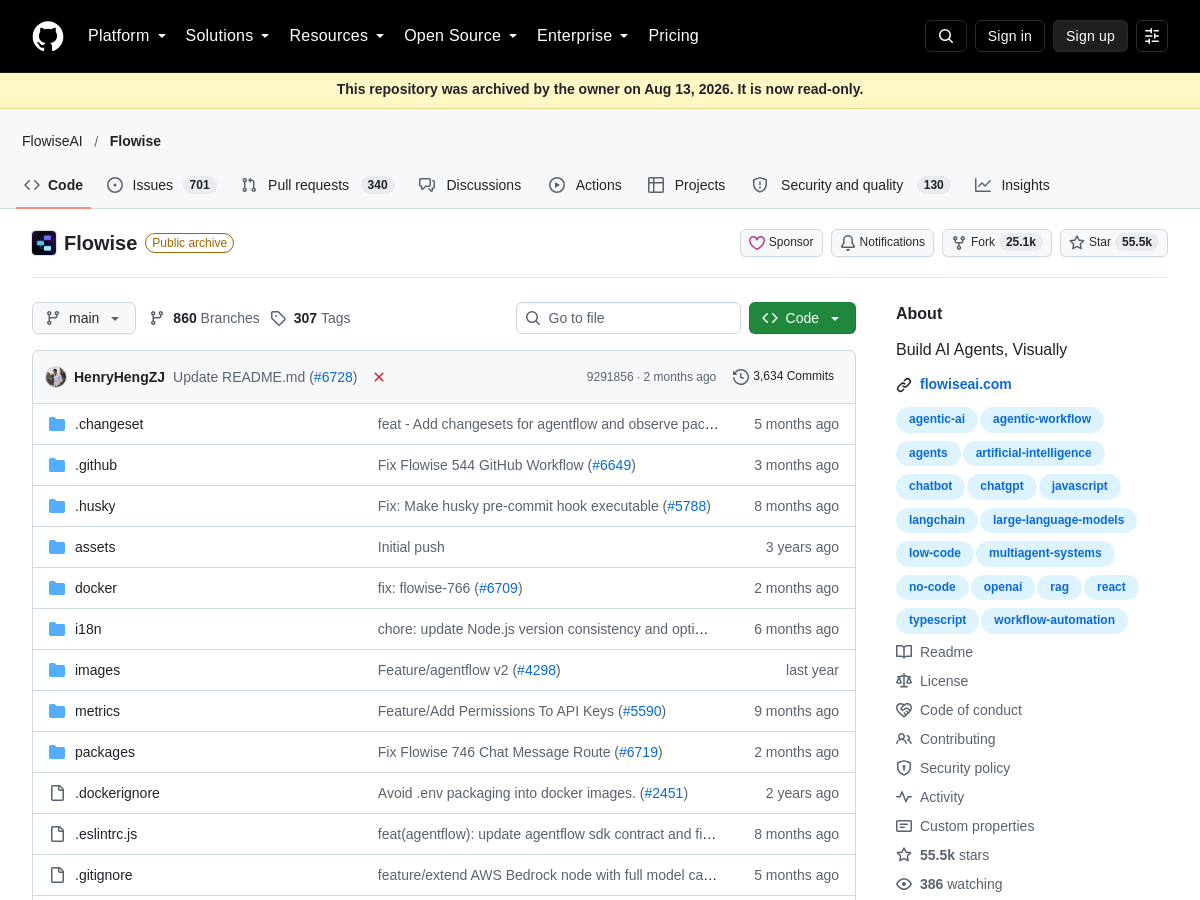
Flowise
AI Agents Open Source

Flowise is an open-source project that enables users to build AI agents visually. It provides a platform for creating and managing AI-powered agents, allowing users to design and deploy custom AI solutions. The project is built using a variety of technologies, including JavaScript, React, and TypeScript, and is designed to be highly customizable and extensible. Flowise also integrates with other tools and services, such as GitHub and Docker, to provide a seamless development experience. The project has a strong focus on community involvement, with a large number of contributors and a active discussion forum. Overall, Flowise provides a powerful and flexible platform for building and deploying AI agents, and is well-suited for a wide range of applications and use cases. The project is constantly evolving, with new features and updates being added regularly. The use of AI agents can help automate tasks, improve decision-making, and enhance customer experiences. Flowise provides a unique approach to building AI agents, allowing users to create custom agents using a visual interface. This approach makes it easier for users to create and deploy AI agents, without requiring extensive programming knowledge. The project also provides a range of pre-built templates and examples, making it easier for users to get started with building their own AI agents. In addition to its core features, Flowise also provides a range of tools and services for managing and deploying AI agents, including support for Docker and Kubernetes. This makes it easy to deploy and manage AI agents in a variety of environments, from local development machines to large-scale production deployments. Overall, Flowise provides a powerful and flexible platform for building and deploying AI agents, and is well-suited for a wide range of applications and use cases.

Solves

Flowise solves the problem of building and deploying AI agents, which can be a complex and time-consuming task. By providing a visual interface for creating and managing AI agents, Flowise makes it easier for users to create and deploy custom AI solutions. This can help automate tasks, improve decision-making, and enhance customer experiences. Flowise also provides a range of tools and services for managing and deploying AI agents, making it easier to deploy and manage AI agents in a variety of environments. Overall, Flowise provides a powerful and flexible platform for building and deploying AI agents, and is well-suited for a wide range of applications and use cases.

Screenshot of BMAD METHOD
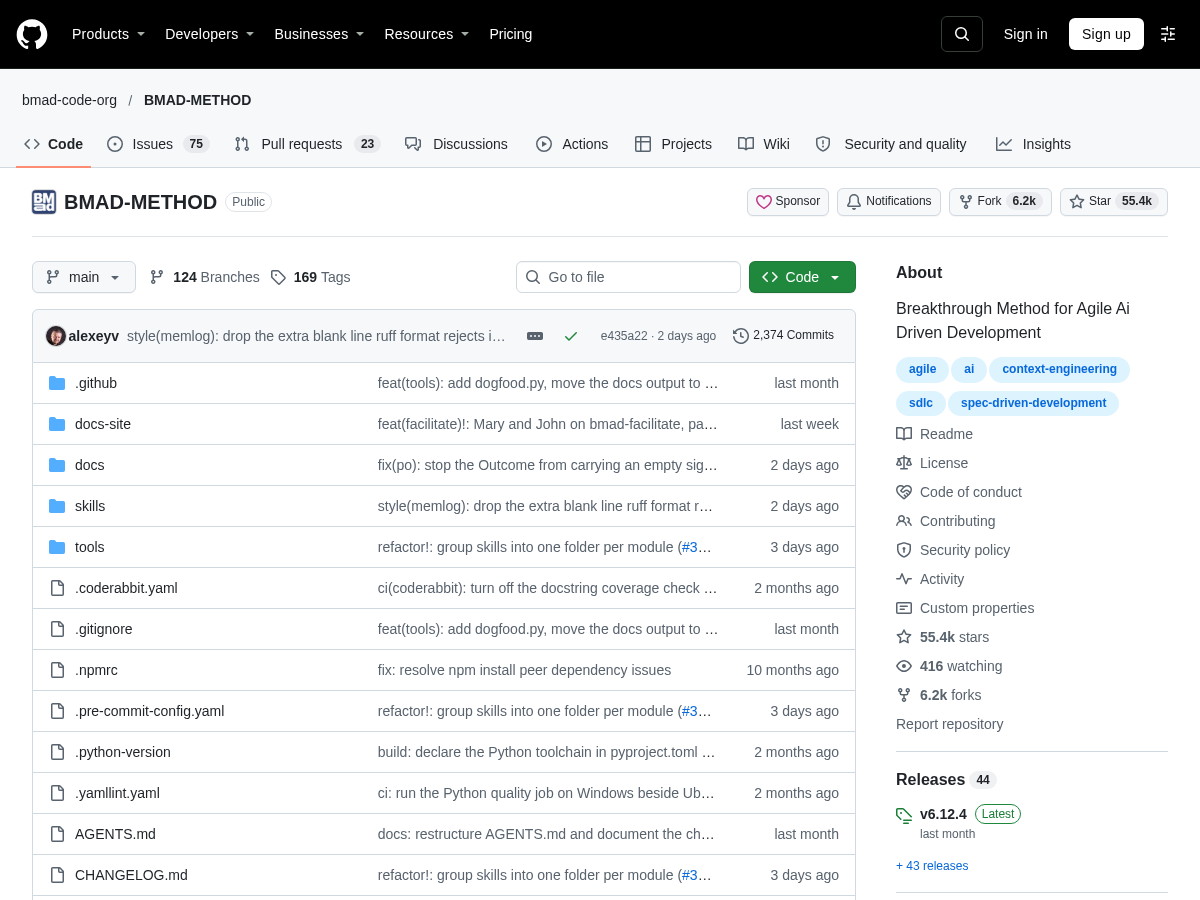
BMAD METHOD
AI/ML Open Source

The BMAD METHOD is an open-source project that provides a breakthrough method for agile AI-driven development. It is designed to facilitate the development of AI-powered systems and applications, with a focus on agility, flexibility, and collaboration. The project provides a set of tools, templates, and guidelines for developers, analysts, and other stakeholders to work together effectively and efficiently. The BMAD METHOD is built around the concept of context engineering, which involves the creation of a shared understanding of the problem domain and the development of a common language and framework for collaboration. The project also includes a set of AI-powered tools and techniques for automating various aspects of the development process, such as code generation, testing, and deployment. Overall, the BMAD METHOD is a comprehensive framework for agile AI-driven development that aims to improve the speed, quality, and reliability of software development projects. The project is highly customizable and can be tailored to meet the specific needs of different organizations and projects. It also includes a set of pre-built templates and examples to help users get started quickly and easily. The BMAD METHOD is a rapidly evolving project, with new features and updates being added regularly. The project's community is active and engaged, with many contributors and users participating in discussions, reporting issues, and providing feedback. The project's documentation is extensive and well-maintained, making it easy for new users to get started and for experienced users to dive deeper into the project's features and capabilities. The BMAD METHOD is a valuable resource for anyone involved in software development, particularly those working on AI-powered projects. It provides a unique combination of agility, flexibility, and collaboration, making it an ideal choice for teams and organizations looking to improve their development processes and outcomes. The project's focus on context engineering and AI-powered tools and techniques makes it particularly well-suited for complex and dynamic problem domains. By providing a shared understanding of the problem domain and a common language and framework for collaboration, the BMAD METHOD enables teams to work more effectively and efficiently, and to deliver high-quality solutions that meet the needs of stakeholders and users.

Solves

The BMAD METHOD solves the problem of how to develop AI-powered systems and applications in a rapid, flexible, and collaborative manner. Many organizations and teams struggle with the complexity and uncertainty of AI-powered development, which can lead to delays, cost overruns, and poor outcomes. The BMAD METHOD provides a comprehensive framework for agile AI-driven development, which enables teams to work more effectively and efficiently, and to deliver high-quality solutions that meet the needs of stakeholders and users. By providing a shared understanding of the problem domain and a common language and framework for collaboration, the BMAD METHOD helps teams to overcome the challenges of AI-powered development and to achieve their goals and objectives.

Screenshot of Gpt Engineer
Gpt Engineer
Code Open Source

GPT Engineer is an open-source command-line interface (CLI) platform designed to experiment with AI-driven code generation. It allows users to describe software requirements in natural language, and the tool generates corresponding code files, enabling rapid prototyping and automation of coding tasks. The project was created by Anton Osika and serves as a precursor to the popular Lovable platform. The tool is intended for developers and technical enthusiasts who want to explore the capabilities of large language models in software development. By providing a flexible, local execution environment, GPT Engineer allows users to integrate different AI backends and customize generation workflows. It emphasizes iterative refinement and hands-on experimentation with code generation. As an open-source project, GPT Engineer has attracted a community of contributors and users interested in AI-assisted programming. While it may require familiarity with the command line and AI model APIs, it provides a foundation for understanding and building upon automated code generation techniques.

Solves

GPT Engineer addresses the need for rapid code generation from natural language specifications, reducing the time and effort required to translate ideas into functional code. It enables developers to bypass boilerplate and focus on higher-level design, accelerating prototyping and experimentation with AI-driven software development.

Screenshot of MojoMake - AI Image to Video Generator

MojoMake is an AI-powered image-to-video generation platform that enables users to transform static images into dynamic, engaging videos. By aggregating access to multiple leading AI models—such as those specialized in motion synthesis, style transfer, and animation—MojoMake gives users the ability to choose the best model for their specific creative needs directly from a single interface. With over 100 built-in effects, including zooms, pans, portraits, landscapes, and abstract animations, the platform caters to a wide range of visual styles. The tool is designed for simplicity: upload an image, select a desired effect and model, and generate a video clip in seconds. It operates entirely in the cloud, requiring no local hardware or technical expertise. MojoMake also offers a freemium pricing model, allowing users to experiment with limited free generations before upgrading to paid plans for higher resolutions, longer videos, and commercial usage rights. The platform is regularly updated with new models and effects to stay at the cutting edge of generative AI.

Solves

Content creators, marketers, social media managers, and small business owners often struggle to produce video content due to lack of time, skills, or resources. Creating even simple animated videos traditionally requires expensive software and technical know-how. MojoMake solves this by providing an intuitive, AI-driven solution that instantly converts any static image into a professional-looking video clip, lowering the barrier to video creation and enabling rapid content production without prior experience.

Screenshot of Cherry Studio
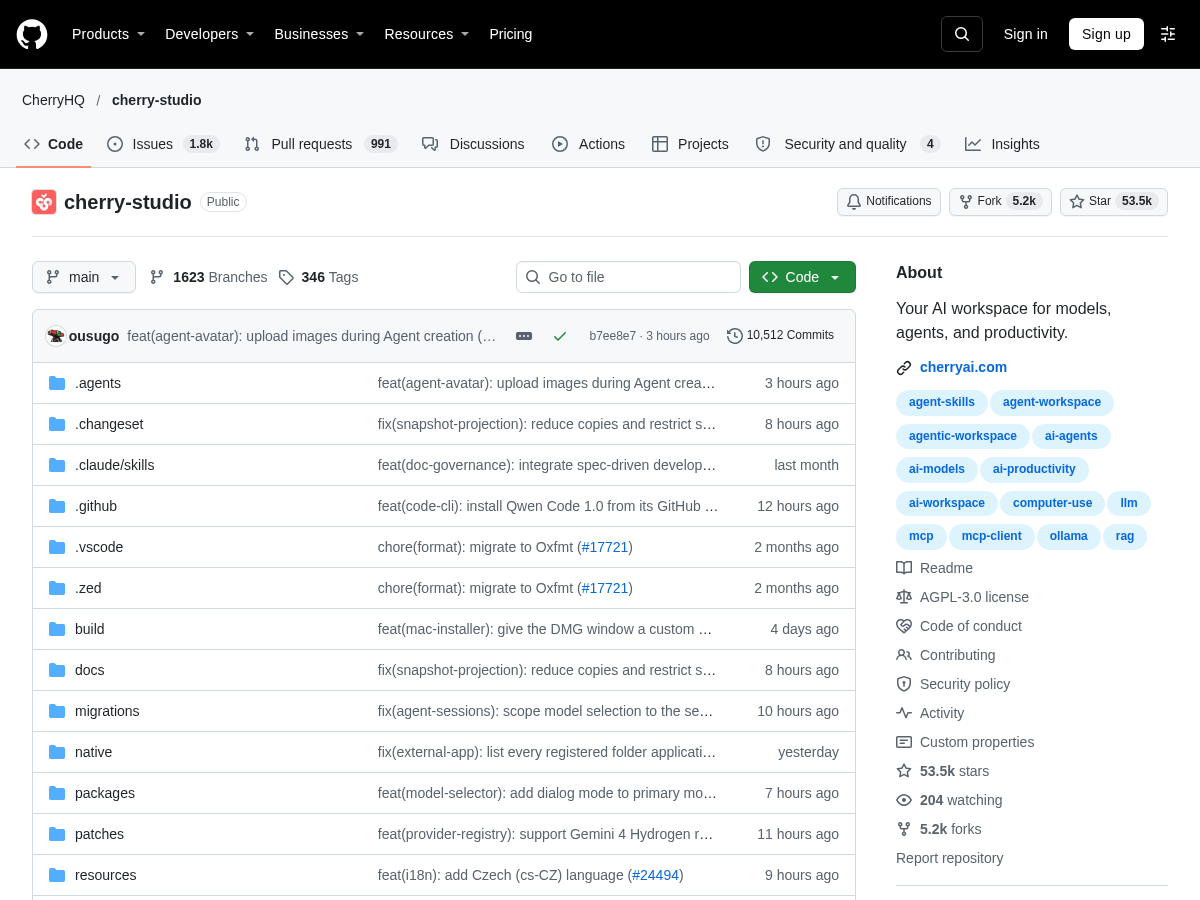
Cherry Studio
AI Agents Open Source

Cherry Studio is an open-source AI workspace designed for models, agents, and productivity. It provides a comprehensive platform for users to create, manage, and interact with AI agents, leveraging the power of artificial intelligence to enhance productivity and efficiency. The project is hosted on GitHub and has gained significant attention, with over 53,000 stars and 5,200 forks. Cherry Studio's features include agent creation, image upload, and management, as well as integration with other tools and services. The project is actively maintained, with regular updates and contributions from the community. Cherry Studio aims to provide a flexible and customizable AI workspace, allowing users to tailor the platform to their specific needs and use cases. With its open-source nature, Cherry Studio encourages collaboration and innovation, enabling developers and users to contribute to the project and shape its future development. The project's documentation and community resources are available on the Cherry AI website, providing users with a comprehensive guide to getting started with Cherry Studio and exploring its capabilities. Overall, Cherry Studio represents a significant step forward in the development of AI workspaces, offering a powerful and flexible platform for users to harness the potential of artificial intelligence. Cherry Studio's architecture is designed to be modular and extensible, allowing users to integrate the platform with other tools and services. The project's community is active and engaged, with many contributors and users sharing their experiences and knowledge on the project's GitHub page and other online forums. As the project continues to evolve, it is likely that Cherry Studio will become an increasingly important player in the AI workspace market, providing a unique and innovative solution for users looking to leverage the power of artificial intelligence.

Solves

Cherry Studio solves the problem of providing a comprehensive and customizable AI workspace for models, agents, and productivity. Many users and organizations struggle to find a suitable platform for managing and interacting with AI agents, often relying on fragmented and incomplete solutions. Cherry Studio addresses this challenge by providing a unified and flexible platform that can be tailored to specific needs and use cases. By leveraging Cherry Studio, users can streamline their workflows, enhance productivity, and unlock the full potential of artificial intelligence. The platform's open-source nature and active community ensure that it remains adaptable and responsive to the evolving needs of its users, providing a future-proof solution for AI workspace requirements.

Screenshot of Questie AI - Game Companion & Roleplay Character Chat

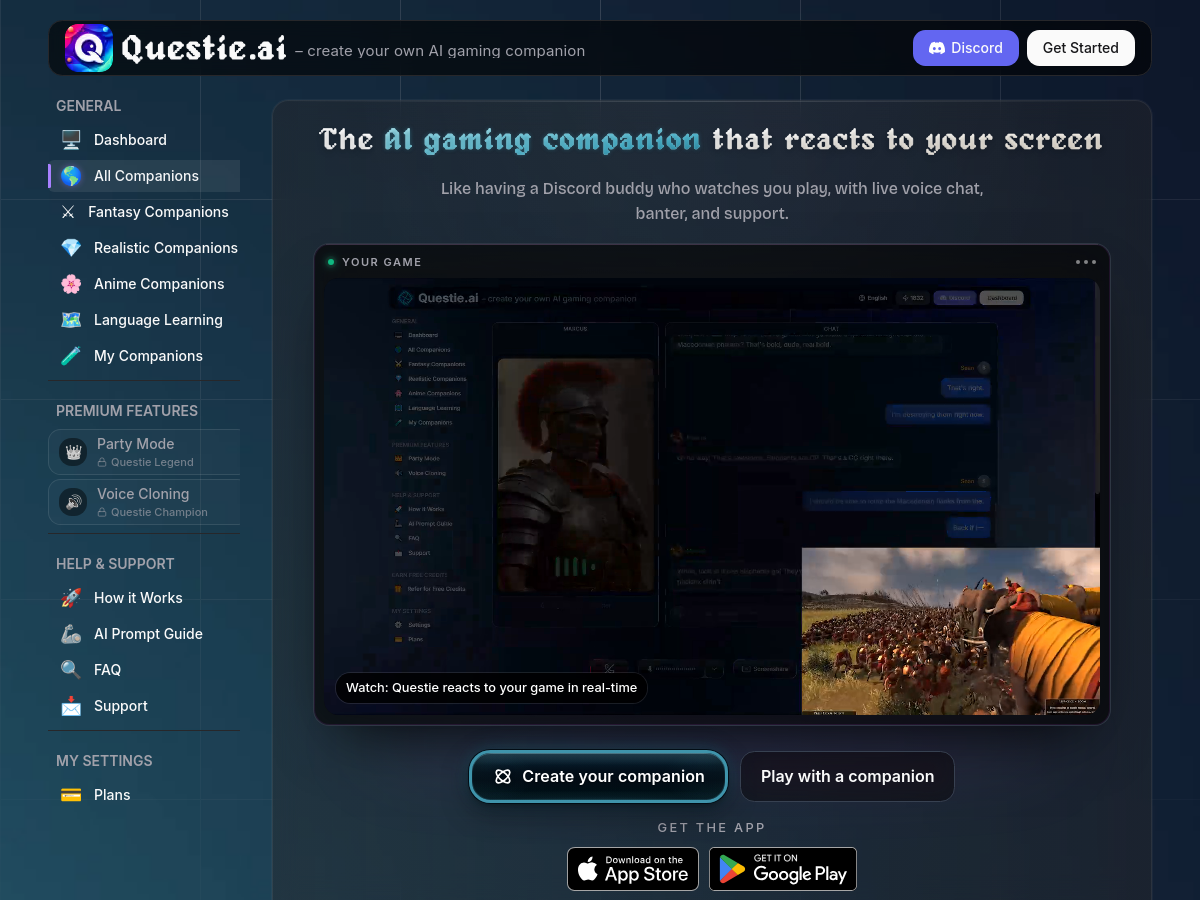
Questie AI is a freemium AI companion platform designed specifically for gamers and roleplay enthusiasts. It allows users to create custom AI characters that act as gaming companions, reacting to gameplay in real time through live screenshare and engaging in voice chat. The service positions itself as a virtual Discord buddy that watches you play, offering banter, encouragement, and interactive roleplay while you game. It is available as a web application and through native iOS and Android apps, with a reported community of over 50,000 players. The platform includes a library of pre-made companions across categories such as fantasy, anime, realistic, and language learning. Users can also build and personalize their own AI companions. Premium features include Party Mode and voice cloning, available through paid tiers. Questie AI has been featured in outlets such as 404 Media, Kotaku, and iXBT Games, and markets itself as an alternative to Character.AI, Moemate, PolyBuzz, Hakko AI, and similar AI roleplay platforms. Questie AI combines vision-language AI with conversational roleplay, enabling the AI to observe on-screen gameplay and respond contextually. This creates a hands-free companion experience for single-player campaigns, multiplayer sessions, and casual play. The service also supports language learning scenarios, allowing users to practice conversations with AI characters in a game-adjacent context. Its design targets gamers seeking companionship, entertainment, or a more immersive roleplay experience while playing video games.

Solves

Questie AI solves the problem of playing games alone by providing an AI companion that can watch your screen, react to gameplay events, and chat with you by voice in real time. It gives gamers a social, interactive presence during solo sessions, and offers customizable roleplay characters for those who want narrative or conversational companionship beyond traditional game NPCs.

Screenshot of Llama_index
Llama_index
Fine-tuning Open Source

LlamaIndex is a document processing platform designed for AI applications. It provides a comprehensive framework for fine-tuning and utilizing large language models (LLMs) to process and analyze documents. The platform is built on top of a vector database, which enables efficient storage and retrieval of document embeddings. LlamaIndex also supports multi-agent systems, allowing for the integration of multiple AI models and agents to work together seamlessly. The project is open-source and has a large community of contributors, with over 52,000 stars on GitHub. The documentation for LlamaIndex is extensive, covering topics such as installation, usage, and customization. The project is licensed under the MIT license, making it freely available for use and modification. LlamaIndex has a wide range of applications, including but not limited to, natural language processing, information retrieval, and document analysis. The platform is highly customizable, allowing developers to tailor it to their specific needs and use cases. Overall, LlamaIndex is a powerful tool for anyone looking to leverage the capabilities of AI in document processing and analysis. The project is constantly evolving, with new features and updates being added regularly. The community surrounding LlamaIndex is active and supportive, providing a wealth of resources and knowledge for users to tap into. Whether you're a seasoned developer or just starting out, LlamaIndex is definitely worth exploring. With its robust feature set, flexible architecture, and active community, it has the potential to revolutionize the way we work with documents and AI.

Solves

Developers and researchers working with large language models often face the challenge of efficiently processing and analyzing documents. LlamaIndex solves this problem by providing a comprehensive platform for document processing, fine-tuning, and utilization of LLMs. It enables users to easily integrate multiple AI models and agents, making it an ideal solution for complex document analysis tasks. By leveraging the capabilities of LlamaIndex, users can unlock new insights and capabilities in their document processing workflows, leading to increased productivity and innovation.

Screenshot of Supervision
Supervision
AI/ML Open Source

Supervision is an open-source computer vision project that provides reusable tools for various computer vision tasks. The project is hosted on GitHub and has gained significant attention with over 51,000 stars. Supervision supports a wide range of computer vision tasks, including classification, object detection, instance segmentation, and semantic segmentation. The project uses popular deep learning frameworks such as PyTorch and TensorFlow. The documentation and examples provided in the project demonstrate how to use the tools for different tasks, including image processing, video processing, and tracking. The project also has a strong focus on community involvement, with a code of conduct and contributing guidelines available. Overall, Supervision is a valuable resource for developers and researchers working on computer vision projects. The project's tools and examples can be used to build and deploy computer vision models, and the community involvement ensures that the project is continuously improved and updated. The latest commit to the project added support for semantic segmentation, which is a key task in computer vision. The project's documentation and examples have also been updated to reflect this new feature. With its wide range of tools and strong community involvement, Supervision is an excellent choice for anyone working on computer vision projects. The project's open-source nature also ensures that it is accessible to everyone, regardless of their budget or organization. The tools and examples provided in the project can be used in a variety of applications, including robotics, healthcare, and security. The project's focus on reusability and modularity also makes it easy to integrate with other projects and frameworks. In summary, Supervision is a comprehensive and well-maintained open-source computer vision project that provides a wide range of reusable tools and examples for various computer vision tasks.

Solves

Supervision solves the problem of building and deploying computer vision models by providing a set of reusable tools and examples. Computer vision is a key task in many applications, including robotics, healthcare, and security. However, building and deploying computer vision models can be challenging, especially for developers without extensive experience in the field. Supervision addresses this problem by providing a set of pre-built tools and examples that can be used to build and deploy computer vision models. The project's tools and examples are designed to be reusable and modular, making it easy to integrate them with other projects and frameworks. By using Supervision, developers can save time and effort, and focus on building and deploying their computer vision models.

Screenshot of LocalAI
LocalAI
Image Gen Open Source

LocalAI is an open-source AI engine that allows users to run various models, including LLMs, vision, voice, image, and video models, on any hardware without requiring a GPU. The project provides a self-hosted solution, giving users control over their data and models. LocalAI supports multiple hardware configurations and allows users to work with different types of models, making it a versatile tool for AI development and research. The project is actively maintained, with regular updates and contributions from the community. LocalAI's documentation is well-organized, providing users with a comprehensive guide to getting started, using the platform, and contributing to the project. The project's focus on decentralization and self-hosting makes it an attractive option for users who value data privacy and security. With its open-source nature and active community, LocalAI has the potential to become a leading platform for AI development and research. LocalAI's architecture is designed to be modular, allowing users to easily integrate their own models and hardware configurations. The project's use of open standards and protocols ensures that users can easily share and collaborate on models and projects. Overall, LocalAI is a powerful tool for AI development and research, providing users with a flexible and customizable platform for building and deploying AI models.

Solves

LocalAI solves the problem of limited access to AI models and hardware for developers and researchers. Many AI models require significant computational resources and specialized hardware, making it difficult for individuals and organizations to develop and deploy AI solutions. LocalAI addresses this issue by providing a self-hosted platform that allows users to run AI models on their own hardware, without requiring a GPU or other specialized equipment. This makes it possible for users to develop and deploy AI models in a more flexible and cost-effective way, without being limited by the constraints of cloud-based services or proprietary hardware.

Screenshot of Qlib
Qlib
AI Agents Open Source

Qlib is an AI-oriented Quant investment platform designed to utilize AI technology for empowering Quant Research. It supports diverse machine learning modeling paradigms, including supervised learning, market dynamics modeling, and reinforcement learning (RL). Qlib is equipped with RD-Agent to automate the R&D process, making it a comprehensive tool for quantitative research and investment. The platform is open-source and has gained significant attention and contributions from the developer community, with over 50,000 stars on GitHub. Qlib's capabilities extend to exploring ideas, implementing productions, and automating workflows, making it a valuable resource for researchers, investors, and financial institutions. Its integration with various machine learning libraries and frameworks enables users to build, test, and deploy quantitative models efficiently. The platform's documentation and community support provide users with the necessary resources to get started and stay updated with the latest developments.

Solves

Quantitative researchers and investors face the challenge of exploring and implementing complex investment strategies, which can be time-consuming and require significant expertise. Qlib solves this problem by providing a comprehensive platform that supports diverse machine learning modeling paradigms, automates the R&D process, and enables users to build, test, and deploy quantitative models efficiently. By leveraging Qlib, researchers and investors can streamline their workflow, reduce the risk of errors, and make more informed investment decisions.

Screenshot of ChatGPT Images
ChatGPT Images
Images Unknown

ChatGPT Images is a feature integrated into OpenAI's ChatGPT platform that allows users to generate and edit images directly through natural-language text prompts. Rather than operating as a standalone image generator, it functions within a conversational interface, enabling users to iteratively refine visuals by describing changes, adding objects, or adjusting styles in an ongoing dialogue. The tool leverages OpenAI's advanced multimodal models to interpret both text and existing images, supporting tasks like creating original illustrations, transforming photos, and generating custom graphics for various creative and professional purposes. Because it is part of ChatGPT, users can combine image creation with text-based assistance, making it easy to brainstorm concepts, develop visual assets, and maintain context across a project. The interface is designed for simplicity, allowing anyone with access to ChatGPT to produce visuals without prior design expertise or special software. While the underlying model is proprietary and not open source, the service is delivered through a web-based platform, requiring no installation. ChatGPT Images is continuously improved by OpenAI, reflecting the company's broader roadmap for multimodal AI capabilities.

Solves

ChatGPT Images addresses the need for accessible, conversational image generation, enabling users without design skills to create and refine visuals simply by describing what they want, eliminating the need for complex image-editing tools or separate AI art platforms.

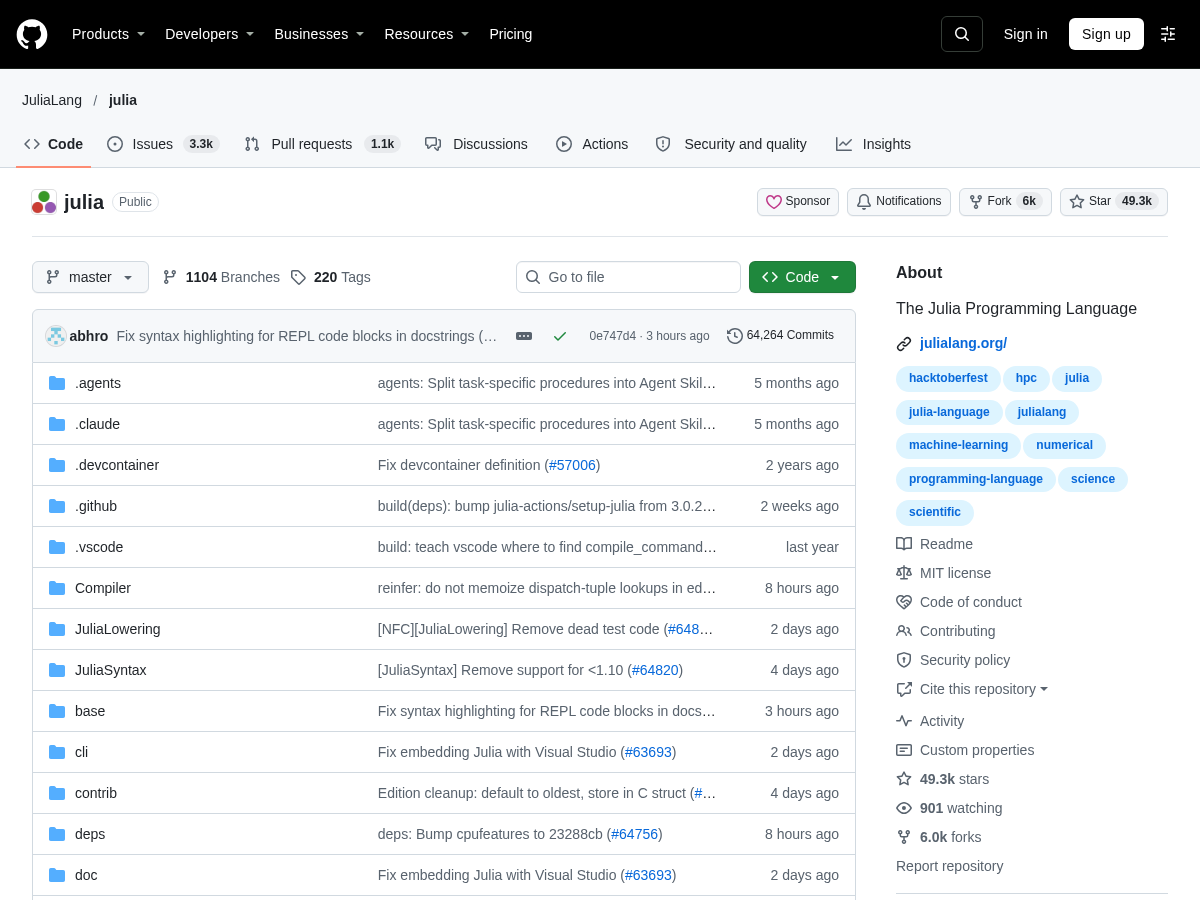
Screenshot of Julia
Julia
AI/ML Open Source

The Julia Programming Language is a high-level, high-performance, and dynamic language developed by Jeff Bezanson, Alan Edelman, Stefan Karpinski, and Viral Shah at MIT. It is designed to be fast, efficient, and easy to use, with a syntax similar to Python, MATLAB, and R. Julia is particularly suited for numerical and scientific computing, machine learning, and data analysis. It has a strong focus on performance, concurrency, and parallelism, making it an attractive choice for large-scale computations. The language is also extensible, allowing developers to add new functionality and libraries as needed. With its growing community and increasing adoption in various fields, Julia has become a popular choice for researchers, scientists, and developers alike.

Solves

The Julia Programming Language solves the problem of slow and inefficient performance in numerical and scientific computing, machine learning, and data analysis. Many languages used in these fields, such as Python and R, are interpreted and can be slow for large-scale computations. Julia addresses this issue by providing a just-in-time (JIT) compilation and type specialization, which enables it to achieve performance comparable to C++ and other low-level languages. Additionally, Julia's concurrency and parallelism features make it well-suited for large-scale computations, allowing developers to take full advantage of multi-core processors and distributed computing environments.

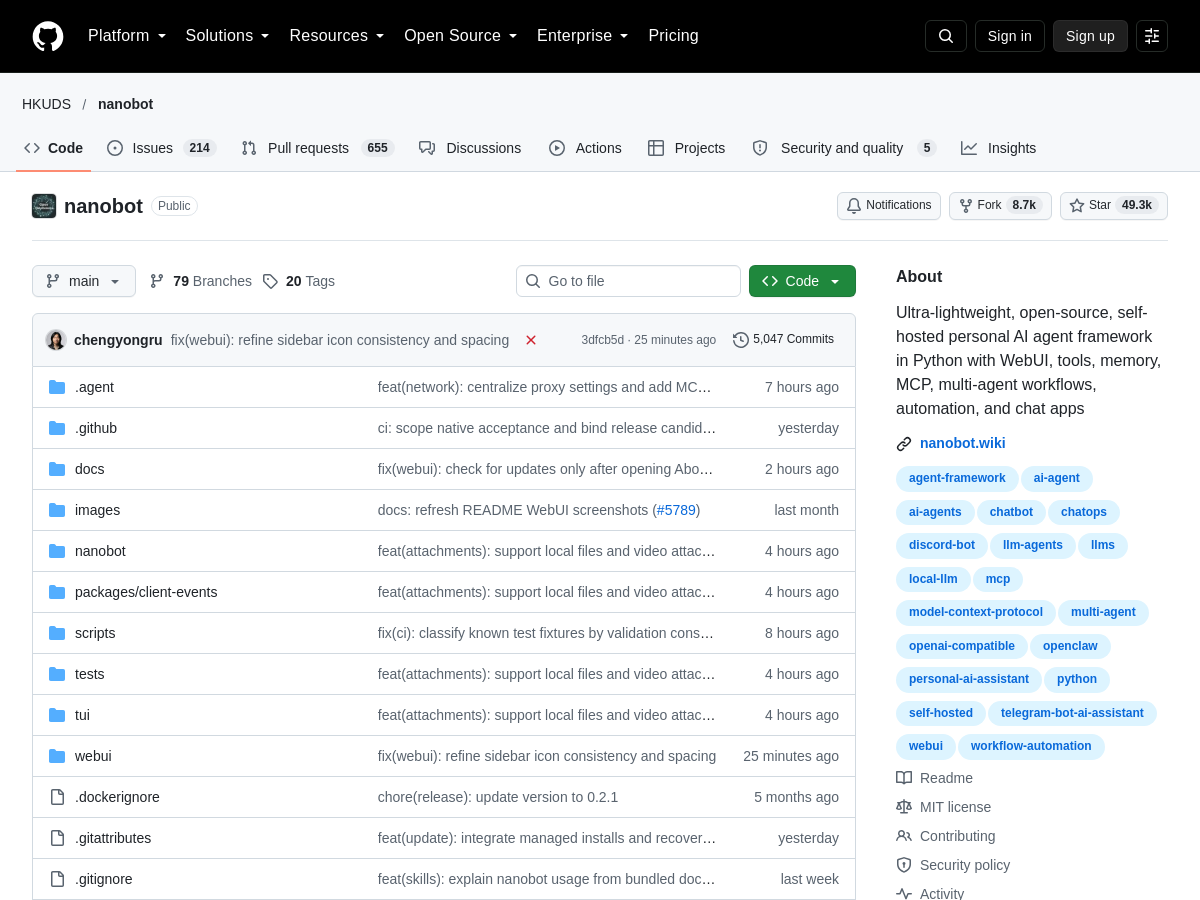
Screenshot of Nanobot
Nanobot
AI Agents Open Source

Nanobot is an ultra-lightweight, open-source, self-hosted personal AI agent framework in Python. It features a WebUI, tools, memory, MCP, multi-agent workflows, automation, and chat apps. The framework is designed to be highly customizable and extensible, allowing users to create their own AI-powered agents. Nanobot's architecture is modular, making it easy to integrate with other tools and services. The framework also includes a range of pre-built tools and features, such as support for local files and video attachments, making it a versatile solution for a wide range of use cases. With its open-source nature and active community, Nanobot is a popular choice among developers and researchers looking to build and deploy their own AI agents. The framework's self-hosted nature also ensures that users have full control over their data and agents, making it a secure and reliable solution. Overall, Nanobot is a powerful and flexible framework that enables users to build and deploy custom AI agents, making it an ideal choice for a wide range of applications. Nanobot's documentation and community resources are also extensive, making it easy for new users to get started and for experienced users to dive deeper into the framework's capabilities. The framework's WebUI provides a user-friendly interface for interacting with agents, making it accessible to users without extensive programming knowledge. Additionally, Nanobot's support for multi-agent workflows and automation enables users to create complex and dynamic AI systems, making it a powerful tool for a wide range of applications.

Solves

Nanobot solves the problem of creating and deploying custom AI agents, which can be time-consuming and require significant expertise. By providing a pre-built framework and a range of tools and features, Nanobot makes it easy for users to create and deploy their own AI agents, without requiring extensive knowledge of AI or machine learning. This enables users to automate tasks, interact with agents, and build custom AI systems, making it a powerful solution for a wide range of applications. Additionally, Nanobot's self-hosted nature ensures that users have full control over their data and agents, making it a secure and reliable solution.

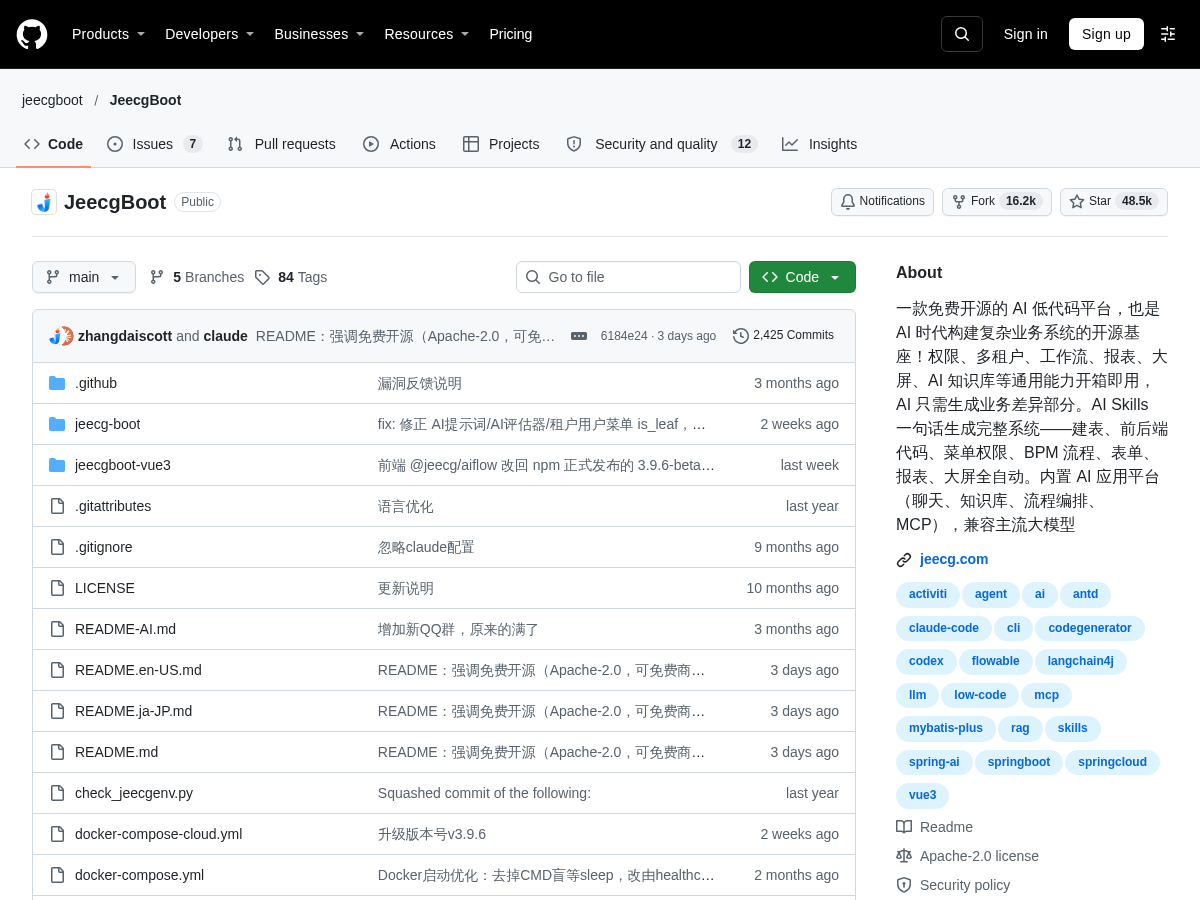
Screenshot of JeecgBoot
JeecgBoot
LLM Open Source

JeecgBoot is an open-source, low-code AI platform designed for building complex business systems. It provides a range of features, including permission management, multi-tenancy, workflow, reporting, and AI knowledge base, all of which are available out-of-the-box. The platform also includes an AI application platform with chat, knowledge base, process orchestration, and MCP capabilities, and is compatible with mainstream large models. JeecgBoot's AI Skills feature allows for the generation of complete systems, including database tables, front-end and back-end code, menu permissions, BPM processes, forms, reports, and dashboards, all with a single sentence. The platform is built on top of a range of technologies, including Spring Boot, MyBatis Plus, and Vue 3, and is licensed under the Apache-2.0 license, making it free for commercial use. With its low-code approach and AI-powered features, JeecgBoot aims to simplify the development of complex business systems and provide a cost-effective solution for enterprises. The platform has a strong focus on community involvement, with a large number of contributors and a active community of users. JeecgBoot is a rapidly evolving platform, with new features and updates being added regularly. Overall, JeecgBoot is a powerful and flexible platform that can be used to build a wide range of business applications, from simple web applications to complex enterprise systems. Its low-code approach and AI-powered features make it an attractive option for developers and enterprises looking to streamline their development processes and improve productivity. The platform's open-source nature and active community also ensure that it is constantly evolving and improving, with new features and updates being added regularly. This makes JeecgBoot a great choice for businesses looking for a reliable and scalable platform for building complex business systems.

Solves

JeecgBoot solves the problem of building complex business systems, which can be time-consuming and costly. By providing a low-code, AI-powered platform, JeecgBoot enables developers to quickly and easily build custom business applications, without the need for extensive coding knowledge. This makes it an ideal solution for enterprises looking to streamline their development processes and improve productivity. Additionally, JeecgBoot's open-source nature and active community ensure that it is constantly evolving and improving, with new features and updates being added regularly, which helps to address the problem of keeping up with the latest technology trends and advancements.

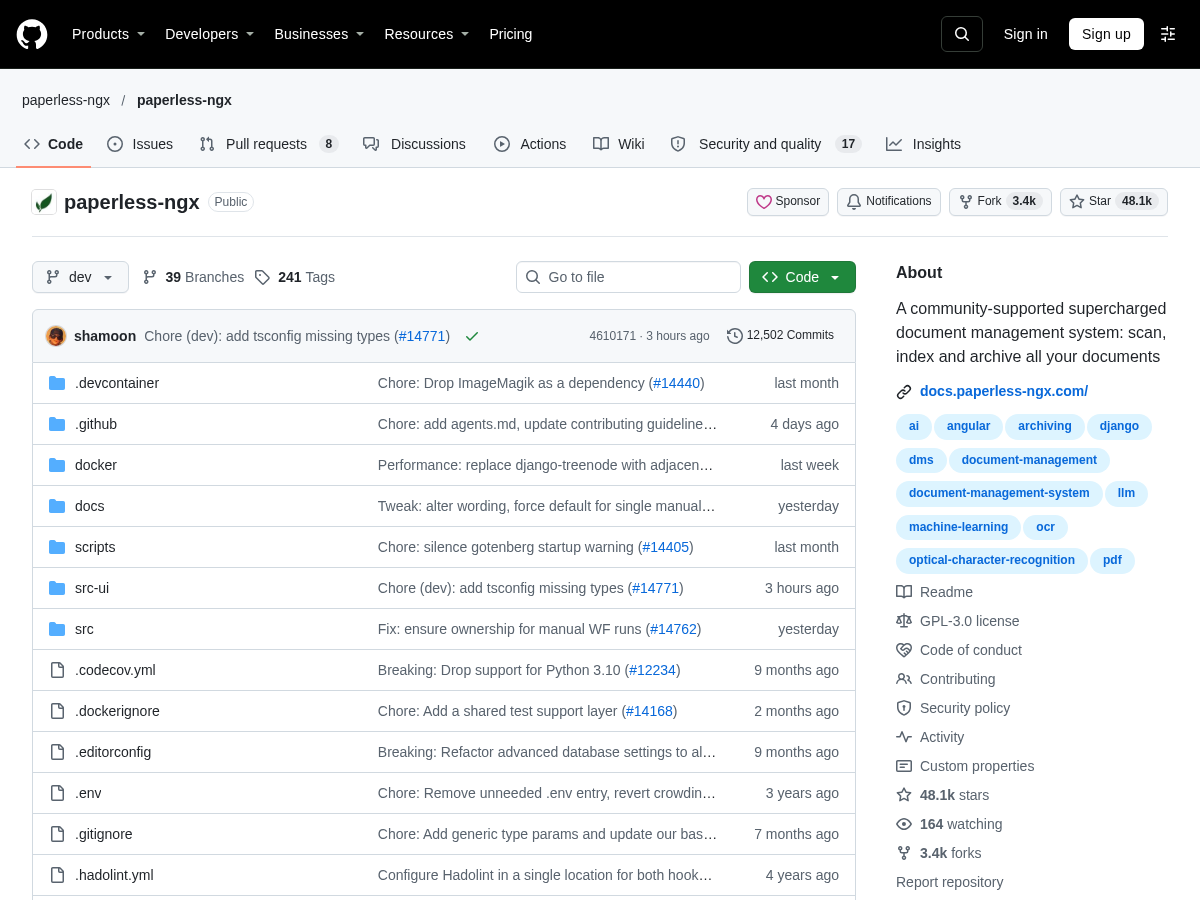
Screenshot of Paperless Ngx
Paperless Ngx
LLM Open Source

Paperless-ngx is a document management system that transforms physical documents into a searchable online archive. It is designed to distribute the responsibility of advancing and supporting the project among a team of people. The system allows users to scan, index, and archive documents, making it easier to keep track of and manage physical documents. Paperless-ngx is the official successor to the original Paperless and Paperless-ng projects. It has a wide range of features, including document scanning, indexing, and archiving, as well as a user-friendly interface. The system is available in many languages and has a strong focus on community support and contribution. Paperless-ngx can be deployed using docker compose, and there are step-by-step guides available for alternative installation methods. The documentation for Paperless-ngx is available at https://docs.paperless-ngx.com. Overall, Paperless-ngx is a powerful and flexible document management system that can help individuals and organizations to manage their physical documents more efficiently. It is a community-supported project, and contributions are welcome. The system has a strong focus on security, and it is recommended to run it on a local server in your own home with backups in place. Paperless-ngx is a great tool for anyone looking to digitize their physical documents and make them more accessible and manageable. It has a wide range of features and a user-friendly interface, making it easy to use and navigate. The system is highly customizable, and users can contribute to the project by submitting feature requests, translating the interface, and reporting bugs. With its strong focus on community support and security, Paperless-ngx is a great choice for individuals and organizations looking for a reliable and efficient document management system.

Solves

Paperless-ngx solves the problem of managing physical documents by providing a digital archive that is searchable and accessible. It helps individuals and organizations to keep track of their documents, reduce clutter, and increase productivity. The system is particularly useful for managing sensitive documents such as social insurance numbers, tax records, and invoices. By providing a secure and reliable way to store and manage documents, Paperless-ngx helps to reduce the risk of document loss, damage, or unauthorized access. Overall, Paperless-ngx provides a convenient and efficient solution for managing physical documents, making it easier to access and manage information.

Screenshot of CowAgent
CowAgent
AI Agents Open Source

CowAgent is an open-source personal AI assistant and agent harness. It plans tasks, runs tools and skills, and self-evolves with memory and knowledge. The tool is multi-agent, multi-model, and multi-channel, making it a versatile and powerful AI solution. CowAgent is also lightweight and extensible, with a one-line install feature that makes it easy to get started. The tool has a wide range of applications, from automating tasks to providing personalized assistance. With its advanced features and open-source nature, CowAgent has the potential to revolutionize the way we interact with AI. The project has a strong community of developers and users, with over 47,000 stars on GitHub and a active discussion forum. The tool is constantly evolving, with new features and updates being added regularly. Overall, CowAgent is a cutting-edge AI solution that has the potential to make a significant impact in the world of artificial intelligence. CowAgent's architecture is designed to be modular and scalable, allowing developers to easily integrate new models and skills into the system. The tool also has a strong focus on security and privacy, with features such as encryption and access controls to protect user data. With its advanced features and open-source nature, CowAgent is an ideal solution for developers and organizations looking to build custom AI applications. The tool's documentation is also extensive, with a comprehensive README and documentation set that makes it easy for new users to get started. Overall, CowAgent is a powerful and flexible AI solution that has the potential to make a significant impact in the world of artificial intelligence.

Solves

CowAgent solves the problem of providing a personalized and automated AI assistant that can perform a wide range of tasks and skills. The tool is designed to self-evolve with memory and knowledge, making it a powerful solution for individuals and organizations looking to automate tasks and improve productivity. With its multi-agent, multi-model, and multi-channel architecture, CowAgent can handle complex tasks and provide personalized assistance, making it an ideal solution for those looking for a customized AI experience. The tool also solves the problem of providing a secure and private AI solution, with features such as encryption and access controls to protect user data.

Screenshot of Made With ML
Made With ML
Model Serving Open Source

Made With ML is an open-source educational project that guides developers through the complete lifecycle of production-grade machine learning applications. It provides a hands-on curriculum covering data engineering, model training, deployment, monitoring, and continuous improvement. The repository includes modular code, Jupyter notebooks, and DevOps scripts that demonstrate best practices such as experiment tracking, automated testing, containerization, and orchestration with tools like Ray. By working through the project, users learn to build scalable ML systems that can be iteratively refined and adapted to real-world requirements.

Solves

Many ML practitioners know how to build models in notebooks but struggle to transition them into reliable, maintainable production services. Made With ML bridges this gap by offering a structured, end-to-end example that teaches the engineering principles and tools needed to serve models at scale, handle data drift, and implement CI/CD pipelines.

Screenshot of Airflow
Airflow
Observability Open Source

Apache Airflow is a platform to programmatically author, schedule, and monitor workflows. It is a powerful tool for managing and automating tasks, and is widely used in the data engineering and data science communities. Airflow provides a flexible and scalable way to define and manage workflows, and includes features such as task dependencies, retries, and notifications. It also includes a web-based user interface for monitoring and managing workflows, as well as a REST API for integrating with other tools and systems. Airflow is written in Python and is open-source, with a large and active community of contributors and users.

Solves

Data engineers and data scientists often have to manage complex workflows and tasks, which can be time-consuming and error-prone. Airflow solves this problem by providing a platform for programmatically authoring, scheduling, and monitoring workflows, making it easier to manage and automate tasks. With Airflow, users can define workflows as code, manage task dependencies, and monitor workflow execution, making it easier to manage complex data pipelines and workflows.

Screenshot of AstrBot
AstrBot
LLM Open Source

AstrBot is an AI Agent Assistant and development framework that integrates multiple instant messaging (IM) platforms, large language models (LLMs), plugins, and AI features. It can be used as an alternative to OpenClaw. AstrBot provides a comprehensive platform for building and deploying AI-powered chatbots and conversational agents. The framework supports various IM platforms, including Discord, Telegram, and QQ, and allows developers to create custom plugins and integrate them with the platform. AstrBot also provides a range of AI features, including natural language processing (NLP) and machine learning (ML) capabilities. The platform is designed to be highly customizable and extensible, making it a popular choice among developers and researchers. AstrBot is open-source and has a large community of contributors and users, which ensures that the platform is constantly evolving and improving. The project is hosted on GitHub and has a detailed documentation and wiki, making it easy for new users to get started. AstrBot has a wide range of applications, including customer service, tech support, and entertainment. The platform can be used to build conversational agents that can interact with humans in a natural and intuitive way, making it a powerful tool for businesses and organizations. Overall, AstrBot is a powerful and flexible platform for building and deploying AI-powered chatbots and conversational agents.

Solves

AstrBot solves the problem of building and deploying AI-powered chatbots and conversational agents. Many businesses and organizations need to provide customer support and tech support to their customers, but building and maintaining a conversational agent can be a complex and time-consuming task. AstrBot provides a comprehensive platform for building and deploying conversational agents, making it easy for businesses and organizations to provide high-quality customer support and tech support to their customers. Additionally, AstrBot provides a range of AI features and plugins, making it a powerful tool for developers and researchers who want to build custom conversational agents.

Screenshot of Milvus
Milvus
LLM Open Source

Milvus is a high-performance, cloud-native vector database built for scalable vector ANN search. It is designed to handle large-scale vector data and provide efficient similarity search capabilities. Milvus is built using a cloud-native architecture and is designed to be highly scalable and flexible. It supports a variety of data formats and provides a range of features, including data ingestion, indexing, and querying. Milvus is also highly customizable, allowing users to tailor the database to their specific use cases. The database is built using a variety of technologies, including Go, C++, and Python, and is designed to be highly performant and reliable. Milvus has a large and active community of users and contributors, and is widely used in a variety of applications, including computer vision, natural language processing, and recommender systems. The database is highly scalable and can handle large amounts of data, making it a popular choice for applications that require efficient and accurate similarity search capabilities. Milvus is also highly secure, with features such as encryption and access control, making it a popular choice for applications that require high levels of security. Overall, Milvus is a powerful and flexible vector database that is well-suited for a wide range of applications. It is highly scalable, performant, and secure, making it a popular choice for users who require efficient and accurate similarity search capabilities. Milvus is constantly evolving, with new features and improvements being added regularly. The database is widely used in industry and academia, and has a large and active community of users and contributors. Milvus is a popular choice for applications that require efficient and accurate similarity search capabilities, and is well-suited for a wide range of use cases, including computer vision, natural language processing, and recommender systems.

Solves

Milvus solves the problem of efficient and accurate similarity search in large-scale vector data. Many applications, such as computer vision, natural language processing, and recommender systems, require the ability to search for similar vectors in large datasets. However, traditional databases are not well-suited for this task, as they are designed for exact matching rather than similarity search. Milvus provides a solution to this problem by providing a highly scalable and performant vector database that is optimized for similarity search. With Milvus, users can efficiently and accurately search for similar vectors in large datasets, making it a popular choice for applications that require this capability.

Screenshot of Streamlit
Streamlit
Dev Tools Open Source

Streamlit is an open-source Python library that allows developers to create and share beautiful, custom web apps for data science and machine learning in minutes. It provides a simple and easy-to-use API for building web applications, and it supports a wide range of data science and machine learning libraries, including Pandas, NumPy, and Scikit-learn. Streamlit also provides a number of features that make it easy to build and deploy web applications, including automatic UI generation, real-time updates, and support for a wide range of data formats. With Streamlit, developers can focus on writing code and building applications, rather than worrying about the details of web development. Streamlit is designed to be highly customizable, and it provides a number of features that make it easy to tailor the look and feel of web applications to meet the needs of specific users and use cases. Overall, Streamlit is a powerful and flexible tool for building web applications, and it has a wide range of potential use cases in data science, machine learning, and other fields. Streamlit is also highly extensible, and it provides a number of APIs and tools that make it easy for developers to add new features and functionality to the library. This makes it an ideal choice for developers who want to build custom web applications, and it has a wide range of potential use cases in data science, machine learning, and other fields. Streamlit also has a large and active community of developers, which means that there are many resources available for learning and troubleshooting, including documentation, tutorials, and forums. This makes it an ideal choice for developers who are new to web development, as well as those who are experienced and looking for a powerful and flexible tool for building web applications.

Solves

Streamlit solves the problem of building and deploying web applications for data science and machine learning. Many data scientists and machine learning engineers struggle with building and deploying web applications, as it requires a significant amount of expertise in web development. Streamlit provides a simple and easy-to-use API for building web applications, which makes it easy for data scientists and machine learning engineers to build and deploy web applications without having to learn a lot about web development. This saves time and effort, and it allows data scientists and machine learning engineers to focus on their core work of building and deploying models, rather than worrying about the details of web development.

Screenshot of Shannon
Shannon
Vector DB Open Source

Shannon is an open-source AI-driven penetration testing tool designed for web applications and APIs. It automates the identification and exploitation of security vulnerabilities by analyzing application source code, detecting potential attack vectors, and executing real-world exploits to confirm their existence. By integrating into the development lifecycle, Shannon helps teams uncover critical flaws before they reach production. Unlike traditional static analysis or simple scanners, Shannon uses artificial intelligence to understand the logic and flow of an application, enabling it to craft targeted attacks that mimic those of a human pentester. It goes beyond just flagging potential issues, actually performing safe but realistic attacks to validate the presence and severity of vulnerabilities such as SQL injection, cross-site scripting, and authentication bypasses. Built for developers and security engineers, Shannon can be run from the command line or integrated into CI/CD pipelines, making it suitable for both manual security assessments and automated regression testing. Its AI model learns from each engagement, potentially improving its accuracy and coverage over time.

Solves

Manually penetration testing web applications and APIs is time-consuming and requires specialized expertise. Shannon automates this process by using AI to analyze source code, identify attack vectors, and execute exploits, enabling teams to find and verify vulnerabilities earlier and more efficiently.

Screenshot of IFixAi
IFixAi
AI Agents Open Source

IFixAi is an open-source tool designed for independent auditing of AI agents. It allows users to run audits by human or the agent itself, providing answers to crucial questions in the AI Agent Economy, such as whether the agent is doing what it is supposed to do. With IFixAi, users can obtain this information in less than 120 seconds. The tool is built to evaluate AI agents, ensuring they align with their intended purposes and operate within specified boundaries. IFixAi supports various features, including one-command self-check, local MCP server, SARIF, and trace intake, making it a comprehensive solution for AI agent auditing. It is developed in Python and licensed under Apache-2.0, indicating its open and collaborative nature. The project is actively maintained, with regular commits and updates, showcasing its dynamic and evolving character. IFixAi's documentation and contributing guidelines are available, facilitating community involvement and further development. Overall, IFixAi serves as a vital tool for ensuring the reliability, safety, and governance of AI agents, contributing to the broader goals of responsible AI development and deployment.

Solves

The primary problem IFixAi solves is the lack of transparency and accountability in AI agent operations. As AI agents become increasingly prevalent, it is crucial to ensure they function as intended and do not pose risks to users or the broader ecosystem. IFixAi addresses this challenge by providing a straightforward and efficient auditing mechanism, enabling users to verify whether AI agents are operating correctly and within their designated parameters. This capability is essential for building trust in AI systems, mitigating potential risks, and fostering a more reliable and secure AI environment.

Screenshot of Jan
Jan
LLM Open Source

Jan is an open-source alternative to ChatGPT that runs 100% offline on your computer. It is designed to provide a similar experience to ChatGPT but with the added benefit of being able to run locally on your machine, eliminating the need for internet connectivity. Jan is built using the LLaMA model and is designed to be a self-hosted solution, giving users full control over their data and conversations. The tool is highly customizable and can be tailored to meet the specific needs of its users. Jan's offline capability makes it an attractive option for those who value privacy and security. The tool's open-source nature also means that it is constantly being improved and updated by a community of developers, ensuring that it stays up-to-date with the latest advancements in AI technology. Jan's user interface is designed to be intuitive and user-friendly, making it easy for users to interact with the tool and get the most out of its features. Overall, Jan is a powerful and flexible tool that offers a unique alternative to traditional chatbot solutions. Jan's architecture is based on the Tauri framework, which allows it to be cross-platform and run on multiple operating systems, including Windows, macOS, and Linux. The tool's core functionality is built around the LLaMA model, which is a state-of-the-art language model that is capable of understanding and generating human-like text. Jan's offline capability is made possible by its ability to run the LLaMA model locally on the user's machine, eliminating the need for internet connectivity. The tool's customization options allow users to tailor the experience to their specific needs, including the ability to fine-tune the model and adjust the tool's settings. Jan's community-driven development ensures that the tool is constantly being improved and updated, with new features and enhancements being added regularly. The tool's open-source nature also means that users have full access to the code, allowing them to modify and extend the tool to meet their specific needs. In terms of technical details, Jan is built using a combination of Rust and JavaScript, with the Tauri framework providing the foundation for the tool's cross-platform functionality. The tool's user interface is built using web technologies, including HTML, CSS, and JavaScript, which provides a flexible and customizable interface for users to interact with the tool. Overall, Jan is a powerful and flexible tool that offers a unique alternative to traditional chatbot solutions, with its offline capability, customization options, and community-driven development making it an attractive option for those who value privacy, security, and flexibility.

Solves

Jan solves the problem of users who want to use a chatbot-like tool but are concerned about the privacy and security implications of using a cloud-based solution. By providing a self-hosted alternative to ChatGPT, Jan gives users full control over their data and conversations, eliminating the need for internet connectivity and ensuring that their interactions with the tool remain private. This is particularly important for users who work with sensitive information or who are concerned about the potential risks of using a cloud-based chatbot solution. Jan's offline capability also makes it an attractive option for users who are looking for a more secure and private way to interact with a chatbot-like tool.

Screenshot of Langgraph
Langgraph
AI Agents Open Source

Langgraph is an open-source project that enables the building of resilient agents. It is designed to work with various AI models and frameworks, providing a flexible and scalable solution for developers and researchers. The project is hosted on GitHub and has a large community of contributors and users. Langgraph provides a range of features and tools for building and deploying AI agents, including support for multiple AI models, frameworks, and environments. It also includes a range of examples and tutorials to help users get started with building their own AI agents. The project is actively maintained and updated, with new features and improvements being added regularly. Langgraph is designed to be highly customizable and extensible, allowing users to modify and extend the code to suit their specific needs. Overall, Langgraph is a powerful and flexible tool for building and deploying AI agents, and is widely used in the AI research and development community. Langgraph is built using Python and is released under the MIT license. The project has a strong focus on documentation and testing, with a comprehensive set of documentation and tests available to help users get started and ensure the code is reliable and stable. The project also has a strong community of contributors and users, with many people contributing to the code and providing support and feedback to others. Langgraph is designed to be highly scalable and can be used to build and deploy large-scale AI systems. It also includes a range of tools and features for monitoring and debugging AI agents, making it easier to identify and fix issues. Overall, Langgraph is a highly capable and flexible tool for building and deploying AI agents, and is widely used in the AI research and development community.

Solves

Langgraph solves the problem of building and deploying resilient AI agents. Many developers and researchers struggle with building and deploying AI models, as it can be a complex and time-consuming process. Langgraph provides a simple and flexible solution for building and deploying AI agents, making it easier for developers and researchers to focus on their core work. By providing a range of features and tools for building and deploying AI agents, Langgraph helps to reduce the complexity and time required to build and deploy AI models, making it a valuable tool for anyone working with AI.

Screenshot of Bruno
Bruno
Dev Tools Open Source

Bruno is an open-source API client and integrated development environment (IDE) for exploring, testing, and debugging REST, GraphQL, and other HTTP APIs. It is designed as a lightweight, privacy-focused alternative to commercial tools like Postman and Insomnia, with a strong emphasis on storing API collections locally as plain text files. Built on Electron, Bruno runs on Windows, macOS, and Linux. It supports variables, environments, pre-request scripts, and assertions, enabling developers to create complex API workflows without relying on a cloud account. Collections are saved in a human-readable format that can be easily versioned with Git. Bruno also includes a command-line interface (CLI) runner that allows API tests to be executed in CI/CD pipelines, making it suitable for both interactive development and automated testing. Because all data remains on the user's machine, it appeals to teams concerned about data privacy and vendor lock-in.

Solves

Bruno solves the problem of needing a lightweight, offline-capable API testing client that stores collections as version-controllable plain text files. Unlike cloud-based tools, it eliminates account requirements and data sharing, giving developers full control over their API collections and enabling seamless Git-based collaboration.

Screenshot of Siyuan
Siyuan
AI/ML Open Source

Siyuan is a privacy-first, self-hosted personal knowledge management software that combines note-taking, outlining, and mind mapping in a block-based editor. It offers a WYSIWYG Markdown experience, allowing users to seamlessly blend formatted text with live editing. The core architecture is block-oriented, enabling granular content organization, transclusion via block references, and automatic backlinks for a networked thought approach. A built-in graph view visualizes relationships between notes, while a spaced repetition and flashcard system supports learning. Siyuan is fully open source, written in TypeScript (frontend and Electron) and Go (kernel), ensuring transparency and the ability to self-host the entire infrastructure for complete data sovereignty. The ecosystem includes a community marketplace for plugins, themes, and templates, extending functionality. It provides native desktop applications for Windows, macOS, and Linux, mobile apps for iOS and Android, and a web interface, with optional end-to-end encrypted sync across devices. Advanced features include a web clipper, local AI integration, an extensive API for automation, and support for multiple sync backends (WebDAV, S3, etc.). Siyuan is under active development with frequent releases and a vibrant open source community.

Solves

Users who are concerned about data privacy and vendor lock-in with proprietary cloud-based note-taking apps (like Notion or Evernote) need a self-hosted, open source alternative that doesn't compromise on rich editing features. Siyuan addresses this by providing a fully self-hosted, block-based knowledge management platform where all data stays under the user's control. It enables users to manage complex notes, research, and personal wikis with advanced linking, while remaining accessible across devices through self-managed sync.

Screenshot of Ray
Ray
LLM Open Source

Ray is an AI compute engine that consists of a core distributed runtime and a set of AI Libraries for accelerating ML workloads. It is designed to provide a scalable and flexible platform for building and deploying machine learning models. Ray's core distributed runtime allows for the efficient execution of ML workloads across a cluster of machines, while its AI Libraries provide a set of pre-built functions and tools for tasks such as data processing, model training, and model serving. Ray is built on top of a number of open-source technologies, including Apache Arrow, Apache Parquet, and TensorFlow, and is designed to be highly extensible and customizable. It supports a wide range of programming languages, including Python, Java, and C++, and provides a simple and intuitive API for building and deploying ML models. Ray is widely used in industry and academia for a variety of applications, including computer vision, natural language processing, and recommender systems. Its scalability, flexibility, and ease of use make it a popular choice for building and deploying ML models at scale. Ray's distributed runtime allows for the execution of ML workloads on a cluster of machines, making it possible to train large models quickly and efficiently. Its AI Libraries provide a set of pre-built functions and tools for tasks such as data processing, model training, and model serving, making it easy to build and deploy ML models. Overall, Ray is a powerful and flexible platform for building and deploying machine learning models, and is widely used in industry and academia for a variety of applications. Ray's community is active and growing, with a large number of contributors and users. It is widely used in industry and academia, and has a number of successful use cases. Ray's documentation is extensive and well-maintained, making it easy to get started with the platform. Ray's API is simple and intuitive, making it easy to build and deploy ML models. Ray's scalability and flexibility make it a popular choice for building and deploying ML models at scale.

Solves

Ray solves the problem of building and deploying machine learning models at scale. Many organizations struggle with building and deploying ML models, as it requires a significant amount of expertise and resources. Ray provides a scalable and flexible platform for building and deploying ML models, making it possible for organizations to quickly and efficiently train and deploy large models. Ray's distributed runtime and AI Libraries provide a set of pre-built functions and tools for tasks such as data processing, model training, and model serving, making it easy to build and deploy ML models. Additionally, Ray's scalability and flexibility make it a popular choice for building and deploying ML models at scale, allowing organizations to quickly and efficiently train and deploy large models.

Screenshot of Gradio
Gradio
AI/ML Open Source

Gradio is a Python library that allows users to build and share machine learning apps. It provides a simple and intuitive way to create web-based interfaces for machine learning models, making it easy to demonstrate and share the capabilities of these models. With Gradio, users can create a range of applications, from simple demos to complex workflows, and share them with others via a web link. The library is designed to be highly customizable, allowing users to tailor the appearance and behavior of their apps to suit their specific needs. Gradio also supports a wide range of machine learning frameworks and libraries, making it a versatile tool for anyone working with machine learning. The library is open-source and has a large community of users and contributors, which helps to ensure that it stays up-to-date and continues to improve over time. Gradio's key features include its ease of use, flexibility, and customizability, making it an ideal choice for anyone looking to build and share machine learning apps. The library is well-documented and has a range of tutorials and examples to help users get started. Overall, Gradio is a powerful and user-friendly library that makes it easy to build and share machine learning apps, and its open-source nature and large community ensure that it will continue to evolve and improve over time. Gradio's capabilities can be applied to a wide range of applications, including data analysis, data visualization, and deployment of machine learning models. It provides a simple and consistent API for building and sharing machine learning apps, making it easy to integrate into existing workflows and pipelines. The library's customizability and flexibility also make it an ideal choice for researchers and developers who need to build and share complex machine learning workflows. In addition to its technical capabilities, Gradio also provides a range of tools and features that make it easy to collaborate and share machine learning apps with others. For example, users can share their apps via a web link, making it easy to demonstrate and share the capabilities of their machine learning models with others. Overall, Gradio is a powerful and versatile library that makes it easy to build and share machine learning apps, and its open-source nature and large community ensure that it will continue to evolve and improve over time.

Solves

Gradio solves the problem of making machine learning models accessible and shareable. Many machine learning models are difficult to demonstrate and share with others, which can limit their impact and usefulness. Gradio provides a simple and intuitive way to create web-based interfaces for machine learning models, making it easy to demonstrate and share their capabilities with others. This can be particularly useful for researchers and developers who need to collaborate with others or demonstrate the capabilities of their models to stakeholders. By providing a simple and consistent API for building and sharing machine learning apps, Gradio makes it easy to integrate machine learning models into existing workflows and pipelines, and to share them with others via a web link.