Tool discovery

What type of AI tool
are you looking for?

Search the active catalog with LambdaBase AI Search, or keep browsing the popularity-ordered directory below.

Submitted search queries and interaction metrics may be analyzed to improve result quality. Do not include personal or confidential information

Browse popular tools.

Screenshot of Noogat
Noogat
Data Paid

Noogat is an iOS application designed to capture fleeting thoughts and ideas instantly using Apple's Siri voice command. By saying 'Hey Siri, I have a Noogat,' users can save a note without unlocking their phone or opening an app, making it ideal for hands-free operation while driving, exercising, or in the middle of a task. Every note is automatically processed with AI auto-tagging, which assigns color-coded tags to organize the content without manual sorting. The app also supports typed notes, but its primary innovation is the seamless voice capture that never interrupts the user's flow. The app's Pro tier unlocks advanced semantic search capabilities, allowing users to find notes by meaning rather than exact keywords—queries like 'that idea about the app I had last week' return relevant results. Temporal search enables locating notes from specific time periods using natural language, and the related noogats feature surfaces semantically connected ideas the user may not have consciously linked. For developers, Noogat offers MCP integration, which connects the app to AI coding assistants like Claude Code and Cursor, letting agents search past notes to enrich context during development sessions. Noogat is built for anyone who generates ideas constantly and needs a frictionless capture system. The basic tier is free, while Pro costs $4.99/month or $49.99/year and adds semantic search, time-based search, related notes, bulk export, and MCP integration. The app is currently exclusive to iPhone and iPad, with a beta web app available, and a strong privacy commitment—user data is never sold or used for advertising.

Solves

Creative professionals, busy individuals, and those with ADHD often lose fleeting ideas because traditional note-taking requires too much friction—unlocking a phone, opening an app, typing. Existing voice memos are cumbersome to search later, and ideas get buried. Noogat solves this by enabling instant, hands-free voice capture via Siri and providing AI-driven auto-tagging and semantic search, so users can quickly record a thought the moment it arises and later retrieve it even if they can't remember the exact words they used.

Screenshot of MetaBlast
MetaBlast
CRO Paid

MetaBlast is an AI-powered meta tag generator that transforms how websites handle SEO and social sharing. By simply pasting a public URL, MetaBlast fetches the page, analyzes its content using language models, and automatically writes production-ready HTML meta tags — including title, description, Open Graph, and Twitter Cards. It avoids generic templates by tailoring each tag to the actual page content, ensuring relevance and optimization. The tool provides live previews showing exactly how the page will appear in Google search results, Twitter/X, Facebook, and LinkedIn before you publish. This helps users catch display issues early and improve click-through rates. The interface is clean and focused on speed, with a four-second generation time for a typical SaaS landing page. MetaBlast offers a free tier with three generations per day, no credit card required, making it accessible for side projects, one-off pages, or evaluation. Paid plans include a one-time Starter purchase for 100 generations (ideal for freelancers and agencies) and a monthly Pro plan with unlimited generations, searchable history, and priority support. All features — like all meta tag types and cross-platform previews — are available on every plan. Designed for teams that ship web pages regularly, MetaBlast turns meta tag creation from a tedious checklist item into a fast ritual. It focuses on four core primitives: AI generation, live previews, free access, and pro scalability, with no seats or surprises. The tool supports any public HTTPS site returning HTML, including landing pages, blogs, docs, and product pages, making it versatile for modern web development workflows.

Solves

Many landing pages, blogs, and marketing sites launch with broken, missing, or boilerplate meta tags, which harms their appearance in search engine results and social media shares. This leads to lower click-through rates, poor branding on platforms like Twitter and Facebook, and missed SEO opportunities. MetaBlast solves this by automatically generating accurate, context-aware meta tags from the page's actual content, eliminating manual guesswork and ensuring optimized previews across Google, X, Facebook, and LinkedIn in seconds.

Screenshot of PhaseBid
PhaseBid
Professional Services Paid

PhaseBid is an AI-assisted estimating and CRM platform designed specifically for electrical contractors. It provides a unified workspace where contractors can manage customers, create job scopes, generate AI-powered estimate drafts, review and edit pricing, and produce professional proposal PDFs. The tool streamlines the bidding process without removing contractor expertise, allowing every AI-generated draft to be fully editable before client delivery. The platform centralizes scattered workflows by connecting customer records, job tracking, schedule management, and financial estimates. Users can capture detailed job scopes including site information, notes, and scheduling needs, then leverage AI to rapidly draft labor, material, and exclusion lists. The system supports templates and pricebooks for reuse on common job types, reducing repetitive data entry. After AI generation, contractors maintain full control to adjust every line item—labor rates, material costs, markups, permits, and assumptions—ensuring accuracy before converting the estimate into a branded PDF proposal. The interface also provides job status tracking and scheduling, so all project-related data stays linked from initial estimate to completion. PhaseBid offers a tiered pricing model, including a free plan with limited AI drafts, making it accessible for solo electricians while scaling to teams with advanced features and unbranded proposals. By marrying AI efficiency with mandatory human review, PhaseBid aims to reduce administrative overhead while preserving the professional judgment that electrical work demands.

Solves

Small electrical contractors often spend excessive time on manual estimating, scattered notes, and disjointed tools. PhaseBid solves this by offering an AI-powered, centralized workspace that drafts estimates, manages customers and jobs, and outputs polished proposals, all while ensuring the contractor verifies every detail before submission.

Screenshot of ToolmetryAI
ToolmetryAI
AI/ML Free

ToolmetryAI is a web-based platform offering a comprehensive collection of over 120 free AI-powered tools designed to streamline tasks for developers, content creators, and business professionals. It provides instant access to utilities across categories such as SEO, developer tools, content generation, social media, Discord management, and business documentation—all from a single, consistent interface without any downloads, installations, or mandatory sign-ups. The platform leverages advanced AI language models to power features like meta tag generation, blog outlining, code explanation, ad copy creation, and paraphrasing, producing professional-grade output in seconds. Most tools process data entirely client-side, ensuring that sensitive information like API keys, personal documents, and business data never leaves the user's browser, prioritizing privacy and security. ToolmetryAI eliminates the need to juggle multiple bookmarks or expensive SaaS subscriptions by unifying essential functionality in one place. Each tool is designed for minimal friction: users simply select a tool, provide input in a natural format, and receive immediate results that can be copied, downloaded, or exported. The platform's design emphasizes consistency, with shared keyboard shortcuts and workflow patterns across all tools. With regular updates driven by user feedback, the toolkit grows to accommodate emerging professional requirements, from SEO audits and social media management to Discord embed building and invoice generation. This makes ToolmetryAI a versatile companion for anyone seeking to enhance productivity without compromising on privacy or cost.
Solves

Many professionals—such as freelance developers, content writers, small business owners, and social media managers—rely on a fragmented set of online tools for daily tasks like formatting code, generating SEO content, creating invoices, or designing social media posts. These tools often require subscriptions, separate logins, or time-consuming setups. ToolmetryAI solves this by providing a unified, free, browser-based suite of 120+ AI-powered utilities that work instantly with no accounts, while keeping all sensitive data private through client-side processing.

Screenshot of Brainfo
Brainfo
Apis Paid

Brainfo is an AI-native second brain application that brings together multiple top AI models into a single integrated workspace. Designed around Tiago Forte’s CODE methodology (Capture, Organize, Distill, Express), it helps users seamlessly capture fleeting ideas, organize information with AI-powered categorization, distill key insights through summarization and pattern detection, and express knowledge effectively. The platform aims to replace a fragmented stack of productivity tools—such as note-taking apps, task managers, and document editors—with one unified solution. Brainfo emphasizes clarity, productivity, and connective thinking, offering features like multi-format note capture, folder and tag organization, AI summarization, and insight discovery. It is positioned as a digital thinking system for individuals who want to build a personal knowledge base without switching between multiple applications. The tool is currently accessible via a waitlist, with a free tier available.

Solves

Knowledge workers and creators often juggle multiple disconnected apps for note-taking, task management, and AI assistance, leading to scattered information and reduced productivity. Brainfo solves this by providing a single, AI-enhanced workspace where users can capture, organize, and make sense of their ideas and data without context switching, reducing tool fragmentation and cognitive overhead.
Screenshot of Riakoo
Riakoo
Communication Paid

Riakoo is a browser-based assessment integrity platform designed to enable HR teams, hiring managers, and certification bodies to conduct secure online exams, pre-employment tests, and skills assessments. The platform requires no software installation—candidates simply access the assessment via a link on any modern browser. Riakoo captures and documents every session with a comprehensive set of integrity monitoring features, including automatic identity verification via webcam snapshots every five minutes, tab-switch detection with timestamped screenshots, copy-paste prevention by disabling right-click, keyboard shortcuts, and DevTools, and GPS-based location verification for remote compliance. A real-time dashboard allows proctors to monitor up to 50 candidates simultaneously, displaying live status, violation flags, and alerts. After the assessment, Riakoo generates audit-ready PDF reports per candidate that include scores, answers, an incident log, and all evidence screenshots, making results defensible and shareable with legal or management teams. The platform supports multiple question types (multiple choice, short answer, essay) and provides tiered pricing—from a free plan with limited assessments up to an enterprise plan with SSO, API access, and white-labeling.
Solves

Organizations conducting remote assessments face challenges in ensuring test integrity, verifying candidate identity, and providing auditable evidence of cheating or violations. Traditional methods or unproctored online tests leave room for dishonesty and cannot produce reliable, defensible results. Riakoo solves this by embedding automated integrity checks—webcam captures, tab-switch logging, copy-paste blocking, and location verification—directly into the assessment experience without requiring candidates to install software. It gives proctors a real-time view of all candidates and produces comprehensive reports that serve as a trustworthy record, enabling confident decision-making in hiring, certification, and educational evaluation.

Screenshot of Hiro
Hiro
Growth Paid

Hiro is an AI-powered job matching platform that connects job seekers and employers through transparent scoring and a swipe-based interface. Job seekers can build a profile with skills, experience, salary expectations, location, and visa status, then browse over 550,000 jobs aggregated from 52+ sources, each scored 0-100 for fit based on multiple dimensions. The platform provides detailed breakdowns of match scores across skills, role fit, experience, location, salary, and visa compatibility. For job seekers, Hiro offers AI-generated cover letters, mock interviews with feedback, a resume builder with ATS optimization, auto-apply to high-scoring jobs, real-time application tracking, and an H-1B sponsorship database. Employers can post jobs, define an ideal candidate specification, and receive AI-scored applicants they can swipe through to shortlist in seconds. Additional employer features include pipeline analytics, interview scheduling, team collaboration, passive candidate discovery, and round-based hiring management. Hiro operates on a freemium model with paid Pro and Elite plans for advanced features.

Solves

Traditional job boards and applicant tracking systems often bury relevant matches under piles of unqualified applications, wasting time for both job seekers and employers. Hiro solves this by using transparent AI scoring that instantly ranks jobs or candidates based on a holistic fit analysis, including often-overlooked factors like visa status and salary alignment. The swipe-based interface accelerates decision-making, while features like auto-apply, mock interviews, and employer analytics streamline the hiring pipeline from discovery to offer.

Screenshot of FounderDive
FounderDive
Data Paid

FounderDive is an AI cofounder platform built specifically for solo founders. It provides a persistent AI partner named Prova that validates startup ideas with real market data, challenges founders to think critically, and never forgets a conversation. Unlike generic chatbots, Prova uses live data from Reddit and X to score ideas across six dimensions: Market, Competition, Monetisation, Distribution, Timing, and Founder Fit. The core feature is the Deep Dive, where a founder drops their idea and receives a data-backed analysis within minutes. Prova scans relevant threads, posts, and competitor information, then delivers a bull case and bear case along with specific, actionable feedback. This is not AI speculation but grounded in actual online discussions and competitor reviews. Prova’s memory system is a key differentiator. It employs three tiers—hot (current session), warm (last 30 days), and cold (everything forever)—to maintain context across sessions. It tracks commitments made in previous conversations and follows up, holding the founder accountable. This ensures continuity and progression, mimicking the support of a human cofounder. Beyond validation, FounderDive offers features like PRD generation, sprint task planning, and launch plan creation. It is designed to guide founders from idea to execution. Pricing includes a free tier with limited Deep Dives and messages, and paid plans (Builder and Founder) for more extensive use. The tool was built by a 17-year-old solo founder who experienced firsthand the need for a challenging, data-driven cofounder.

Solves

Solo founders often lack a cofounder to provide honest, data-backed feedback and strategic accountability. Generic AI assistants reset every session, agree too readily, and cannot validate ideas with real market data. FounderDive solves this by offering a persistent AI cofounder that scans live social media and competitor data, remembers every interaction, and actively challenges assumptions to help founders make better decisions.

Screenshot of ShipNext
ShipNext
Apis Paid

ShipNext is a full-stack SaaS starter kit built on Next.js 16, providing a ready-to-use boilerplate for building web applications. It integrates essential SaaS components: authentication via BetterAuth (supports Google, GitHub, email magic links), payments through Stripe/Lemonsqueezy/Paddle, database with Drizzle ORM on PostgreSQL or SQLite, email service with Resend and React Email templates, and UI components from Shadcn UI with Tailwind CSS. It also includes a dashboard, admin panel, landing page sections, blog with MDX, documentation site, and SEO metadata. The codebase is designed to be customized, not treated as a black-box generator, allowing developers to add their own product logic on top of the existing modules. The starter is AI-ready, structured to work with AI coding tools like Cursor, Claude Code, Codex, Windsurf, and Gemini. Its architecture and documentation are optimized so these tools can understand the app shape and assist in customization. The package is a one-time purchase that grants a lifetime license, enabling developers to use it for unlimited SaaS projects without recurring fees. Rather than spending weeks setting up repetitive SaaS infrastructure, developers can clone the ShipNext repository, configure environment variables for their chosen providers, and immediately start building their product. The included modules cover user management (sign-up, sign-in, OAuth, magic links), subscription billing (checkout, billing portal, credits/quotas), data operations (type-safe ORM, migrations, file uploads to S3-compatible storage), and marketing pages. All components are themeable and built with TypeScript for type safety. ShipNext aims to eliminate the common setup work so that indie makers and startups can ship a functional product in hours, focusing on their unique business logic and go-to-market strategy rather than boilerplate code.

Solves

Building a modern SaaS product requires setting up authentication, payments, databases, email, and UI components repeatedly. This boilerplate work can take weeks. ShipNext provides a pre-built, customizable foundation that handles all these layers, allowing developers to skip the repetitive setup and immediately start implementing their product-specific features, drastically reducing time to first launch.

Screenshot of LinGoat
LinGoat
Data Free

LinGoat is a science-based language learning platform designed to accelerate Spanish acquisition through active sentence production and targeted feedback. Instead of passive flashcards, users translate prompts into full Spanish sentences and receive instant, word-level grading that checks morphology, grammar, and word choice. Every mistake is isolated and turned into a personalized spaced repetition item, ensuring that learners review exactly what they missed at the optimal time. The app claims to make learning 4x faster than standard spaced repetition, supported by an independent study published at the BEA 2024 workshop. A structured curriculum guides learners from basics to fluency, using a character-driven progression that represents stages of learning: curious, focused, studying, and enlightened. Currently supporting Spanish, with English and German planned, LinGoat is free to use and accessible via web browser.

Solves

Language learners often struggle with retention because traditional methods rely on passive recognition (e.g., multiple choice, flashcards) and provide generic feedback. This fails to solidify active recall and contextual grammar usage, leading to slow progress and frustration. LinGoat addresses these issues by forcing learners to construct complete sentences from scratch, then supplying granular, word-by-word corrections that pinpoint specific errors. The spaced repetition system adapts to each mistake, bringing it back just before it is forgotten, so review time is minimized and retention is maximized. By combining active production with precision feedback and smart scheduling, LinGoat dramatically improves learning efficiency.

Screenshot of Cuteheart Suite
Cuteheart Suite
Analytics Paid

Cuteheart Suite is a privacy-focused SaaS platform that bundles twelve encrypted applications under a single sign-in. The core principle is client-side end-to-end encryption: all encryption and decryption happen in the user's browser, ensuring that the server only handles ciphertext and never has access to plaintext data. This approach allows users to collaborate, store files, communicate, and manage workflows without trusting the server with their secrets. The suite includes: Cloud (end-to-end encrypted personal storage), Epaste (ephemeral encrypted file and text sharing), Cuddl IRC (one-on-one IRC-style private matching), Cyclo (a wiki and private workspace with encryption), PrivCaptcha (a paid human-verification service), Cute Auth (OAuth 2.0 sign-in with privacy by design), Cute Survey (privacy-first surveys storing only delta data), Terracotta (a parts framework for backend compute), PIM (all-in-one encrypted email), Rotocoin (an activity-based testnet), Cspec (committee governance for organizations), and Cutespace (code hosting with run actions and terminal shipping). Each tool is designed to replace common non-private alternatives, offering daily usability with strong cryptographic guarantees. The platform provides free, paid, and prepaid tiers per app, and includes open-source libraries for transparency and custom development. By centralizing multiple services under a single privacy-respecting account, Cuteheart reduces the attack surface and simplifies key management for end users. Cuteheart Suite targets privacy-conscious individuals, developers, and organizations that need a full stack of everyday tools—from file storage to email, collaboration to governance—without compromising on data sovereignty. It is built on the belief that privacy should be both accessible and practical, integrating encryption seamlessly into shared workflows.

Solves

Many cloud productivity and collaboration tools either lack encryption or implement server-side encryption, meaning the service provider can access user data. This exposes sensitive information to data breaches, insider threats, and surveillance. Cuteheart Suite solves this by keeping encryption keys exclusively on the user's device; all data is encrypted in the browser before it is transmitted, and the server stores only ciphertext. This allows users to safely store, share, and process information across a variety of apps—storage, messaging, wiki, email, code hosting—without ever exposing plaintext to the provider.

Screenshot of CoParent Share
CoParent Share
Finance Paid

CoParent Share is a cloud-based platform designed specifically for separated or divorced parents to manage shared child expenses. It provides a neutral, transparent system where both parents can log expenses, apply custom split rules (e.g., 60/40, 50/50, or one parent covering 100%), and track real-time balances. Every expense can be categorized (education, medical, sports, etc.) and includes attachment of receipts for full auditability. The platform requires mutual approval for any settlement, ensuring both parents agree before funds are considered reconciled, thereby eliminating disputes and surprises. Built with bank-level encryption and hosted in Australia, the service emphasizes privacy and security—neither parent can alter the other's records. It is accessible via web, iOS, and Android, allowing instant expense entry from any device. Additional features include PDF and CSV statement exports with timestamps, weekly email summaries, and a simple invitation system to get started in minutes.

Solves

Co-parents often face friction and conflict over shared child expenses, with unclear records, forgotten payments, and disputes about fairness leading to stress and arguments. CoParent Share solves this by providing a shared, neutral ledger that removes the need for uncomfortable money conversations. It automatically enforces pre-agreed split rules, maintains a real-time balance that both can see, and requires dual approval for every settlement, creating a trustworthy, conflict-reducing financial workflow.

Screenshot of Omera
Omera
Communication Paid

Omera is an AI keyboard for iPhone that integrates writing assistance directly into the iOS keyboard, working across all apps. It leverages artificial intelligence to enhance text by correcting grammar, improving clarity, adjusting tone, and providing instant translations. Users simply type as usual, and with a single tap, Omera refines the message to sound professional, friendly, concise, or any desired style. Unlike copy-paste solutions, Omera is always available at the keyboard level, eliminating the need to switch between apps. The keyboard offers four main features: improved writing, tone adjustment, instant translation, and quick reply suggestions. Improved writing corrects errors and suggests phrasing changes to make text clearer and more polished. Tone adjustment allows users to adapt the emotional tone of their message—from casual to formal or empathetic—with one tap. Instant translation translates typed text into another language without leaving the conversation. Quick reply generates smart responses based on the context, helping users reply faster. Omera is designed for everyday communication, whether it’s writing a professional email, chatting in a messaging app, or posting on social media. It caters to professionals who need error-free and well-toned correspondence, students working on assignments, and expats or language learners navigating communication across languages. The tool is always present in the keyboard, making it a seamless companion for anyone who writes on iPhone regularly. User testimonials highlight its impact: professionals note improved email clarity and confidence, expats appreciate breaking language barriers, and students benefit from error-free text and multilingual support. Omera positions itself as the keyboard that helps users write like their best selves, without interrupting their workflow.

Solves

Many iPhone users struggle to write error-free, appropriately toned, and clear messages across different apps, especially when juggling multiple communication channels or writing in a non-native language. Omera solves this by embedding AI-powered writing assistance directly into the keyboard, providing one-tap grammar correction, tone adjustment, translation, and smart replies without leaving the current app or using copy-paste.

Screenshot of Finbuddy
Finbuddy
Finance Free

Finbuddy is an AI-powered financial assistant designed to serve as a co-pilot for the next generation of investors, particularly retail and first-time investors. The platform offers a conversational interface where users can ask natural language questions about finance, receive personalized investment insights, track their portfolios, and access educational content. By leveraging artificial intelligence, Finbuddy analyzes market data, user preferences, and financial goals to provide tailored recommendations, risk assessments, and real-time market updates. The tool is accessible via a web application, emphasizing simplicity and user-friendliness to lower the barrier to financial literacy and informed investing. Key features include portfolio analysis, goal-based planning, market news aggregation, and interactive Q&A. Finbuddy aims to democratize financial advice by making it free and instantly available, ultimately empowering billions of people to make smarter financial decisions.

Solves

Many individuals, especially in emerging markets or with limited capital, lack access to affordable, personalized financial advice due to high fees, minimum asset requirements, or complexity of traditional advisory services. This leads to uninformed investment decisions, missed opportunities, and financial anxiety. Finbuddy solves this problem by providing a free, AI-driven co-pilot that delivers personalized guidance, education, and portfolio management tools, enabling anyone with an internet connection to navigate investing with confidence.

Screenshot of PairSMS.com
PairSMS.com
Apis Paid

PairSMS is a specialized online service that provides real phone numbers exclusively for SMS verification on dating apps. Unlike generic SMS verification sites that offer temporary or VoIP numbers often blocked by platforms like Tinder, Bumble, and Hinge, PairSMS focuses solely on dating app registrations and logins, ensuring higher success rates. Users can select from a list of supported dating apps, choose a country, and instantly receive a dedicated phone number. This number is then entered during the app’s phone verification step, and the received SMS code is displayed in the PairSMS dashboard. The service is built to address the strict verification requirements of dating apps, which increasingly reject virtual numbers to combat spam and fake profiles. PairSMS supplies real, carrier-based phone numbers that are less likely to be flagged, helping users bypass the common "number not accepted" errors encountered with free public SMS inboxes or recycled numbers. By providing numbers tied to specific regions, PairSMS also allows users to verify accounts in different countries when needed. Key features include a simple three-step workflow: choose an app, get a number, and receive the code. The dashboard retains the provided number for the duration of the verification, and no personal information is required beyond payment. PairSMS emphasizes privacy, enabling users to keep their personal phone numbers off dating platforms, separating dating activity from work, family, and other critical communications. Additionally, the service supports many popular dating apps such as Tinder, Bumble, Badoo, Hinge, OkCupid, Plenty of Fish, Feeld, and Grindr, with numbers available from a wide range of countries including the US, UK, Canada, Australia, Germany, and France. Overall, PairSMS is a pragmatic solution for anyone wanting to maintain privacy and reliability during dating app verification. It bypasses the frustrations of free SMS services and the risks of linking personal numbers, offering a streamlined, paid alternative dedicated to a niche but common need.

Solves

Many dating app users want to verify their accounts without exposing their personal phone numbers due to privacy, security, or separation of personal and dating life. Simultaneously, free online SMS reception services often fail because the shared virtual numbers are overused, blocked, or already linked to existing accounts. PairSMS solves this by offering real, dedicated phone numbers tailored for dating app SMS verification, ensuring the code arrives reliably while keeping the user’s primary mobile number private.

Screenshot of onai
onai
Fashion Paid

ONAI is an AI-powered creative platform designed for fashion brands and e-commerce businesses to generate high-quality, on-brand visual assets. It uses artificial intelligence to produce model photography, product shots, and lifestyle images that align with a brand's unique aesthetic. Users can create a variety of outputs including full-body campaign shots, catalog images, and social media content without the need for traditional photoshoots. The platform offers a user-friendly interface where brands can upload their style guidelines or existing assets to train the AI to generate consistent visuals. It supports multiple angles and scenes, allowing for a diverse range of imagery from eye-level front views to detailed product close-ups. The generated images are optimized for different uses, from e-commerce listings to Instagram feeds. Key features include on-brand generation, fast turnaround, and the ability to scale content production infinitely. ONAI works with several brands and provides a free trial to get started. It emphasizes creativity made easy, aiming to become the creative layer for brands by automating the visual content creation process while maintaining brand identity.

Solves

Fashion brands and e-commerce companies face the challenge of producing large volumes of high-quality visual content quickly and cost-effectively. Traditional photography requires expensive setups, models, and lengthy post-production, making it difficult to keep up with the demand for fresh content across multiple channels. ONAI solves this by using AI to generate on-brand visuals instantly, reducing costs and time while ensuring consistent brand representation across all imagery.

Screenshot of Nire HQ
Nire HQ
Finance Paid

Nire HQ is a dual-sided platform designed to bridge the preparation gap between startup founders and venture capitalists. It provides an investability assessment for founders and a portfolio management tool for VCs, all within a connected ecosystem. For founders, Nire HQ delivers a scored evaluation across categories that investors commonly weigh, such as team, market opportunity, traction, and financial projections. The assessment is designed to be honest and data-driven, giving founders a clear picture of their strengths and weaknesses in the eyes of investors. The platform then offers actionable recommendations to help founders improve specific areas before approaching funders, potentially increasing their chances of securing investment. For venture capital firms and fund managers, Nire HQ offers a dedicated portfolio management dashboard that tracks key performance indicators, monthly and annual recurring revenue (ARR) trends, and runway projections across all portfolio companies. The system uses artificial intelligence to detect anomalies and flag potential issues early—such as a startup’s metrics drifting off target—enabling proactive intervention. This side of the platform is built to match how VCs actually work, centralizing reporting and analysis that might otherwise exist in spreadsheets or fragmented tools. The two sides are connected conceptually: founders can understand the metrics that investors track, while investors can potentially discover pre-assessed founders who meet their investment thesis. Nire HQ aims to make the fundraising process more transparent and efficient for both parties by standardizing evaluation criteria and providing ongoing monitoring. The platform is currently in pre-launch phase with a waitlist, indicating it is a web-based SaaS offering with paid plans, though specific pricing details are not yet public.

Solves

Startup founders often struggle to understand what venture capitalists look for in an investment, leading to poorly prepared pitch materials and wasted effort on fundraising that could have been avoided. Conversely, fund managers often rely on manual processes and outdated data to track portfolio company health, risking missed warning signs. Nire HQ solves both problems by giving founders a structured, scored investability assessment with specific feedback to improve their readiness, and by providing VCs with an AI-powered portfolio management platform that centralizes KPI tracking, runway analysis, and early drift detection—ultimately making fundraising more transparent and portfolio oversight more proactive.

Screenshot of DermAura
DermAura
Analytics Free

DermAura is an AI-powered dermatology platform that provides personalized skin analysis through multi-angle photo scans. Users upload four photos (front, left, right, and chin) to capture a comprehensive view that single-photo tools miss. The platform uses Claude Vision to detect skin conditions directly from images, assessing issues like acne, eczema, or signs of aging. Alongside visual analysis, DermAura includes a five-question stress assessment that correlates cortisol levels with skin behavior, revealing how mental state impacts skin health. Based on this combined analysis, it generates a custom skincare ritual and recommends curated products tailored to the detected conditions. The entire process is free and accessible via a web interface, requiring only a profile with skin type to begin.

Solves

Many individuals lack easy access to dermatologists and struggle to identify skin conditions or find effective products. DermAura solves this by offering an immediate, AI-driven skin scan that detects conditions from multi-angle photos, correlates stress factors, and delivers a personalized routine with product matches—all without cost or appointments.

Screenshot of Patmi App: Personalized Stories

Patmi is a mobile application that creates personalized fairytales starring your child. It uses artificial intelligence to generate unique stories where the child is the hero, with custom illustrations featuring their uploaded photo. Parents can choose from a set of values to teach, such as kindness, courage, patience, teamwork, and more, ensuring each tale has an educational moral. The app guides users through a simple four-step process: select the values to focus on, enter the child's name and age, pick a side character (like a dragon, fox, or unicorn), and upload a photo of the child. Patmi then generates a story that incorporates these elements, creating a one-of-a-kind reading experience. For busy parents, a library of ready-made tales is also available, which can be quickly personalized by adding the child's name. Patmi places a strong emphasis on child safety and privacy. Photos are processed securely, never stored or shared with third parties, and all content is filtered to be kid-friendly and age-appropriate. The app is designed to be calming, making it ideal for bedtime routines. The tales are not only entertaining but also educational, weaving in the chosen values gently so children learn through narrative. Parents report that the app fosters quality family time, helps children engage with important life lessons, and makes bedtime something to look forward to.

Solves

Parents often struggle to find engaging ways to teach important values to their young children. Traditional storytelling can feel disconnected from a child's personal experiences, making lessons less impactful. Patmi solves this by generating AI-powered stories that place the child directly in the narrative, along with chosen moral themes, creating a deeply personal and memorable learning experience. The app saves parents time by offering ready-made tales while also providing the option to fully customize stories, all within a safe, parent-controlled environment.

Screenshot of Foliom
Foliom
Finance Free

Foliom is a personal finance application that automatically tracks your entire financial life by reading the bank, credit card, UPI, and investment emails you already receive. It turns email transaction alerts into a unified dashboard, eliminating spreadsheets and manual data entry. The app provides real-time insights into net worth, income streams, spending patterns, investment holdings, and recurring subscriptions. It also features an AI assistant that can answer natural language questions about your money, such as spending summaries or subscription cancellations. The demo showcases a sample user, Aarav, with made-up data including salary, freelance income, mutual funds, stocks, crypto, and daily expenses. Foliom categorizes transactions, monitors goals, and alerts users to bill due dates and spending anomalies.

Solves

Individuals struggle to maintain an accurate, up-to-date picture of their finances because manually logging transactions and aggregating data from multiple accounts is tedious and error-prone. Foliom solves this by automatically ingesting financial transaction emails, parsing them to extract amounts, categories, and parties, and presenting a comprehensive, real-time dashboard of net worth, spending, income, subscriptions, and goal progress without any manual effort.

Screenshot of SyncodeLive
SyncodeLive
Analytics Free

SyncodeLive is a real-time collaborative code editor that requires no signup and is completely free forever. It provides an AI-powered code reviewer that automatically analyzes code as you type, flagging bugs, complexity issues, and offering concrete suggestions — without requiring any extra clicks or external API calls. The editor supports 26 programming languages, with JavaScript and Python executing directly in the browser through native or WebAssembly runtimes. For other languages like Go, Rust, Java, C++, Ruby, and SQL, it uses an LLM-powered execution layer to simulate output as if a compiler were installed. The platform enables instant collaboration through a shareable 6-character URL. Any recipient can join the session immediately and edit code simultaneously with named cursors and avatars, achieving sub-100ms synchronization globally via a network of over 300 edge locations. It also features open public rooms where users can pair‑program with strangers or learn from AI teacher agents that guide through coding concepts step‑by‑step. Designed for speed and simplicity, SyncodeLive eliminates account creation, software installation, and container cold‑starts. It aims to be the quickest way for developers to share and collaborate on code — whether for pair programming, technical interviews, teaching, or ad‑hoc code reviews. The interface is fully functional in a browser tab with syntax highlighting and a desktop IDE‑like feel. Additional features such as voice chat, read‑only sharing, and share‑with‑LLM flows are included at no cost.

Solves

Developers, students, and teams often need a zero‑friction way to collaborate on code without dealing with account walls, software setups, or latency. Existing tools like code paste bins lack interactivity, while full IDEs like Replit impose signups and container cold‑starts. SyncodeLive solves this by providing an instantly accessible, no‑signup environment where users can share a link and start pair‑programming in under 10 seconds, with integrated AI code review and multi‑language execution that runs directly in the browser.

Screenshot of CELLLS
CELLLS
Bots Paid

CELLLS is an AI-powered spreadsheet tool that automatically fills table cells with researched information based on plain English column descriptions. Users start by creating a table and adding a list of companies, people, or URLs. Then, they describe what data each column should contain—such as "funding amount", "employee count", or "tech stack"—using simple sentences. Without any formulas or coding, the platform uses large language models from Mistral AI to scour the web and other sources, populating cells in parallel with accurate, cited data. The tool supports scheduling reruns to keep data up-to-date, and it can monitor for changes like job moves of contacts, enabling timely follow-ups. CELLLS is designed for business teams conducting market research, lead enrichment, and competitive analysis. It can process entire lists at once, delivering results in minutes instead of hours. Exports to CSV and Excel are seamless, and real-time collaboration allows multiple team members to work from the same source of truth. A key feature is source verification: when web search is enabled, each filled cell links back to its original source, ensuring transparency and credibility. Additionally, CELLLS is built and hosted in the EU, ensuring GDPR compliance and data residency within Europe. The platform is easy enough for non-technical users—no tutorials or prompt engineering required—yet powerful enough to handle complex research tasks like digesting shareholder letters or press releases. With plans ranging from a free trial to enterprise, CELLLS scales from individual founders to large organizations, offering unlimited tables and users on paid plans. A template library for common research tasks is planned for future release. Overall, CELLLS transforms how teams gather, monitor, and utilize external data by turning static spreadsheets into self-filling research engines, dramatically reducing manual data collection efforts.

Solves

Business professionals often spend countless hours manually looking up information on companies, people, or competitors, copying data into spreadsheets from various sources. This repetitive, error-prone process slows down decision-making and limits productivity. CELLLS solves this by allowing users to define what data they need in plain English, and the AI fills entire columns automatically with verified, cited information. It also continuously monitors for changes, enabling proactive actions like re-engaging leads who change jobs, without manual tracking.

Screenshot of WTClaude
WTClaude
Productivity Free

WTClaude is a billing-grade cost tracking tool for Anthropic's Claude Code, designed to give developers accurate, real-time insights into their spending on AI-powered coding assistants. It works by reading the exact billing data that Anthropic uses to calculate charges, capturing metrics directly from Claude Code sessions run in the terminal. By hooking into the terminal environment, WTClaude ensures that the cost figures it displays are identical to what will appear on the user's Anthropic bill, eliminating guesswork and providing a trustworthy financial picture. Beyond terminal tracking, WTClaude offers an opt-in web dashboard and multi-device sync, allowing users to monitor costs across different machines and coding environments. This dashboard provides a consolidated view of spending, daily breakdowns, and trends, making it easier to manage budgets for individual developers or small teams. For Claude Code usage in the desktop app, where direct billing data isn't available, the tool provides honest, clearly-labeled estimates so users always know the reliability of the numbers they are seeing. WTClaude is free and open-source, released under the MIT license, and can be set up in under 60 seconds using a simple npx command. The tool is built with transparency in mind, never misleading users by presenting estimates as exact data. It currently focuses on Claude Code, with upcoming plans to expand into tracking for Claude Chat and Cowork, and to offer team-oriented features suitable for small and medium businesses without requiring an enterprise plan.

Solves

Developers and teams using Anthropic's Claude Code face uncertainty about how much their AI interactions are costing them, leading to budget overruns and billing surprises. WTClaude solves this by providing exact, billing-grade cost data directly from the terminal, eliminating reliance on rough estimates. It gives users the same numbers that Anthropic uses for billing, along with a unified dashboard and cross-device sync, so they can confidently track, manage, and forecast their Claude Code expenses without manual effort or guesswork.

Screenshot of RoundOS
RoundOS
Productivity Paid

RoundOS is an AI-powered fundraising operating system designed for startup founders. It transforms the chaotic, fragmented process of raising capital into a single managed cycle by automating pipeline management, investor tracking, and outreach. The system acts as an operator, not just a passive CRM, ensuring that nothing falls through the cracks during a raise. Users start by uploading their pitch deck and connecting their inbox. RoundOS reads the deck to extract company details, round stage, traction, and investor fit. It then builds a pipeline of best-fit funds from a global knowledge base, ranking them by alignment. The platform maps the founder's network—emails, calendar, contacts—to uncover the warmest introduction paths to each target. Every interaction is auto-logged, and the system continuously monitors conversations, flagging any that go quiet and need a nudge. Key features include a self-maintaining CRM that eliminates manual data entry, living dossiers on funds and partners with thesis, check sizes, and relationship strength, an AI engine that drafts personalized outreach emails in the founder's voice (with full review before sending), and a daily 'Today' view that surfaces a prioritized queue of evidence-backed moves. A conversational AI answers questions about the entire round, such as 'Who's gone quiet?' or 'What should I do today?' RoundOS keeps the founder in control: no message is sent without approval, and new facts are learned and incorporated, but critical decisions always require human confirmation. It is designed to reduce the mental overhead of fundraising, prevent momentum loss, and increase the odds of closing a round by ensuring every opportunity is pursued at the right time.

Solves

Founders often lose investors not because of poor metrics but due to gaps in communication and organization. They struggle to track multiple conversations, recall what each investor requested, follow up on warm introductions, and maintain consistent momentum. RoundOS solves this by acting as an automated operator that maintains a real-time CRM, monitors conversations for inactivity, drafts context-rich messages, and surfaces the most impactful daily actions. It ensures no thread goes cold and every warm path is leveraged, allowing founders to focus on building their company instead of managing a fundraising spreadsheet.

Screenshot of ContractScan Ai
ContractScan Ai
Legal Paid

ContractScan Ai is an AI-powered contract analysis platform that enables business owners, freelancers, and real estate investors to understand legal documents in seconds. Instead of relying on expensive lawyers or struggling through complex legal jargon, users simply upload a PDF contract—such as a lease, NDA, vendor agreement, or freelance contract—and the tool's Claude-class AI model scans every clause to produce a comprehensive risk report within 60 seconds. The report is written in plain English and includes a contract snapshot (parties, term, value, effective date), a balance-of-power score, specific risk flags with estimated financial impact, key dates and deadlines, and actionable negotiation tips with suggested language for requesting better terms. The platform emphasizes accuracy and transparency by citing exact contract wording for every finding, thereby preventing the hallucinations common in generic AI tools. It is designed to be intuitive and requires no legal training; users get instant, evidence-based insights that help them decide whether to sign or push back. The service also extracts critical dates like renewal and termination windows, ensuring users never miss an important deadline. ContractScan Ai is offered as a subscription service with a simple pricing model: one plan at $49/month provides unlimited analyses, full reports, downloadable PDFs, and a 30-day money-back guarantee. The first contract analysis is free, requiring no credit card, allowing potential users to test the service risk-free. The tool is built for speed, accuracy, and ease of use, making legal contract review accessible to non-lawyers who need to protect their interests without the high cost of traditional legal review.

Solves

Business owners, freelancers, and real estate investors frequently encounter contracts that contain hidden risks, unfair terms, or costly clauses, but they lack the legal expertise or budget to have every agreement reviewed by an attorney. ContractScan Ai solves this by providing immediate, AI-driven contract analysis that translates complex legalese into plain-English risk summaries, identifies red flags, estimates potential financial exposure, and offers negotiation advice. This enables users to make informed decisions quickly and independently, avoiding bad deals and expensive legal bills.

Screenshot of Vantis
Vantis
Analytics Paid

Vantis is a premium wealth tracking platform designed for high-net-worth individuals in the UK, specifically targeting HENRYs (High Earners, Not Rich Yet) and UHNWIs (Ultra High Net Worth Individuals). It offers a consolidated dashboard that aggregates financial data from multiple sources, including bank accounts, investment portfolios, property holdings, and other assets, providing a comprehensive view of one's net worth. The platform leverages real-time data synchronization to deliver up-to-the-minute insights into asset performance, allocation, and liabilities. With an emphasis on elegant design and user experience, Vantis simplifies complex financial management, allowing users to monitor their wealth effortlessly. It likely includes features such as automated categorization, customizable reporting, and alerts for key financial events. Built for modern portfolios, it supports diverse asset classes including cryptocurrencies, private equity, and collectibles, making it suitable for sophisticated investors. Vantis also addresses UK-specific needs such as tax planning for ISAs, capital gains, and stamp duty, helping users optimize their financial strategies. The platform is subscription-based, ensuring continuous updates and premium support for its discerning clientele.

Solves

Affluent individuals in the UK often struggle with fragmented financial information spread across multiple banks, brokers, and property managers. Traditional tools either lack the sophistication for complex portfolios or are not tailored to UK tax and regulatory contexts. Vantis solves this by aggregating all assets and liabilities in one place, providing a holistic, real-time picture of wealth. It eliminates manual spreadsheets and guesswork, empowering users to make informed decisions about investments, tax planning, and retirement, while its premium design caters to those who value both functionality and aesthetics.

Screenshot of RussiaVPS
RussiaVPS
Web Hosting Services Unknown

RussiaVPS is a comprehensive online directory and comparison platform dedicated to Russian network infrastructure services. It aggregates and presents verified Virtual Private Server (VPS) hosting, dedicated servers, proxy networks, and VPN tunnels provided by various vendors. The platform features a unified interface where users can compare KVM Linux servers, Windows RDP environments, residential and mobile proxies, and secure VPN protocols like WireGuard and OpenVPN. Each listed provider is audited for uptime, pricing, features, and accepted payment methods, with many offering anonymous crypto payments and offshore hosting. The site also includes user ratings, detailed reviews, and direct links to provider websites for deployment. The service is designed to simplify the complex landscape of Russian VPS and proxy services, which often cater to users needing IP addresses in Russia for web scraping, SEO monitoring, ad verification, or bypassing geo-restrictions. By curating a list of over 45 audited providers, RussiaVPS ensures that users can quickly find options that match their specific requirements, such as DMCA-free hosting, zero-KYC policies, or high-bandwidth connections up to 10Gbps. The platform is organized into clear categories, including cheap VPS, Windows VPS, Linux root servers, offshore hosting, and crypto-friendly services, making navigation intuitive for both technical and non-technical users. Beyond simple listings, the platform offers additional resources such as hosting guides, deals and coupons, and an interactive comparison matrix. The matrix allows side-by-side evaluation of providers based on critical factors like starting price, uptime guarantees, location of data centers, supported virtualization (KVM, OpenVZ), and customer ratings. This functionality is particularly valuable for users who need to make informed decisions quickly without manually gathering data from multiple sources. The platform is regularly updated to reflect the latest offerings from sponsors and newly onboarded providers. RussiaVPS positions itself as a neutral directory, not a hosting reseller, meaning it earns revenue through sponsorships and affiliate links rather than directly selling services. This model allows it to maintain a broad and unbiased catalog while providing value through editorial content and verified performance metrics. The site supports multiple languages and is accessible worldwide, with a focus on privacy-conscious users who may prefer providers that accept cryptocurrencies and require minimal personal information for signup.

Solves

Individuals and businesses seeking Russian-based virtual servers, proxies, or VPNs face a fragmented market with numerous providers of varying quality, opaque pricing, and unclear terms of service. Manually researching each option is time-consuming and risky due to potential scams or poor performance. RussiaVPS solves this by acting as a centralized, verified directory that compares key metrics like uptime, price, location, and user reviews, enabling users to quickly identify reputable services that meet their needs without guesswork.

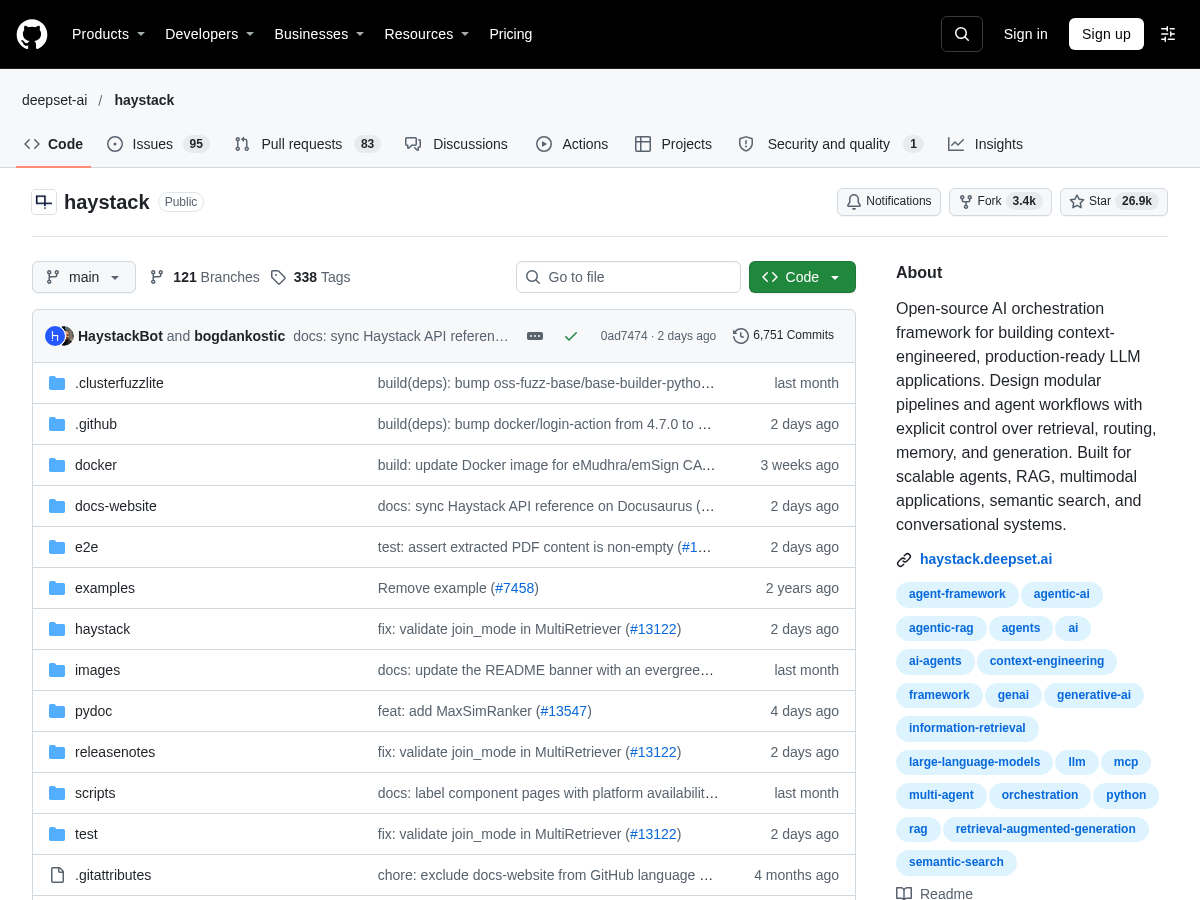
Screenshot of Haystack
Haystack
AI Agents Open Source

Haystack is an open-source AI orchestration framework designed for building context-engineered, production-ready LLM applications. It allows users to design modular pipelines and agent workflows with explicit control over retrieval, routing, memory, and generation. The framework is built for scalable agents, RAG, multimodal applications, semantic search, and conversational systems. Haystack provides a flexible and customizable architecture for developers to create complex AI-powered systems. It supports the development of large language models and provides tools for information retrieval, question answering, and text generation. The framework is highly extensible and can be integrated with various other AI tools and libraries. Haystack has a large community of developers and users, and it is widely used in industry and academia for building AI-powered applications. The framework is constantly evolving, with new features and updates being added regularly. Haystack is a powerful tool for anyone looking to build complex AI systems, and its open-source nature makes it accessible to developers and researchers around the world. The framework has a wide range of applications, including but not limited to, chatbots, virtual assistants, language translation, and text summarization. Haystack's modular design makes it easy to integrate with other AI tools and libraries, allowing developers to create customized AI-powered systems. The framework's scalability and flexibility make it an ideal choice for building large-scale AI applications. Haystack's community-driven development ensures that the framework stays up-to-date with the latest advancements in AI research and technology. The framework's documentation and tutorials provide a comprehensive guide for developers to get started with building AI-powered applications using Haystack.

Solves

Haystack solves the problem of building complex AI-powered systems by providing a flexible and customizable framework for designing modular pipelines and agent workflows. It addresses the challenges of scalability, flexibility, and customizability in AI system development, making it easier for developers to create production-ready LLM applications. Haystack's open-source nature and large community of developers and users ensure that the framework stays up-to-date with the latest advancements in AI research and technology, providing a reliable and efficient solution for building AI-powered systems.

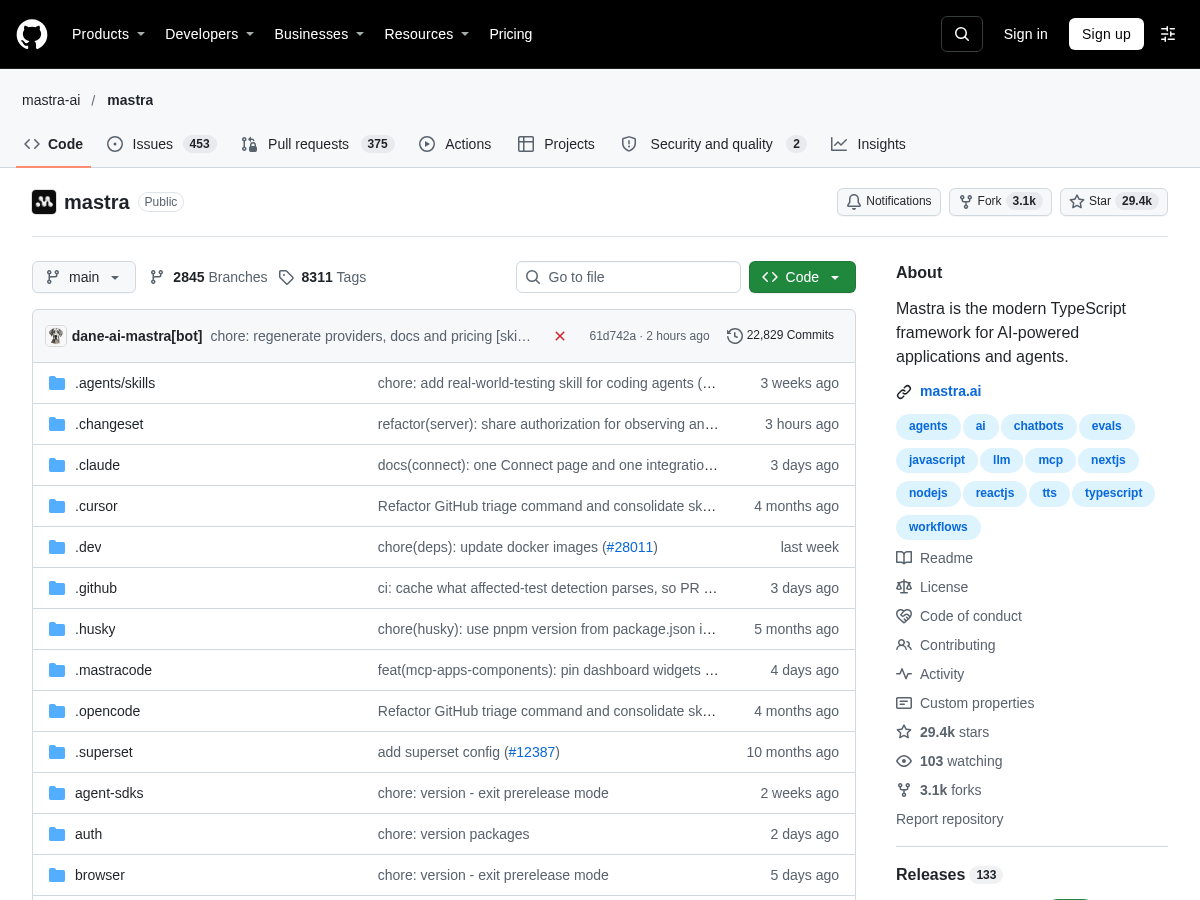
Screenshot of Mastra
Mastra
AI Agents Open Source

Mastra is a modern TypeScript framework designed for building AI-powered applications and agents. It provides a comprehensive set of tools and features to support the development of AI applications, from early prototypes to production-ready deployments. Mastra integrates with popular frontend and backend frameworks like React, Next.js, and Node.js, and can be deployed as a standalone server. The framework includes features such as model routing, agents, workflows, human-in-the-loop capabilities, context management, and integrations with various libraries and tools. Mastra also provides production essentials like evals and observability to support the ongoing development and refinement of AI applications. With its extensive documentation, community support, and dual-license model, Mastra is an attractive choice for developers looking to build reliable and scalable AI products. Mastra's architecture is designed to be flexible and extensible, allowing developers to customize and extend the framework to meet their specific needs. The framework's use of TypeScript ensures that developers can take advantage of the language's type safety and other features to build robust and maintainable code. Overall, Mastra provides a powerful and flexible foundation for building AI-powered applications and agents, and its comprehensive set of features and tools make it an ideal choice for developers looking to build innovative and effective AI solutions. Mastra's documentation and community support also make it easy for developers to get started and stay up-to-date with the latest developments and best practices in AI application development. The framework's dual-license model provides flexibility and options for developers, allowing them to choose the license that best fits their needs and use case. With its strong focus on security, Mastra is committed to maintaining the security of the repository and the framework as a whole, and encourages responsible disclosure of any security findings. Mastra's extensive set of features and tools, combined with its flexible and extensible architecture, make it a powerful and attractive choice for developers looking to build innovative and effective AI-powered applications and agents.

Solves

Mastra solves the problem of building and deploying AI-powered applications and agents by providing a comprehensive and flexible framework that supports the entire development lifecycle, from early prototypes to production-ready deployments. With Mastra, developers can quickly and easily build, tune, and scale reliable AI products, without requiring extensive expertise in AI or machine learning. Mastra's framework provides a standardized and opinionated approach to building AI applications, making it easier for developers to get started and stay on track. By providing a wide range of features and tools, Mastra helps developers to overcome the challenges of building and deploying AI-powered applications, and to create innovative and effective AI solutions that meet the needs of their users.

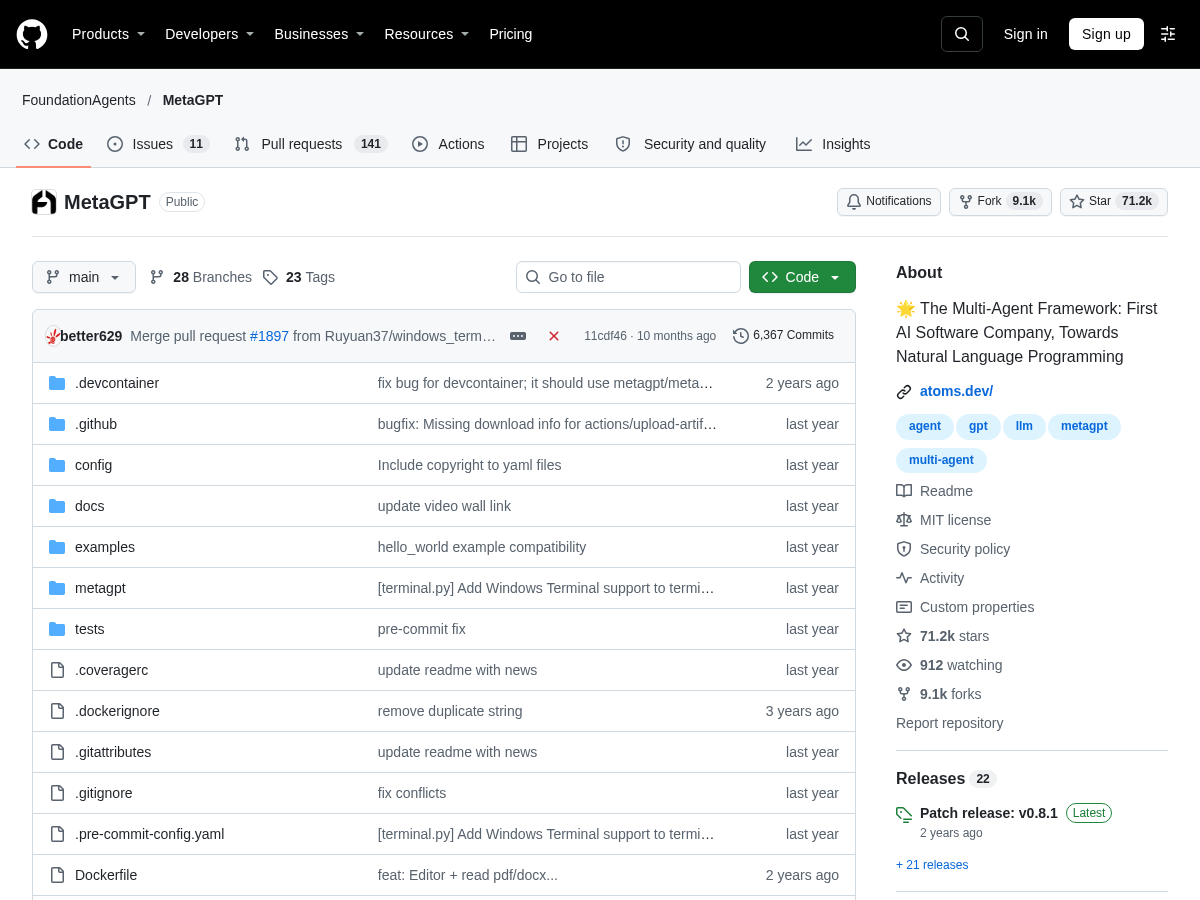
Screenshot of MetaGPT
MetaGPT
AI Agents Open Source

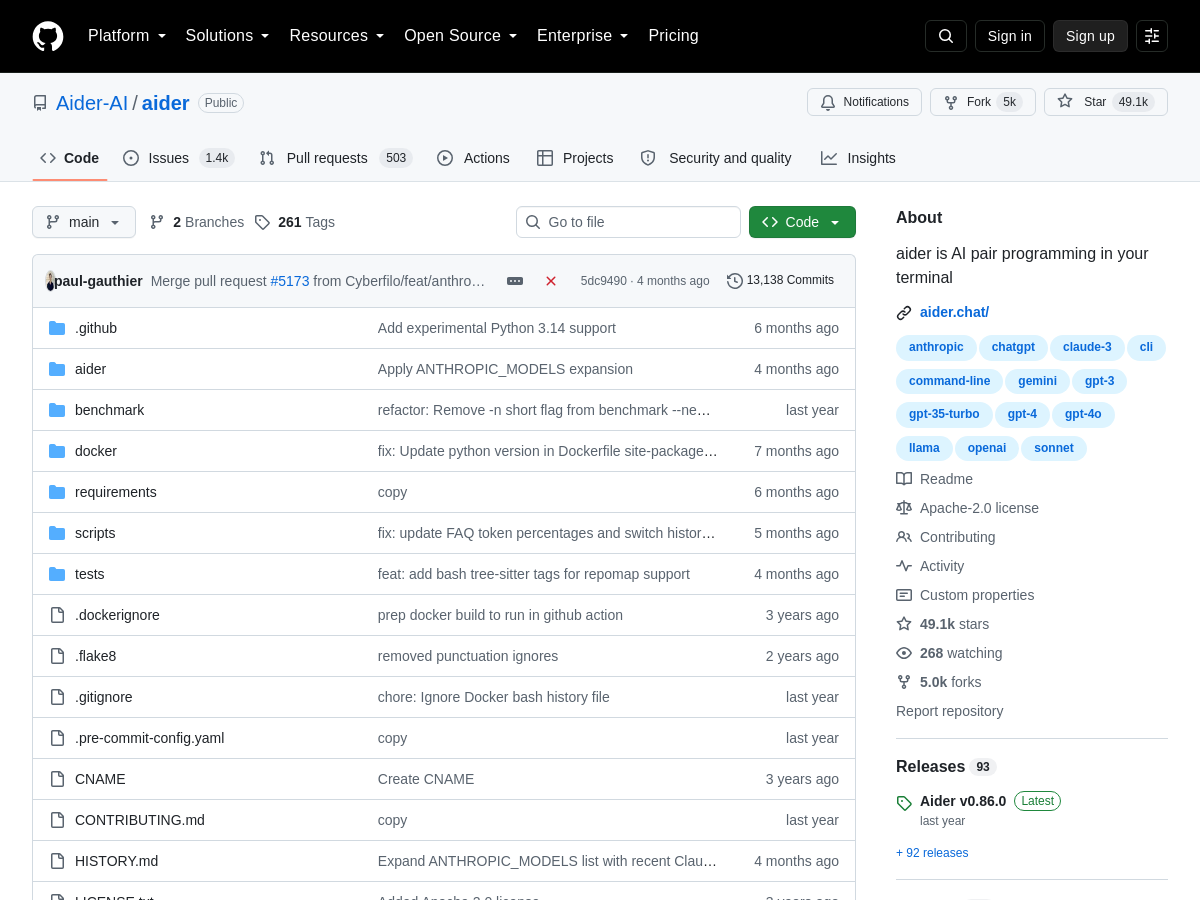
MetaGPT is an open-source, multi-agent framework that enables natural language programming. It is designed to allow users to provide a one-line requirement and receive a comprehensive response, including a product requirements document (PRD), design, tasks, repository, and continuous integration (CI) setup. The framework utilizes a combination of artificial intelligence (AI) and software development methodologies to streamline the development process. With MetaGPT, users can leverage the power of AI to automate tasks, improve productivity, and enhance collaboration. The project is hosted on GitHub and has gained significant attention, with over 71,000 stars and 9,000 forks. The MetaGPT community is active, with numerous contributors and a comprehensive documentation set. The framework supports various features, including code review, project management, and security testing, making it an attractive solution for developers, researchers, and organizations seeking to harness the potential of AI in software development.

Solves

MetaGPT solves the problem of inefficient software development processes by providing a streamlined and automated approach to developing software applications. It addresses the challenges faced by developers, researchers, and organizations in managing complex software projects, ensuring timely delivery, and maintaining high-quality standards. By leveraging AI and machine learning, MetaGPT enables users to focus on high-level requirements, while the framework handles the underlying implementation details, thereby reducing the risk of errors, improving productivity, and enhancing overall development efficiency.

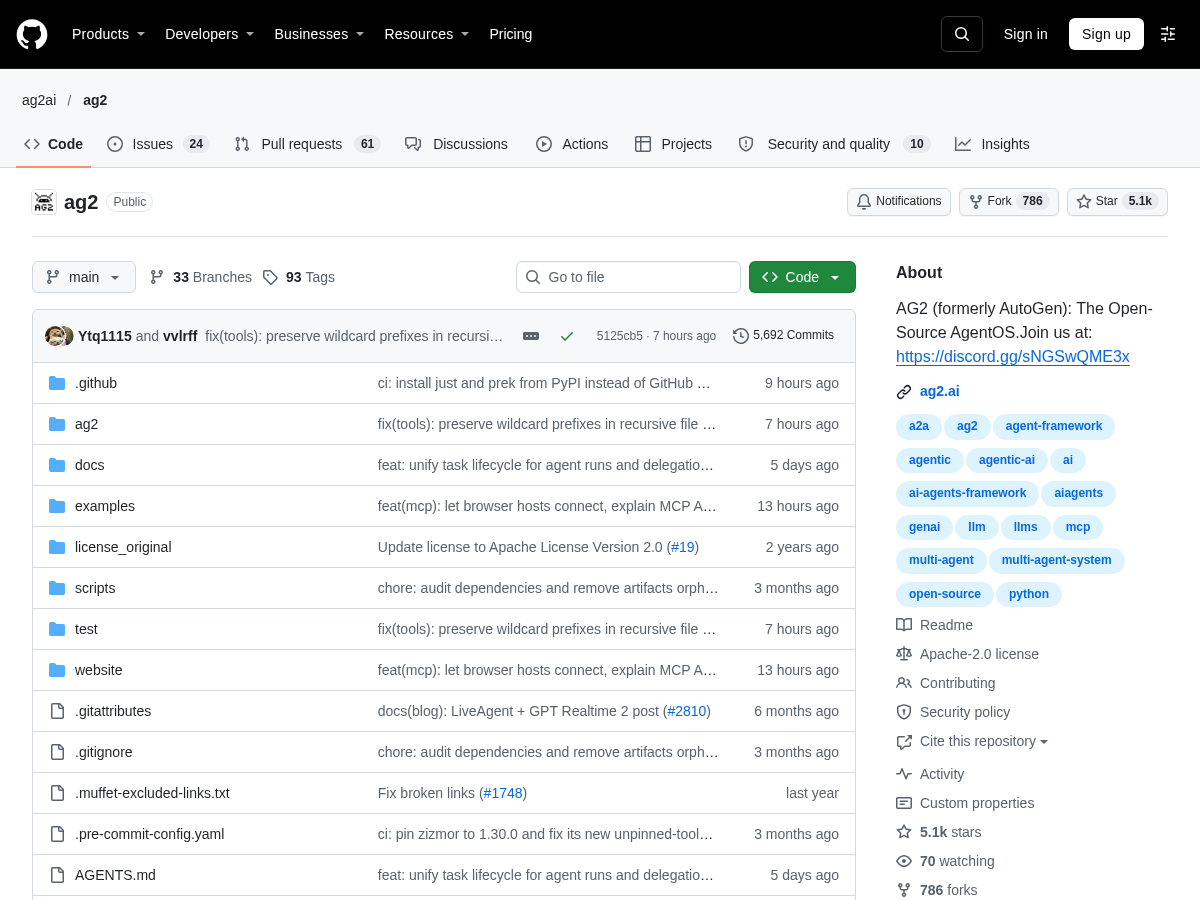
Screenshot of AG2
AG2
AI Agents Open Source

AG2 is an open-source programming framework for building AI agents and facilitating cooperation among multiple agents to solve tasks. It offers features such as agents capable of interacting with each other, facilitates the use of various large language models (LLMs) and tool use support, autonomous and human-in-the-loop workflows, and multi-agent conversation patterns. AG2 aims to streamline the development and research of agentic AI. The project is currently maintained by a dynamic group of volunteers from several organizations. AG2 requires Python version >= 3.11 and is available as 'ag2' on PyPI. It has a range of features including agents, tools, human in the loop, orchestrating multiple agents, and the agent harness. AG2 also supports more advanced concepts such as structured output, multi-agent network, knowledge & memory, middleware, telemetry, evaluation, and testing.

Solves

AG2 solves the problem of building and managing AI agents and their interactions, making it easier for developers to create complex AI systems. It provides a framework for building AI agents that can interact with each other and with humans, and facilitates the use of various large language models and tool use support. This makes it easier for developers to create AI systems that can solve complex tasks and interact with humans in a more natural way.

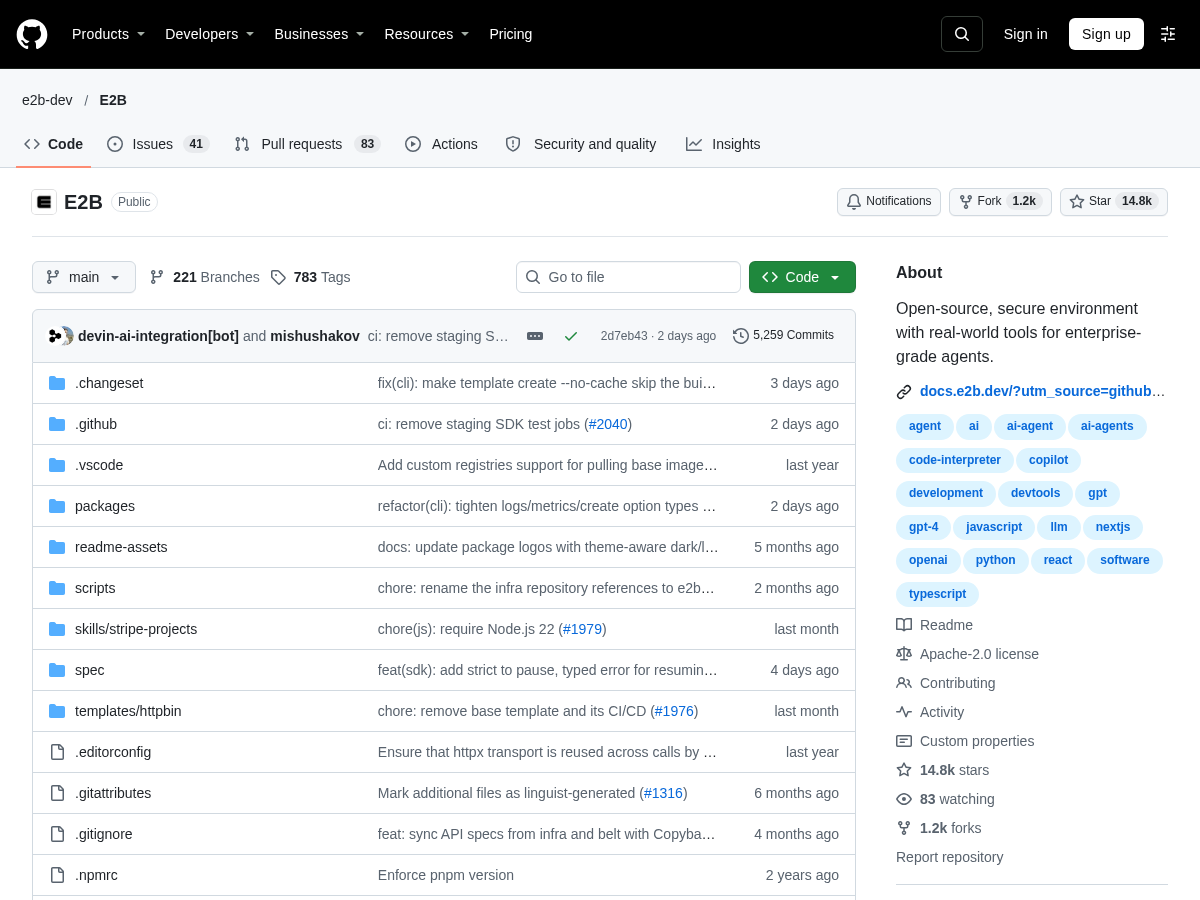
Screenshot of e2b
e2b
AI Agents Open Source

e2b is an open-source platform designed for building and deploying virtual developers' agents. It provides a secure environment equipped with real-world tools, making it suitable for enterprise-grade agents. The platform is highly customizable and allows developers to create tailored solutions for their specific needs. With its open-source nature, e2b encourages community involvement and contributions, ensuring it stays up-to-date with the latest technologies and trends. The project is hosted on GitHub, where developers can find extensive documentation, contribute to the codebase, and engage with the community. e2b supports a wide range of technologies, including JavaScript, Python, and TypeScript, making it a versatile tool for developers from various backgrounds. Its integration with other development tools and services enhances its utility, allowing for streamlined development and deployment processes. Overall, e2b aims to simplify the development and deployment of virtual agents, providing a robust and secure foundation for these applications.

Solves

Developers and enterprises face the challenge of creating and deploying efficient virtual agents that can automate tasks and enhance productivity. e2b solves this problem by offering a comprehensive platform that simplifies the development, deployment, and management of these agents. With e2b, developers can focus on creating the logic and functionality of their agents without worrying about the underlying infrastructure, thereby reducing development time and increasing the reliability of their applications.

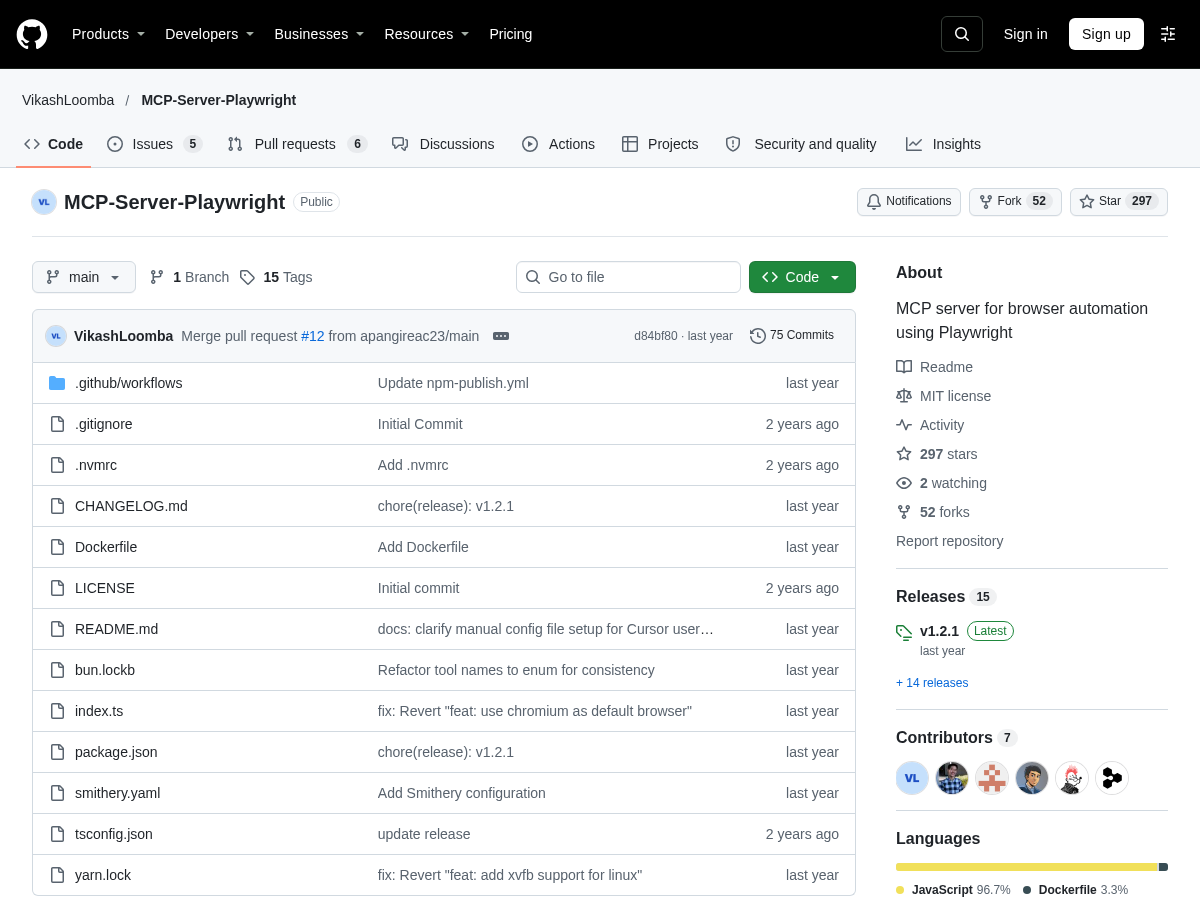
Screenshot of automatalabs/mcp-server-playwright
automatalabs/mcp-server-playwright
Developer Tools Open Source

MCP Server Playwright is a Model Context Protocol server that provides browser automation capabilities using Playwright. It enables Large Language Models (LLMs) to interact with web pages, take screenshots, and execute JavaScript in a real browser environment. The server is designed to work with Playwright, a popular browser automation framework, and provides a simple and efficient way to automate browser interactions. The library is written in TypeScript and is available on npm. It has a simple and intuitive API, making it easy to use and integrate into existing applications. The library also includes a number of features, such as support for multiple browsers, automatic waiting for elements to be visible, and automatic handling of browser crashes. Overall, MCP Server Playwright is a powerful and flexible library for automating browser interactions, and is well-suited for a wide range of applications, from web scraping and automation to testing and debugging. The library is actively maintained and has a strong community of developers who contribute to it and provide support. It is also widely used in industry and academia, and has a number of success stories and case studies. The library is designed to be highly customizable, and provides a number of options and configuration settings that can be used to tailor its behavior to the needs of the application. It also includes a number of examples and demos, which can be used to get started with the library and to learn more about its features and capabilities. In addition to its technical features and capabilities, MCP Server Playwright also has a number of benefits and advantages that make it a popular choice among developers. For example, it is highly efficient and can automate browser interactions quickly and reliably, which can save time and reduce costs. It is also highly flexible and can be used with a wide range of browsers and applications, which makes it a versatile and useful tool. Overall, MCP Server Playwright is a powerful and flexible library for automating browser interactions, and is well-suited for a wide range of applications.

Solves

The problem that MCP Server Playwright solves is the need for a simple and efficient way to automate browser interactions. Many applications require automated browser interactions, such as web scraping, testing, and debugging, but these interactions can be time-consuming and difficult to implement. MCP Server Playwright provides a solution to this problem by providing a simple and intuitive API for automating browser interactions, which can save time and reduce costs. It also provides a number of features and capabilities that make it well-suited for a wide range of applications, from web scraping and automation to testing and debugging.

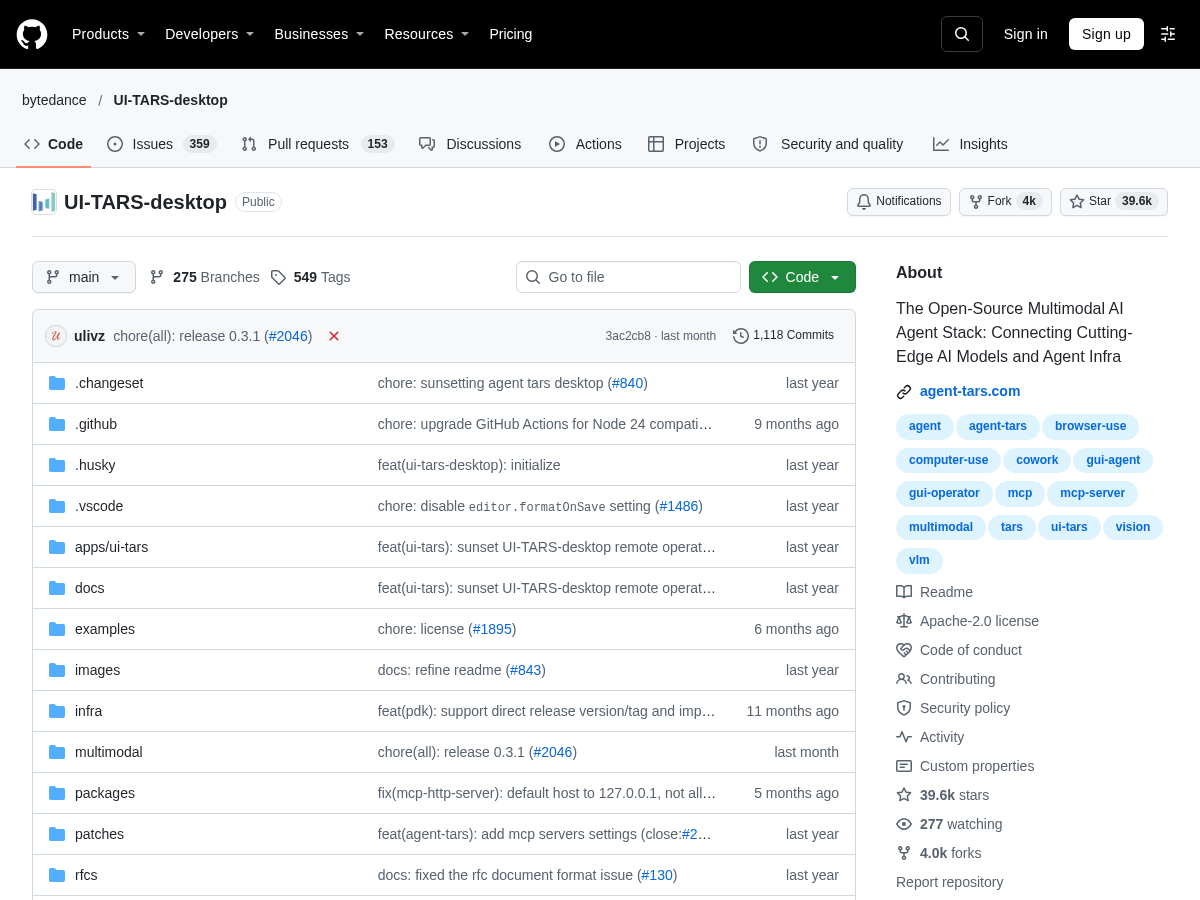
Screenshot of agent-infra/mcp-server-browser
agent-infra/mcp-server-browser
Developer Tools Open Source

UI-TARS-desktop is an open-source multimodal AI agent stack that connects cutting-edge AI models and agent infrastructure. It provides a platform for developers to build and deploy AI-powered applications. The project uses Puppeteer for browser automation, supporting both local and remote browser connections. UI-TARS-desktop is designed to be highly customizable and extensible, with a modular architecture that allows developers to easily integrate new AI models and features. The project has a strong focus on community involvement, with a large number of contributors and a active discussion forum. UI-TARS-desktop is licensed under the Apache-2.0 license, making it free to use and distribute. The project has a wide range of applications, including but not limited to, computer vision, natural language processing, and robotics. UI-TARS-desktop is a powerful tool for developers looking to build innovative AI-powered applications. The project is constantly evolving, with new features and updates being added regularly. The UI-TARS-desktop community is active and supportive, providing a wealth of resources and documentation for developers to get started with the project. Overall, UI-TARS-desktop is a cutting-edge open-source project that has the potential to revolutionize the field of AI development. With its modular architecture, customizable features, and strong community support, UI-TARS-desktop is an ideal choice for developers looking to build innovative AI-powered applications. The project's use of Puppeteer for browser automation makes it an ideal choice for applications that require automated browser interactions. The project's focus on multimodal AI makes it an ideal choice for applications that require multiple forms of input and output. The project's active community and extensive documentation make it easy for developers to get started and stay up-to-date with the latest developments.

Solves

UI-TARS-desktop solves the problem of building and deploying AI-powered applications by providing a modular and customizable platform for developers to integrate cutting-edge AI models and agent infrastructure. It also solves the problem of automated browser interactions by using Puppeteer for browser automation. Additionally, UI-TARS-desktop solves the problem of community involvement by providing a large number of contributors and a active discussion forum. This makes it easier for developers to get started with AI development and to build innovative AI-powered applications.

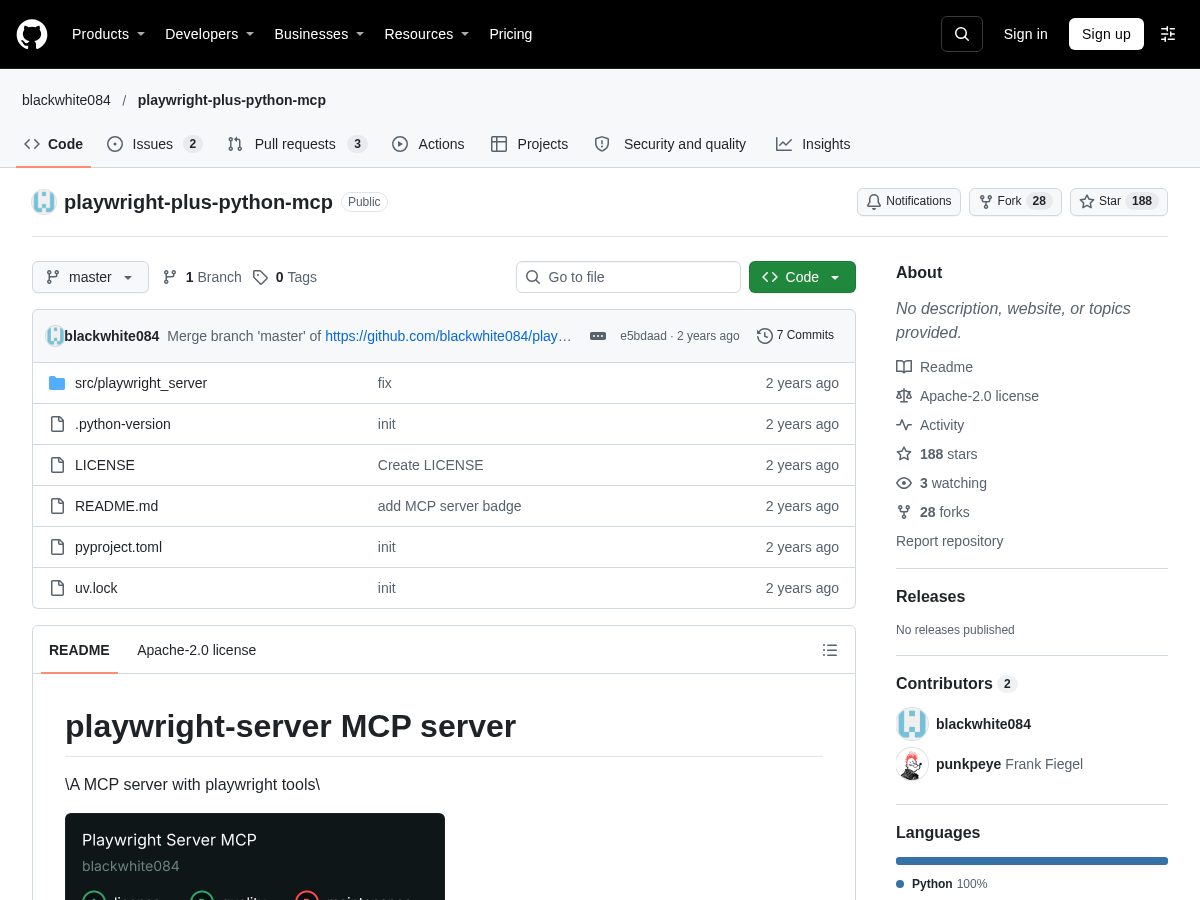
Screenshot of blackwhite084/playwright-plus-python-mcp
blackwhite084/playwright-plus-python-mcp
Developer Tools Open Source

Playwright Plus Python MCP is a browser automation library that utilizes Playwright, tailored for Large Language Models (LLMs). It provides a simple note storage system with custom note:// URI scheme for accessing individual notes, where each note has a name, description, and text/plain mimetype. The library implements various tools such as playwright_navigate, playwright_screenshot, playwright_click, playwright_fill, playwright_evaluate, playwright_click_text, playwright_get_text_content, and playwright_get_html_content. These tools enable users to navigate to specified URLs, take screenshots, click elements, fill out input fields, execute JavaScript code, and retrieve text and HTML content. The library also provides a single prompt, summarize-notes, which creates summaries of all stored notes with optional style arguments for detail level control. Playwright Plus Python MCP is designed to work with the Model Context Protocol (MCP) and can be configured and debugged using the MCP Inspector.

Solves

Developers and researchers working with Large Language Models (LLMs) face the challenge of automating browser interactions and managing note storage systems. Playwright Plus Python MCP solves this problem by providing a library that simplifies browser automation and note management, allowing users to focus on their core tasks. With its intuitive tools and prompts, the library streamlines the process of navigating, screenshotting, and interacting with web pages, making it an ideal solution for LLM-related projects.

Screenshot of co-browser/browser-use-mcp-server
co-browser/browser-use-mcp-server
Developer Tools Open Source

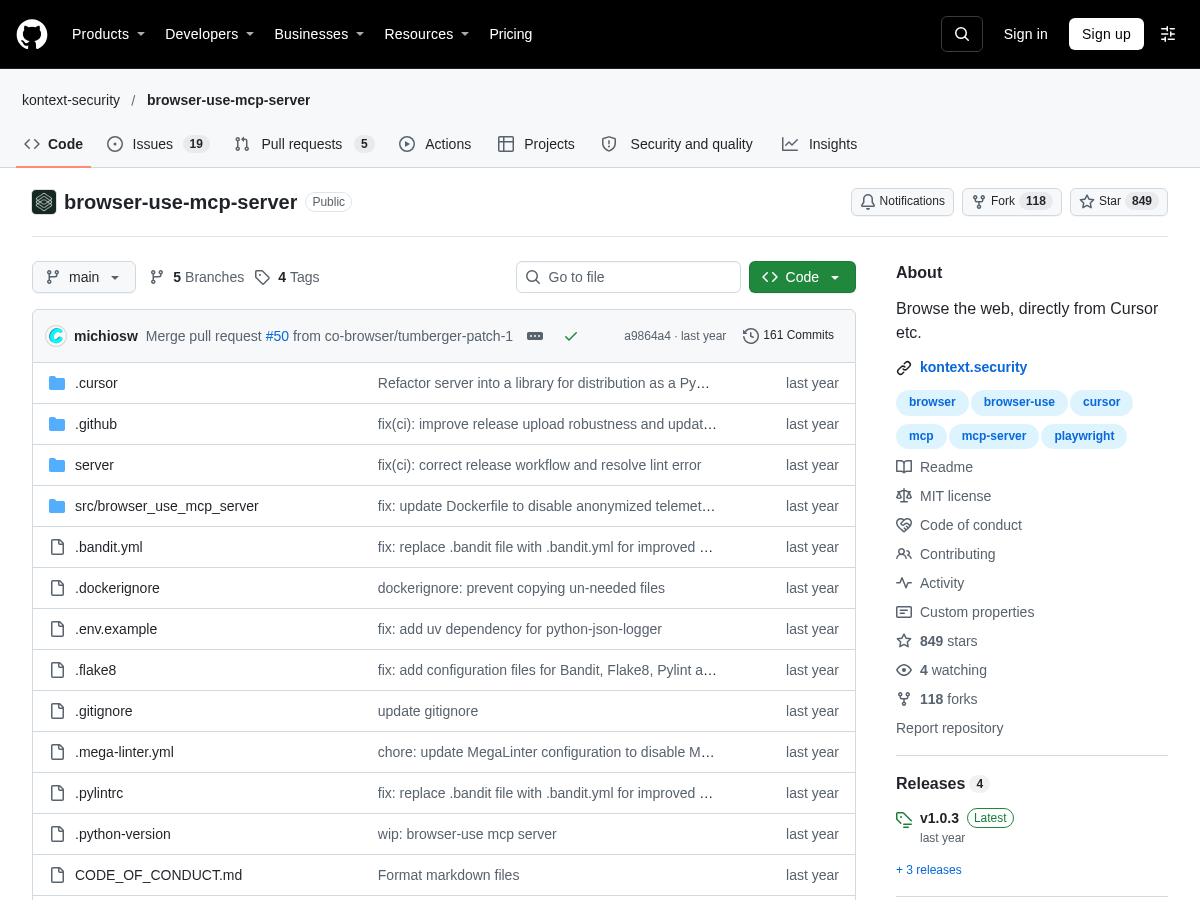
The browser-use-mcp-server is an open-source project that enables browser automation with browser-use. It includes a Dockerfile to run Chromium in Docker with a VNC server. This project allows users to browse the web directly from Cursor etc. The repository contains various configuration files for code quality checks, such as Bandit, Flake8, Pylint, and Pyright. The project is written in Python and has a MIT license. The Dockerfile is configured to disable anonymized telemetry and adjust environment variables. The project has a code of conduct and contributing guidelines, making it easy for developers to get involved. With 849 stars and 118 forks, this project has a significant presence in the developer community.

Solves

Developers who need to automate browser interactions may face challenges with existing solutions. The browser-use-mcp-server project solves this problem by providing a simple and efficient way to automate browser interactions using browser-use. This project enables developers to browse the web directly from Cursor etc., making it easier to automate tasks and workflows.

Screenshot of mgnirck/lecka-mcp
mgnirck/lecka-mcp
Developer Tools Open Source

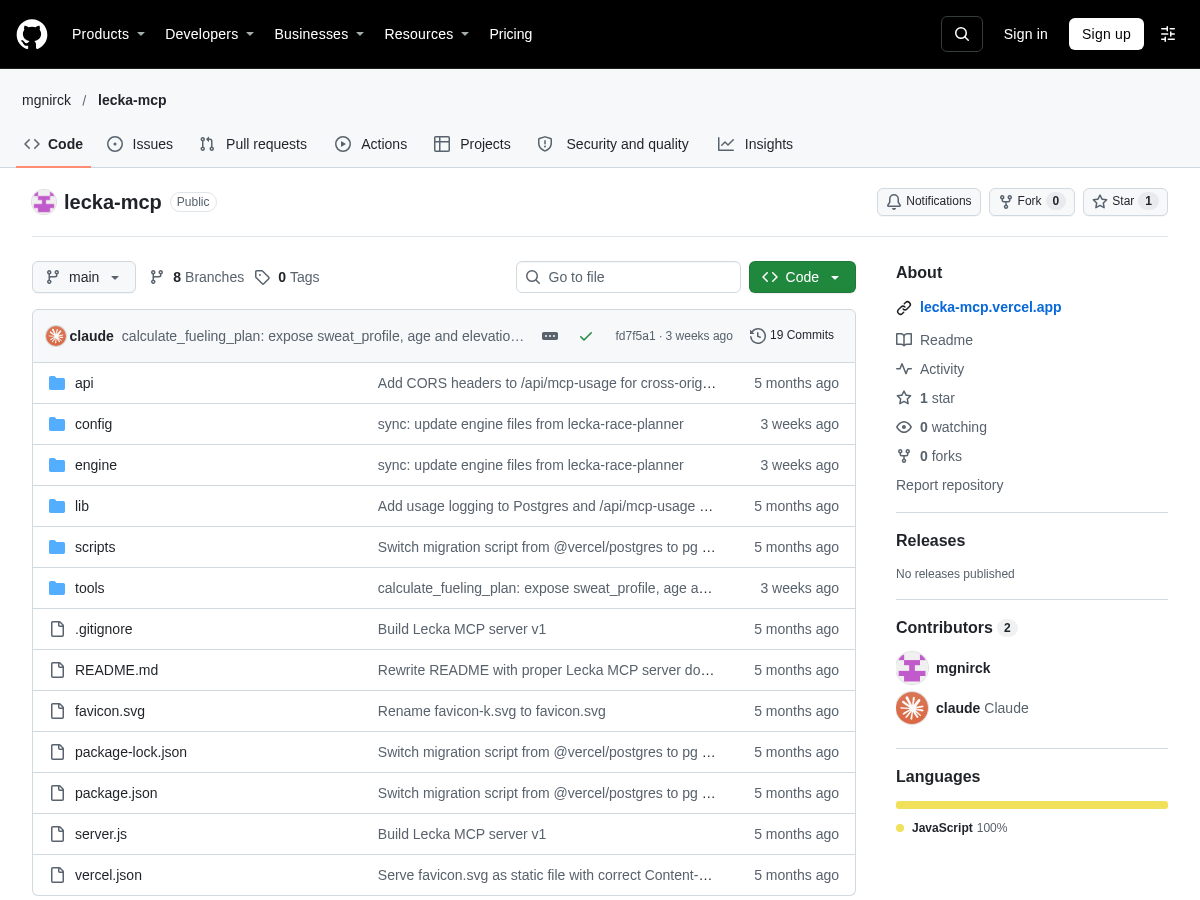
Lecka MCP is an open-source project that provides a race nutrition planning tool for endurance athletes. The tool calculates carb, sodium, and fluid targets, as well as provides Lecka product recommendations based on race type, conditions, and athlete weight. The project is built using Node ESM and utilizes the @modelcontextprotocol/sdk dependency. The tool consists of several components, including a server, tools, and engine, which work together to provide a comprehensive nutrition planning solution. The server acts as the entry point, with three registered tools: get-products, calculate-fueling, and get-nutrition. The engine is responsible for calculating nutrition targets and providing product recommendations. The project also includes a configuration file, formula-config.json, and a products.json file, which provides bundled fallback data. The tool is designed to be used by endurance athletes and coaches to optimize nutrition planning and improve performance.

Solves

Endurance athletes often struggle with nutrition planning, which can negatively impact their performance and overall health. Lecka MCP solves this problem by providing a comprehensive and personalized nutrition planning tool that takes into account various factors such as race type, conditions, and athlete weight. By using Lecka MCP, athletes can optimize their nutrition plan and improve their performance, reducing the risk of dehydration, cramping, and other nutrition-related issues.

Screenshot of 34892002/bilibili-mcp-js
34892002/bilibili-mcp-js
Developer Tools Open Source

Bilibili-mcp-js is a JavaScript library that provides a Bilibili video search service using the Model Context Protocol (MCP). It allows users to search for videos on Bilibili, a popular Chinese video sharing platform. The library is designed to be used with LangChain, a framework for building conversational AI models. It provides a simple and efficient way to integrate Bilibili video search functionality into LangChain-based applications. The library is open-source and licensed under the MIT license, making it freely available for use and modification. It has been actively maintained, with regular updates and commits to the GitHub repository. The library includes example code and documentation to help users get started with using the Bilibili video search service. Overall, bilibili-mcp-js is a useful tool for developers looking to add Bilibili video search functionality to their applications.

Solves

Developers who want to add Bilibili video search functionality to their applications may face the problem of having to implement the search functionality from scratch, which can be time-consuming and require significant development effort. Bilibili-mcp-js solves this problem by providing a pre-built library that can be easily integrated into LangChain-based applications, saving developers time and effort.

Screenshot of BB-fat/browser-use-rs
BB-fat/browser-use-rs
Developer Tools Open Source

Browser-use-rs is a lightweight Rust library for browser automation via Chrome DevTools Protocol (CDP) with built-in AI integration through Model Context Protocol (MCP). It provides a simple API for common browser operations such as navigating, clicking, inputting, taking screenshots, and extracting content. The library is designed to be fast and lightweight, with zero Node.js dependency and minimal overhead. It also features DOM extraction with indexed interactive elements, CSS selector or numeric index-based element targeting, and thread-safe browser session management. The library is compatible with Rust 1.70+ and requires Chrome or Chromium to be installed. It is licensed under the MIT license and has been inspired by and references the agent-infra/mcp-server-browser project.

Solves

Developers who need to automate browser interactions for tasks such as web scraping, automated testing, or AI-driven automation face the problem of finding a reliable and efficient library that can handle these tasks. Browser-use-rs solves this problem by providing a lightweight and fast Rust library that can automate browser interactions via CDP and integrate with AI models through MCP.

Screenshot of Notion AI
Notion AI
Productivity Unknown

Notion AI is a comprehensive AI tool that integrates the power of ChatGPT within Notion, allowing users to leverage AI capabilities without leaving the platform. The tool is designed to provide practical AI skills that can be applied to real-world work, with a focus on hands-on lessons and structured learning paths. The Neuron Academy, which offers Notion AI, provides over 80 hands-on lessons, guided learning paths, and course certificates, with new content added every week. The platform is geared towards professionals who want to use AI in their day-to-day work, with no technical experience required. The academy's instructors, including Grant Harvey and Corey Noles, have extensive experience in researching, testing, and explaining AI, and provide clear, practical guidance without unnecessary jargon. Notion AI is part of The Neuron Academy's offerings, which aim to make sense of what's happening in AI and explain what actually matters, with a focus on practical application and real-world use cases.

Solves

Notion AI solves the problem of professionals needing to develop practical AI skills that can be applied to their day-to-day work, without requiring extensive technical experience or searching through scattered tutorials and hype. The tool provides a comprehensive and structured approach to learning AI, with a focus on hands-on lessons and real-world applications, allowing users to build useful skills and stay current with the latest AI tools and capabilities.

Screenshot of Proliferate
Proliferate
AI Agents Open Source

Proliferate is an open-source local and cloud agent IDE designed for running various coding agents, including Claude Code, Codex, OpenCode, and more, in parallel across isolated workspaces. It allows users to manage multiple agents, each with its own isolated branch, terminal, conversation, and review state. The platform supports native harnesses for different agents, worktree workspaces, parallel agents, subagents, integrations, and workflows. Proliferate can be self-hosted, and its control plane is deployable via Docker, AWS, GCP, Azure, Kubernetes, or air-gapped operation. The platform provides a desktop app and supports configuration for custom deployments. Proliferate's features include support for multiple coding agents, isolated workspaces, and customizable workflows, making it a versatile tool for developers and teams working with AI-powered coding agents. The platform is highly customizable, with support for custom integrations and workflows, and is designed to be extensible and adaptable to different development environments. With its open-source nature and active community, Proliferate offers a flexible and collaborative solution for teams looking to leverage AI-powered coding agents in their development workflows. Proliferate's self-hosting capabilities and support for various deployment options make it an attractive choice for teams with specific infrastructure requirements or security concerns. Overall, Proliferate provides a powerful and customizable platform for managing AI-powered coding agents and streamlining development workflows.

Solves

Developers and teams working with AI-powered coding agents often face challenges in managing multiple agents, workflows, and integrations. Proliferate solves this problem by providing a unified platform for running and managing multiple coding agents in parallel, with isolated workspaces and customizable workflows. This allows teams to streamline their development workflows, improve productivity, and reduce the complexity associated with managing multiple agents and integrations. By providing a self-hosted solution with flexible deployment options, Proliferate also addresses the needs of teams with specific infrastructure requirements or security concerns.

Screenshot of Continue
Continue
AI Agents Unknown

Continue is an open-source autopilot for software development, designed to amplify the work of developers rather than automate it. The project was acquired by Cursor, but its open-source codebase remains freely available for others to build upon. Continue was pioneering in the field of AI developer tooling, pushing the boundaries of what could be achieved. The project's mission was to ensure that developers are amplified, not automated, and this commitment continues in the work ahead. Continue provided features such as automated PR review, AI code review, and agent checks, which were integrated with platforms like GitHub, Sentry, and Snyk. The project's community played a significant role in its development, and the open-source codebase serves as a foundation for future innovations. Although the project is no longer actively maintained, its legacy continues to inspire new developments in the field of AI-powered software development.

Solves

Developers often face the challenge of manually reviewing and managing code changes, which can be time-consuming and prone to errors. Continue solved this problem by providing an autopilot system that could automate tasks such as code review, PR review, and agent checks, freeing up developers to focus on more complex and creative tasks. By leveraging AI technology, Continue aimed to improve the efficiency and accuracy of software development processes, making it an invaluable tool for developers and development teams.

Screenshot of Aider
Aider
AI Agents Open Source

Aider is an AI pair programming tool that allows users to collaborate with large language models (LLMs) to start new projects or build on existing codebases. The tool is designed to be used in the terminal and provides a command-line interface for users to interact with the LLMs. Aider supports various programming languages and provides features such as code completion, code review, and project management. The tool is open-source and has a large community of contributors and users. Aider is designed to be highly customizable and can be integrated with other development tools and platforms. The tool is constantly evolving, with new features and improvements being added regularly. Aider's goal is to make programming more efficient, productive, and enjoyable by providing a collaborative and interactive coding experience. The tool is suitable for developers of all levels, from beginners to experienced professionals, and can be used for a wide range of programming tasks, from small projects to large-scale enterprise applications. Aider's documentation and community resources are extensive, making it easy for users to get started and learn how to use the tool effectively. Overall, Aider is a powerful and innovative tool that has the potential to revolutionize the way we program and collaborate on coding projects.

Solves

Aider solves the problem of inefficient and isolating programming experiences by providing a collaborative and interactive coding environment. Many developers struggle with writer's block, debugging, and code optimization, which can lead to frustration and decreased productivity. Aider's AI-powered pair programming capabilities help to overcome these challenges by providing real-time code completion, review, and suggestions, allowing developers to focus on the creative and high-level aspects of programming. Additionally, Aider's community-driven approach and open-source nature ensure that the tool is constantly improving and adapting to the needs of its users, making it an essential tool for any developer looking to improve their productivity and coding experience.

Screenshot of AgentVerse
AgentVerse
AI Agents Open Source

AgentVerse is an open-source platform designed to facilitate the deployment of multiple LLM-based agents in various applications. It provides two primary frameworks: task-solving and simulation. The platform is built to support the development and deployment of AI agents, allowing users to create and manage their own agents. AgentVerse is developed using Python and utilizes the OpenAI library for LLM support. The project is hosted on GitHub and has a growing community of contributors. The platform's architecture is modular, allowing for easy integration of new agents and applications. AgentVerse also provides a range of tools and features for agent development, including data loading, simulation, and visualization. The project's goal is to provide a flexible and scalable platform for AI agent development, enabling users to create and deploy their own agents in a variety of applications. AgentVerse has a simple and intuitive API, making it easy for developers to integrate the platform into their own applications. The platform also provides a range of pre-built agents and applications, allowing users to get started quickly. Overall, AgentVerse is a powerful and flexible platform for AI agent development, providing a range of tools and features for creating and deploying custom agents.

Solves

AgentVerse solves the problem of developing and deploying AI agents in various applications. Many developers and organizations struggle with creating and managing their own AI agents, due to the complexity and expertise required. AgentVerse provides a platform for developing and deploying AI agents, making it easier for users to create and manage their own agents. The platform's modular architecture and simple API make it easy for developers to integrate AgentVerse into their own applications, allowing them to focus on developing their own agents rather than building a platform from scratch.

Screenshot of Agents
Agents
AI Agents Open Source

The Agents library is a framework for building language agents. It is inspired by the connectionist learning procedure used for training neural nets and makes an analogy between language agents and neural nets. The library allows for the implementation of the main components of connectionist learning, including backward propagation and gradient-based weight update, in the context of agent training using language-based loss, gradients, and weights. The library provides a systematic framework for training language agents and supports optimizing multi-agent systems. It includes a workflow illustration that demonstrates how the library works. The library is open-source and available on GitHub.

Solves

The Agents library solves the problem of training language agents in a systematic and efficient way. It provides a framework for building and training language agents, which can be used in a variety of applications such as natural language processing, dialogue systems, and language generation. The library addresses the challenge of training language agents by providing a connectionist learning procedure that can be used to optimize the performance of the agents.

Screenshot of Cursor
Cursor
Software Engineering Unknown

Cursor is an AI-powered coding agent designed to accelerate software development by automating tasks and providing assistance to developers. It integrates with various tools and platforms, including GitHub, Slack, and terminal interfaces, to streamline the development process. With Cursor, developers can hand off tasks to AI agents, which can work autonomously to build, test, and demo features, allowing developers to focus on high-level decision-making. The platform supports multiple cutting-edge models from leading AI providers, enabling users to choose the best model for every task. Additionally, Cursor offers features such as code completion, intelligent code navigation, and context-aware completions to enhance developer productivity. The platform is trusted by over half of the Fortune 500 companies to accelerate development securely and at scale.

Solves

Cursor solves the problem of inefficient software development by automating repetitive tasks, providing intelligent coding assistance, and enabling developers to focus on high-level decision-making. This helps to accelerate development, improve productivity, and reduce the time and effort required to build and deliver software products.

Screenshot of Yolando
Yolando
AI SEO Tools Unknown

Yolando is an AI visibility platform designed to help marketers improve their brand's discovery in AI-generated answers. It provides tools to monitor how large language models (LLMs) position a business, offering insights and recommendations to enhance brand presence in AI-driven conversations. The platform aims to turn market knowledge, AI visibility, and go-to-market execution into a continuous advantage. Key features include AI Visibility, which shows how LLMs represent your brand; Recommendations, which guides content creation and optimization priorities; Marketing Studio for generating on-brand content automatically; and Competitor Radar to track competitor moves. Yolando helps marketers take control of how AI understands and represents their brand, ensuring consistency across touchpoints. Yolando has raised $8.5M in total funding and is trusted by marketing leaders. It positions itself as a command center for marketing in the age of AI, where standing still means disappearing.

Solves

Yolando addresses the challenge of brand invisibility in AI-generated answers. As AI becomes a primary discovery channel, brands that are not cited or recommended by LLMs risk being excluded from buyer conversations. Yolando enables marketers to see what AI sees, shape what it says, and ensure their brand appears when it matters.

Screenshot of DreamFort
DreamFort
AI Agent Unknown

DreamFort is a privacy-focused, web-based AI suite that combines three tools behind a single identity-stripping architecture: confidential AI chat, a private AI agent, and an AI image and video generation studio. The chat component provides access to frontier models such as ChatGPT, Claude, Gemini and Grok alongside open models like DeepSeek, with model switching available mid-conversation. The creation studio supports video generation with models including Seedance, Veo, Kling and the Wan line, plus image generation with models such as Nano Banana and GPT Image. The agent component is positioned as a local sandbox that runs on the user's own device, where it can write and execute code, analyze user files, and build documents or applications without uploading the underlying work. DreamFort states that it strips identifying information from every request and does not maintain tracking profiles or logs tied to a user identity, describing the approach with terms such as OHTTP and trusted execution environment (TEE) in its marketing. The product is marketed as a pay-as-you-go service with free starting credits, and the site claims a user base of over 80,000. Backers and supporters referenced on the homepage include a16z, SV Angel, the NVIDIA Inception Program, and Illia Polosukhin. Pricing details are not published in the supplied material beyond the pay-as-you-go and free-credits description.

Solves

Mainstream AI chat and generative media services typically tie prompts, uploaded files, and generated outputs to a user account, and may apply content filters or retain conversation logs. DreamFort addresses this by routing requests through an identity-stripping layer so chats, prompts, and generations are not associated with the user, while also offering a local sandbox for agent tasks so sensitive files and code do not leave the device.