Tool discovery

What type of AI tool
are you looking for?

Search the active catalog with LambdaBase AI Search, or keep browsing the popularity-ordered directory below.

Submitted search queries and interaction metrics may be analyzed to improve result quality. Do not include personal or confidential information

Browse popular tools.

Screenshot of MiniMax H3 Max Video Generator
MiniMax H3 Max Video Generator
AI Video Generator Unknown

MiniMax H3 Max Video Generator (h3-max.pro) is a browser-based workspace for creating short AI videos from text prompts or reference images. Users write a scene brief, optionally upload a first frame and a last frame to anchor the composition and ending, and generate clips between 5 and 15 seconds long. The workspace is positioned as an independent front end for the MiniMax H3 Max video model rather than an official MiniMax product. Generation settings include two model tiers (H3 Max Standard and H3 Max Turbo), six aspect ratios (21:9, 16:9, 4:3, 1:1, 3:4, 9:16) and resolutions of 480P, 768P and 1080P. Image-to-video generation follows the aspect ratio of the uploaded source image. Costs are expressed in whole credits that vary by model, resolution and exact clip length, and a credit estimate is shown before the user commits to a generation. The site also provides a library of editable 'shot recipe' prompt briefs covering product films, vertical stories, material close-ups and establishing shots, plus a curated showcase gallery of generated clips. A separate video-to-prompt utility is offered alongside the main generator. Text and image inputs share the same credit rates, and prompts may optionally be submitted to the public showcase. The tool is aimed at creators who want quick, prompt-driven video takes for social, product and concept work without a camera crew or editing pipeline, keeping prompt, model settings and finished takes together for iterative revision.

Solves

Producing even a few seconds of usable footage traditionally requires cameras, locations, talent and editing time. This tool converts a written scene description or a reference image into a short finished clip, and it exposes model choice, framing, duration and resolution settings together with a pre-generation credit estimate so users can judge cost and iterate on a take before spending more.


Screenshot of A Little Box of Goodies
A Little Box of Goodies
Other Unknown

A Little Box of Goodies is a web-based service for creating and sharing personalized digital care packages. Users assemble a virtual box by selecting items such as notes, photos, songs, videos, gifts, voice messages, drawings, locations, coupons, and news to include for a recipient. The site uses a shipping-label and package motif: users fill in a 'to' name and a 'from' name, add goodies to the box, and then pay to generate a shareable link. The package can be sent by text, email, or any other method, and the recipient opens it online via the generated link. The homepage describes the product as a way to send 'a little care' for someone special. It provides a lightweight, browser-based alternative to physical care packages by letting users combine multiple personal media types into one digital parcel. Pricing details and technical implementation are not specified on the homepage.

Solves

It solves the problem of sending a thoughtful, personalized gift or care package when people are apart or when physical shipping is impractical. Instead of coordinating multiple messages, files, and links across different apps, users can bundle personal content into one shareable online package.

Screenshot of Wuli AI
Wuli AI
AI Image Generator Free

Wuli AI (呜哩AI) is a web-based, one-stop AIGC creative platform for generating images and videos. Its own site tagline translates to "one wuli, creativity blooms," and it positions AI drawing and video creation as being "within reach," with a community feed where prompts and outputs are shared and remixed. The homepage metadata explicitly describes it as an intelligent creation platform supporting text-to-image, text-to-video and other multimodal AI creation. The product is organized around two main areas: a Generate workspace for prompt-driven creation and an Asset library for storing and managing the resulting files. The site is Chinese-language first and carries regional and personal-brand keywords in its metadata, indicating it is aimed primarily at Chinese-speaking users rather than a global developer audience. Access is tied to an account with an invitation and points (credit) system — a homepage banner invites visitors to log in and earn bonus credits, which is a common monetization and growth pattern for consumer AIGC apps in that market. No public API, pricing tiers, model details or self-hosted option are documented on the homepage, so it should be treated as a closed, browser-only cloud service. No public GitHub repository or README is available, so details such as the underlying diffusion models, generation limits, resolution, or commercial licensing of outputs cannot be verified from the sources reviewed here.

Solves

Creators who want AI-generated stills and video usually have to run separate tools for images and motion, each with its own subscription and interface. Wuli AI bundles text-to-image and text-to-video generation, an asset library, and a community sharing space into a single free-to-start web platform, lowering the barrier for Chinese-speaking users who want to go from prompt to finished creative asset without switching services or paying upfront.

Screenshot of Melius
Melius
AI Workflow Unknown

Melius is a SaaS creative workspace that positions itself as an "AI-native operating system for creatives." Users describe the image, video, audio, or full campaign asset they want, and the platform routes the request to an appropriate generation model, executes a multi-step workflow, and surfaces every prompt used along the way so the user can iterate and steer results until they match the creative intent. The product is built around a canvas-style workspace where creative assets are produced as connected nodes. Marketing examples on the site include advertising and product mockups, e-commerce pack shots and PDP images, filmmaking character studies and movie cuts, fashion croquis, and branding visuals, spanning image and video outputs from multiple third-party models. Melius also targets team and campaign-level work rather than one-off generations, supporting campaign briefs and asset management across formats. The company advertises enterprise options and lists brands such as ClassPass, Gopuff, Life360, L Catterton, and Scale Venture Partners among its customers. Access is through a hosted web application with free sign-up and sign-in, plus a separate pricing page whose tiers are not detailed in the available homepage content. No public API, open-source repository, or on-premise deployment option is documented in the material reviewed.

Solves

Creative teams often juggle many separate generative AI tools for images, video, and audio, with inconsistent prompting, fragmented asset management, and little visibility into how a result was produced. Melius addresses this by centralizing multi-model generation in one canvas workspace, automatically routing prompts to suitable models and exposing the full prompt history so users can reproduce, refine, and coordinate assets within a single campaign workflow.

Screenshot of Superblocks
Superblocks
AI App Builder Unknown

Superblocks is an enterprise platform for building, deploying, and governing AI-powered internal applications, positioned as a software factory for business teams. It lets business users generate production-grade apps on company data while IT and security teams centrally manage authentication, integrations, access controls, auditing, and policy agents.

Solves

Business teams increasingly use AI and low-code tools to create internal applications, but these apps can become ungoverned shadow IT that directly access business systems and sensitive data. Superblocks addresses this by providing a governed platform where apps inherit access controls, authenticate through a central integration layer, abstract secrets, and are audited, while IT and security retain policy control.

Screenshot of agent-session-manager-desktop
agent-session-manager-desktop
AI Agents Open Source

Agent Session Manager Desktop is an open-source desktop GUI for managing multiple AI coding-agent sessions. It is described as the GUI counterpart of agent-session-manager and provides a graphical layer over tmux, allowing developers to keep several terminal-based agents organized in one window rather than juggling many terminal tabs. The application is built with Wails, Svelte, and xterm.js. Each session can contain agent and shell tabs, and each tab has its own working directory, so different repositories, tasks, or contexts can run side by side without confusion. When an agent is waiting for input, a header counter appears; users can answer the prompt directly without switching tabs. The tool also supports ntfy push notifications, making it possible to notice waiting agents when away from the desk. The project targets workflows where developers run multiple AI coding agents, such as Gemini, Aider, and Codex, in parallel. By combining tmux session persistence with a desktop GUI and notification indicators, it aims to reduce context switching and missed prompts in terminal-heavy AI-assisted coding.

Solves

Running multiple terminal-based AI coding agents often means juggling tmux windows, losing track of which tab is waiting for input, and repeatedly switching contexts. Agent Session Manager Desktop centralizes agent and shell sessions in a desktop GUI, preserves per-tab working directories, highlights waiting agents with a header counter, and supports ntfy push notifications so users can respond promptly without hunting through terminal tabs.

Screenshot of Wan3 Video Generator
Wan3 Video Generator
AI Video Generator Unknown

Wan3 Video Generator is a browser-based AI video creation workspace hosted at wan-3.pro that turns text prompts or a single reference image into short cinematic clips using the Wan 3.0 model family. Users pick a mode (text-to-video or image-to-video), a model variant (Wan 3.0 or a richer "Prime" option), an aspect ratio, a resolution, and a clip duration before spending credits on a generation, and results can be reviewed and refined on the same terms. Output control is a core part of the product: 16:9, 9:16, and 1:1 aspect ratios are offered alongside 480P, 720P, and 1080P resolution and clips between 2 and 15 seconds long. Generation is credit-based and the workspace shows the cost before rendering (for example, 6 credits for a 5-second 720P clip). Published plans grant monthly credit allowances: Starter at $20/month for 80 credits, Pro at $40/month for 160 credits, and Enterprise at $150/month for 600 credits, with a yearly billing discount. The site highlights four repeatable workflows — product lens shots, character motion driven from a first frame, vertical social cuts, and storyboard previsualization — and describes controls such as first-frame anchoring, subject continuity, and camera-aware motion. It also advertises a server API so video generation can be called from other products, and states that generated files are kept private to the account. No GitHub repository or self-hosted distribution is published for this product.

Solves

Producing cinematic-looking video normally requires cameras, actors, lighting, and editing time, which is expensive and slow. Wan3 Video Generator lets a creator describe a shot or upload one still frame and receive a short, reviewable video draft in seconds, so motion, framing, and pacing can be iterated quickly without a production pipeline.

Screenshot of Manifest
Manifest
AI Agents Open Source

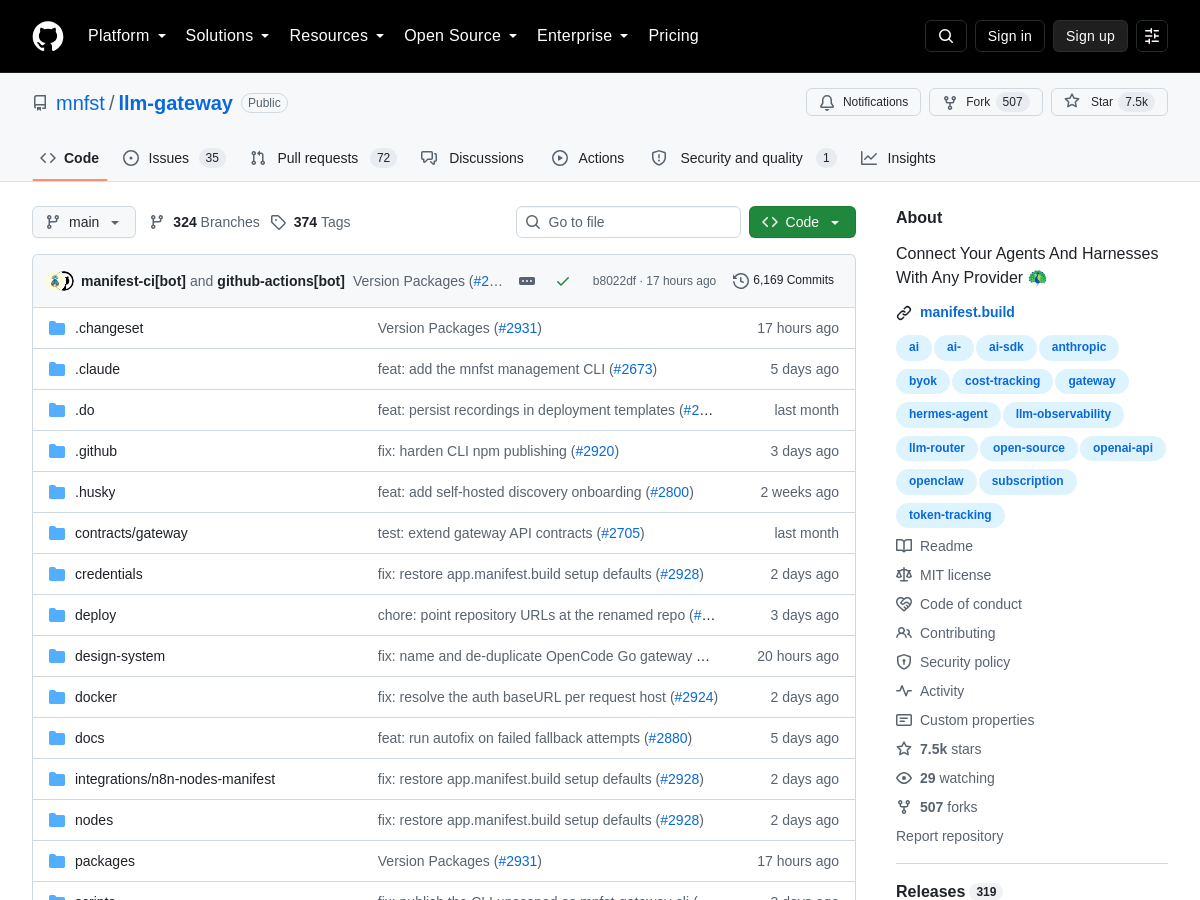
Manifest is an open-source, real-time cost observability platform for AI agents and LLM-powered applications. It connects agents and harnesses to any model provider through a gateway layer while capturing telemetry about tokens, costs, messages, and model usage. The project is published as llm-gateway on GitHub under the mnfst organization and is positioned as a way to unify provider access with usage accounting. A core part of the tool is a local-first dashboard that visualizes spend and usage as requests happen, rather than relying on delayed provider billing exports or spreadsheets. It advertises support for 28+ LLM models and accepts telemetry through OTLP ingestion, which is the OpenTelemetry protocol, allowing traces and metrics from instrumented applications to flow into the same observability pipeline. Because it is self-hosted and open source, teams can deploy the gateway and dashboard inside their own infrastructure and keep prompt, message, and cost data on their own systems. This makes it relevant for teams that need per-agent, per-model, or per-session cost visibility without sending operational data to a third-party SaaS vendor. The repository is aimed at developers building agents who want both routing to multiple providers and continuous insight into what those agents cost to run.

Solves

AI agents and LLM applications commonly call multiple providers and generate costs that are hard to attribute accurately in real time. Provider invoices arrive late and aggregate usage, so teams cannot easily tell which agent, session, or model is driving spend, or catch runaway token usage before the bill grows. Manifest addresses this by pairing a multi-provider gateway with real-time token, message, and cost tracking in a self-hosted dashboard, giving teams immediate visibility into model usage and spend as requests happen.

Screenshot of Ask BONBON
Ask BONBON
AI Knowledge Base Unknown

Ask BONBON is an AI-powered electrical code assistant designed to answer questions about the National Electrical Code (NEC) and Canadian Electrical Code (CEC) in plain English. The tool provides responses that cite the relevant code article, helping users locate authoritative references quickly. It is available on iOS, Android, and web, making it accessible across common devices used in the field and office. The product is aimed at electricians, electrical contractors, and inspection professionals who need fast, reliable code lookups without manually searching through lengthy code books. It also includes calculators, state amendments, and local code support, which can help users account for jurisdictional variations. Ask BONBON was formerly known as Ask [PERSON_NAME], indicating a rebrand or name change. Because the homepage is minimal and redirects, other technical details such as pricing, exact model architecture, and update frequency are not publicly specified in the available source. The tool positions itself as an AI assistant for electrical code compliance, troubleshooting, and inspection support.

Solves

Electricians and contractors often need to quickly find and interpret specific NEC or CEC articles, including state amendments and local code variations. Manually searching code books or PDFs is time-consuming and error-prone. Ask BONBON addresses this by providing plain-English answers with cited code articles, calculators, and jurisdiction-specific references in a single app.

Screenshot of agent-session-manager
agent-session-manager
AI Agents Open Source

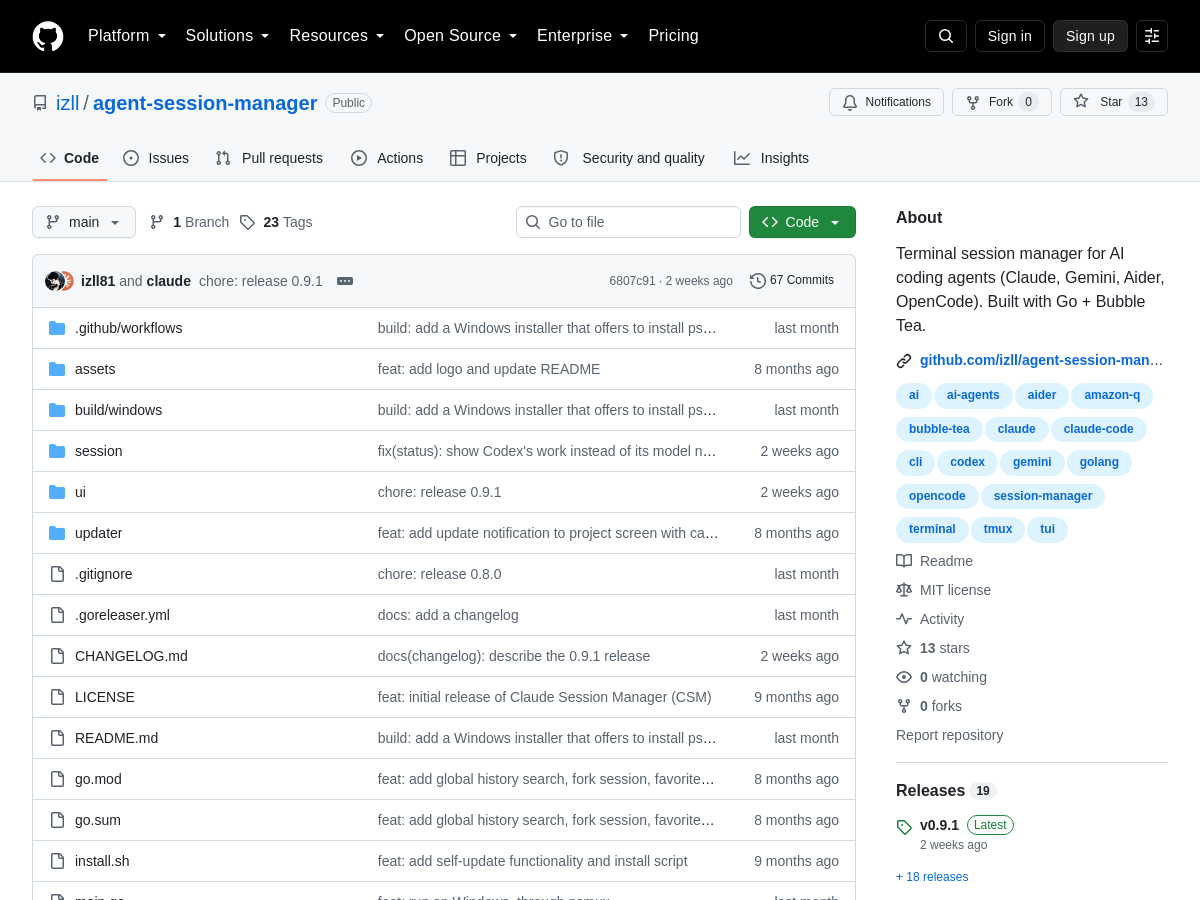
agent-session-manager is an open-source terminal session manager for AI coding agents, built with Go and Bubble Tea. It runs as a tmux TUI and provides a unified interface for launching, monitoring, and interacting with multiple agent sessions. It supports popular coding agents such as Claude Code, Codex, Gemini, Aider, Amazon Q, and OpenCode. It offers live status indicators, session grouping, and the ability to resume or fork existing agent sessions. Users can review diffs produced by agents directly in the terminal, helping to inspect code changes before accepting them. The tool also supports mobile push notifications that alert the user when an agent needs an answer or approval, allowing work to continue away from the terminal. By centralizing agent session management, it aims to reduce context switching and make parallel agent workflows more manageable for developers. The project is distributed as open-source software and is intended for terminal-centric development environments.

Solves

Developers using multiple AI coding agents in the terminal often struggle to track sessions, switch between contexts, and notice when an agent needs input. agent-session-manager solves this by providing a single tmux-based TUI for live status, session grouping, resume/fork, diff review, and mobile push notifications, making parallel agent workflows more organized and responsive.

Screenshot of Hyperagent
Hyperagent
AI Agent Unknown

Hyperagent is a hosted AI agent platform that deploys a fleet of autonomous agents to research, build, deliver, and continuously maintain business work. According to its homepage, agents operate with their own computing environments — including real browsers and shells — and are given access to a team's data, tools, and stylistic context so that output matches existing organizational conventions. Users brief the fleet once in natural language, and the agents then research, draft, share, and refine the work. The platform emphasizes persistent, long-lived agents rather than one-off chat sessions. Agents reportedly generate new memories and skills as they work, and execution is presented as transparent: users can watch each search, decision, and artifact as it is produced. Deliverables span websites, videos, slide decks, documents, dashboards, and other formats, with examples on the site covering out-of-home ad campaigns, cinematic real estate listing videos, a hiring command center with ranked candidates, and a full brand identity transformation. Finished work is surfaced where teams already operate, including Slack, email, Telegram, webhooks, and scheduled runs, with agents addressable via @-mentions. A central command center provides agent roster management, deployment, and connection setup. The homepage advertises per-artifact time and cost figures (for example, an 8-minute campaign for roughly $6.41), suggesting usage-based pricing, though no public pricing page details were available in the provided content. Hyperagent is positioned as a general-purpose "system of agents" for business work rather than a single-task helper, targeting teams that want repeatable, self-updating deliverables instead of static AI outputs. Exact model providers, underlying infrastructure, and licensing terms are not disclosed in the available homepage material.

Solves

Business knowledge work is fragmented across tools, and AI chat outputs go stale immediately after they are produced. Hyperagent addresses this by running persistent agents that research, build, and then keep deliverables current as data and organizational context change, removing the need to re-prompt or manually rebuild decks, dashboards, sites, and briefs every time something shifts.

Screenshot of Spook
Spook
AI SEO Tools Unknown

Spook is a web-based automated SEO platform marketed under the tagline "Get organic traffic on auto-pilot." According to its homepage, it identifies winnable Google and ChatGPT queries, generates SEO-oriented articles, and publishes that content automatically to a user's site. The product positions itself as an end-to-end loop for organic growth rather than a standalone keyword or writing tool, aiming to reduce the manual work involved in research, drafting, and publishing. The workflow begins by connecting a website, after which Spook surfaces query opportunities it judges achievable for that domain. It then drafts content around those queries and can publish the results on a schedule. The homepage also references integrations with Google Search Console data and display of domain rating metrics, suggesting users can track performance alongside the content pipeline. Beyond generation, the site highlights features such as Google Search Console statistics, domain rating visibility, and a backlink exchange function that lets listed apps swap free backlinks with one another. Spook is distributed as a hosted subscription service with a free trial period; the homepage states the first week is free with no charge until it ends, and invites visitors to try the tool on their real website without creating an account first. The homepage cites social proof including a 5.0 rating from a small number of reviews, roughly 84 users, and over 800 published articles, along with testimonials from founders, growth operators, and SEO practitioners. Pricing details are not fully enumerated on the page beyond the free trial and a user-cited price point, so the exact plan tiers and limits are unclear from the available information.

Solves

Spook addresses the difficulty small teams and solo founders face in running consistent SEO programs. Traditional SEO requires keyword research, competitive analysis, content writing, publishing, and rank monitoring, typically spread across multiple tools and significant manual effort. Spook consolidates these steps by connecting to a site, identifying queries that are realistically winnable, generating corresponding content, and publishing it automatically so that organic traffic can grow without dedicated SEO specialists.

Screenshot of GeekLink
GeekLink
AI OCR Unknown

GeekLink is a desktop AI subtitle application for macOS and Windows. It provides three focused workflows: OCR extraction of burned-in subtitles, translation of subtitle files, and speech transcription into subtitles. The app is designed for local-first processing, with the homepage stating that subtitle recognition and speech recognition run on the user's computer after initial model downloads; no uploads are required for those tasks. AI translation uses DeepSeek and requires an internet connection. The OCR tool targets videos where subtitles are permanently embedded in the image, such as foreign films, dramas, documentaries, and social media clips. The transcription tool converts spoken audio into subtitle files, while the translation tool can translate subtitle files into more than 40 languages, including English, Chinese, Japanese, Korean, French, German, Spanish, and others. GeekLink can also export finished videos with processed subtitles. GeekLink is distributed as a native desktop app. The macOS build requires macOS 13.0 or later and Apple Silicon (M1/M2/M3/M4); Intel Macs are not supported. A Windows 64-bit desktop build is also available. The app offers a 7-day free trial of Pro features without sign-up or login, and Pro activation uses a license key. App data is stored under ~/Library/Application Support/GeekLink/ on macOS, with exports under ~/Movies/GeekLink Exports/.

Solves

GeekLink solves the problem of extracting, transcribing, and translating subtitles for videos where subtitles are burned into the video image or exist only as speech. It reduces reliance on cloud upload services for OCR and speech recognition by running those tasks locally after model download, while providing subtitle translation and video export in one desktop workflow.

Screenshot of EasyVeo
EasyVeo
AI Video Generator Unknown

EasyVeo is a browser-based AI video studio focused on generating and cloning short-form video ads. Its headline capability is an "AI video ad cloner" workflow: users upload a reference ad or viral video, supply product photos (and optionally an avatar or start/end frames), and the tool regenerates the ad concept with the user's own product while attempting to follow the structure and motion of the reference. Output controls include aspect ratio (16:9, 4:3, 1:1, 3:4, 9:16, 21:9, Auto), resolution (480p, 720p, and 1080p on some models), duration (commonly 4-30 seconds depending on model), and quality presets. Rather than training its own video model, EasyVeo acts as a multi-model aggregation layer. The site advertises access to ByteDance Seedance 2.0, Seedance 2.0 Fast and Seedance 2.5, MiniMax H3, and Google Veo 3.1, Veo 3.1 Fast and Veo 3.1 Lite, with additional model names such as Kling 3.0, MiniMax Video, Hailuo and Vidu surfaced in the model discovery section. Users can mix engines per shot, choosing higher-fidelity models for hero shots and cheaper or faster models for iteration. Beyond ad cloning, the platform offers a general text-to-video and image-to-video generator, a viral video elements analyzer that breaks down reference clips into reusable patterns, an AI image tool, and a prompt library. Product photos are analyzed automatically after sign-in so the generated scenes can reflect real product details, and an avatar picker supports uploading a custom presenter image. The product is delivered entirely through a web interface with no install, and pricing is listed on the site but not publicly detailed in the homepage copy; credits are described as non-expiring. Because the underlying generative models are third-party, output fidelity, audio support and maximum clip length depend on the selected engine.

Solves

Producing short-form video ads traditionally requires scriptwriting, filming, editing and paid talent, which is slow and costly for small teams. EasyVeo addresses this by letting marketers reuse a proven reference ad as a template and regenerate it with their own product imagery using multiple third-party generative video models, reducing the path from concept to a testable ad variant without a production crew.

Screenshot of Metanew!
Metanew!
AI Games Unknown

metanew! is a web-based discovery and guide platform for Roblox, published at newgame.co.jp/metaverse. It aggregates the official Roblox popularity charts on a country-by-country basis and refreshes that ranking data daily, letting players see which experiences are trending in different regions rather than only in the global chart. The interface is available in English, Japanese, and Traditional Chinese, and it is aimed at players rather than at Roblox Studio developers. The site organizes its content into several sections: Discover (new and trending games), Ranking (country and category charts), Codes (redeemable promo codes and their rewards), Events (limited-time in-game events), Guides (how-to and walkthrough content), Board (community discussion), Game lists (curated collections), and My Games (personal library). The homepage advertises roughly 30,000 listed games, 9,000 or more codes, over 30,000 events, and around 4,500 guides, making it a fairly large editorial and database resource for the Roblox ecosystem. Beyond a simple list, metanew! supports filtering by genre, typical session length, age range, supported device, and how aggressively a game pushes players toward spending, so users can narrow the catalog to experiences matching their preferences. It also includes a light gamification layer called ROBRANK: logged-in users rate games and write reviews to earn EXP, which raises their profile rank and unlocks cosmetic progression. Daily missions, such as rating one game, are used to encourage ongoing participation. Account features require signing in with a Google account; browsing the catalog and codes is otherwise free and does not require payment information. No public API, open-source repository, or license information is published on the homepage, and the platform does not appear to be affiliated with or endorsed by Roblox Corporation.

Solves

Roblox hosts hundreds of thousands of experiences and its own charts are hard to browse by country, genre, session length, or monetization pressure, and redeemable codes and event details are scattered across wikis, Discord servers, and fan blogs. metanew! collects country-level Roblox rankings, promo codes with their rewards, event schedules, and practical guides into one searchable, daily-refreshed catalog so players can decide what to play and claim rewards without visiting many separate sites.

Screenshot of AgentGit
AgentGit
AI Agent Free

AgentGit is a free service for saving, sharing, and resuming AI agent sessions. It positions the session, not just the resulting files, as the unit of work: instructions, reasoning, attempts, and decisions are preserved so work can continue rather than restart. The homepage frames this with the line 'Code is cheap, show me your talk.' Users can install AgentGit via `npx -y create-agit` or by asking a supported coding agent to follow the quickstart documentation. AgentGit can import sessions from Claude Code, Codex, OpenCode, OpenClaw, Hermes, and WorkBuddy. Once a session is captured, it can be shared by link for viewing or handed off via a prompt so another person or agent can continue from where the previous session stopped. The service includes a web presence with login/signup, agents, workspaces, and docs, and it encourages collaboration through community channels such as Slack. It is aimed at developers and agent users who switch between tools or teammates and need continuity across sessions. The homepage does not detail self-hosting, storage limits, or licensing.

Solves

AI agent sessions contain the full process of solving a problem—instructions, reasoning, attempts, and decisions—but files alone capture only the final result. When developers switch agents, tools, or teammates, that context is often lost and the work must start over. AgentGit saves and transfers the complete session so it can be resumed, viewed, or handed off without losing the context needed to continue.

Screenshot of Superagent
Superagent
AI Agents Open Source

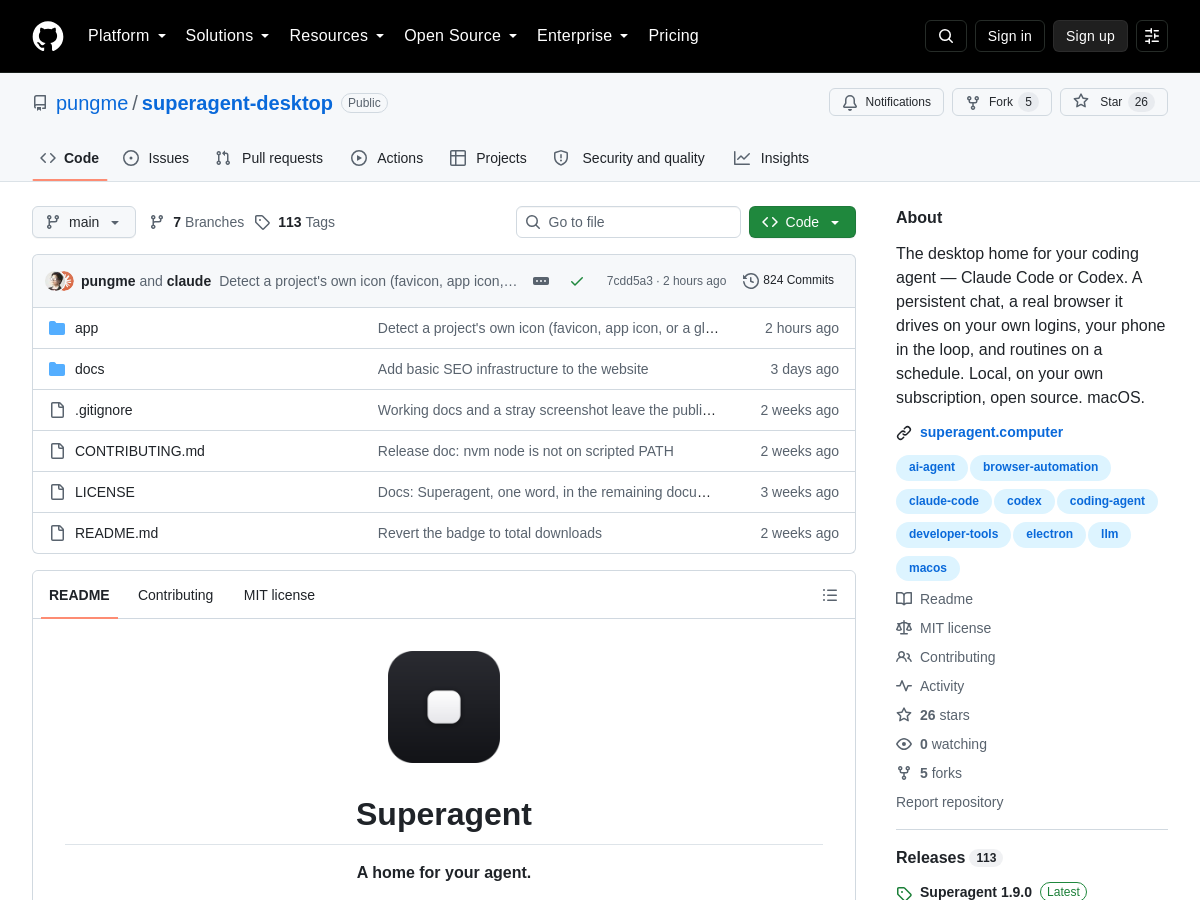
Superagent Desktop is an open-source macOS desktop application that acts as a home base for command-line coding agents such as a Claude Code–style agent or Codex. Rather than living only in a terminal window, the agent gets a persistent chat interface plus a set of local capabilities it can actually operate: a real browser it drives using the user's own logged-in sessions, and an iOS Simulator it can install and screenshot apps in. The project positions itself around keeping the agent loop local. It runs on the user's own machine and uses their existing agent subscription instead of proxying requests through a hosted service, and the source is openly available on GitHub. A companion mobile app is included so the agent's progress can be monitored remotely from a phone. Beyond single interactive sessions, Superagent Desktop supports scheduled routines, letting recurring tasks run on a timetable rather than only on demand. Combined with the browser and simulator integrations, this makes it suited to workflows that need to touch real web pages or verify mobile builds rather than operate purely on files in a repository. Because the tool is distributed as a desktop application rather than a library or hosted platform, adoption is a matter of installing the app on macOS and pointing it at an existing agent. It is a relatively young and niche project, so documentation and feature coverage should be verified against the repository before relying on it.

Solves

Coding agents are typically confined to a terminal and cannot interact with a real browser session or a mobile device. Superagent Desktop gives those agents a persistent desktop workspace with a browser they can drive on the user's own logins, an iOS Simulator for installing and screenshotting apps, scheduled routines, and a phone companion app for remote monitoring — all running locally on the user's existing subscription.

Screenshot of InteriorStage AI
InteriorStage AI
AI Interior Design Unknown

InteriorStage AI is a web-based room design tool that furnishes photos of empty rooms using AI image generation. Users upload a clear photo of an empty space, choose a design style, and receive a visualized concept showing furniture and decor placed within the existing architecture of the room, including walls, windows, flooring, and lighting as photographed. The product positions itself as a planning aid rather than a shopping engine: the generated images are meant to serve as inspiration before buying furniture, moving into a new home, or refreshing a blank space. It emphasizes showing seating, rugs, tables, art, lamps, and other movable items as one connected direction so users can react to the scale, visual weight, and mood of a full arrangement instead of guessing item by item. The homepage highlights room-specific guidance for bedrooms, living rooms, and city apartments, with before-and-after sliders demonstrating the empty room versus the furnished concept. It also offers a feature that turns selected room concepts into short video slideshows with transitions and music, using mood presets such as Modern, Luxury, Warm, or Cinematic. InteriorStage markets itself to homeowners and renters and offers a free start with a linked pricing page. Exact model details, output resolution limits, and commercial usage terms are not disclosed on the homepage and would need to be confirmed from the pricing and FAQ pages.

Solves

Empty rooms are difficult to evaluate because a blank space gives no sense of scale, proportion, or mood, and buying furniture item by item often leads to mismatched results. InteriorStage AI addresses this by generating a furnished concept image from a single photo of the empty room, letting users preview a complete furniture and decor direction before spending money on purchases or committing to a layout.

Screenshot of Evoriqa
Evoriqa
AI Customer Service Unknown

Evoriqa is a white-label AI customer service platform that turns a website and documentation into an AI support agent. The agent is trained on the user's knowledge base and answers customer questions instantly across chat and email in a unified inbox. It also captures leads, books appointments, and hands off to human agents when needed. According to the homepage, setup can be done in 60 seconds with no signup required to try. The platform supports omnichannel engagement, including a website widget, WhatsApp, Messenger, Instagram, Slack, SMS, email, and phone calls via an AI voice agent. It emphasizes grounded answers by citing sources from the knowledge base and stating 'I don't know' rather than hallucinating. Agentic capabilities allow the AI to capture leads, book appointments via Cal.com or Calendly, create tickets, look up orders, and call APIs, with every run logged. For human collaboration, Evoriqa provides a unified inbox with copilot assistance, canned replies, notes, and CSAT tracking. A shadow mode lets the AI draft replies for human approval before it is allowed to respond autonomously. The platform also offers a white-label reseller console for agencies to manage client workspaces under their own brand. It targets small businesses, agencies, and specific verticals such as law firms, clinics, restaurants, e-commerce, hotels, and real estate.

Solves

Evoriqa addresses the challenge of managing repetitive customer support inquiries across multiple channels, which can overwhelm small business teams and lead to slow response times. By deploying an AI agent trained on existing content, it automates answers, captures leads, books appointments, and routes complex issues to humans with full context, reducing operational costs and improving customer experience.

Screenshot of Archal
Archal
AI Testing Unknown

Archal provides stateful API sandboxes for testing AI agents and integrations. Each sandbox contains one or more simulated API environments, such as GitHub, Slack, Stripe, Supabase, Linear, and others. Environments expose familiar REST and, for many services, MCP interfaces, retain mutations across calls, and can be reset to a declared baseline state. This lets developers exercise agent workflows without test accounts, rate limits, or shared dirty state. The product is aimed at agent developers, connector teams, and integration engineers. A typical flow is to create a sandbox with selected environments, receive isolated endpoints once ready, call the APIs or tools as usual, inspect requests/responses/mutations/timing, and reset the sandbox to its starting state. Archal states that each environment is an independently built simulation of the service, not the provider's live service. Use cases include harness testing, CI integration testing, and agent training or reinforcement learning rollouts, where every run needs the same starting state while changes persist through the episode. Archal is hosted and offers sign-up with usage credits; setup can be performed through supported coding agents and the Archal CLI.

Solves

AI agent and integration tests often rely on shared test accounts, live APIs with rate limits, and state that becomes dirty between runs. Archal solves this by providing isolated, stateful sandboxes with simulated API environments that persist changes during a run and reset to a known baseline, making agent behavior repeatable and integration tests more deterministic.

Screenshot of LrcSong
LrcSong
AI Subtitle Generator Unknown

LrcSong is a web-based AI platform focused on synchronized lyrics, karaoke creation, and subtitle format conversion. It bundles several lyric and karaoke utilities into a single browser-accessible service, including vocal stripping, automatic lyric synchronization, and take scoring, so users can go from an audio track to a sing-along or subtitled output without installing desktop software. The service supports a range of common timed-text and subtitle formats, notably LRC, SRT, VTT, ASS, and TTML, and provides conversion paths such as SRT to LRC. This makes it useful for creators who need to move lyric or subtitle data between karaoke players, video editors, and streaming platforms that expect different caption standards. LrcSong targets audio inputs including MP3 and FLAC according to its published metadata, positioning itself around music files rather than general video. Access appears to follow a freemium credit model: the homepage advertises three free credits with no credit card required, after which additional usage is presumably paid, though the exact pricing tiers are not disclosed on the landing page. Because the product is delivered as a hosted SaaS application with no public GitHub repository, its internal models, licensing terms, and release cadence are not publicly documented. Users should treat capability claims such as vocal separation quality and lyric alignment accuracy as vendor-stated until verified against their own audio material.

Solves

Producing synchronized lyrics, karaoke tracks, and correctly timed subtitles is normally a manual, multi-tool workflow: separate vocals, transcribe or time-code lyrics, then convert between incompatible subtitle formats. LrcSong consolidates vocal stripping, lyric synchronization, and LRC/SRT/VTT/ASS/TTML conversion into one browser-based service, reducing the number of separate tools and manual timing steps needed to turn an audio file into a karaoke-ready or subtitled result.

Screenshot of Alex AI
Alex AI
AI Recruiting Unknown

Alex is a commercial AI recruiting platform that automates the top-of-funnel hiring workflow for employers, staffing firms, and recruitment process outsourcing (RPO) providers. Rather than acting as a simple sourcing tool, it is positioned as an end-to-end "AI recruiter" that conducts candidate interviews, screens resumes, verifies identity, proctors assessments, and coordinates scheduling inside a company's existing applicant tracking system. The product is organized into several modules: AI Interviews for automated first-round conversations, Resume Screens for high-volume filtering, Coordinator for scheduling and handoffs, Verify and Identity for confirming that a candidate is real and who they claim to be, Proctor for knowledge checks, and Talent Match for rediscovering candidates already sitting in an ATS. Candidates can be engaged over video, phone, SMS, and WhatsApp, which allows the system to reach hourly, frontline, and international applicants who may not respond to email. Alex integrates with more than 30 officially supported ATS platforms, so screening and interview outcomes flow back into existing recruiter workflows instead of a separate silo. The vendor markets the platform across healthcare, manufacturing and logistics, retail and hospitality, research and biotech, professional services, early-careers campus programs, and staffing/RPO use cases, with a stated emphasis on high-volume and frontline hiring. Pricing is not published publicly and is generally handled through a sales-led demo process. The company has publicly announced $20M in funding and publishes an ethical AI statement and a trust center covering security and compliance, indicating an enterprise-oriented go-to-market with attention to hiring fraud and candidate verification.

Solves

Recruiting teams are often bottlenecked by manual resume screening, repetitive first-round interviews, candidate verification, and scheduling coordination, which limits how many applicants they can genuinely evaluate. Alex addresses this by automating screening, interviewing, identity and knowledge verification, and calendar scheduling, allowing employers to interview every applicant at scale without proportionally increasing recruiting headcount.

Screenshot of 3DMaker
3DMaker
AI 3D Model Generator Unknown

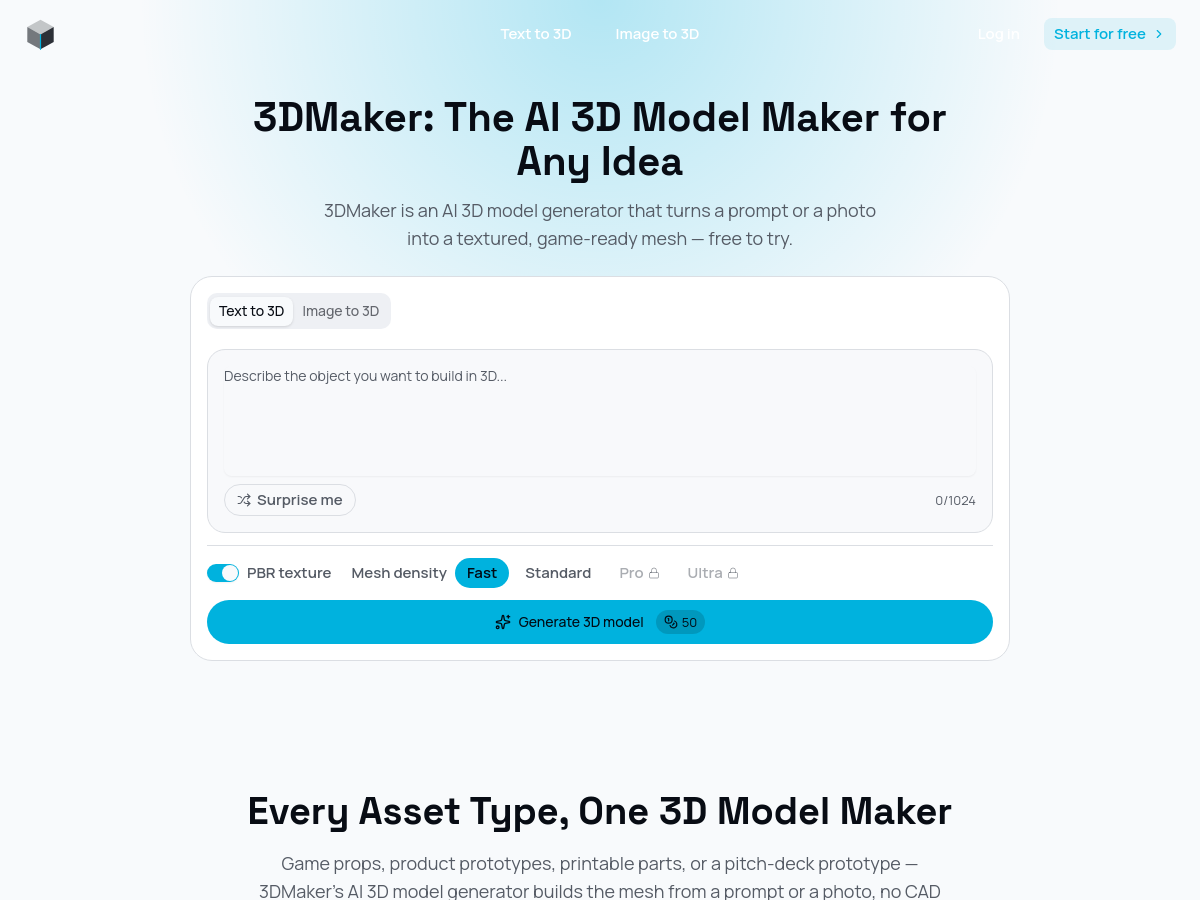
3DMaker is a browser-based AI 3D model generator that converts text prompts or reference images into textured, game-ready 3D meshes. Users describe an idea in up to 1,024 characters or upload a single photo (PNG, JPG, or WEBP, optionally up to four angles) and the service reconstructs geometry and applies PBR materials automatically, typically in 10 to 120 seconds depending on the selected mesh density. The tool exposes two entry points, Text to 3D and Image to 3D, both backed by the same generation pipeline. A mesh density control offers four levels — Fast, Standard, Pro, and Ultra — so users can trade generation time for geometric detail, from quick concept drafts to assets intended for close-up renders. PBR textures are generated alongside the mesh, avoiding a separate texturing pass. Generated assets are exported as GLB files that can be dropped into Blender, Unity, Unreal Engine, Three.js, Babylon.js, or model-viewer without a conversion step. The site's meta description also advertises FBX, OBJ, and USDZ export for game, AR/VR, 3D printing, and product design workflows. The homepage positions 3DMaker around asset types such as game props, characters, furniture, vehicle concepts, 3D-printable parts, and product prototypes. The product requires no CAD or 3D modeling experience and offers a free starting tier alongside paid plans, though exact pricing tiers are not published on the homepage. Marketing copy on the site also references Flux Kontext image generation and editing capabilities, indicating the platform bundles related AI image tooling alongside the 3D generator.

Solves

Producing textured 3D assets traditionally requires CAD or modeling expertise, hours of manual mesh work, and a separate UV/texturing pass. 3DMaker removes that barrier by turning a short text description or a single photograph into a textured, game-ready mesh in seconds, giving non-specialists a fast path to 3D content for games, AR/VR, 3D printing, and product prototypes.

Screenshot of Riverside
Riverside
AI Podcast Unknown

Riverside is a browser-based studio platform for recording, editing, streaming, and publishing podcasts and videos. It captures separate local tracks for each participant at up to 4K video and uncompressed audio quality, so recordings are not degraded by unstable internet connections during remote interviews. The platform also runs recording sessions through a web link, with macOS, iOS, and Android apps available for additional workflows. The product bundles a suite of AI-assisted production tools on top of recording. Transcription generates text-based editing, where cutting a transcript also cuts the corresponding audio and video. Magic Clips identifies highlight moments and exports short-form clips, while Magic Audio improves speech quality, and additional tools handle captions, AI translation, show notes, an AI co-creator, and an AI Twin feature. Beyond capture and editing, Riverside covers distribution and growth: podcast hosting with analytics, newsletters, social content scheduling, and HD live streaming to platforms. Webinar hosting, async recording, and in-person recording use cases are also supported, along with an MCP integration and free utility tools. Riverside targets podcasters, producers, marketers, and businesses that need studio-grade output without a full production crew. It offers a free tier with paid plans, and an enterprise-oriented offering for larger organizations.

Solves

Remote podcast and video production usually requires expensive recording hardware, separate editing software, and manual post-production across disconnected tools. Riverside removes that friction by capturing high-quality separate audio and video tracks per participant in the browser, then providing transcription-based editing, AI clip generation, captions, hosting, and distribution in one place, so creators can produce studio-quality content without a production crew.

Screenshot of getdesign
getdesign
AI Design Assistant Free

getdesign is an AI-powered tool that extracts design systems from public website URLs. It opens the site in a real browser, reads the site's actual CSS, and captures the rendered page to identify colors, typography, spacing, and components. The output is a downloadable design.md file that can be used as a style guide or provided as context to a coding agent. The tool offers five surfaces: a web dashboard, an HTTP API (GET /v1/design returning Markdown or JSON), a CLI runnable with bunx @getdesign/cli, a TypeScript SDK installable via bun add @getdesign/sdk, and a portable Skill for coding agents like Claude Code, Codex, and Cursor. The CLI, SDK, and Skill run locally on Bun, while the API and web dashboard provide hosted runs. getdesign is currently in beta and free to use, but hosted runs require your own Daytona and OpenAI API keys; there is no getdesign API key or run billing in V1. Users pay Daytona for browser capture and OpenAI for model usage. Dashboard runs are private until published, at which point a shareable link allows viewing and downloading the design document and screenshots.

Solves

Extracting a design system from an existing website currently requires manual inspection of CSS, color pickers, and typography tools, which is time-consuming and error-prone. getdesign automates this by reading the live site's CSS and rendered output to produce a structured design.md, saving hours when rebuilding interfaces or providing design context to AI coding agents.

Screenshot of TypeSafe AI
TypeSafe AI
AI Models Unknown

TypeSafe AI is an AI lab developing machine-native intelligence infrastructure for automation. The company is building a new class of models called System One Models, designed to be used natively by machines rather than humans. These models are trained with a novel algorithm called Reinforcement Learning for Calibrated Decisions (RLCD), which contrasts with Reinforcement Learning from Human Feedback (RLHF) used for chat models. RLCD aims to produce reliable, calibrated decisions rather than human-like conversation. System One Models return typed outputs that software can directly act upon, with each decision including a calibrated confidence estimate. This allows developers to set thresholds for autonomous action versus human review, and combine decisions in code to build complex workflows. TypeSafe AI claims significant performance improvements, stating that their models are 193.6x faster and 444.6x cheaper than LLMs for System One tasks. The first System One Model is available in early access via a waitlist. The approach addresses issues with RLHF-trained models such as mode dropping, overconfidence, and lack of reliability, which often require humans-in-the-loop. TypeSafe AI positions its models as reliable, fast, and type-safe alternatives for automation, emphasizing decisions over strings. The website indicates a version 0.01 copyright 2026 and the lab is based in a redacted location.

Solves

Current LLMs trained via Reinforcement Learning from Human Feedback (RLHF) are optimized for human preferences and chat, leading to issues like mode dropping, overconfidence, and reliability gaps. These flaws often require humans-in-the-loop, limiting automation. TypeSafe AI solves this by building machine-native models that produce calibrated, type-safe decisions with confidence estimates, enabling reliable automation without constant human oversight.

Screenshot of Snake Game
Snake Game
AI Games Free

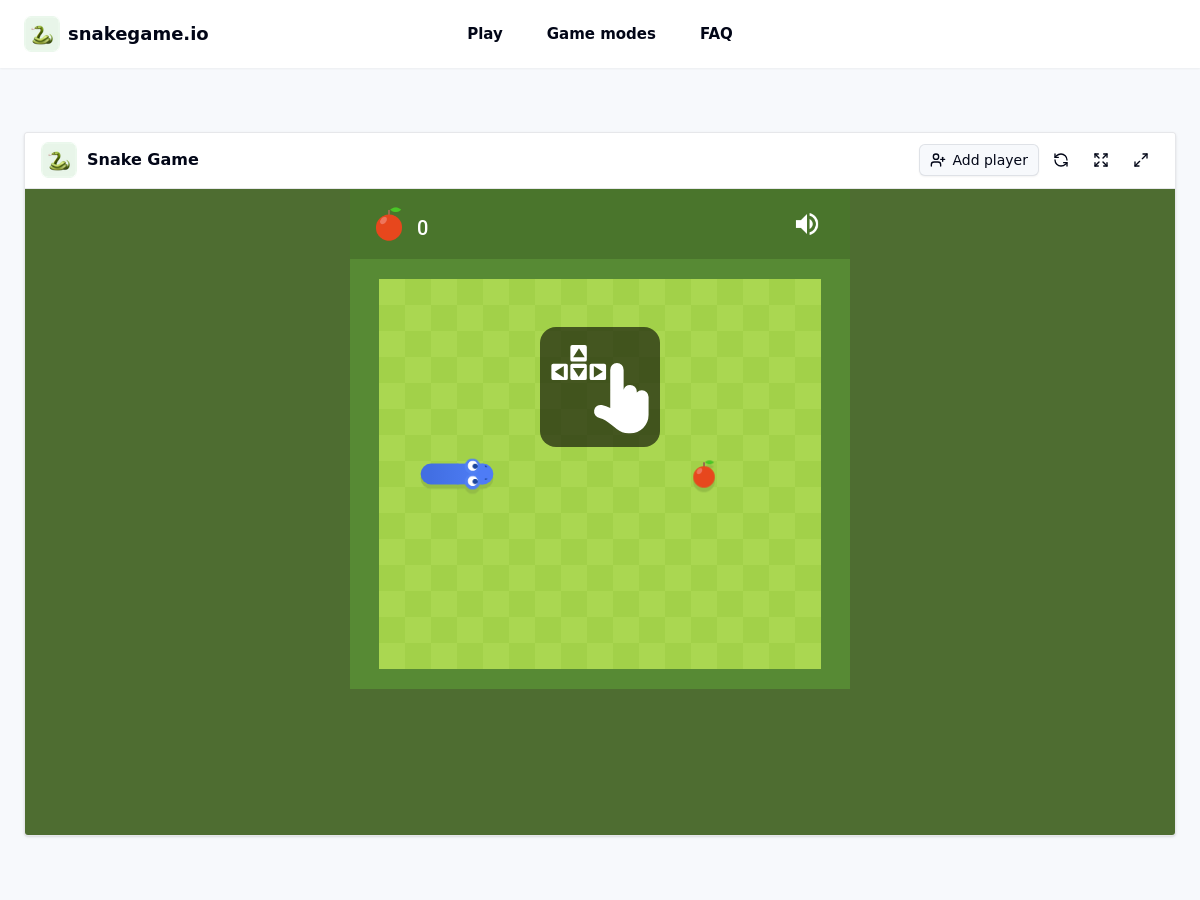
Snake Game at snakegame.io is a free online browser-based version of the classic snake game. It requires no login, download, or installation before play. Players control a snake to collect food, grow longer, and avoid walls, their own body, and opposing snakes in duel modes. The game offers three main modes: classic solo, local two-player duel, and AI opponent. In local two-player mode, player one uses WASD keys and player two uses the arrow keys on the same keyboard. AI mode provides Easy, Normal, and Hard difficulty levels that adjust the computer opponent's route planning and risk avoidance. Additional features include fullscreen or theater mode for a larger board view, quick restarts, and responsive keyboard controls. The site is available in English and runs entirely in the browser.

Solves

Provides a free, instantly playable version of the classic snake game for solo practice, local multiplayer competition, or AI challenge without account creation, downloads, or setup.

Screenshot of Vigil
Vigil
AI Agents Open Source

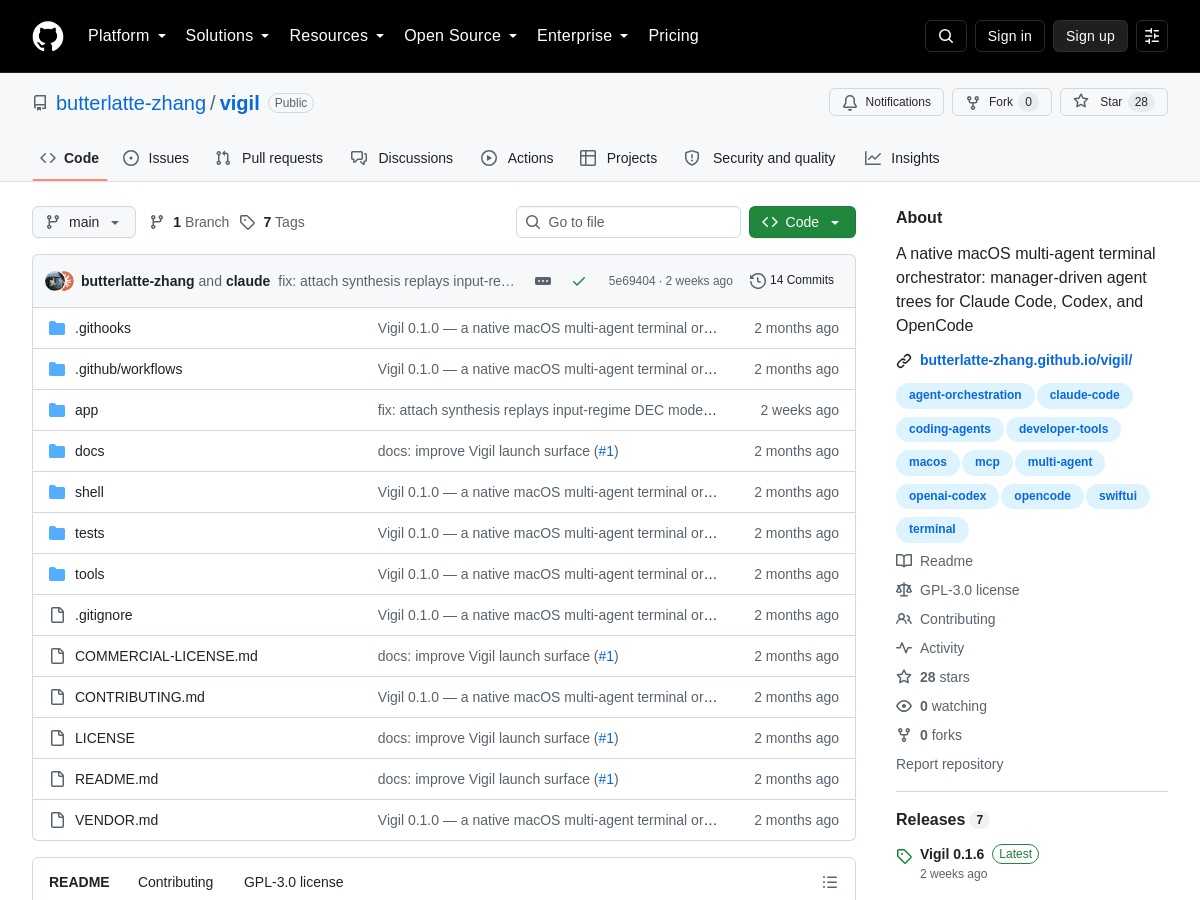
Vigil is an open-source native macOS multi-agent terminal orchestrator. It organizes AI coding agents into a manager-driven tree: a manager agent spawns workers and sub-managers, with detailed task context flowing down the hierarchy and summaries rolling back up. Each agent node runs inside its own terminal user interface (TUI), so users can inspect or take over any node directly. The project is designed for terminal-based AI coding CLIs such as Claude Code, Codex, and OpenCode. Rather than forcing all agents into a single chat or hidden process, Vigil keeps each agent in the CLI's native TUI, enabling interactive control and transparent monitoring. It is distributed as an open-source GitHub repository and targets macOS users who want to coordinate multiple coding agents. Because it is native to macOS and terminal-centric, Vigil is best suited to developers already using command-line AI agents. It provides a structured way to decompose larger coding tasks into subtasks, delegate them, and collect results without losing the ability to intervene manually.

Solves

Managing multiple AI coding agents in terminals is manual and error-prone: users must open separate panes, track context, copy summaries, and intervene without a clear hierarchy. Vigil solves this by providing a manager-driven agent tree where tasks and context flow down, summaries flow up, and every agent remains an interactive TUI that can be taken over.

Screenshot of Media.io AI Face Swap
Media.io AI Face Swap
AI Face Swap Generator Unknown

Media.io AI Face Swap is a browser-based AI photo editing tool from Media.io (a Wondershare brand) that replaces one face in an image with another. Users upload a source photo containing a face plus a second image that supplies the face to swap in; the service detects faces automatically, aligns them, and blends the replacement with AI so the result matches the original lighting, tone, and skin texture. No desktop software, manual masking, or retouching is required. The editor accepts JPG, JPEG, and PNG uploads up to 50 MB with a minimum width and height of 300 px, and returns a downloadable result in seconds. Work can also be started from images stored in the user's Media.io history. The tool sits inside a larger Media.io AI suite that includes video AI, image AI, audio AI, character and avatar creation, and other generation and editing utilities, so face swap output can be combined with other features under one account. Promoted scenarios on the product page include meme face swap, portrait face swap, group photo face swap, and costume face swap, with sample before/after previews. The page lists endorsement logos from technology review outlets but does not publish detailed pricing, model, or processing-location information.

Solves

Replacing a face in a photo traditionally requires professional software such as Photoshop, plus manual masking, color matching, and retouching skill. Media.io AI Face Swap automates face detection, alignment, and blending so non-designers can generate realistic-looking face swaps online in seconds without installing desktop software.

Screenshot of AI OTAKU LABO
AI OTAKU LABO
AI Tools Directory Free

AI OTAKU LABO is a Japanese-language web media and discovery platform focused on generative AI and AI tools. It publishes hands-on reviews, usage guides, pricing breakdowns, and comparisons covering a catalog of more than 200 paid and free AI services, spanning categories such as text generation, image generation, video generation, voice synthesis, and comic or anime art creation. The site positions itself as a specialist outlet produced by an "AI professional team" rather than a casual blog, and it emphasizes tutorials written so that readers without prior generative AI knowledge can follow along. Editorial content typically includes step-by-step instructions with diagrams, screenshots of the interface, and notes on actual subscription tests the editorial team performed themselves. Beyond reviews, AI OTAKU LABO organizes tools by use case (recommended AI by purpose), hosts image-generation techniques and tips, and covers industry news. Content is available primarily in Japanese, with an English-language section, making the material accessible to both domestic and international readers. Access to the site and its articles is free; the platform is monetized through advertising and affiliate links to the reviewed AI services. It functions as a comparison and research destination rather than a deployable AI product itself.

Solves

Generative AI tools launch and change pricing so quickly that non-expert users struggle to know which services are worth paying for or how to start using them. AI OTAKU LABO addresses this by aggregating over 200 AI services into one catalog, then adding Japanese-language reviews, pricing details, comparison lists, and beginner-friendly how-to guides so that readers can evaluate and adopt AI tools without deep technical background.

Screenshot of ShieldLabs
ShieldLabs
AI API Unknown

ShieldLabs is a fraud detection and prevention service for web applications. It builds a persistent identifier from 300+ device, network, browser, and OS signals collected on the first page load, so the same visitor can remain recognized across cleared cookies, rotated IPs, and incognito sessions. It turns anonymous traffic into a risk score for each visitor and links visitors, devices, and accounts into a single identity graph. The platform provides out-of-the-box detection for account takeover, account sharing, multi-accounting, promo and bonus abuse, free trial abuse, ad and traffic fraud, and traffic quality checks. It also recognizes returning trusted visitors to reduce repeated checks and friction. Risk signals include country, IP address, proxy/VPN, datacenter IP, anti-detect browser, abuser, incognito, suspicious paid click, device fingerprint, geolocation, and returning visitor signals. ShieldLabs is offered as a hosted web service with a free tier of 5,000 identifications, a 5-minute setup, and no credit card required. It targets industries such as AI, iGaming, cryptocurrency, SaaS, fintech, e-commerce, travel, marketplaces, media and streaming, ticketing, and gaming. Pricing beyond the free tier is not specified on the homepage.

Solves

ShieldLabs solves the problem of anonymous and masked abuse in web applications by turning device, network, and browser signals into a persistent visitor identity and risk score. It helps teams detect multi-accounting, account sharing, account takeovers, promo abuse, free-trial abuse, and bot-driven ad fraud before they impact revenue, ad spend, and business metrics.

Screenshot of PlayerZero
PlayerZero
AI Agent Unknown

PlayerZero is a SaaS AI production engineering platform that builds a living engineering world model grounded in code, tickets, observability signals, people, and workflow data. The platform is designed to give support, SRE, engineering, and QA teams a shared source of truth for coordinating ownership, reducing handoff friction, and resolving production work faster. The product uses collaborative AI agents that perform production engineering work and improve with every outcome. It supports use cases such as support triage and routing, incident monitoring and response coordination, root cause diagnosis and fix delivery, and QA validation of changes against expected behavior. PlayerZero also markets SIM-1, a model family for simulating large codebases and infrastructure for parallel debugging and verification. The company targets engineering teams operating complex, customer-facing production systems. On its homepage, PlayerZero reports customer outcomes including reduced L3 triage time, fewer engineering escalations, faster MTTR, and fewer defect escapes, with customers such as Zuora, First Street, KeyData, Georgia Pacific, and Onboard.

Solves

Production engineering teams often struggle with fragmented context across tickets, code changes, logs, incidents, and ownership handoffs, which slows incident resolution and lets defects escape to customers. PlayerZero addresses this by building an engineering world model that unifies those signals and uses AI agents to triage, diagnose, coordinate, and verify production work, aiming to reduce escalations, MTTR, and customer-impacting defects.

Screenshot of Wheel Picker
Wheel Picker
Other Free

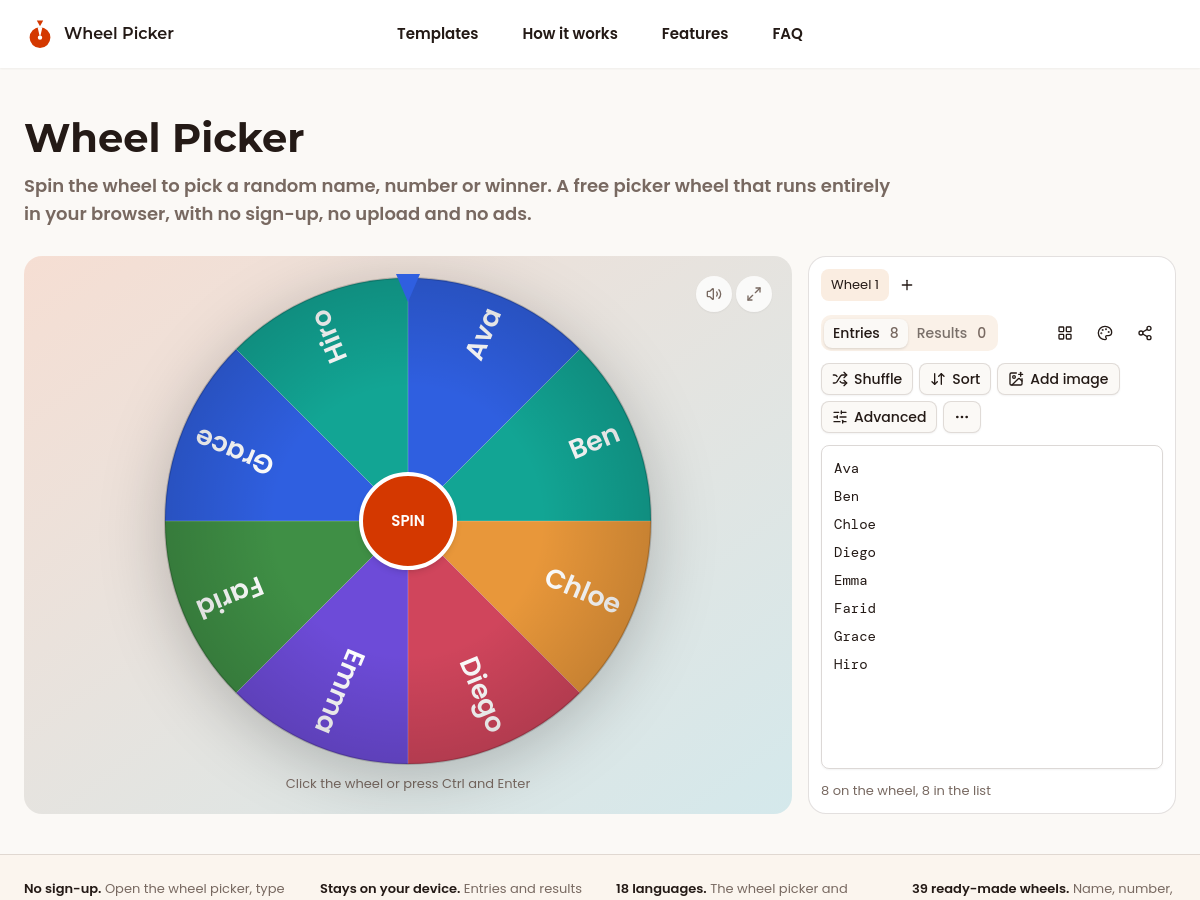
Wheel Picker is a free browser-based spin-the-wheel tool for randomly selecting names, numbers, teams, winners, and other options. It runs entirely in the browser, requires no sign-up, and states that entries, images, and results are never uploaded. The interface supports typing or pasting one entry per line, including lists from spreadsheets or CSV files, and provides 39 ready-made wheels such as name picker, number wheel, team generator, yes/no, raffle draw, and decision prompts. Features include weighted entries, live percentage display, three spin behaviors (Keep, Eliminate, Tally), photo-based entries resized in the browser, and customization with color palettes, surfaces, pointers, spin sounds, and celebrations. Users can share a wheel by link, display a QR code, or embed the wheel spinner in another page. The tool is translated into 18 languages. Common uses include classroom name calling, live giveaway draws, team formation, raffles, decision making, party games, food choices, chore assignment, and other everyday random selections. The homepage presents a three-step workflow: type or paste a list, set odds and appearance, then spin and act on the result.

Solves

Provides a quick, free, and transparent way to make random selections in front of an audience without accounts, uploads, or manual drawing. It removes the need for physical wheels, spreadsheets, or ad-heavy spinner sites when picking names, numbers, teams, or giveaway winners.

Screenshot of Newface
Newface
AI Video Generator Unknown

NewFace is an AI video generation platform that enables users to create UGC-style videos, advertisements, and social media content without filming or a production crew. It provides a unified canvas where a skill-powered agent builds videos based on user descriptions, streamlining the content creation process. The platform offers a suite of tools including AI image generation, video generation, video-to-audio conversion, product detail page creation, and specialized generators for TikTok ads, UGC videos, video ads, real estate ads, YouTube Shorts, and more. It supports various ad formats and industries, from skincare and fashion to tech and real estate. NewFace is designed for marketers, e-commerce businesses, and content creators, offering AI avatars, product ads, and templates for platforms like TikTok, Meta, Google Ads, and YouTube. The platform is accessible via a subscription-based SaaS model with pricing plans available on its website.

Solves

NewFace solves the problem of producing high-quality UGC-style videos and advertisements without the need for filming, actors, or a production crew. It enables rapid creation of social media content and ad creatives at scale, reducing time and cost associated with traditional video production.

Screenshot of Floor Planner
Floor Planner
AI Floor Plan Generator Unknown

Floor Planner is an online AI floor planning platform that generates 2D and 3D floor plans from text descriptions. The homepage states users can describe a space in words, choose room, house, or custom generation modes, set dimensions, and generate a detailed floor plan in under 10 seconds. It supports 10+ rendering styles, including Technical, 3D-Isometric, Colored 2D, Blueprint, Hand-Drawn, Anime, Watercolor, Marker Pen, Collage, and Realistic. The product also offers AI floor plan editing, a full floor plan editor, and image and CAD file conversion according to the provided category description. The homepage advertises no sign-up, free use, unit selection in square meters or square feet, aspect ratio options, and Basic/Advanced model modes. A history panel stores generated floor plans. The site reports 2K+ floor plans generated, a 98% satisfaction rate, and a 4.9/5 rating from 3,000+ users, though these are marketing claims. Floor Planner targets designers, homeowners, and business users who need quick conceptual layouts without specialized CAD training. It is web-based and positioned as a low-friction alternative to traditional floor planning software.

Solves

Creating floor plans traditionally requires CAD software, drafting skills, or professional design services, which can be slow and expensive. Floor Planner addresses this by using AI to turn natural-language descriptions, images, and CAD files into editable 2D and 3D floor plans, allowing users to visualize room layouts and full-house designs quickly without prior design expertise.


Screenshot of HEICtoJPG
HEICtoJPG
Other Free

HEICtoJPG is a free, browser-based web tool that converts Apple HEIC and HEIF photos into standard JPEG files. According to its homepage, users can drag and drop up to 200 HEIC or HEIF images at once, and conversion starts automatically. Because the decoding runs inside the browser tab using an open-source HEIC decoder, the files are not uploaded to a remote server, and the working data is cleared when the tab is closed. The converter preserves the original pixel dimensions and orientation while re-encoding a standard JPEG, so no additional detail is added or cropped. Users can pick an output quality of 80%, 92% (the stated default) or 100%, trading file size against fidelity. Results can be downloaded one JPG at a time or, when several files are converted, as a single ZIP archive; a single failed file can reportedly be retried without restarting the whole batch. The tool targets the common friction point that iPhone and iPad devices save photos as HEIC to save space, while upload forms, Windows applications, printers and older image editors often refuse that format. It requires no account, adds no watermark, and positions itself as suitable for personal photos, IDs and client work given the local-only processing model. Conversion speed depends on the user's own hardware rather than on a server. The site states that HEIF is the container format, and HEIC typically refers to a HEIF image encoded with HEVC; both are decoded into .jpg output. The service is free and the homepage lists no GitHub repository, so implementation details such as the exact decoder library, licence and release history are not disclosed there.

Solves

Apple devices save photos in HEIC/HEIF, a format many upload forms, Windows applications, printers and older image editors cannot open. HEICtoJPG converts those files into universally compatible JPEGs directly in the browser, avoiding uploads of private photos and avoiding the need for desktop software or accounts.

Screenshot of VPS AI
VPS AI
AI Agent Unknown

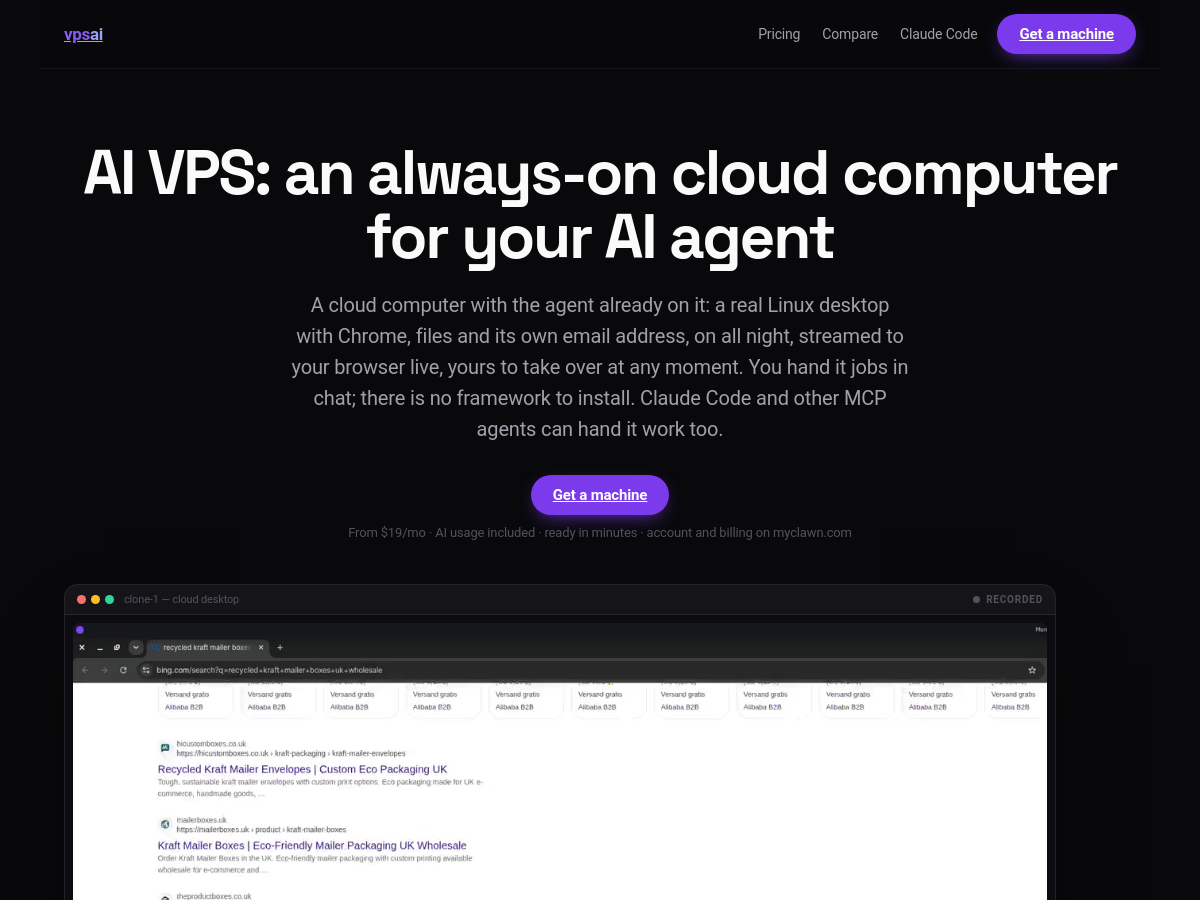
VPS AI (vpsai.ai) is a hosted service that provides always-on cloud desktops built specifically for AI agents rather than for websites. Each machine is a real graphical desktop with Google Chrome, a filesystem, persistent browser logins, and its own outbound email address, streamed live to the user's browser so a person can watch the agent work and click in to take over the keyboard and mouse at any moment. The service is positioned as an alternative to a plain Linux VPS plus an evening of DIY setup: the agent tooling is already on the box and jobs are handed to it in chat, with no framework to install, and MCP-based agents such as Claude Code can also delegate work to the machine. Plans are sold as one dedicated machine per tier with AI usage bundled into the monthly price: Spark at $19/mo (2 GB burst RAM, 20 GB disk, $10 AI usage), Surge at $39/mo (4 GB / 40 GB, $25 usage), Apex at $79/mo (8 GB / 80 GB, $60 usage) and Godmode at $159/mo (16 GB / 160 GB, $140 usage, priority compute). Billing runs monthly through Stripe, can be cancelled at any time with effect at the end of the period, and the machine's disk is retained for 30 days after cancellation. Included usage resets each billing cycle, while topped-up credits do not expire. The company states that AI usage is metered at provider cost multiplied by 1.35 and paced by rolling 5-hour, 7-day and 30-day windows so that a runaway loop cannot consume a month's allowance in an afternoon. It also notes that the product is not a GPU server: model inference is called through APIs with usage included in the subscription, so the machine's role is to be the agent's computer rather than to host model weights. Receiving email is not yet enabled; the agent's address is currently for sending only, and account sign-up and billing are handled on the companion domain myclawn.com. The advertised core capabilities are sixfold: the machine stays on 24/7 regardless of whether the user's laptop is open; it runs a real Chrome display with sessions that survive; it has an identity of its own for outbound email; its screen can be watched live from laptop, tablet or phone; the user can seize control to solve a CAPTCHA, enter a two-factor code or complete a sign-in; and files, installed tools and logins persist across sessions rather than resetting between runs.

Solves

Most useful agent work happens behind a login on sites with no API, and a cheap headless Linux box cannot do it: it has no real browser, no persistent logins, no identity of its own and no screen a human can intervene on. VPS AI packages the always-on machine, the graphical desktop with Chrome, persistent sessions, an outbound email address, bundled model usage and a live, take-over-able screen into one managed monthly subscription, so users do not have to assemble and babysit that stack themselves.

Screenshot of Gauth AI
Gauth AI
AI Homework Helper Unknown

Gauth is an AI homework helper that converts STEM questions into full step-by-step solutions rather than bare answers. Users can type a question or upload a photo or screenshot of their homework, and the service returns numbered solving steps with explanations of the reasoning behind each move. Mathematical notation such as fractions, integrals, powers, roots and matrices is rendered in LaTeX for readability. The product covers mathematics first, including algebra, geometry, trigonometry, precalculus, calculus, statistics and linear algebra, and extends to science subjects such as physics and chemistry. Solutions are generated in seconds and are stored in a user account history so they can be revisited later, for example before a test. A first step-by-step solution is offered without requiring an account. Gauth is delivered as a web application with companion mobile apps referenced in user reviews. It operates on a freemium model: a free plan includes a limited number of solutions per day, while the paid Gauth Plus tier advertises unlimited AI queries, full step-by-step explanations and Assignment Solver credits. Subscriptions are billed through Stripe and can be cancelled from the account, with access retained until the end of the current billing period. The tool is aimed at students who want to check their own work, find where they went wrong, and understand underlying concepts. User testimonials on the homepage emphasise using it to verify practice problems and learn methods rather than simply copy answers.

Solves

Students working through STEM homework often get stuck on a problem and cannot see the intermediate reasoning that leads from the question to the answer. Gauth solves this by accepting typed or photographed problems and returning numbered, explained solution steps with properly rendered mathematical notation, so learners can identify mistakes and understand the method rather than only obtaining a final result.

Screenshot of AI video, image & music generator — all in one, on a single credit balance

WowMade is a web-based AI creative platform that generates video, images, music and text from natural-language prompts through a single unified interface. The site markets itself as an all-in-one generative studio, advertising access to third-party models such as Seedance 2.5 and Seedream 5.0 alongside its own workflow tools, with all generations billed against one shared credit balance rather than separate subscriptions per modality. On the video side, WowMade offers text-to-video and image-to-video generation plus a library of roughly fifteen preset cinematic "Visual Effects" — including Snap Zoom, Drone Pullback, Lens Dive, Dolly Warp, Hyperspeed, Orbit Burst, Liquid Chrome, Shatter, Ember Burst, Overgrowth, Crystal Bloom and Portal — which apply camera and physics-driven motions to a supplied still image. Image capabilities include text-to-image generation, AI upscaling and enhancement, and editing tools such as an object remover. A separate music module produces original audio, and a text creation page rounds out the suite. Positioning emphasises ease of use for non-professionals: the homepage states that no experience is needed and that users can cancel at any time, and it targets creative teams as well as individual creators. Outputs can be managed in a "My Creations" area and the site provides an Academy section with learning resources. Pricing is credit-based and tiered, with the homepage advertising savings of up to 42% per credit on larger plans. The platform is delivered entirely as a hosted product and depends on generating media in the cloud, so usage costs and availability scale with the underlying credit balance and the third-party models it routes to.

Solves

Creating video, imagery and music traditionally requires separate specialist tools, multiple subscriptions and significant editing skill. WowMade consolidates text-to-video, image generation and editing, and music generation into one browser-based platform with a single credit balance, letting non-experts produce cinematic clips, stills and audio from prompts without switching between applications or learning professional editing software.

Screenshot of Chattide
Chattide
AI Assistant Unknown

ChatTide is a browser-accessible AI assistant marketed as an easy-to-use conversational tool for creating, learning, and discovering. The public site presents it as a general-purpose chat product, with dedicated pages for AI chat and a free ChatGPT-style experience, plus a sign-in flow and an upgrade/pricing page. It positions itself as a low-friction entry point for people who want conversational AI without a complex setup. Beyond the marketing tagline and navigation structure, the homepage exposes little technical detail: it does not document the underlying model providers, context limits, supported file types, integrations, or data-handling practices beyond links to Terms of Service and Privacy Policy. A free tier appears to exist alongside a paid upgrade path, but exact quotas and prices are not stated on the captured page, so pricing should be treated as unconfirmed. Because no public GitHub repository or developer documentation was found, ChatTide should be categorized as a closed SaaS web application rather than a library, framework, or self-hosted tool. Evaluation of fit should therefore be based on hands-on trial rather than published specifications, and organizations with strict data-residency or model-transparency requirements should verify those details directly with the vendor before adoption.

Solves

ChatTide addresses the friction of getting started with conversational AI: instead of requiring API keys, model configuration, or local installation, it offers a ready-to-use web chat interface for drafting, learning, and exploratory Q&A. It targets users who want immediate assistance from a browser session and a low-effort upgrade path, rather than a customizable or self-hosted AI stack.

Screenshot of Reply200
Reply200
AI Social Media Unknown

Reply200 is a SaaS tool for AI-powered comment moderation and auto-reply across Facebook, Instagram, TikTok and YouTube. It monitors comments on organic posts, paid ads and live streams, then classifies each one and takes an action: reply, like, ignore, hide or delete. The vendor positions it as an always-on layer that keeps engagement flowing without a human manually reading every comment. The core mechanism is a voice replica. Reply200 scans a connected page's past replies, posts, captions, bio and links to build a profile of the account's tone, slang and emoji habits. When a new comment arrives, the system combines that voice profile, the content of the post, a context library and configured page goals to generate a reply intended to read as if the account owner wrote it. Moderation is rule- and intent-driven. Spam, competitor bait and abusive comments can be hidden or deleted automatically, while genuine questions, purchase intent and positive sentiment get replies or likes. Setup is marketed as a one-click account link with no code, and moderation versus engagement behaviour can be toggled per Page or Business Manager at any time. Pricing is not published on the homepage beyond a 7-day free trial with cancel-anytime terms. Marketing claims about scale include 500+ teams and 4M+ comments handled, but these figures come from the vendor and are not independently verified. A blog and documentation site are available.

Solves

Social accounts accumulate comments that go unanswered: purchase questions, shipping and sizing queries, and positive fans who expect a response. Silence lowers engagement signals, which can reduce organic reach, and unanswered questions under paid ads waste ad spend while spam and competitor bait degrade brand perception. Reply200 addresses this by automatically classifying every comment and either replying in the account's own voice or hiding/deleting spam and abuse, so no comment needs manual review.

Screenshot of freebeat
freebeat
AI Music Video Generator Unknown

freebeat is a web-based AI content platform centered on generating music videos and synchronized visual content. Its documented entry point at freebeat.ai/lyric-video positions it as a tool for turning audio tracks and lyrics into videos, where visuals are timed to the music and the words being sung or spoken. The product is delivered entirely through the browser, so no local installation or render hardware is required from the user. The tool targets music-adjacent creators who need visual output fast: independent musicians, producers, and social media creators publishing to YouTube, TikTok, Instagram, and similar channels. The typical workflow is upload or paste audio and lyrics, choose a visual style or template, and let the AI handle scene generation, beat matching, and text animation, then export a finished video. The description available for this catalog entry is brief and the public homepage was not retrievable during enrichment (the URL returned a hosting provider security checkpoint rather than product content), and no public GitHub repository was found. Details such as exact render resolution limits, watermark policy, export formats, credit pricing, and licensing terms are therefore unverified and should be confirmed directly on the vendor site before relying on them.

Solves

Producing a music or lyric video conventionally requires editing software, stock or generated footage, manual beat synchronization, and typographic timing work, which is slow and demands skills most musicians and small creators do not have. freebeat addresses this by automating scene generation and lyric-to-audio synchronization in a browser-based workflow, reducing a multi-hour editing task to a guided upload-and-export process.

Screenshot of Video Trimmer
Video Trimmer
Other Unknown

Video Trimmer is a free browser-based tool for cutting and trimming video clips online. The homepage describes a three-step workflow: drop in a file, drag the trim handles to select the range to keep, and export the result as MP4 or another common format. The tool states that trimming runs locally in the browser tab, so the video is not uploaded to a server, and that no account or software installation is required. Beyond basic start-and-end trimming, the workspace offers single-clip editing tabs for cropping, rotating, flipping, resizing, speeding up or slowing down, changing volume, muting, looping, and adding text or image overlays. This positions it as a lightweight alternative to full video editors for quick clip cleanup, with output quality described as matching the source after a cut. The homepage also says exports are free and watermark-free, with no stated limit on video length or file size. It markets the tool to people who frequently trim short clips, such as product marketers, support teams, content creators, teachers, and social media managers. A separate meta description on the same page references an AI image generator based on Flux Kontext, which is inconsistent with the main video trimming content.

Solves

Video Trimmer solves the need to quickly cut a video down to its useful part without opening a complex multi-track editor, installing desktop software, creating an account, or uploading private footage to a remote server. It focuses on fast single-clip trimming and lightweight edits in the browser.

Screenshot of Body Type Calculator
Body Type Calculator
AI Beauty Free

Body Type Calculator is a free web-based tool that estimates a person's body shape from three circumference measurements: bust/chest/shoulders, natural waist, and fullest hips. It supports female and male profiles, accepts centimeters or inches, and returns an instant rule-based classification such as hourglass, pear, apple, rectangle, or inverted triangle for women, and trapezoid, rectangle, oval, triangle, or inverted triangle for men. The calculator also displays ratios like bust-to-waist and waist-to-hip, indicates when a result is near a category boundary, and provides links to styling and measurement guides. The homepage states that the measurement formula decides the body type, while an optional front-facing photo can be uploaded to enhance the written explanation with AI. The photo does not change the measurement-based result. Measurements remain in the browser until the user chooses AI analysis, and no sign-in is required. Results are presented as general proportion and styling guidance, not medical advice. The site includes supporting pages for female and male body type categories, a body type quiz, a waist-to-hip ratio calculator, and instructions on how to measure the body accurately. Users can copy a share link or download a PNG of their result.

Solves

It removes the need to manually interpret body measurement rules by instantly classifying body shape from bust, waist, and hip measurements, while offering optional AI explanation and styling references without sign-in or payment.

Screenshot of 网易叭哥说 (NetEase Bageshuo)
网易叭哥说 (NetEase Bageshuo)
AI Speech-to-Text Free

NetEase BaGeShuo (网易叭哥说) is a free desktop AI voice input agent developed under NetEase Youdao. It converts spoken language into clean, structured text and inserts the result directly into whatever application the user is working in, functioning as a system-wide dictation layer rather than a standalone note-taking app. Beyond raw speech-to-text, the tool applies AI post-processing to the transcript: it polishes sentence flow, removes filler words and verbal tics, and organizes rambling speech into more readable, structured output. It also supports speech translation, so users can dictate in one language and obtain text in another. Because input works across applications, the tool is positioned as a replacement for typing in chat clients, email, documents and other text fields. The vendor claims dictation is up to five times faster than typing, and highlights privacy and security messaging alongside community and business-contact channels on its homepage.

Solves

Typing is slow and speech-to-text output is usually messy: raw dictation captures filler words, false starts and unstructured phrasing that must be cleaned up manually. BaGeShuo addresses this by combining system-wide voice input with AI polishing, filler-word removal and translation, so users can speak naturally into any application and get text that is ready to send or publish.

Screenshot of Hypit
Hypit
AI Video Generator Unknown

Hypit is an open-source AI platform for cloning viral videos and turning them into editable, repeatable workflows. Rather than generating isolated clips, it reproduces a whole video—face, dialogue, B-roll, captions, and effects—so that the result can be re-run and varied in bulk. The project is positioned as an agent-driven tool: one command can produce tens or hundreds of variants, letting teams iterate on short-form video at scale. The product markets itself on a 'BYOK' (bring your own key) model, meaning users can plug in their own model providers or use a hosted Hypit API. It supports agent compatibility with tools such as Claude, Codex, and other agents, and exposes both a command-line quickstart and API access. The core is free to use and can be self-hosted, while a commercial pricing tier exists for hosted access. Hypit differentiates itself through full-video cloning and open-source control rather than template-based remixing. Its comparison table contrasts it with Arcads, Higgsfield, and Seedance, highlighting batch scale of 10, 50, or 100+ runs per invocation, model-provider freedom, and no mandatory platform catalog. Editing is described as anchored to words (transcript-aligned) instead of timeline seconds, which suits script-first video production. Because the tool is distributed as an open-source project, its exact language, license, and release cadence are best confirmed from the GitHub repository (hypit-ai/hypit). Guidance, developer documentation, and a Discord community are linked from the homepage.

Solves

Producing short-form video at scale is slow and manual: creators must script, shoot, edit, caption, and then repeat the process for every variation. Hypit addresses this by cloning a proven viral video into a structured, editable workflow and then generating many variants automatically, so teams can test hooks, faces, and edits without rebuilding each video by hand.

Screenshot of Reverse Video Search
Reverse Video Search
AI Video Search Unknown

Reverse Video Search is a web-based video provenance workspace for tracing the original source of a video clip and finding reposts. It accepts a video upload, a public URL, or keyword search, and supports formats such as MP4, MOV, AVI, GIF, with stated limits of 50MB and 20 minutes per upload. The service is designed for journalists, rights teams, brands, and researchers who need to investigate where a clip came from and how it spread. The tool extracts and compares visual fingerprints from keyframes that can survive compression, crops, and repost edits. It also offers premium deep-search options such as transcript matching, audio matching against accessible candidate videos, OCR and watermark detection from keyframes, timeline comparison, and an evidence report with an editable DMCA draft. These signals are combined to produce ranked candidate matches with source links, dates, captions, and confidence details. Reverse Video Search positions its results as leads for human verification rather than a black-box verdict. Users can compare source pages, dates, captions, edits, and accounts, then save an evidence report before acting. The site states that one search is available without an account, sign-up includes five bonus credits, and each search costs five credits, with more credits available for purchase. Monitoring is listed as not yet available. Target scenarios include finding the earliest known upload, checking whether viral footage is presented out of context, documenting unauthorized reposts, and monitoring brand or campaign assets. The homepage notes that the tool cannot see every private account, deleted post, regional restriction, or unindexed page, so origin and ownership should be confirmed independently.

Solves

Video clips are frequently renamed, cropped, mirrored, translated, compressed, or reposted without credit, and ordinary keyword search often sees only the new title, caption, or description. Reverse Video Search addresses this by searching underlying media signals such as keyframes, audio, transcripts, watermarks, and upload timelines to help users find earlier sources and understand how a video moved across platforms.

Screenshot of warmwind
warmwind
AI Agent Unknown

warmwind is a cloud-based product that provides autonomous AI workers intended to automate visual office workflows. According to its homepage, it positions itself as an all-in-one solution for AI workers with the stated promise of eliminating "tool chaos" by keeping everything in the cloud. The product targets repetitive, screen-oriented office tasks, meaning work that is normally performed through graphical interfaces such as browser tabs, web apps, dashboards, and documents. warmwind describes its workers as autonomous and cloud-hosted, so tasks are executed remotely rather than on a user's local machine. Publicly available information is currently limited to the vendor's own homepage and marketing copy. There is no public GitHub repository, documentation set, or third-party technical review available, so details about supported models, integrations, orchestration method, security posture, and pricing are not verifiable from the sources reviewed. Because the exact capabilities are not documented in the available material, this entry should be treated as a high-level catalog record rather than a validated technical assessment.

Solves

Office teams often run repetitive tasks across many disconnected web applications and desktop tools, which creates manual work, copy-paste errors, and fragmented automation scripts. warmwind aims to solve this by offering autonomous cloud-hosted AI workers that operate visual office workflows directly, so users do not have to stitch together multiple separate automation products.