Tool discovery

What type of AI tool
are you looking for?

Search the active catalog with LambdaBase AI Search, or keep browsing the popularity-ordered directory below.

Submitted search queries and interaction metrics may be analyzed to improve result quality. Do not include personal or confidential information

Browse popular tools.

Screenshot of DocsGPT
DocsGPT
LLM Open Source

DocsGPT is an open-source platform designed for building private AI agents, assistants, and enterprise search solutions. It enables organizations to create custom AI systems that can process and understand their own documentation and data without relying on external services. The platform includes a built-in Agent Builder, deep research capabilities, document analysis tools, multi-model support (allowing users to choose from various LLM providers), and API connectivity for extending agents with additional functionality. DocsGPT can be self-hosted using Docker, providing full control over data privacy and security. It is suitable for teams of all sizes that need a customizable, privacy-focused AI assistant for internal knowledge management and customer support.

Solves

DocsGPT solves the challenge of leveraging large language models on proprietary or sensitive documents without compromising data privacy. It provides a self-hosted, open-source platform that lets organizations build AI assistants and search tools tailored to their own knowledge bases, enabling secure, contextual Q&A and document analysis.

Screenshot of DeepSeek Reasonix
DeepSeek Reasonix
Dev Tools Open Source

DeepSeek Reasonix is an open-source, terminal-native AI coding agent built specifically for DeepSeek's language models. It operates as a persistent command-line interface that stays running in the background, leveraging advanced prefix-cache stability to drastically reduce token processing costs and latency. By maintaining a session-based context, Reasonix avoids repeatedly sending overlapping prefixes to the model, achieving cache hit ratios as high as 99.82% and yielding cost savings of up to 98.9%. Users can select between DeepSeek's flash and pro model tiers depending on task complexity. The tool integrates deeply with the developer's workflow, allowing direct interaction with codebases from the terminal, understanding project structures, and providing real-time coding assistance. Its open-source nature and active community (over 12,600 GitHub stars, frequent updates) ensure continuous improvement and transparency. The project includes extensive benchmarks and architectural documentation, emphasizing its engineering focus on cost-efficiency and reliability. DeepSeek Reasonix represents a new generation of AI coding tools that prioritize economic scalability without sacrificing functionality.

Solves

Developers using AI coding assistants often face prohibitive costs from token-based pricing and slow response times due to redundant context processing. DeepSeek Reasonix solves this by maintaining a persistent terminal session with prefix-cache stability, allowing the agent to reuse previously computed token embeddings across multiple queries. This dramatically lowers API costs and improves interaction speed, making it feasible to keep an AI assistant running continuously for on-demand coding help without worrying about escalating expenses.

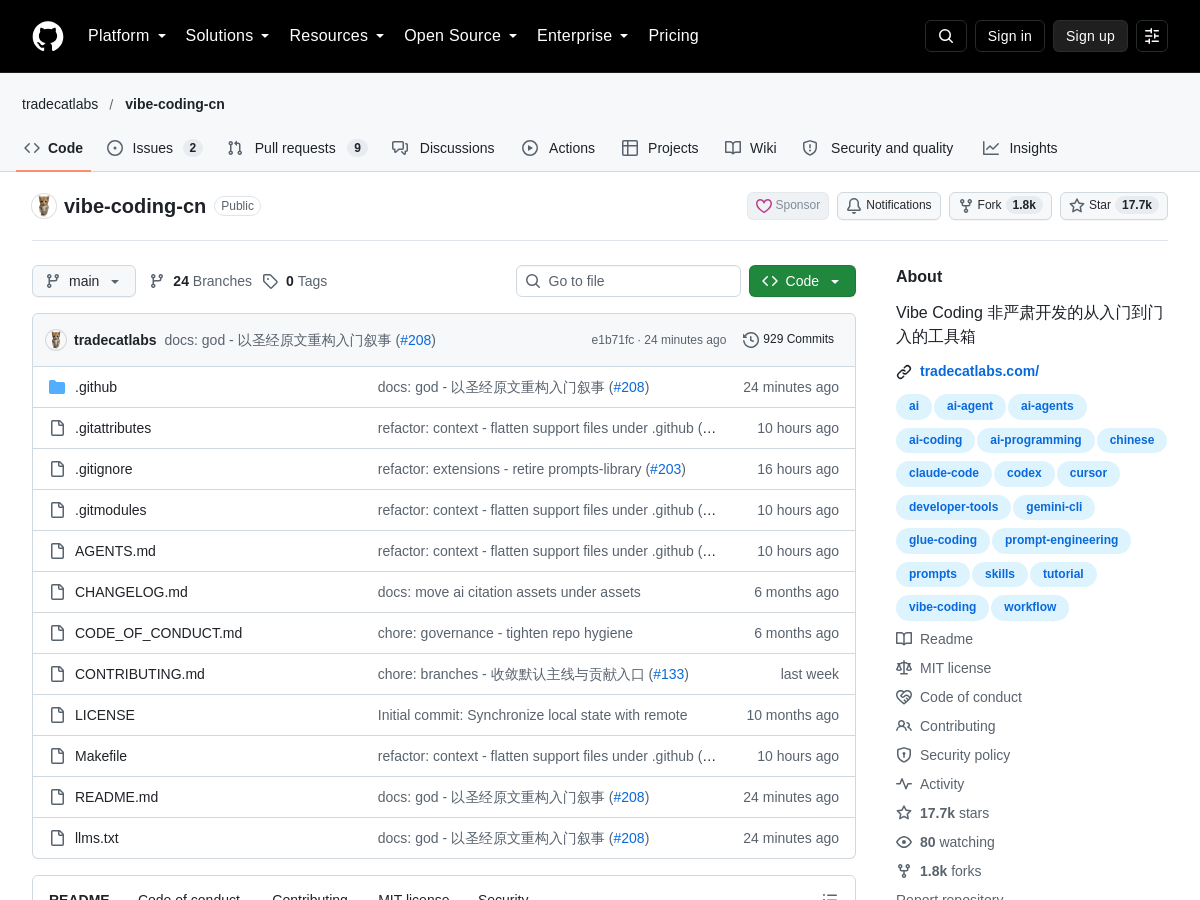
Screenshot of Vibe Coding Cn
Vibe Coding Cn
AI Agents Open Source

Vibe Coding Cn is an open-source project that provides a comprehensive toolbox for developers, from beginners to advanced users. The project is designed to be a one-stop-shop for developers, offering a wide range of tools and resources to help them improve their coding skills and productivity. With a strong focus on AI and machine learning, Vibe Coding Cn aims to provide developers with the latest technologies and techniques to stay ahead of the curve. The project is constantly evolving, with new features and updates being added regularly to ensure that developers have access to the best tools and resources available. Whether you're a seasoned developer or just starting out, Vibe Coding Cn is an excellent resource to help you achieve your coding goals. The project's documentation is well-organized, making it easy for developers to find the information they need to get started. Additionally, the project's community is active and supportive, providing a great opportunity for developers to connect with others and learn from their experiences. Overall, Vibe Coding Cn is an excellent choice for developers looking for a comprehensive and up-to-date toolbox to help them succeed in their careers. The project's commitment to innovation and community engagement makes it an exciting and valuable resource for developers of all levels. With its strong focus on AI and machine learning, Vibe Coding Cn is well-positioned to help developers take advantage of the latest advancements in these fields. By providing a wide range of tools and resources, the project aims to help developers improve their coding skills, increase their productivity, and stay ahead of the curve in the rapidly evolving world of software development. The project's open-source nature also ensures that developers have the freedom to modify and customize the tools and resources to meet their specific needs, making it an excellent choice for developers who value flexibility and control. In summary, Vibe Coding Cn is a powerful and comprehensive toolbox for developers that is designed to help them succeed in their careers. With its strong focus on AI and machine learning, active community, and commitment to innovation, the project is an excellent resource for developers of all levels.

Solves

Vibe Coding Cn solves the problem of developers having to search for and integrate multiple tools and resources to improve their coding skills and productivity. By providing a comprehensive toolbox that includes a wide range of tools and resources, the project saves developers time and effort, allowing them to focus on what matters most - writing high-quality code. Additionally, the project's focus on AI and machine learning helps developers stay ahead of the curve in these rapidly evolving fields, ensuring that they have the skills and knowledge needed to succeed in their careers.

Screenshot of Speech
Speech
LLM Open Source

NVIDIA NeMo Speech is a scalable and open-source framework designed for building, training, and fine-tuning state-of-the-art speech AI models. It provides modular components for automatic speech recognition (ASR), text-to-speech (TTS), and other speech tasks, enabling researchers and developers to quickly assemble and customize pipelines. The framework leverages NVIDIA GPUs for efficient distributed training and includes a collection of pre-trained models that can be adapted to specific domains with minimal effort. NeMo Speech integrates with the broader NVIDIA NeMo ecosystem, which also supports large language models and multimodal AI, making it a versatile tool for conversational AI applications.

Solves

Building high-performance speech AI systems from scratch requires significant expertise in neural network architectures, data preprocessing, and distributed training. NeMo Speech solves this by providing a unified, optimized framework with pre-built modules and pre-trained models, drastically reducing development time and computational resources while maintaining state-of-the-art accuracy.

Screenshot of Iii
Iii
Dev Tools Free

iii is an open-source tool designed to help developers compose, extend, and observe services in real-time. It provides a unified approach to managing microservices and distributed systems by enabling dynamic composition and extension of service functionalities. The tool focuses on real-time observation, allowing teams to monitor service interactions, performance, and behavior as they occur. This capability is particularly useful for debugging and understanding complex service meshes. iii is distributed as a free, self-hosted solution and can be integrated into existing development workflows. Its goal is to simplify the complexity of building and maintaining modern service-oriented architectures.

Solves

iii addresses the challenge of effectively composing and observing services in real-time. Traditional approaches often require manual configuration and provide limited visibility into service interactions. iii simplifies these tasks by offering a unified platform for service composition, extension, and observation, reducing operational overhead.

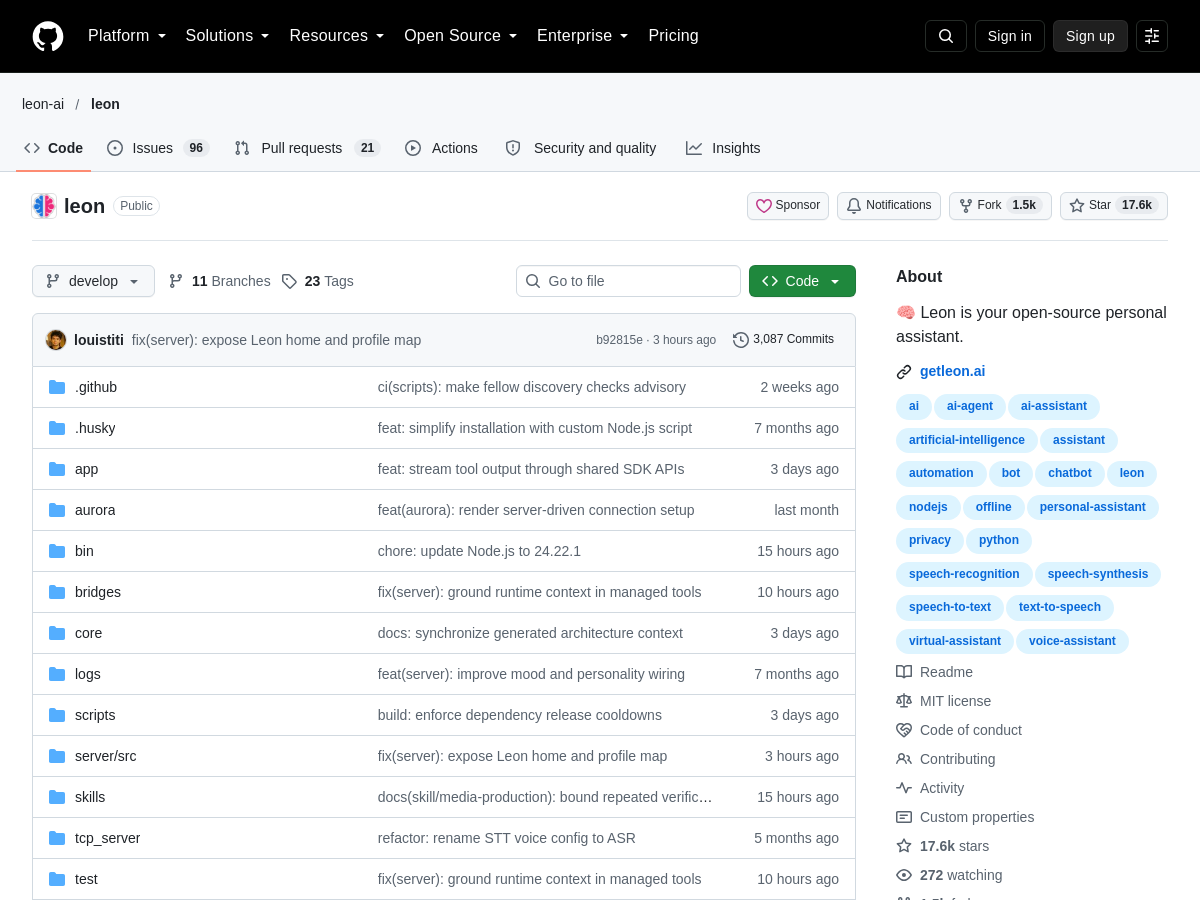
Screenshot of Leon
Leon
AI/ML Open Source

Leon is an open-source personal assistant that utilizes artificial intelligence to provide users with a personalized experience. It is designed to be a virtual companion that can assist with various tasks, such as automating routines, providing information, and controlling smart home devices. Leon is built using a combination of natural language processing, machine learning, and computer vision, allowing it to understand and respond to voice commands, text inputs, and visual cues. The project is hosted on GitHub and has a large community of contributors who are actively developing and improving the software. Leon's architecture is modular, allowing developers to easily integrate new features and functionalities into the system. The project's goal is to create a highly customizable and user-friendly personal assistant that can be used by people of all ages and backgrounds. Leon is available for free and can be installed on a variety of devices, including desktop computers, laptops, and mobile devices. The project is constantly evolving, with new features and updates being added regularly. Overall, Leon has the potential to revolutionize the way we interact with technology and make our lives easier and more convenient. Leon's features include speech recognition, speech synthesis, and natural language processing, which enable it to understand and respond to user inputs. It also has a user-friendly interface that allows users to easily navigate and customize the system. Additionally, Leon has a large community of developers who are constantly working to improve and expand the project's capabilities. With its advanced features and customizable architecture, Leon is an ideal solution for anyone looking for a personalized and user-friendly virtual assistant. The project's open-source nature also makes it an attractive option for developers who want to contribute to and customize the software. As the project continues to evolve, it is likely that Leon will become an increasingly popular choice for those looking for a reliable and feature-rich personal assistant.

Solves

Leon solves the problem of providing a personalized and user-friendly virtual assistant that can assist with various tasks and make life easier and more convenient. It addresses the need for a customizable and adaptable system that can be used by people of all ages and backgrounds. By providing a highly advanced and feature-rich personal assistant, Leon helps to bridge the gap between humans and technology, making it easier for people to interact with and control their surroundings. The project's open-source nature also solves the problem of proprietary software that can be restrictive and limiting, allowing developers to contribute to and customize the software to meet their specific needs.

Screenshot of NeMo
NeMo
LLM Open Source

NVIDIA NeMo is a scalable generative AI framework designed for researchers and developers working on large language models (LLMs), multimodal models, and speech AI, including automatic speech recognition (ASR) and text-to-speech (TTS). It provides a comprehensive set of tools and pre-built components for training, fine-tuning, and deploying state-of-the-art neural models. NeMo leverages NVIDIA's GPU optimization and parallelization techniques, enabling efficient distributed training across multiple GPUs and nodes. The framework includes modular collections for different domains: the NLP collection for LLMs and natural language processing, the Speech collection for ASR and TTS, and the Multimodal collection for models combining vision and language. Users can define custom neural architectures using a configuration-driven approach, and NeMo handles the complexities of mixed-precision training, data loading, and checkpointing. NeMo integrates tightly with NVIDIA's ecosystem, including Megatron-LM for large-scale transformers, RAPIDS for GPU-accelerated data processing, and Triton Inference Server for production deployment. It supports pre-trained models available on the NVIDIA GPU Cloud (NGC), allowing quick fine-tuning for specific tasks. The framework also provides utilities for export to ONNX and TensorRT for optimized inference. With an active open-source community and regular updates, NeMo aims to accelerate GenAI research and development by offering reproducibility, scalability, and state-of-the-art performance out of the box.

Solves

Developers and researchers face challenges in training and deploying large-scale generative AI models due to the need for efficient distributed training, GPU optimization, and integration of multiple modalities (text, speech, vision). NeMo solves this by providing a unified, modular framework that simplifies the process of building, training, and serving LLMs, ASR, and TTS models on NVIDIA hardware, reducing development time and infrastructure complexity.

Screenshot of Khazix Skills
Khazix Skills
AI Agents Open Source

Khazix Skills is an open-source collection of pre-defined AI agent skills designed to enhance the capabilities of language model-based coding assistants and autonomous agents. The repository includes a variety of skill modules such as neat-freak (洁癖), which handles documentation and memory closeout, hv-analysis for analytical tasks, and khazix-writer for content generation. These skills are compatible with popular AI coding tools like Claude Code, OpenAI Codex, and over 40 other agent frameworks. The project aims to provide reusable, modular skill definitions that can be integrated into any agentic workflow, reducing the need for repetitive prompt engineering. Each skill is documented with its purpose, usage instructions, and example prompts, allowing developers to quickly adopt and customize them for specific tasks. The collection is maintained by the community and welcomes contributions of new skills. By offering a standardized set of skills, Khazix Skills accelerates the development of AI-powered applications that require complex, multi-step reasoning, code generation, or data analysis. The skills are designed to be composable, enabling agents to chain multiple skills together for sophisticated workflows. The repository is actively updated to keep pace with advancements in AI agent capabilities.

Solves

Khazix Skills solves the challenge of building effective AI agents by providing a ready-to-use library of skill modules, eliminating the need for developers to craft and test individual prompts from scratch. It standardizes common agent tasks like memory management, analysis, and writing, ensuring consistent behavior and saving time.

Screenshot of WrenAI
WrenAI
AI Agents Open Source

WrenAI is an open-source Generative BI (GenBI) tool designed for AI agents. It provides a governed text-to-SQL experience through an open context layer, allowing users to ask natural-language questions and receive trusted dashboards, charts, and SQL queries. The platform connects to over 20 data sources including BigQuery, Snowflake, PostgreSQL, ClickHouse, Amazon Redshift, and Databricks, making it versatile for multi-database environments. WrenAI emphasizes data accuracy and governance, ensuring that generated SQL aligns with business rules and metadata definitions. By decoupling the query generation from the underlying data models, it allows non-technical users to explore data securely without writing code. The tool is self-hosted and can be integrated into AI agent workflows, enabling autonomous analytics.

Solves

WrenAI solves the challenge of bridging the gap between non-technical users and complex SQL databases by providing an accurate, governed natural-language interface. It eliminates the need for manual SQL writing and reduces errors in data retrieval, enabling faster and more reliable data-driven decisions across organizations.

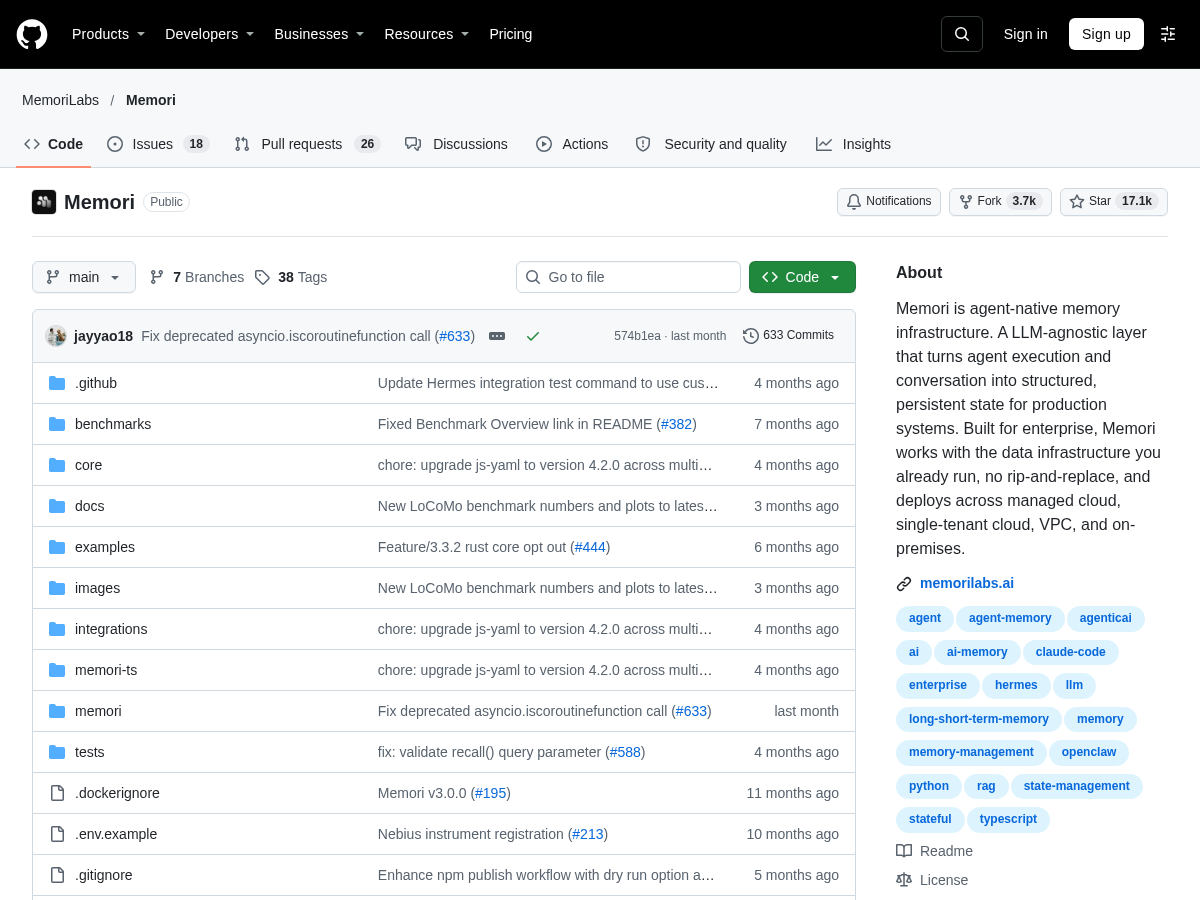
Screenshot of Memori
Memori
LLM Open Source

Memori is an agent-native memory infrastructure designed to work with large language models (LLMs). It provides a layer that turns agent execution and conversation into structured, persistent state for production systems. This infrastructure is built for enterprise use and is compatible with existing data infrastructure, allowing for deployment across managed cloud, single-tenant cloud, VPC, and on-premises environments without requiring a rip-and-replace approach. Memori's functionality enables the creation of more sophisticated and stateful applications, enhancing the capabilities of LLMs in production environments. Its design focuses on providing a flexible and scalable solution for managing memory and state in complex systems, making it an invaluable tool for developers and organizations working with LLMs.

Solves

Enterprises and developers working with large language models face the challenge of managing complex state and memory requirements in production systems. Memori solves this problem by providing an agent-native memory infrastructure that can handle the structured, persistent state needed for sophisticated applications, thereby enhancing the usability and effectiveness of LLMs in real-world scenarios.

Screenshot of Claude Skills
Claude Skills
Dev Tools Open Source

Claude Skills is an open-source collection of 345 Claude Code skills, agent skills, and plugins designed to extend the capabilities of AI coding agents such as Claude Code, Codex, Gemini CLI, Cursor, and 8 other compatible tools. It provides 30+ agents, 70+ custom commands, 330+ skills, customizable references, and scripts, covering domains including engineering, marketing, product, compliance, C-level advisory, research, business operations, commercial & finance, and daily productivity. The repository serves as a centralized hub for reusable, modular skill definitions that can be installed into supported coding agents to add new capabilities or modify existing behavior. Users can pick and choose individual skills or import entire agent configurations, and the project is actively maintained on GitHub with contributions from the community. Because it is open source, teams and individuals can customize the skills to fit their workflows, integrate internal knowledge bases, and share their own modifications back to the project. The collection aims to reduce the time needed to bootstrap AI-assisted development and business processes across multiple agent platforms.

Solves

It solves the problem of manually creating and managing skills, commands, and agent configurations for AI coding agents by providing a ready-made, customizable library that spans engineering, marketing, product, compliance, C-level advisory, research, business operations, finance, and daily productivity tasks.

Screenshot of Generative Ai
Generative Ai
LLM Open Source

This repository, part of Google Cloud Platform, provides a comprehensive collection of sample code and Jupyter notebooks designed to showcase generative AI capabilities on Google Cloud. It focuses on the usage of Vertex AI and the Gemini family of models, including the Gemini Enterprise Agent Platform, for building a wide range of applications. The examples cover text generation, image and video understanding, audio processing, embeddings for semantic search, and the creation of conversational AI agents. The resource is continuously updated to reflect the latest model releases and API changes, ensuring developers have access to current best practices. The repository is structured into subdirectories like agents, audio, embeddings, and more, each containing self-contained notebooks and code snippets that can be executed in a Google Cloud environment or adapted locally. It serves as both an educational tool and a starting point for integrating generative AI into enterprise solutions, with clear instructions on prerequisites such as Google Cloud authentication and enabling necessary APIs. Additionally, it includes advanced topics like retrieval-augmented generation (RAG), function calling, and multi-modal interactions, making it suitable for both beginners and experienced practitioners.

Solves

Developers and organizations often face a steep learning curve when adopting generative AI on cloud platforms, dealing with complex API integrations, model prompting, and ensuring production readiness. This repository solves that by providing ready-to-run, documented examples that demonstrate end-to-end workflows using Google Cloud's generative AI services, significantly reducing the time and effort required to prototype and deploy AI-powered features.

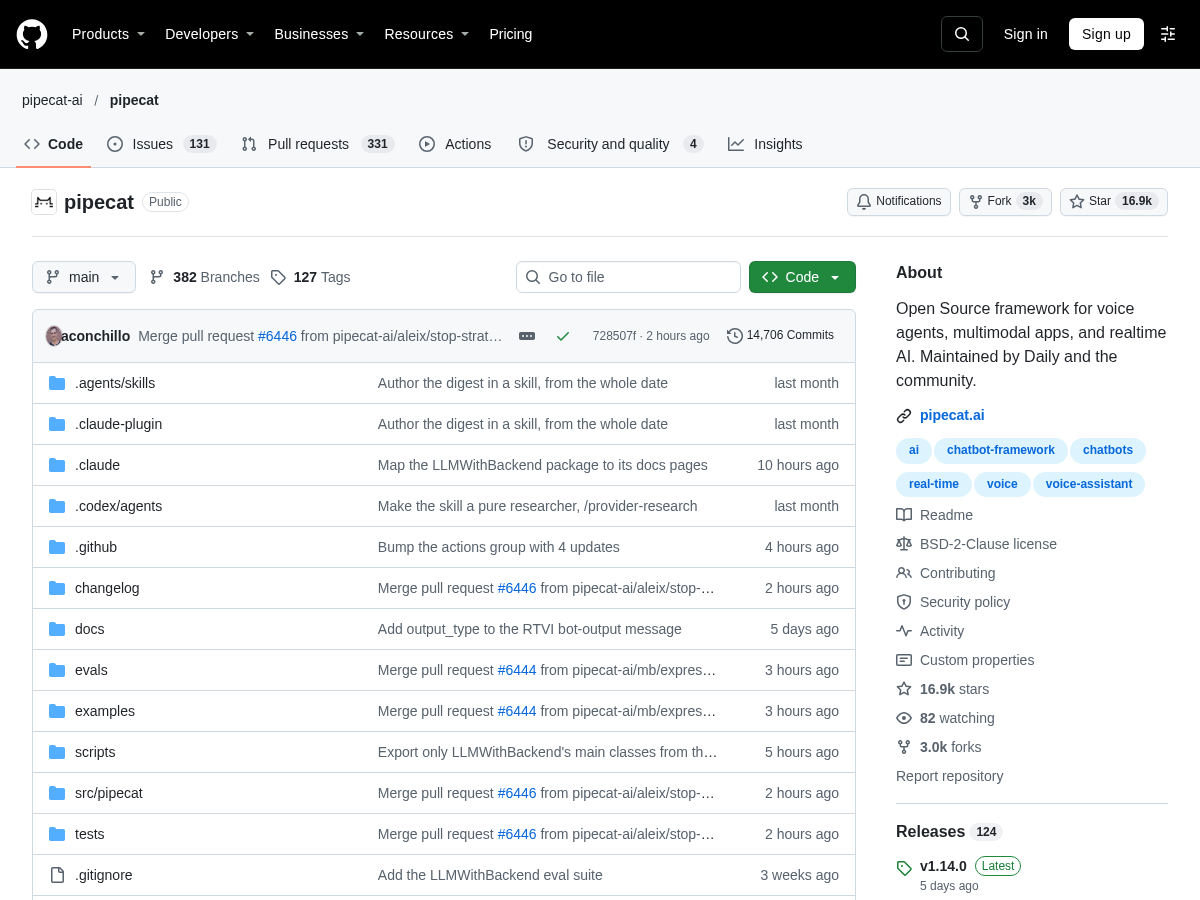
Screenshot of Pipecat
Pipecat
Chatbots Open Source

Pipecat is an open-source framework designed for building voice agents, multimodal applications, and real-time AI systems. It is maintained by Daily and a community of contributors. The framework provides a foundation for creating conversational interfaces and multimodal interactions, leveraging real-time AI capabilities to enhance user experiences. Pipecat's architecture is modular, allowing developers to integrate various components and services to create customized applications. The project is hosted on GitHub, where developers can access the source code, contribute to the project, and engage with the community. Pipecat's documentation and resources are available to help developers get started with building their own voice agents and multimodal apps. The framework's real-time AI capabilities enable developers to create applications that can respond quickly to user input, making it suitable for applications that require fast and accurate interactions. Overall, Pipecat provides a powerful tool for developers to create innovative voice and multimodal applications. The project's open-source nature and community-driven development ensure that it remains flexible and adaptable to evolving technological advancements. Pipecat's potential applications span various industries, including customer service, healthcare, and education, where conversational interfaces and real-time interactions can significantly enhance user experiences. By leveraging Pipecat, developers can focus on creating applications that provide value to users, rather than building the underlying infrastructure from scratch. This enables faster development, reduced costs, and increased innovation in the field of conversational AI. As the project continues to evolve, it is likely that Pipecat will play a significant role in shaping the future of voice and multimodal interactions.

Solves

Developers and organizations face the challenge of creating conversational interfaces and multimodal applications that can provide fast and accurate interactions. Pipecat solves this problem by providing an open-source framework that enables developers to build customized voice agents and multimodal apps with real-time AI capabilities. By leveraging Pipecat, developers can create applications that can respond quickly to user input, making it suitable for applications that require fast and accurate interactions. This enables developers to focus on creating applications that provide value to users, rather than building the underlying infrastructure from scratch.

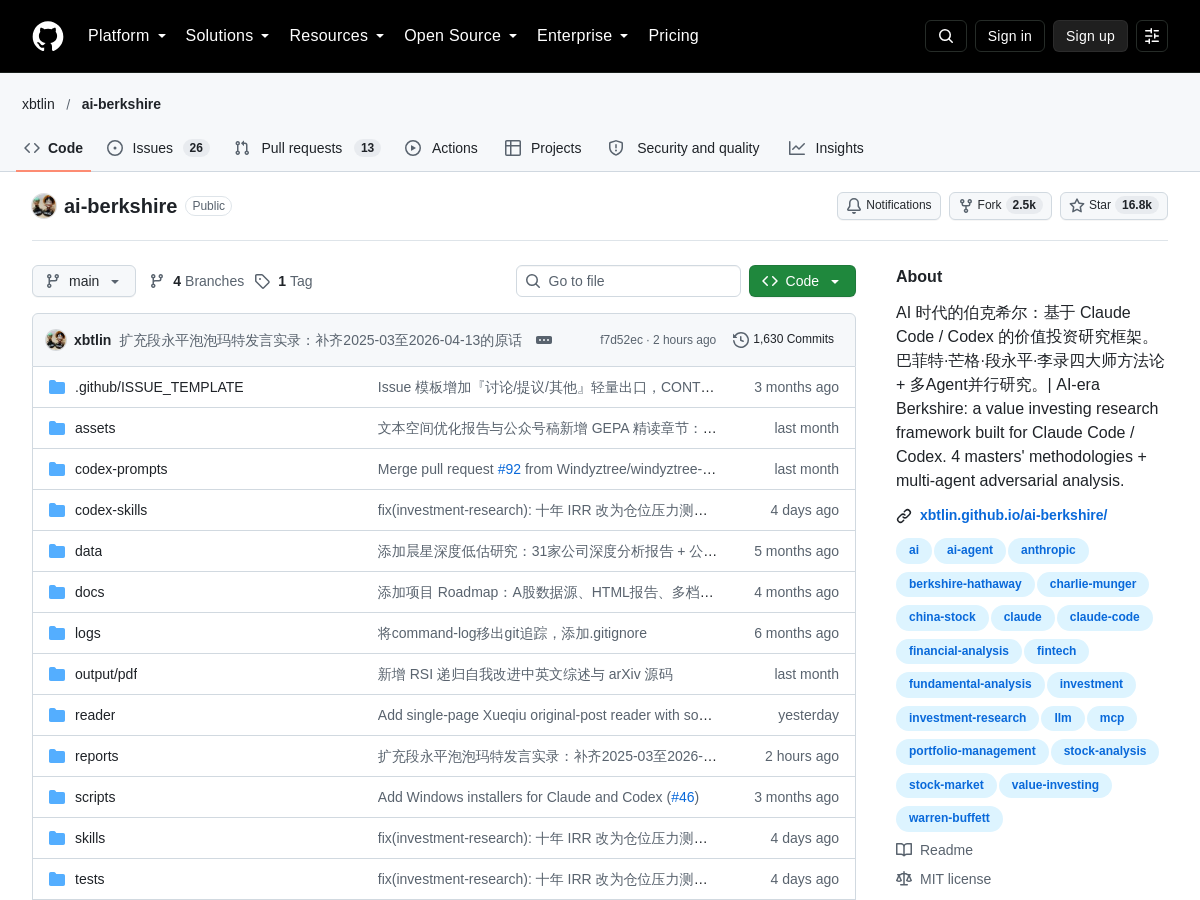
Screenshot of Ai Berkshire
Ai Berkshire
LLM Open Source

Ai Berkshire is an open-source value investing research framework built for Claude Code/Codex. It integrates the methodologies of four investment masters, including Warren Buffett, Charlie Munger, Duan Yongping, and Li Lu, with multi-agent parallel research. The project provides a comprehensive framework for investment research, including financial analysis, stock analysis, and portfolio management. It utilizes AI technologies, such as natural language processing and machine learning, to analyze and process large amounts of financial data. The project is designed to help investors make informed decisions by providing them with a robust and flexible research framework. Ai Berkshire is constantly evolving, with new features and updates being added regularly. The project has a strong community of contributors and users, who share knowledge and resources to improve the framework. Overall, Ai Berkshire is a powerful tool for investors and researchers, providing a unique combination of traditional investment analysis and cutting-edge AI technologies.

Solves

Ai Berkshire solves the problem of inefficient and time-consuming investment research by providing a comprehensive and automated framework for analyzing financial data and making investment decisions. It helps investors to identify potential investment opportunities, evaluate risks, and optimize their portfolios. By leveraging AI technologies, Ai Berkshire enables investors to process large amounts of data quickly and accurately, reducing the risk of human error and improving the overall quality of investment decisions. Additionally, the project's open-source nature and community-driven development ensure that it is constantly improving and adapting to changing market conditions, making it a valuable resource for investors and researchers.

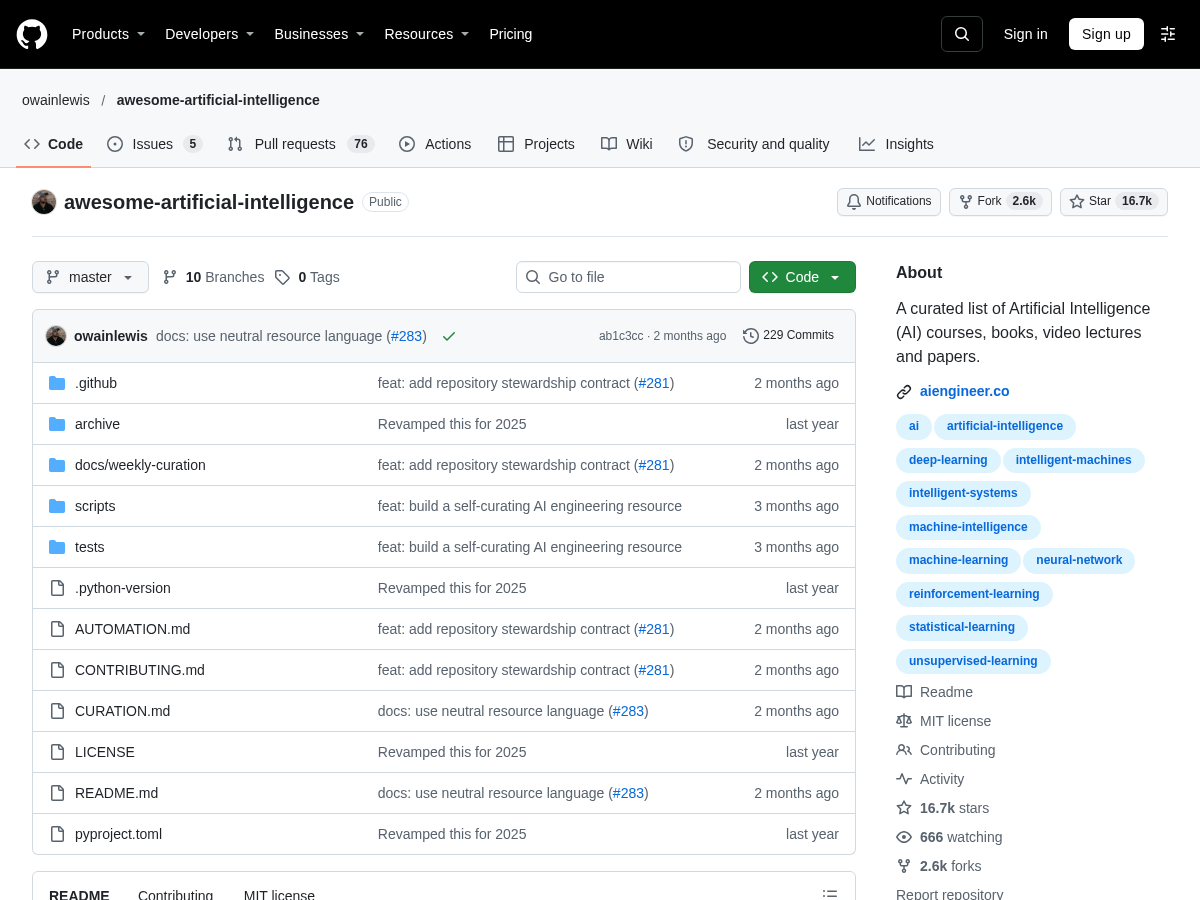
Screenshot of Awesome Artificial Intelligence

Awesome Artificial Intelligence is a curated list of Artificial Intelligence (AI) courses, books, video lectures, and papers. The project aims to provide a comprehensive collection of resources for individuals interested in learning about AI. The list includes a wide range of topics, such as deep learning, machine learning, neural networks, and reinforcement learning. The project is open-source and has a large community of contributors who help maintain and update the list. The resources are carefully curated to ensure that they are accurate, relevant, and useful for learners. The project also includes a contributing guide, which outlines the process for adding new resources to the list. Overall, Awesome Artificial Intelligence is a valuable resource for anyone looking to learn about AI and stay up-to-date with the latest developments in the field. The project is hosted on GitHub and has a large following, with over 16,000 stars and 2,600 forks. The project is licensed under the MIT license, which allows for free use, modification, and distribution of the software. The project's maintainers are committed to keeping the list up-to-date and accurate, and they encourage contributions from the community. The project's documentation includes a contributing guide, a curated list of resources, and a license file. The project's community is active, with many contributors and a large following on GitHub. The project's maintainers are responsive to issues and pull requests, and they work to ensure that the project remains a valuable resource for the AI community. The project has a long history, with the first commit dating back to 2025. Since then, the project has grown and evolved, with many new resources added and updates made to the list. The project's maintainers continue to work on improving the project, with new features and updates added regularly. The project is widely used and respected in the AI community, and it is considered a go-to resource for anyone looking to learn about AI.

Solves

The problem that Awesome Artificial Intelligence solves is the difficulty of finding high-quality, relevant resources for learning about Artificial Intelligence. With so many resources available online, it can be overwhelming to sift through them and find the ones that are accurate, relevant, and useful. Awesome Artificial Intelligence solves this problem by providing a curated list of resources that have been carefully selected and maintained by a community of experts. This saves learners time and effort, and ensures that they have access to the best resources available. Additionally, the project's open-source nature and large community of contributors ensure that the list remains up-to-date and accurate, which is essential in a field like AI that is constantly evolving.

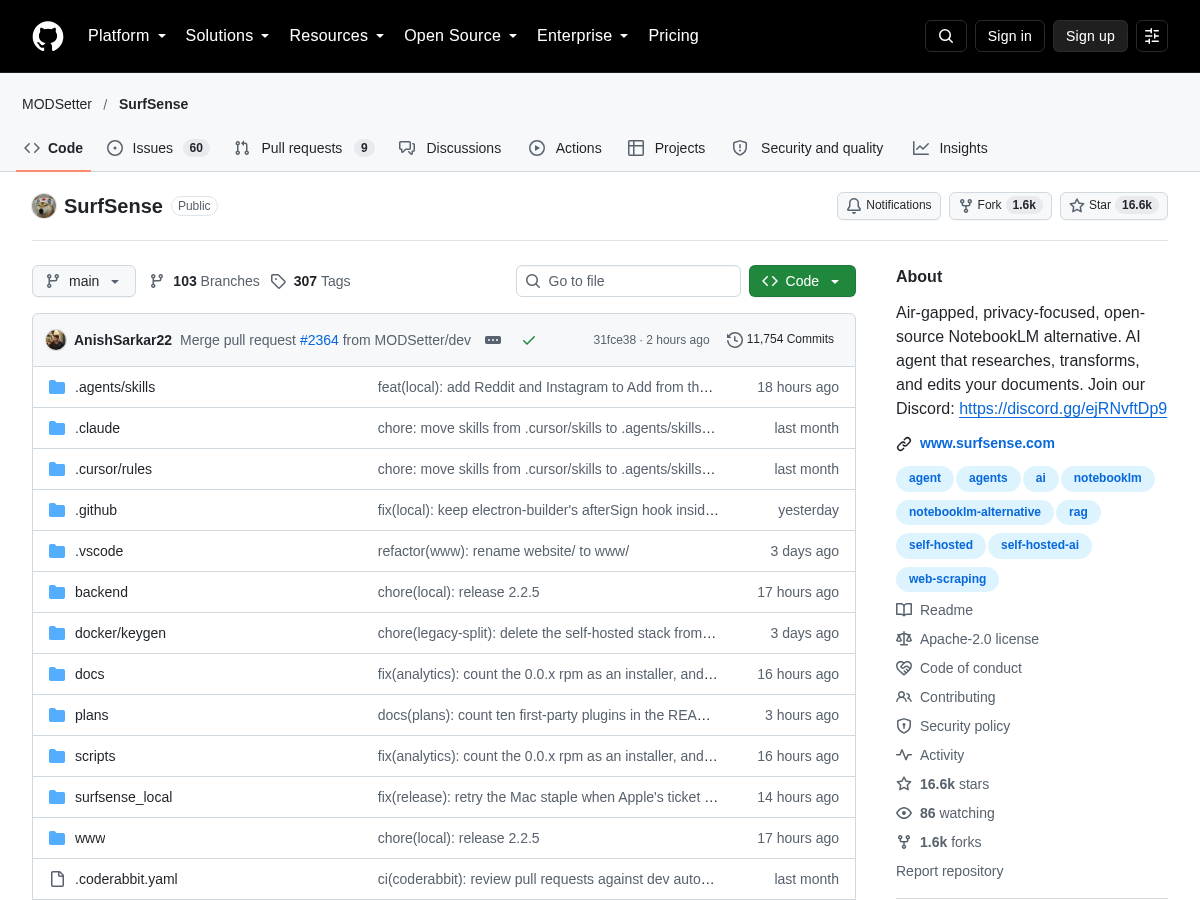
Screenshot of SurfSense
SurfSense
AI Agents Open Source

SurfSense is a free, open-source desktop app for documents you can't upload. A privacy-focused, NotebookLM-style AI agent that researches, transforms and edits your documents, on your machine. The index stays on your disk, you pick the model, local or remote, and there is no account. It supports various file formats such as PDF, Word, Excel, PowerPoint, CSV, Images, Markdown, plain text, HTML, Recordings, and Podcasts. The app allows users to connect plugins, including Google Search, Web Crawl, YouTube, TikTok, Reddit, Instagram, Google Maps, Amazon, Walmart, and Indeed, to read public pages without their own accounts. SurfSense also allows users to edit their files, making a new file each time, and never changing the original. The app is available for Windows, macOS, and Linux, and can be downloaded from the official website.

Solves

SurfSense solves the problem of users needing a secure and private way to research, transform, and edit their documents without having to upload them to a cloud service. It provides an air-gapped solution that runs offline, keeping the user's documents on their machine, and allows them to choose the model they want to use, whether local or remote. This is particularly useful for users who work with sensitive or confidential documents and need to ensure their privacy and security.

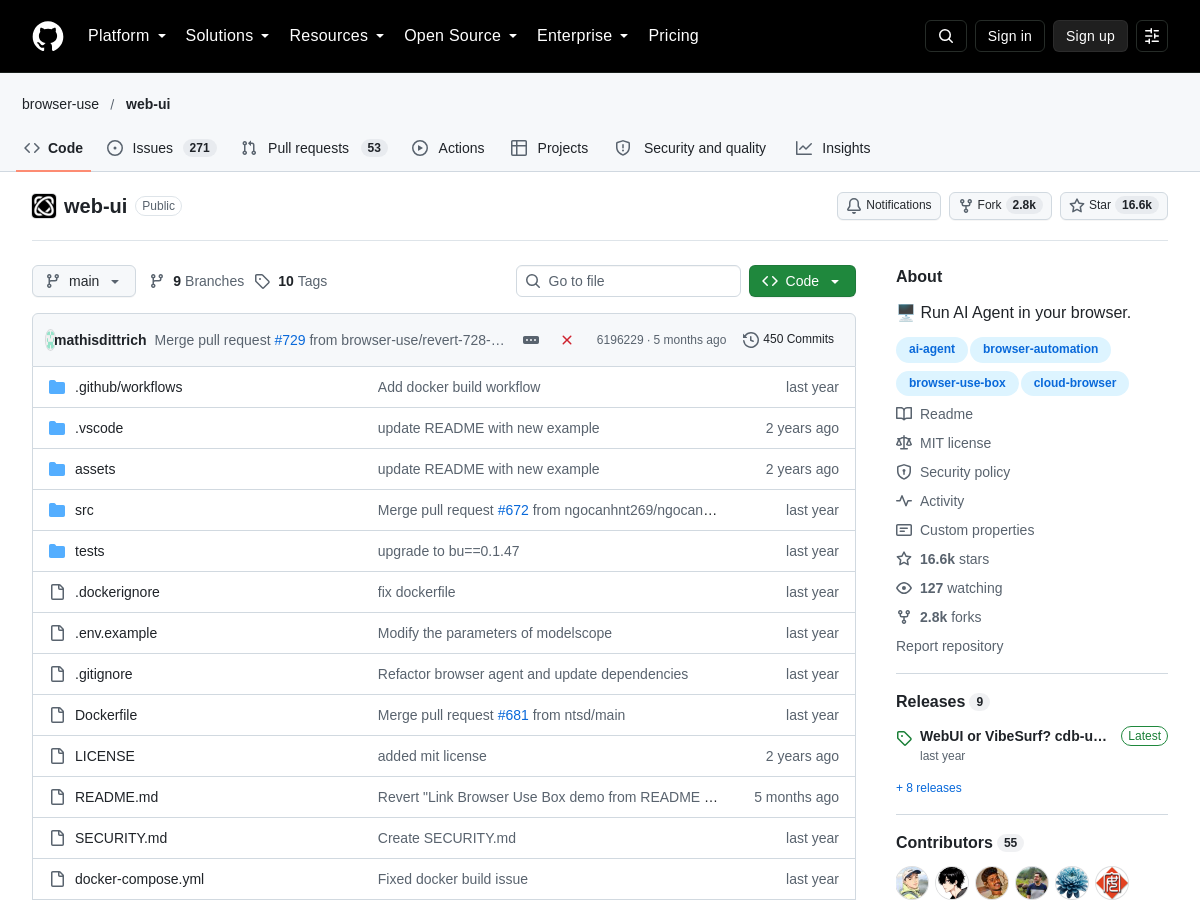
Screenshot of Web Ui
Web Ui
AI Agents Open Source

The Web UI tool is a browser-based interface that allows users to run AI agents directly in their browser. This tool is built on top of the browser-use project, which provides a foundation for browser automation and AI-powered interactions. The Web UI tool provides a user-friendly interface for interacting with AI agents, making it easier for users to leverage the power of AI in their daily browsing activities. The tool is open-source and has a large community of contributors, with over 16,000 stars on GitHub. The Web UI tool is designed to be highly customizable, with a range of configuration options and extensions available. The tool also has a strong focus on security, with a dedicated security policy and regular updates to ensure the latest security patches are applied. Overall, the Web UI tool is a powerful and flexible solution for anyone looking to harness the power of AI in their browser.

Solves

The Web UI tool solves the problem of making AI agents accessible and usable for non-technical users. By providing a browser-based interface, the tool makes it easy for anyone to interact with AI agents, without requiring extensive technical knowledge or expertise. This makes it possible for a wider range of users to leverage the power of AI, from casual browsers to professional developers. The tool also solves the problem of fragmentation, by providing a standardized interface for interacting with AI agents across different browsers and platforms.

Screenshot of Hindsight
Hindsight
AI Agents Open Source

Hindsight is an open-source, self-learning memory layer designed for AI agents. It enables agents to store, retrieve, and update information from past interactions, giving them a persistent, evolving memory. Unlike static memory solutions, Hindsight continuously learns from new data, using vector embeddings to capture semantic meaning and context. It integrates seamlessly with popular agent frameworks and vector stores, allowing developers to add memory capabilities with minimal code. The system supports various memory types such as short-term, long-term, and episodic memory, and can adapt to user preferences and behavioral patterns over time. At its core, Hindsight uses vector similarity search to recall relevant past experiences, which are then fed into the agent's decision-making process. The memory is not just a passive store; it actively learns by reinforcing successful actions and forgetting irrelevant information. This learning mechanism improves the agent's performance in conversational tasks, task planning, and personalized interactions. Hindsight can be self-hosted and is designed to be lightweight, with a simple API for creating, reading, updating, and deleting memory entries. Key features include: automatic memory consolidation, where important memories are strengthened; forgetting mechanisms to manage memory capacity; multi-user and multi-agent memory separation; and customizable retrieval strategies. The library is built with Python and leverages state-of-the-art embedding models and vector databases like Chroma, FAISS, or Pinecone. It also supports adding metadata and filtering to refine memory searches. Hindsight aims to solve the problem of agent amnesia in AI applications, making conversations more coherent and tasks more efficient. By remembering past interactions, agents can avoid repeating mistakes, recall user preferences, and build a deeper understanding of the user over time. This results in more human-like interactions and higher user satisfaction.

Solves

Many AI agents and chatbots suffer from a lack of long-term memory, forgetting user preferences, past conversations, and outcomes of previous actions. This leads to repetitive questioning, inconsistent behavior, and poor user experience. Hindsight solves this by providing a robust, self-learning memory system that allows agents to store and recall relevant past experiences. It enables agents to remember user-specific details, learn from successful interactions, and adapt over time, resulting in more intelligent, context-aware, and personalized responses.

Screenshot of Ai Pdf Chatbot Langchain
Ai Pdf Chatbot Langchain
AI Agents Open Source

This open-source project provides a chatbot agent capable of understanding and answering questions from PDF documents. Built on LangChain and LangGraph, it combines large language models with document retrieval to deliver context-aware responses. The system ingests PDF files, extracts text, and uses vector embeddings to enable semantic search over the document content. It then leverages LangGraph to orchestrate the conversational flow, allowing for multi-turn interactions and follow-up questions. The project is designed to be a starting point for developers who want to build document-based AI assistants without dealing with the underlying complexity of RAG pipelines. It can be self-hosted and customized to fit specific needs.

Solves

It solves the problem of quickly extracting information from PDF documents through natural language, eliminating the need to manually search through lengthy files. It provides a conversational interface where users can ask questions and receive accurate answers based on the document's content.

Screenshot of Maxun
Maxun
Code Open Source

Maxun is an open-source, no-code platform designed to simplify web scraping, crawling, and data extraction. It provides a visual interface that allows users to build scrapers without writing any code, turning any website into a structured API in minutes. The platform supports complex scenarios such as handling dynamic content, pagination, authentication, and JavaScript-rendered pages. It also incorporates AI-powered extraction to intelligently parse unstructured data from web pages, making it suitable for a wide range of data collection tasks. Being self-hosted, Maxun gives users full control over their data and infrastructure, ensuring privacy and compliance. It is built to be extensible and can be integrated into existing workflows via its API, enabling automated data pipelines.

Solves

Maxun solves the challenge of extracting structured data from websites without requiring programming skills, enabling rapid creation of web data APIs for business intelligence, research, and automation.

Screenshot of ChatALL
ChatALL
LLM Open Source

ChatALL is an open-source desktop application that enables users to interact with multiple large language models (LLMs) simultaneously. Instead of switching between different chatbot interfaces, users can enter a single prompt and receive responses from various AI models side by side in a unified window. The tool supports a wide range of models, including ChatGPT, Bing Chat, Google Bard, Anthropic Claude, Alpaca, Vicuna, ChatGLM, MOSS, iFLYTEK Spark, Wenxin Yiyan, and many others, allowing for quick comparison and discovery of the best answer. The application is built to be cross-platform, running on Windows, macOS, and Linux, making it accessible to a broad user base. Users need to provide their own API keys for proprietary services, but free and open-source models can often be used without additional costs, provided they are self-hosted or publicly available. ChatALL's interface is designed for ease of use, with a simple chat input box and multiple response panels that update in real time as each model generates its output. ChatALL is particularly useful for researchers, developers, and AI enthusiasts who want to benchmark model performance, test prompt variations, or simply explore the strengths and weaknesses of different LLMs. By aggregating answers, it helps users identify inconsistencies, validate facts, or find more creative or accurate responses. The project is actively maintained on GitHub, welcoming community contributions to add new model integrations and improve functionality.

Solves

ChatALL addresses the inefficiency of querying multiple AI chatbots individually by providing a single interface to send a prompt to several LLMs at once and compare their responses side by side. This saves time and reduces the friction of toggling between different web apps or API calls, making it easier to discover the best answer, evaluate model quality, or gain diverse perspectives.

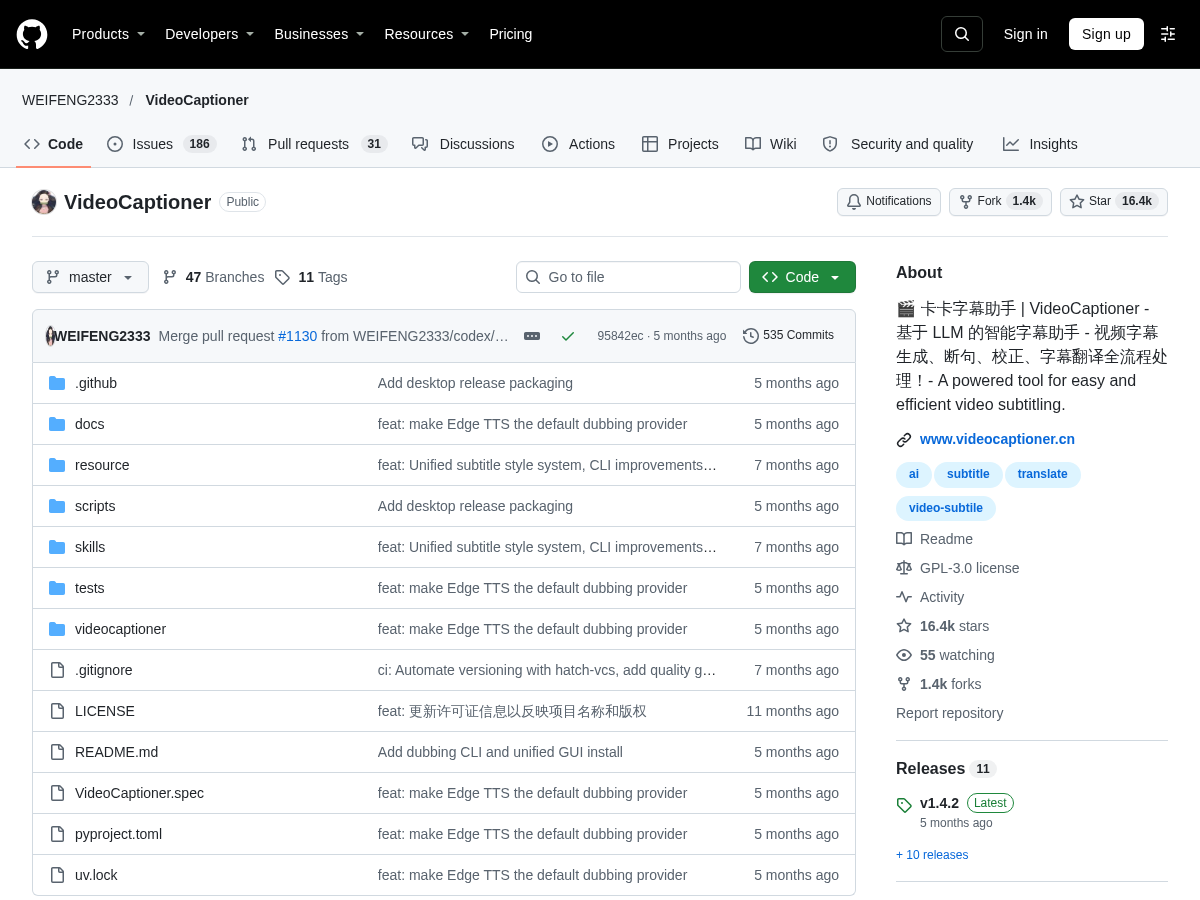
Screenshot of VideoCaptioner
VideoCaptioner
LLM Open Source

VideoCaptioner is an open-source tool designed to simplify the process of video subtitling. It utilizes Large Language Models (LLMs) to generate, correct, and translate subtitles, making it a comprehensive solution for video creators and editors. The tool supports various subtitle formats, including SRT, VTT, and ASS, and allows users to customize the style and appearance of their subtitles. VideoCaptioner also features a command-line interface (CLI) for batch processing and automation. With its advanced features and user-friendly interface, VideoCaptioner is an ideal solution for individuals and organizations looking to streamline their video subtitling workflow. The project is actively maintained and updated, with a strong focus on community involvement and contribution. VideoCaptioner is available on GitHub, where users can access the source code, report issues, and contribute to the project's development. The tool's documentation provides detailed instructions on how to use and customize the tool, making it accessible to users with varying levels of technical expertise. Overall, VideoCaptioner is a powerful and flexible tool that can help users save time and effort in the video subtitling process. The tool's capabilities can be further extended through its API, which allows developers to integrate VideoCaptioner into their own applications and workflows. By leveraging the power of LLMs and community-driven development, VideoCaptioner is poised to become a leading solution for video subtitling and captioning needs. The project's commitment to open-source principles and community involvement ensures that it will continue to evolve and improve over time, addressing the needs of its users and the broader video creation community. With its robust feature set, active development, and user-friendly interface, VideoCaptioner is an excellent choice for anyone looking to simplify and streamline their video subtitling workflow.

Solves

Video creators and editors often struggle with the time-consuming and labor-intensive process of adding subtitles to their videos. This can be a significant challenge, particularly for those who need to process large volumes of video content. VideoCaptioner solves this problem by providing an automated and efficient solution for video subtitling, utilizing LLMs to generate, correct, and translate subtitles. By streamlining the subtitling process, VideoCaptioner saves users time and effort, allowing them to focus on other aspects of video production and editing. The tool's advanced features and customization options also enable users to produce high-quality subtitles that meet their specific needs and requirements.

Screenshot of Ai Website Cloner Template
Ai Website Cloner Template
AI Agents Open Source

Ai Website Cloner Template is an open-source template hosted on GitHub that enables users to clone any website with a single command by leveraging AI coding agents. It provides a starting point for automating website replication using modern AI-driven development workflows. The template likely includes configuration files, scripts, and documentation to interact with AI coding agents, abstracting away the complexity of manually instructing these agents. As an open-source project, it is intended to be forked, customized, and extended by developers who want to quickly duplicate existing websites for prototyping, testing, or learning purposes.

Solves

Traditional website cloning often involves manual scraping, asset downloading, and code reconstruction, which is time-consuming and error-prone. This template addresses that by using AI coding agents to automate the cloning process, allowing developers to replicate a website's structure and code with minimal manual effort.

Screenshot of Reve Image
Reve Image
Image Gen Freemium

Reve Image is an AI-powered image generation platform that introduces Reve 2.0, a model designed to provide fine-grained creative control through a novel code-based intermediate representation. Unlike traditional text-to-image models that directly generate pixels from prompts, Reve separates the planning and rendering phases. The planning stage creates a detailed layout expressed as code, which specifies composition, relationships, style, text, and other elements. This code can be inspected, edited, and manipulated by humans or AI agents before rendering, enabling precise adjustments and iterative refinement. The rendering architecture then generates images at native 4K x 4K resolution (16 megapixels), making them suitable for high-quality print workflows without the need for a separate upscaling step. Reve 2.0 leverages a hybrid approach that combines the intelligence of autoregressive models for planning with the aesthetic capabilities of diffusion models for rendering. By using code as the intermediate representation, the platform allows for agent-native editing, where AI agents can reason about and modify the image layout directly. This design supports creative collaboration between humans and AI, moving beyond imprecise natural language instructions. Users can engage in a highly iterative process, viewing and adjusting the planned layout before finalizing the image, thus eliminating the unpredictability often associated with AI generation. Key features include: native 4K resolution output, fast rendering speeds, a clear separation of planning and rendering for enhanced controllability, agent-native editing capabilities, and support for complex, detailed compositions. The platform is designed for professionals who require high precision and quality, such as designers and content creators, and it aims to make AI image generation more predictable and collaborative.

Solves

Traditional AI image generators often operate like 'fireworks'—unpredictable and difficult to steer, with limited control over specific elements and a frustrating upscaling process that can alter details. Reve Image solves this by introducing a code-based intermediate representation that separates planning from rendering. This allows users to define, inspect, and edit the exact composition and attributes of an image before high-resolution generation, ensuring what they see during iteration is exactly what they get in the final output. It eliminates the need for upscaling by generating directly at 4K resolution and enables AI agents to collaborate meaningfully, addressing the imprecision and opacity of text-only interfaces.

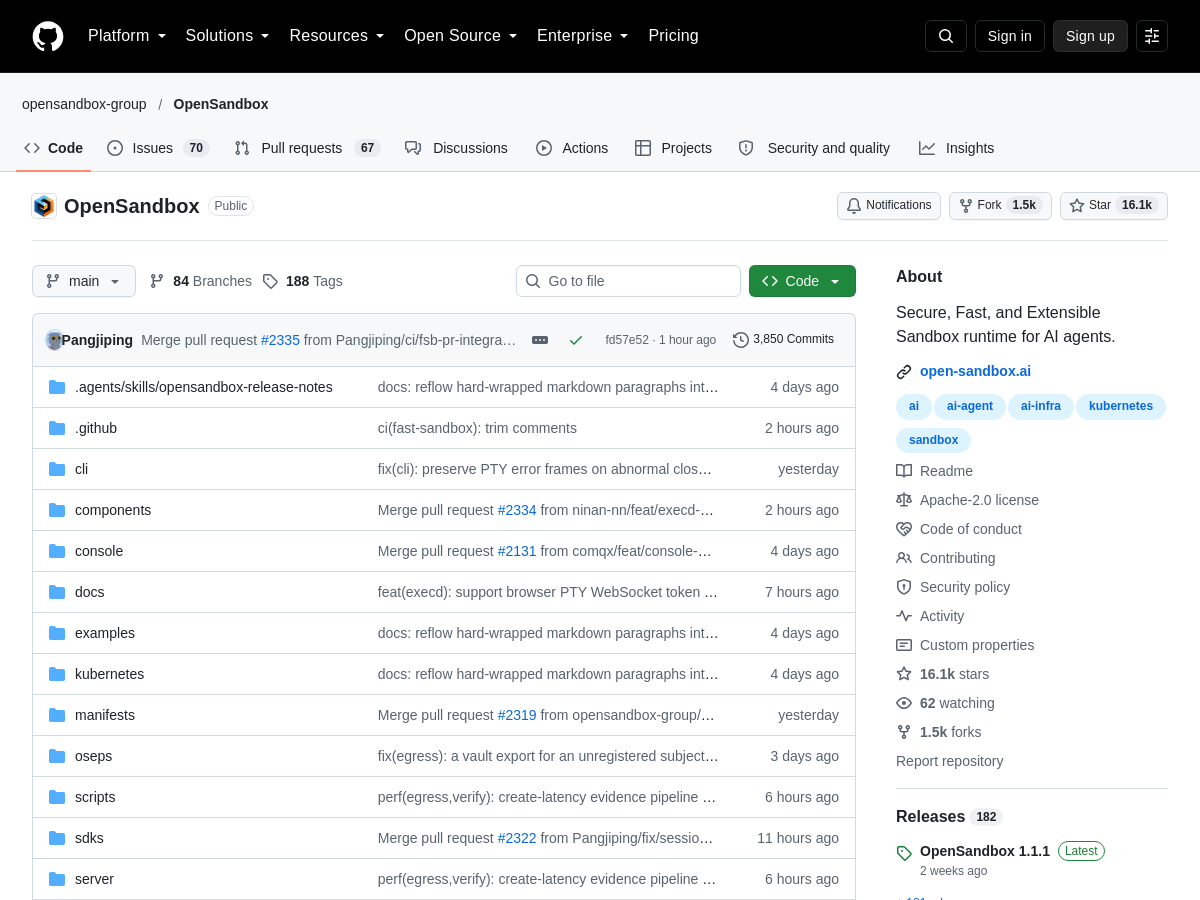
Screenshot of OpenSandbox
OpenSandbox
AI Agents Open Source

OpenSandbox is a secure, fast, and extensible sandbox runtime for AI agents. It provides a runtime environment for AI agents to execute in a secure and isolated manner. The project is open-source and has a large community of contributors. OpenSandbox is designed to be highly customizable and extensible, allowing users to modify and extend its functionality to suit their specific needs. The project has a strong focus on security, with features such as secure authentication and authorization, as well as support for secure communication protocols. OpenSandbox is also highly scalable, making it suitable for large-scale deployments. The project has a comprehensive documentation set, including a getting started guide, API documentation, and a contributor's guide. Overall, OpenSandbox is a powerful and flexible sandbox runtime for AI agents that is well-suited for a wide range of applications. OpenSandbox has a number of key features, including support for multiple AI frameworks, a highly customizable architecture, and a strong focus on security and scalability. The project is highly extensible, with a large number of plugins and extensions available. OpenSandbox is also highly performant, with support for high-performance computing and low-latency communication. The project has a large and active community of users and contributors, with a number of community-driven initiatives and projects. OpenSandbox is widely used in a number of industries, including finance, healthcare, and technology. The project has a number of use cases, including AI model training, AI model deployment, and AI-powered automation. OpenSandbox is also used in a number of research applications, including natural language processing, computer vision, and robotics. Overall, OpenSandbox is a highly versatile and powerful sandbox runtime for AI agents that is well-suited for a wide range of applications.

Solves

OpenSandbox solves the problem of providing a secure and scalable runtime environment for AI agents. Many organizations are looking to deploy AI models in production, but are faced with the challenge of providing a secure and scalable environment for these models to run in. OpenSandbox provides a solution to this problem by providing a highly customizable and extensible sandbox runtime that can be used to deploy AI models in a secure and scalable manner. The project's focus on security and scalability makes it an attractive solution for organizations looking to deploy AI models in production. Additionally, OpenSandbox's support for multiple AI frameworks and highly customizable architecture makes it a versatile solution that can be used in a wide range of applications.

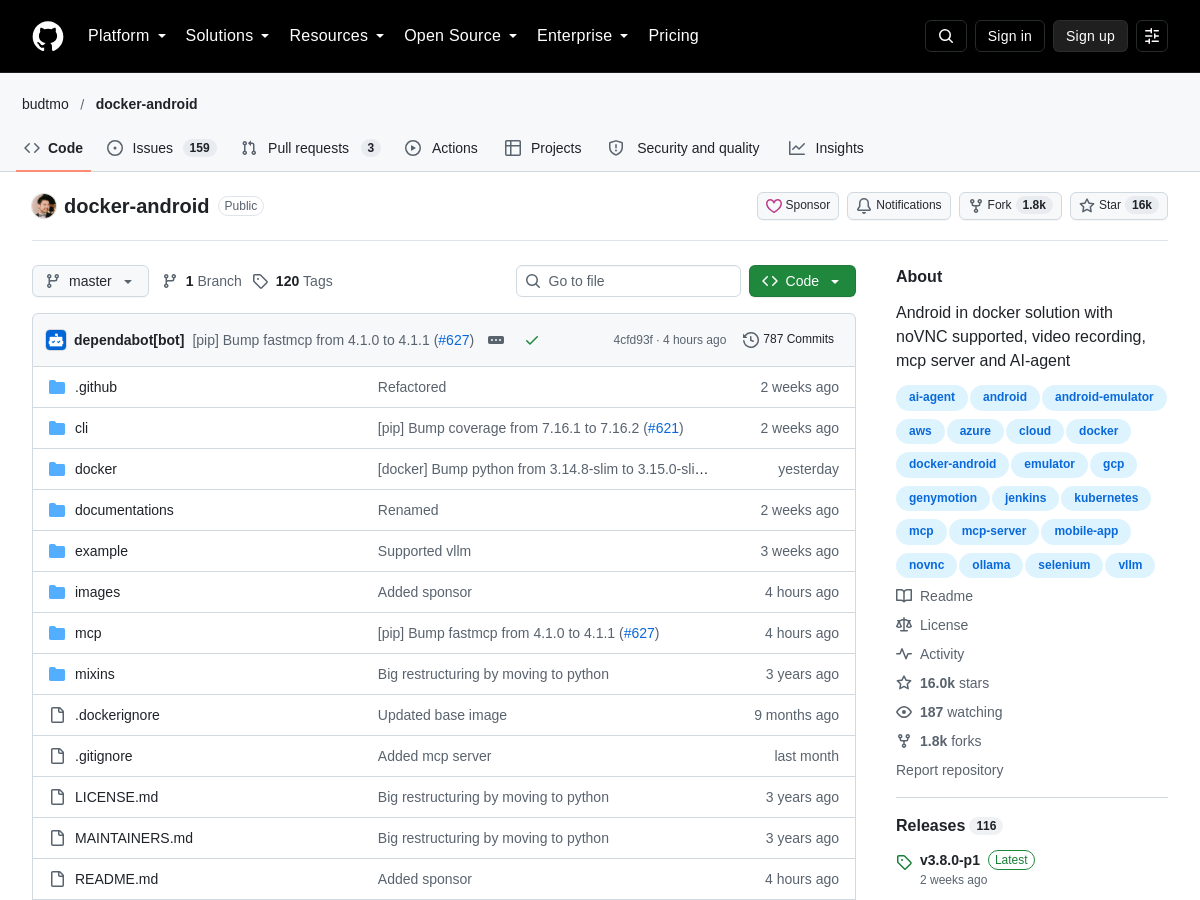
Screenshot of Docker Android
Docker Android
AI Agents Open Source

Docker Android is an open-source project that provides an Android environment in a Docker container. It supports noVNC, video recording, and MCP server, making it a versatile tool for Android development and testing. The project utilizes AI-agent technology to enhance its functionality. With Docker Android, users can create and manage Android environments easily, which is beneficial for developers, testers, and researchers. The project is actively maintained, with regular updates and contributions from the community. Docker Android can be used for various purposes, such as testing Android applications, debugging, and research. It is compatible with multiple platforms, including AWS, Azure, and Google Cloud Platform. The project's documentation and code are available on GitHub, making it accessible to anyone interested in using or contributing to the project.

Solves

Developers and testers face challenges when creating and managing Android environments for testing and development purposes. Docker Android solves this problem by providing a containerized Android environment that is easy to set up and manage. It eliminates the need for manual configuration and reduces the complexity of Android environment creation, making it an ideal solution for those who need to test and debug Android applications quickly and efficiently.

Screenshot of WeKnora
WeKnora
Evaluation Open Source

WeKnora is an open-source LLM knowledge platform developed by Tencent. It is designed to transform raw documents into a queryable Retrieval-Augmented Generation (RAG) system, enabling users to ask questions and get contextually relevant answers from their own data. The platform also functions as an autonomous reasoning agent, capable of multi-step reasoning over the knowledge base, and as a self-maintaining wiki that organizes and updates content automatically. WeKnora supports the full pipeline of document ingestion, text extraction, chunking, embedding, and vector storage, integrating with popular large language models. It provides a self-hosted solution that gives organizations full control over their data and infrastructure, while offering a modular architecture for customization. The tool is suitable for building internal knowledge bases, customer support bots, and research assistants. With WeKnora, users can turn scattered documents into a centralized, intelligent knowledge repository. Its open-source nature permits community contributions and enterprise extensions, making it a flexible foundation for AI-powered knowledge management.

Solves

WeKnora addresses the challenge of extracting actionable knowledge from unstructured documents. It automates the conversion of raw text into a structured, queryable knowledge base, eliminating manual organization and enabling natural language questions to be answered accurately using retrieval-augmented generation and autonomous reasoning.

Screenshot of Awesome Gpt Image 2 API And Prompts
Awesome Gpt Image 2 API And Prompts
Image Gen Open Source

Awesome GPT-Image-2 API and Prompts is a curated collection of resources, examples, and prompt engineering techniques for using the GPT-Image-2 API. It aims to help developers and creators understand how to generate images using the GPT-Image-2 model by providing a centralized list of API documentation links, code snippets, and prompt examples. The repository includes community-contributed prompts, integration guides, and best practices for interacting with the GPT-Image-2 API. It serves as a starting point for those looking to explore the capabilities of the image generation model, whether for prototyping, building applications, or conducting research.

Solves

It solves the problem of scattered information about GPT-Image-2 by aggregating API references, prompt examples, and tutorials into a single, easy-to-navigate list, saving users time and effort in discovering how to use the model effectively.

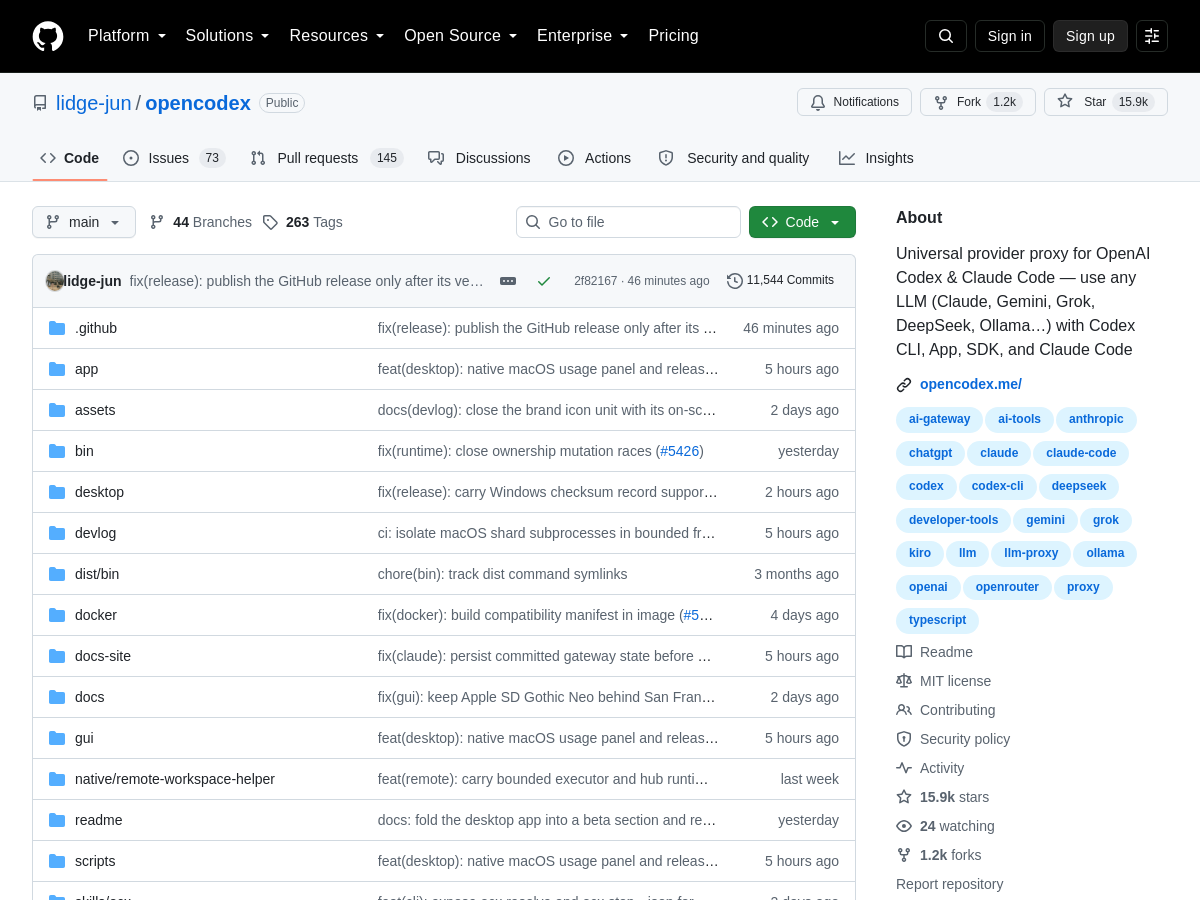
Screenshot of Opencodex
Opencodex
Dev Tools Open Source

Opencodex is an open-source universal provider proxy designed for OpenAI Codex and Claude Code. It enables the Codex CLI, Codex App, Codex SDK, and Claude Code to work with any large language model provider rather than being limited to a single vendor. Supported providers mentioned in its description include Claude, Gemini, Grok, DeepSeek, and Ollama, among others. The project acts as an intermediary layer that translates requests from Codex- and Claude Code-compatible clients into calls to different LLM APIs. This allows developers to switch between cloud and local models, such as Ollama for local inference, without modifying their existing coding agent workflows. Opencodex is distributed as open-source software on GitHub. By decoupling the coding assistant interface from the underlying model provider, Opencodex helps reduce vendor lock-in and gives users more control over cost, privacy, and model choice. The repository is hosted at github.com/lidge-jun/opencodex.

Solves

Coding assistants like OpenAI Codex and Claude Code typically require using their own proprietary models, making it difficult to switch to alternative LLMs such as Gemini, Grok, DeepSeek, or local models via Ollama. Opencodex solves this by providing a universal proxy that lets these tools route requests to any supported LLM provider, reducing vendor lock-in and enabling flexible model selection.

Screenshot of Skaffold
Skaffold
Dev Tools Open Source

Skaffold is an open-source command-line tool developed under the GoogleContainerTools organization that simplifies and accelerates the development workflow for Kubernetes applications. It automates the inner development loop by watching source code changes, building container images, pushing them to a registry, and deploying the updated application to a Kubernetes cluster. Skaffold supports a variety of builders such as Docker, Jib, and Buildpacks, and deployers including kubectl, Helm, and Kustomize, making it adaptable to many existing workflows. The tool uses a declarative configuration file (skaffold.yaml) to define build, test, and deploy stages, and it supports environment-specific profiles to manage different deployment targets like local clusters, staging, or production. Skaffold can run in both development mode with continuous rebuild and redeploy, and in single-run mode suitable for CI/CD pipelines. It also provides utilities for log tailing, port forwarding, and applying resource manifests. Skaffold aims to eliminate the tedious manual steps between code changes and seeing the application live in Kubernetes, thereby reducing developer feedback time and increasing productivity. It integrates seamlessly with the broader Kubernetes ecosystem and is widely adopted by teams practicing cloud-native development.

Solves

Skaffold solves the problem of slow, manual, and error-prone development loops when building and deploying applications to Kubernetes. It automates build, push, and deploy steps triggered by code changes, providing immediate feedback and reducing context switching between local code and cluster state.

Screenshot of Dvc
Dvc
Dev Tools Open Source

DVC (Data Version Control) is an open-source tool for data versioning, ML pipeline management, and experiment tracking. It operates similarly to Git but is optimized for large datasets, machine learning models, and binary files. DVC integrates with existing Git repositories to version control data, code, and model files using metafiles that point to remote storage, allowing users to track data changes alongside code without bloating the Git history. Remote storage backends include Amazon S3, Google Cloud Storage, Azure Blob Storage, HDFS, and local file systems. DVC introduces a declarative YAML-based pipeline definition (`dvc.yaml`) that captures the stages of an ML project, including dependencies, commands, and outputs. This ensures full reproducibility: running `dvc repro` will execute only the necessary stages, caching intermediate results to save time. Experiment tracking is natively supported with `dvc experiments`, which allows users to modify parameters, run experiments, and compare metrics across iterations. DVC also supports live metrics visualization and integration with tools like TensorBoard. Collaboration is facilitated through shared remote storage and metadata stored in Git. Teams can clone a repository, pull data with `dvc pull`, and reproduce experiments seamlessly. DVC's Python API enables advanced programmatic control, but its primary interface is the command line. It is widely adopted in data science and ML engineering for managing the full lifecycle of data-centric projects.

Solves

Data scientists and ML engineers often struggle with versioning large datasets, reproducing experiments, and sharing data and models across teams. Traditional version control systems like Git cannot handle massive files efficiently. DVC solves this by providing a Git-like interface for data versioning stored externally, ensuring that every experiment or model training can be traced back to the exact data and code version used. It also automates pipeline execution and tracks experiment metrics, making machine learning projects more reproducible, collaborative, and manageable.

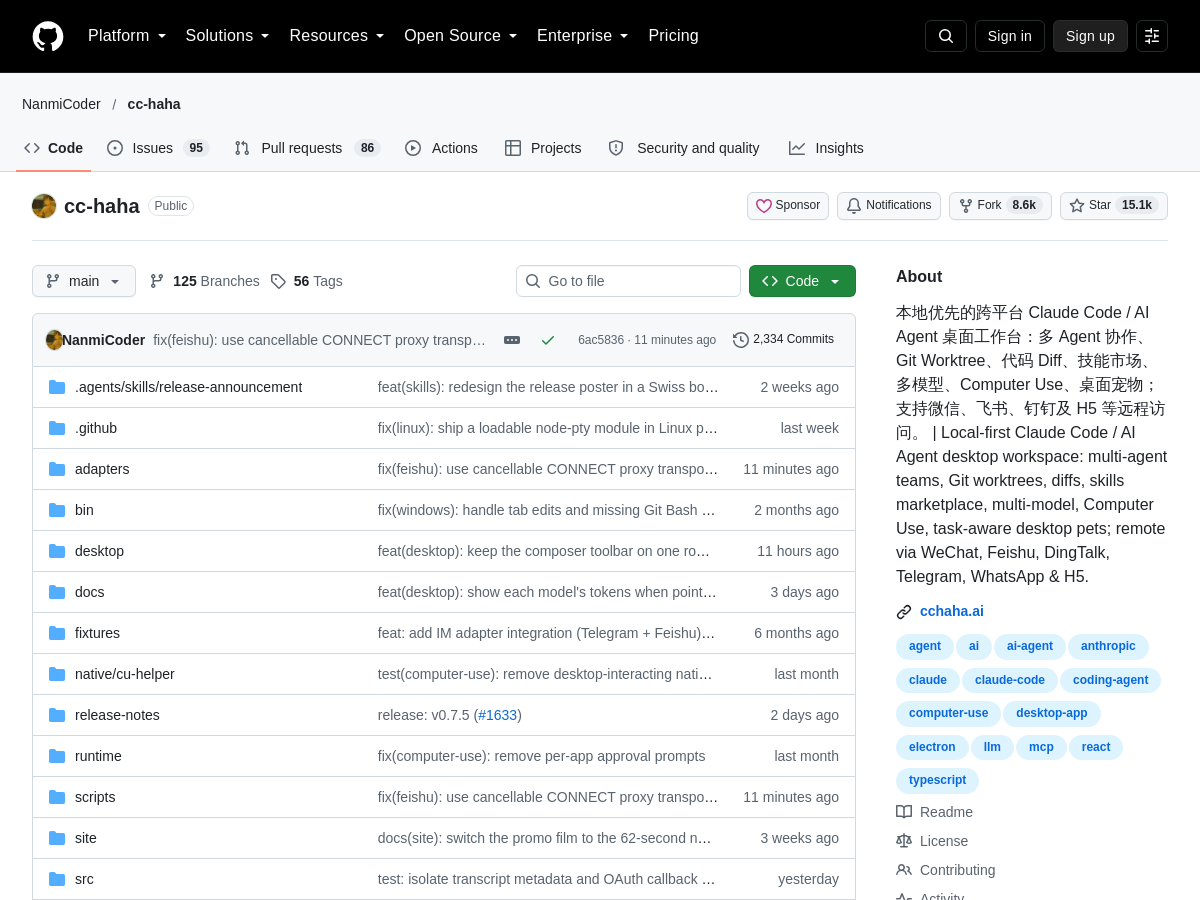
Screenshot of Cc Haha
Cc Haha
LLM Open Source

Cc Haha is a local-first, cross-platform Claude Code / AI Agent desktop workspace that supports multi-agent teams, Git worktrees, code diffs, skills marketplace, multi-model, Computer Use, and task-aware desktop pets. It also allows for remote access via WeChat, Feishu, DingTalk, Telegram, WhatsApp, and H5. The application is built using Electron and React, and it has a wide range of features, including a terminal panel, code editing, and project management. Cc Haha is designed to be a comprehensive desktop workspace for developers, allowing them to manage their code, collaborate with others, and access various tools and services from a single interface. The application has a large community of users and contributors, with over 15,000 stars on GitHub and a active discussion forum. Cc Haha is also highly customizable, with a wide range of configuration options and a large collection of plugins and extensions available. Overall, Cc Haha is a powerful and flexible desktop workspace that is well-suited for developers who need a comprehensive and customizable tool for managing their code and collaborating with others. The application is constantly being updated and improved, with new features and bug fixes being added regularly. The development team is also very active, with a strong focus on community engagement and feedback. This has helped to build a large and active community of users and contributors, who are able to provide support and feedback to each other. Cc Haha is a great example of how open-source software can be used to create a high-quality and widely-used application, and it has the potential to become a leading desktop workspace for developers in the future. The application's local-first approach also ensures that users have full control over their data and can work offline, making it a great option for developers who need to work on sensitive or confidential projects. Additionally, Cc Haha's support for multiple platforms, including Windows, macOS, and Linux, makes it a great option for developers who need to work across different operating systems.

Solves

Cc Haha solves the problem of providing a comprehensive and customizable desktop workspace for developers, allowing them to manage their code, collaborate with others, and access various tools and services from a single interface. It also addresses the issue of data control and security, by providing a local-first approach that ensures users have full control over their data and can work offline. This makes it a great option for developers who need to work on sensitive or confidential projects, and who require a high level of control and security. By providing a wide range of features and configuration options, Cc Haha is able to meet the diverse needs of developers, and provide a flexible and customizable solution that can be tailored to their specific needs.

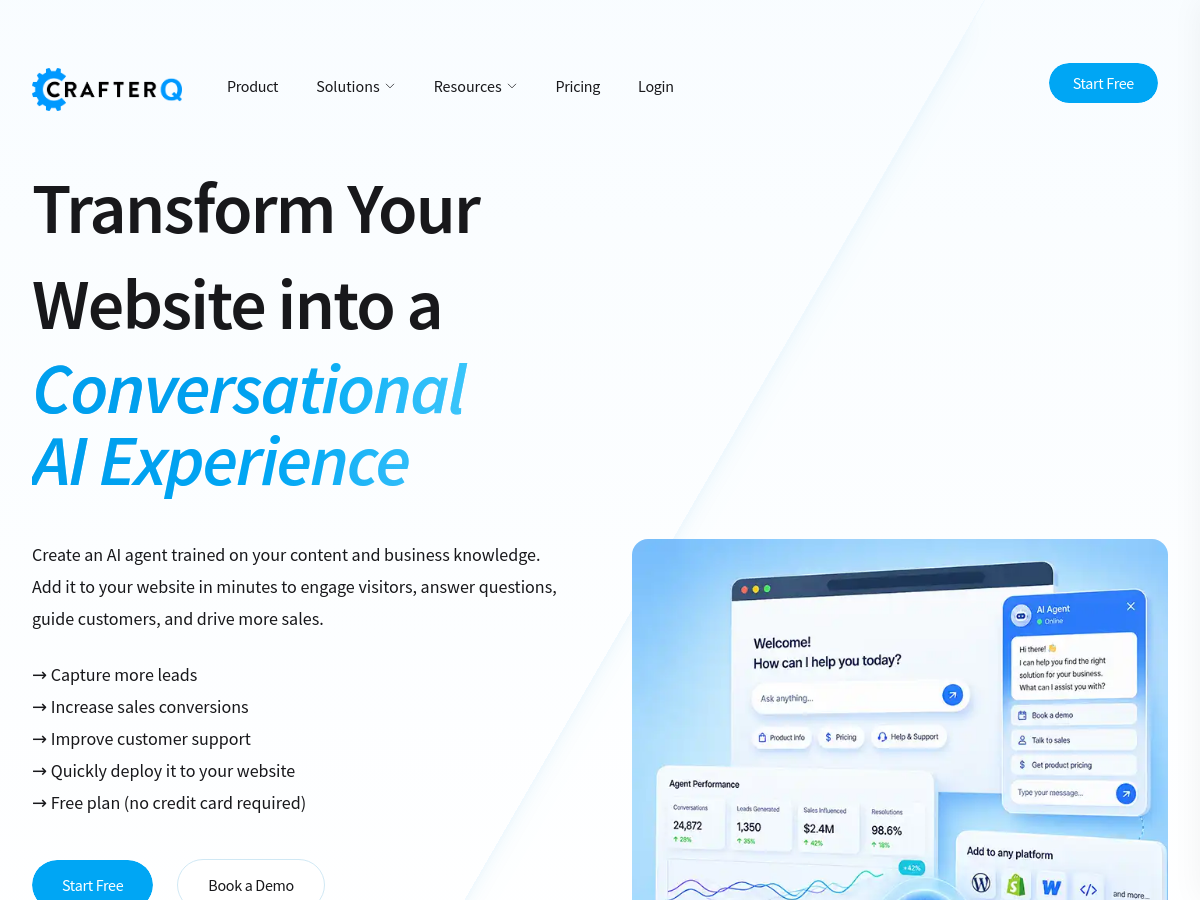
Screenshot of CrafterQ
CrafterQ
Chatbots Free

CrafterQ is a SaaS platform that enables businesses to create and deploy AI-powered agents on their websites. These agents engage visitors, answer questions, and guide them towards meaningful outcomes such as lead generation, customer support, or online sales. CrafterQ uses advanced AI to understand natural language and retrieve information from a business's website, documentation, FAQs, and files to deliver accurate and conversational responses. The platform allows businesses to train their AI agents on various content types, including website content, documentation, knowledge bases, and custom question-and-answer pairs. CrafterQ's AI agents can be deployed on any website with a simple script, and the platform provides enterprise-grade security and independently audited controls to protect business data. With CrafterQ, businesses can create and deploy their first AI agent in just a few minutes, and the platform offers a free plan with no credit card required. CrafterQ's AI agents can be used for various purposes, including sales, support, and e-commerce, and the platform provides a range of resources, including documentation, a trust center, and a partner program. Overall, CrafterQ is a powerful tool for businesses looking to enhance their website experience and improve customer engagement through conversational AI. The platform's advanced AI capabilities, ease of deployment, and robust security features make it an attractive solution for businesses of all sizes. By leveraging CrafterQ, businesses can provide their customers with a more personalized and interactive experience, ultimately driving more sales, improving customer satisfaction, and increasing revenue. With its user-friendly interface and comprehensive features, CrafterQ is an ideal solution for businesses looking to stay ahead of the curve in the rapidly evolving world of conversational AI.

Solves

CrafterQ solves the problem of businesses struggling to engage their website visitors and provide them with a personalized experience. Many businesses have websites that are passive and do not effectively engage visitors, leading to high bounce rates and low conversion rates. CrafterQ's AI-powered agents address this problem by providing visitors with a conversational experience that is tailored to their needs and interests. By using CrafterQ, businesses can increase visitor engagement, improve customer satisfaction, and drive more sales and revenue. Additionally, CrafterQ's AI agents can help businesses to automate their customer support and improve their overall customer experience, leading to increased loyalty and retention.

Screenshot of Rowboat
Rowboat
AI Agents Open Source

Rowboat is an open-source AI coworker designed to assist users with tasks by leveraging large language models and persistent memory. It aims to provide a more context-aware and personalized AI assistant that remembers past interactions and user preferences, enabling more coherent and efficient collaboration. The project is hosted on GitHub under rowboatlabs/rowboat and is available for self-hosting, allowing developers to deploy their own instance and integrate it into their workflows. It falls under the AI Agents category and is free to use under an open-source license. The tool likely supports various integrations and can be extended or customized, but specific features and APIs are documented in the repository.

Solves

Rowboat addresses the challenge of AI assistants that lack memory and context between sessions. By providing persistent memory, it enables more coherent, personalized, and efficient task automation and collaboration, reducing the need to repeatedly provide context.

Screenshot of Public Api Lists
Public Api Lists
Dev Tools Open Source

Public API Lists is an open-source, community-maintained curated collection of free public APIs organized into 48 categories. The project is hosted on GitHub and offers a searchable interface, making it easy for developers to browse and filter APIs by category, keyword, or tag. The list is designed to be a comprehensive resource for discovering public APIs for prototyping, learning, or building applications. In addition to the web-based list, the project provides a free JSON API that exposes the entire collection programmatically. This allows developers to integrate the API list into their own tools, dashboards, or automated workflows. The JSON API is updated along with community contributions, ensuring the data remains current. Because the project is open source, anyone can contribute by adding new APIs, correcting outdated entries, or improving categorization. The repository is maintained by a community of developers and is free to use for personal and commercial projects. Overall, it serves as a convenient, centralized starting point for developers seeking free public APIs.

Solves

Developers often waste time searching scattered sources for public APIs. Public API Lists centralizes thousands of free APIs into one searchable, categorized, community-maintained repository, and also offers a JSON API for programmatic access, reducing discovery time and effort.

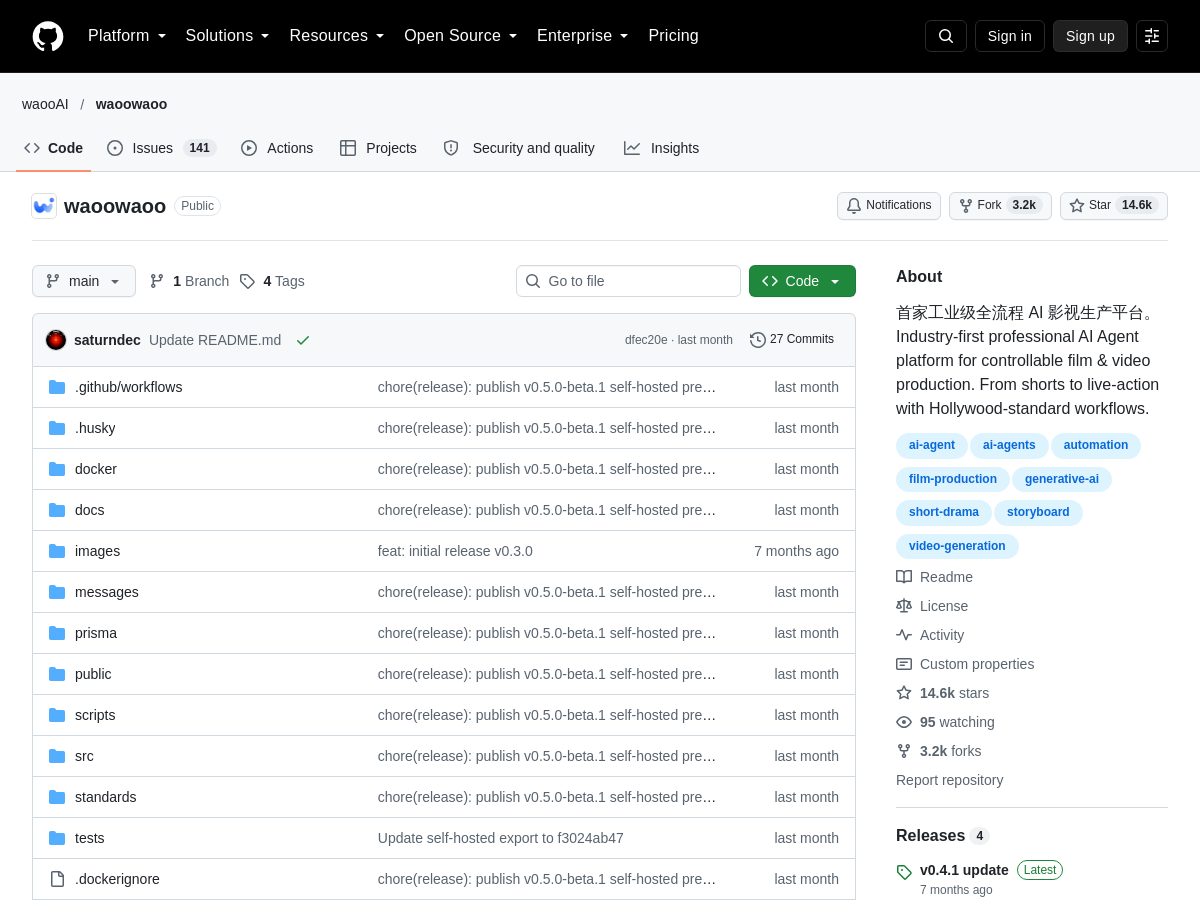
Screenshot of Waoowaoo
Waoowaoo
AI Agents Open Source

Waoowaoo is an industry-first professional AI Agent platform designed for controllable film and video production. It allows users to create content ranging from shorts to live-action films with Hollywood-standard workflows. The platform utilizes generative AI and automation to streamline the production process, making it more efficient and accessible. With its open-source nature, Waoowaoo encourages community involvement and customization, allowing developers to contribute to and modify the platform to suit their specific needs. The project includes a variety of tools and features, such as storyboard creation, video generation, and AI-powered editing, all of which are designed to work together seamlessly to produce high-quality video content. Waoowaoo's goal is to democratize access to professional-grade video production, enabling creators of all levels to produce engaging and polished content without the need for extensive resources or expertise. By leveraging AI and machine learning, Waoowaoo aims to revolutionize the film and video production industry, making it more inclusive, efficient, and innovative. The platform's architecture is modular, allowing for easy integration with other tools and services, and its open-source license ensures that it remains adaptable and community-driven. Overall, Waoowaoo has the potential to significantly impact the future of video production, enabling new forms of creative expression and collaboration. As the project continues to evolve, it is likely to incorporate additional features and functionalities, further solidifying its position as a leading platform for AI-powered video production. With its strong foundation in AI and automation, Waoowaoo is well-positioned to drive innovation in the industry, and its open-source nature ensures that it will remain a collaborative and community-driven effort.

Solves

The problem that Waoowaoo solves is the difficulty and expense associated with producing high-quality video content, particularly for independent creators and small production companies. Traditional video production methods often require significant resources, including expensive equipment, software, and personnel, making it inaccessible to many. Waoowaoo addresses this issue by providing an AI-powered platform that streamlines the production process, reducing the need for extensive resources and expertise. By democratizing access to professional-grade video production, Waoowaoo enables creators of all levels to produce engaging and polished content, thereby leveling the playing field and promoting greater diversity and innovation in the industry.

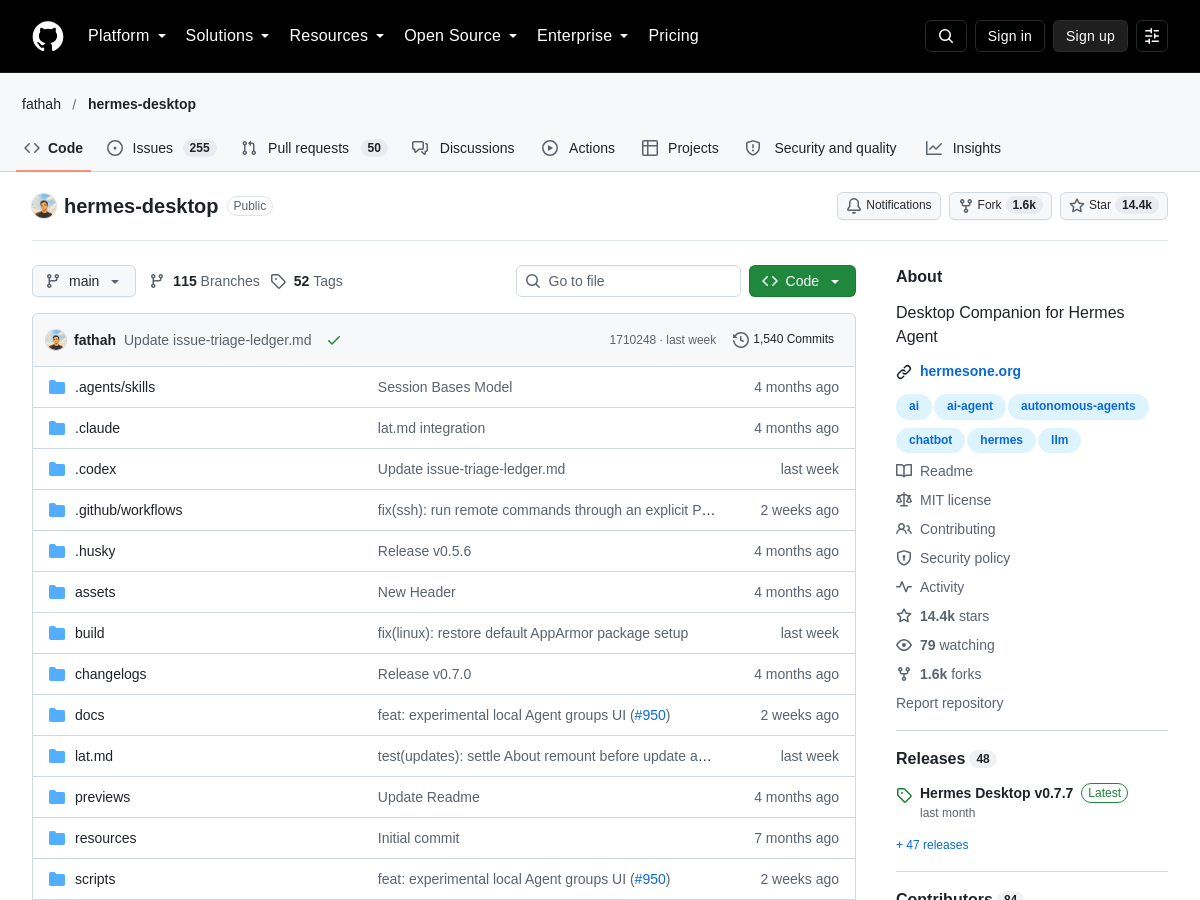
Screenshot of Hermes Desktop
Hermes Desktop
LLM Open Source

Hermes Desktop is a desktop companion for Hermes Agent, designed to provide a user-friendly interface for interacting with the Hermes protocol. The application is built on top of the Hermes protocol, which enables autonomous agents to communicate and collaborate with each other. Hermes Desktop provides a range of features, including a graphical user interface, support for multiple agents, and integration with other tools and services. The application is open-source and available on GitHub, where users can contribute to its development and report issues. Hermes Desktop is designed to be extensible, with a range of plugins and extensions available to customize its functionality. The application is suitable for a range of use cases, including chatbots, virtual assistants, and other applications that require autonomous agents to interact with users. Overall, Hermes Desktop provides a powerful and flexible platform for building and deploying autonomous agents, and is a valuable tool for developers and researchers working in this field. The application has a strong focus on security and privacy, with features such as end-to-end encryption and secure authentication. The Hermes protocol is designed to be highly scalable, making it suitable for large-scale deployments. The application also has a range of tools and features for debugging and testing, making it easier for developers to identify and fix issues. In addition to its technical features, Hermes Desktop also has a strong community of developers and users, who contribute to its development and provide support and guidance to new users. The application is constantly evolving, with new features and updates being added regularly. This makes it an exciting and dynamic platform to work with, and a great choice for anyone looking to build and deploy autonomous agents.

Solves

Hermes Desktop solves the problem of providing a user-friendly interface for interacting with autonomous agents, making it easier for developers and users to build and deploy these agents. The application provides a range of features and tools that make it easier to work with autonomous agents, including a graphical user interface, support for multiple agents, and integration with other tools and services. This makes it easier for users to interact with autonomous agents, and for developers to build and deploy these agents. The application also provides a range of security and privacy features, making it a secure and trustworthy platform for building and deploying autonomous agents.

Screenshot of GenericAgent
GenericAgent
AI Agents Open Source

GenericAgent is a self-evolving agent that grows a skill tree from a 3.3K-line seed, achieving full system control with 6x less token consumption. It is an open-source project hosted on GitHub, with a MIT license. The project has 14.3k stars and 1.7k forks, indicating a significant interest and contribution from the developer community. The agent is designed to automate tasks and can be used for various purposes such as browser automation, desktop automation, and task automation. The project uses Python as the primary programming language and has a simple and lightweight design. The agent can be controlled and customized using a command-line interface (CLI) and has a modular architecture, allowing developers to extend its functionality. The project has a strong focus on community involvement, with a contributing guide and a code of conduct in place. The agent has been designed to be efficient and scalable, with a focus on reducing token consumption and improving performance.

Solves

The problem that GenericAgent solves is the need for a flexible and efficient automation tool that can be used for various tasks and applications. Many automation tools are limited in their functionality and require significant resources to operate. GenericAgent addresses this problem by providing a self-evolving agent that can learn and adapt to new tasks and environments, reducing the need for manual intervention and improving overall efficiency. The agent's ability to grow a skill tree from a small seed and achieve full system control with reduced token consumption makes it an attractive solution for developers and organizations looking to automate tasks and improve productivity.

Screenshot of AI Presentations App
AI Presentations App
Code Freemium

AI Presentations App is an AI-powered presentation maker that builds professional PowerPoint slides instantly from text, topics, URLs, images, and documents (PDF, Word, Excel, PPTX). It operates entirely in the browser, requiring no downloads or installations. Users simply input a topic or upload content, and the AI generates a complete slide deck with an outline, which they can then edit using an integrated AI chat. The editor offers 9+ themes, custom fonts, colors, and shapes, along with a built-in image search. Finished presentations can be exported as PPTX files or PDFs and are fully compatible with Microsoft PowerPoint and Google Slides. The tool supports over 150 languages for content generation, making it suitable for international teams.

Solves

Professionals, educators, and creators often spend hours designing and structuring presentations from scratch. Manually converting ideas into well-organized slides is time-consuming and requires design skills. AI Presentations App automates this process by instantly generating complete, formatted slide decks from simple prompts or uploaded materials, allowing users to focus on content and messaging rather than layout and design.

Screenshot of I Have Adhd
I Have Adhd
Dev Tools Open Source

I Have ADHD is a skill or modification for AI-powered coding agents that aims to deliver more concise, ADHD-friendly outputs. Many coding agents tend to bury answers in lengthy explanations, which can be frustrating for users who need quick, direct information. This tool forces the agent to get to the point, minimizing distractions and reducing cognitive load. The project is open source and available on GitHub. It provides a way to override or augment the default behavior of coding agents, likely by injecting custom instructions or prompts. While specific implementation details are minimal, it targets developers who use AI-assisted coding tools and prefer streamlined, focused responses over verbose narratives.

Solves

Coding agents often provide overly verbose or buried answers, making it difficult for users with ADHD (or anyone seeking efficiency) to quickly extract needed information. I Have ADHD skill forces the agent to output concise, direct responses, removing unnecessary fluff.

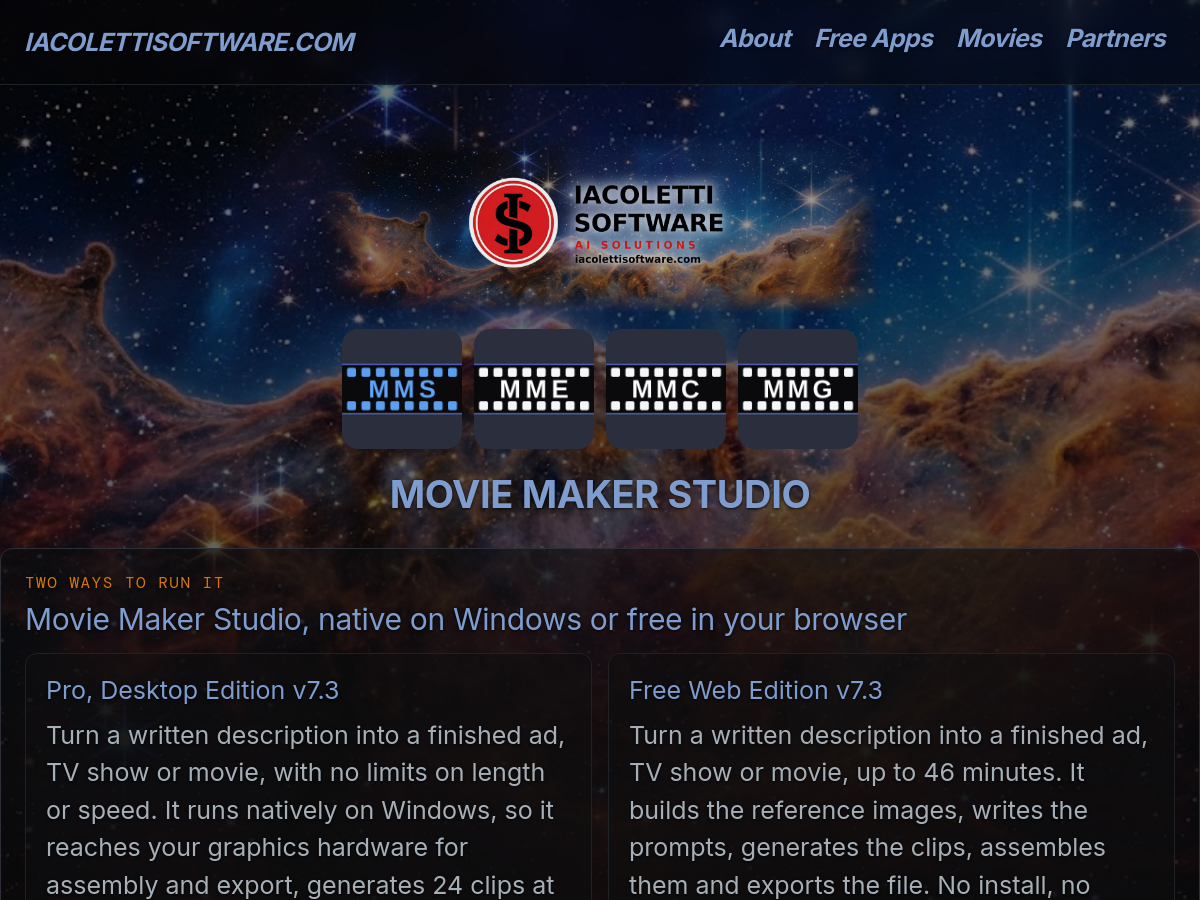
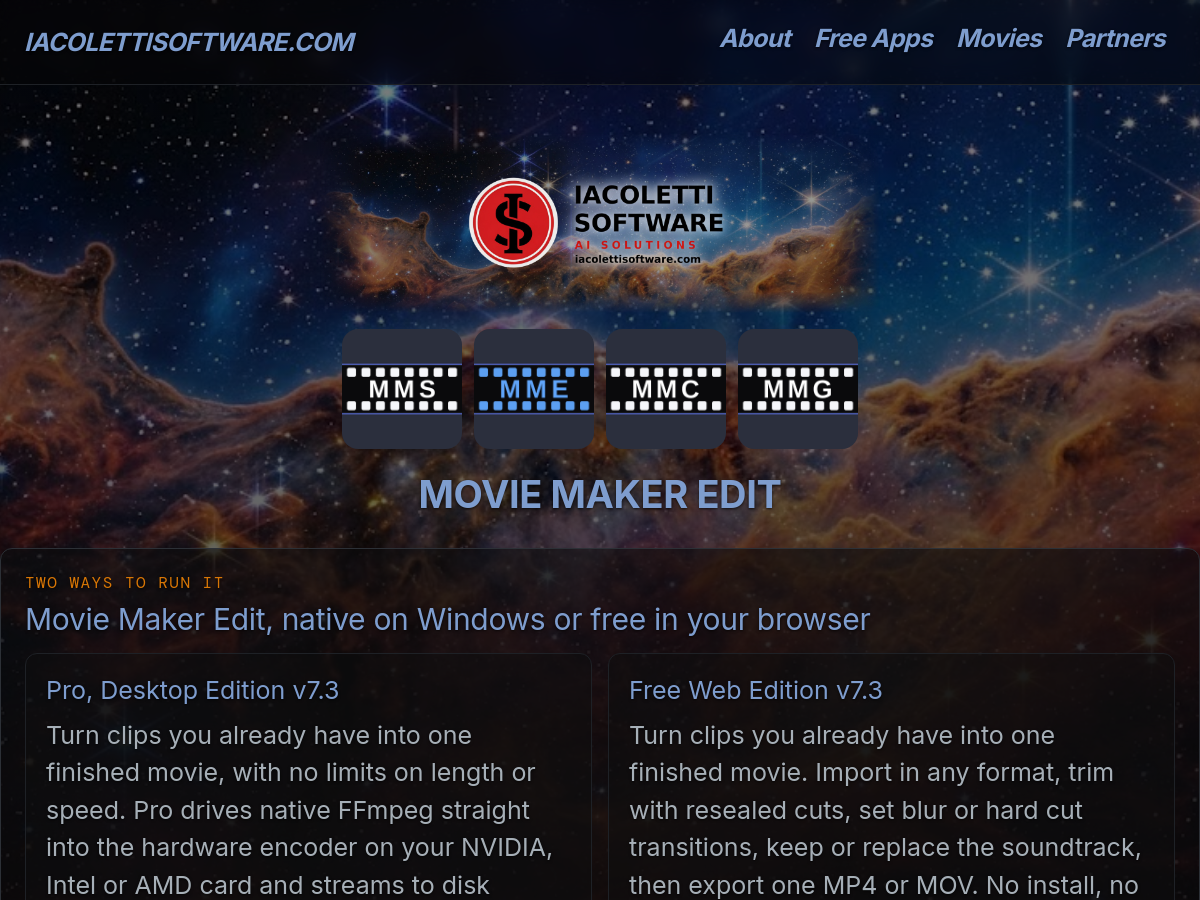
Screenshot of Movie Maker Studio
Movie Maker Studio
Filmmaking Free

Movie Maker Studio is an AI-powered filmmaking tool that converts a written description into a finished, exported video. It automates the entire production pipeline: generating reference images, writing shot prompts, producing clips, assembling the timeline, normalizing audio, and exporting the final file. The tool is available in two editions: a free browser-based web edition and a paid Pro desktop edition for Windows.

Solves

Movie Maker Studio solves the complexity of video production by letting anyone turn a short text description into a finished ad, TV show, or movie without needing a script, storyboard, cast, crew, or editing skills. It automates prompt writing, clip generation, assembly, and export, reducing production time from days to minutes.

Screenshot of Outlines
Outlines
Prompt Engineering Open Source

Outlines is an open-source Python library designed to enable structured outputs from large language models (LLMs). It allows developers to constrain the generation process so that the model's output conforms to a predefined schema or pattern, such as JSON, regular expressions, or custom grammars. This is achieved through efficient finite-state machine compilation and integration with popular LLM backends. Outlines supports a variety of output types including JSON objects, Python dataclasses, Pydantic models, and even executable code, ensuring that the generated text is both syntactically correct and directly usable in downstream applications. The library provides a simple API that integrates seamlessly with existing pipelines, making it a practical choice for production systems that require reliable, machine-readable outputs from generative AI.

Solves

Large language models typically produce free-form text, which is unpredictable and difficult to parse programmatically. This poses challenges for applications that need to ingest model outputs into databases, APIs, or user interfaces. Outlines solves this by guaranteeing that the generated text matches a specified structure, eliminating the need for post-processing, error-prone parsing, or repeated retries. It empowers developers to treat LLMs as deterministic components that output structured data on demand.

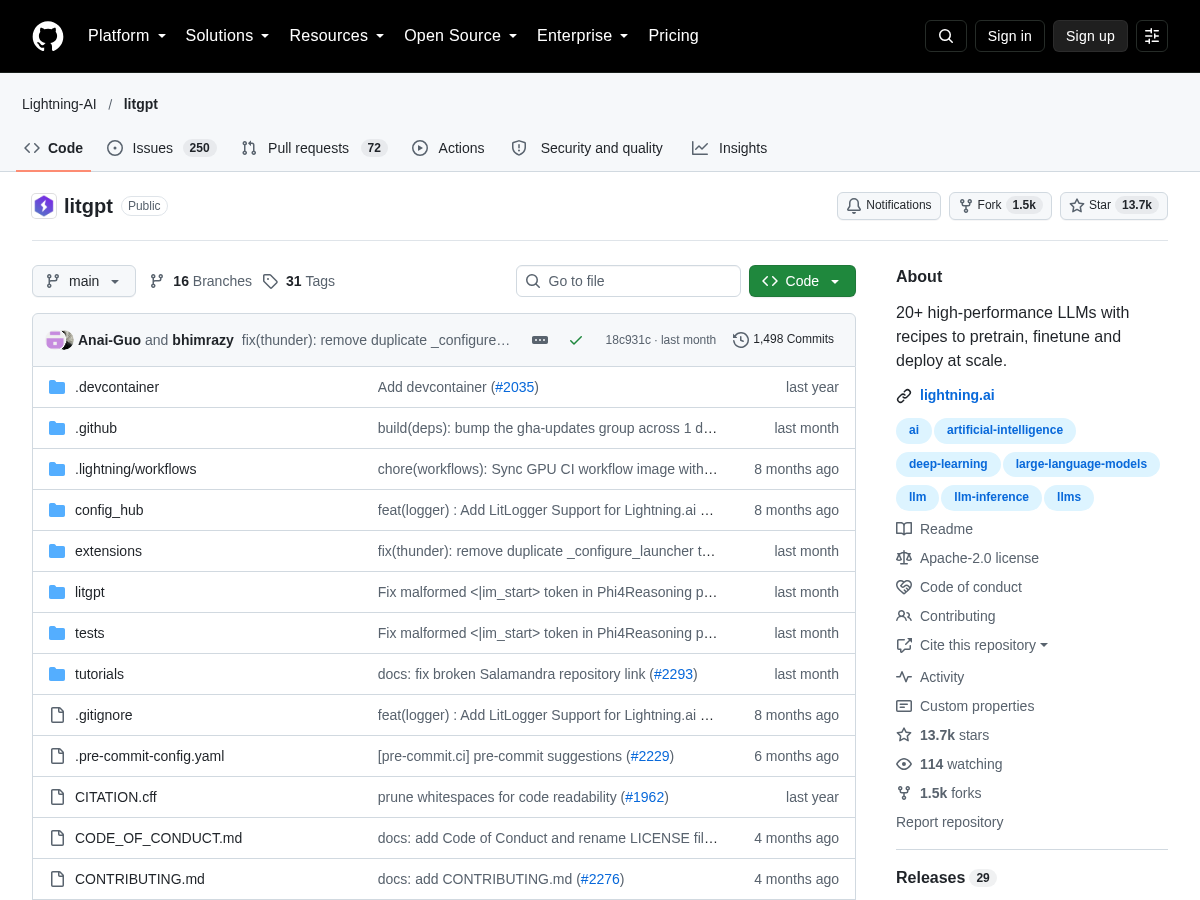
Screenshot of Litgpt
Litgpt
LLM Open Source

LitGPT is an open-source project that provides 20+ high-performance large language models (LLMs) with recipes to pretrain, finetune, and deploy at scale. The project is designed to be enterprise-ready, developer-friendly, and optimized for performance. It includes a range of features such as flash attention, multi-GPU support, and parameter-efficient finetuning. LitGPT also provides a command-line interface to run advanced workflows such as pretraining, finetuning, and deploying LLMs. The project is powered by Lightning Fabric and extends on previous implementations such as Lit-LLaMA and nanoGPT. LitGPT is released under the Apache 2.0 license and has been used in various research projects and initiatives.

Solves

LitGPT solves the problem of providing a scalable and efficient way to pretrain, finetune, and deploy large language models. It addresses the needs of developers, researchers, and enterprises who require high-performance LLMs for various applications such as natural language processing, text generation, and language understanding. By providing a range of pre-trained models, finetuning recipes, and deployment options, LitGPT makes it easier for users to develop and deploy LLMs that meet their specific needs.

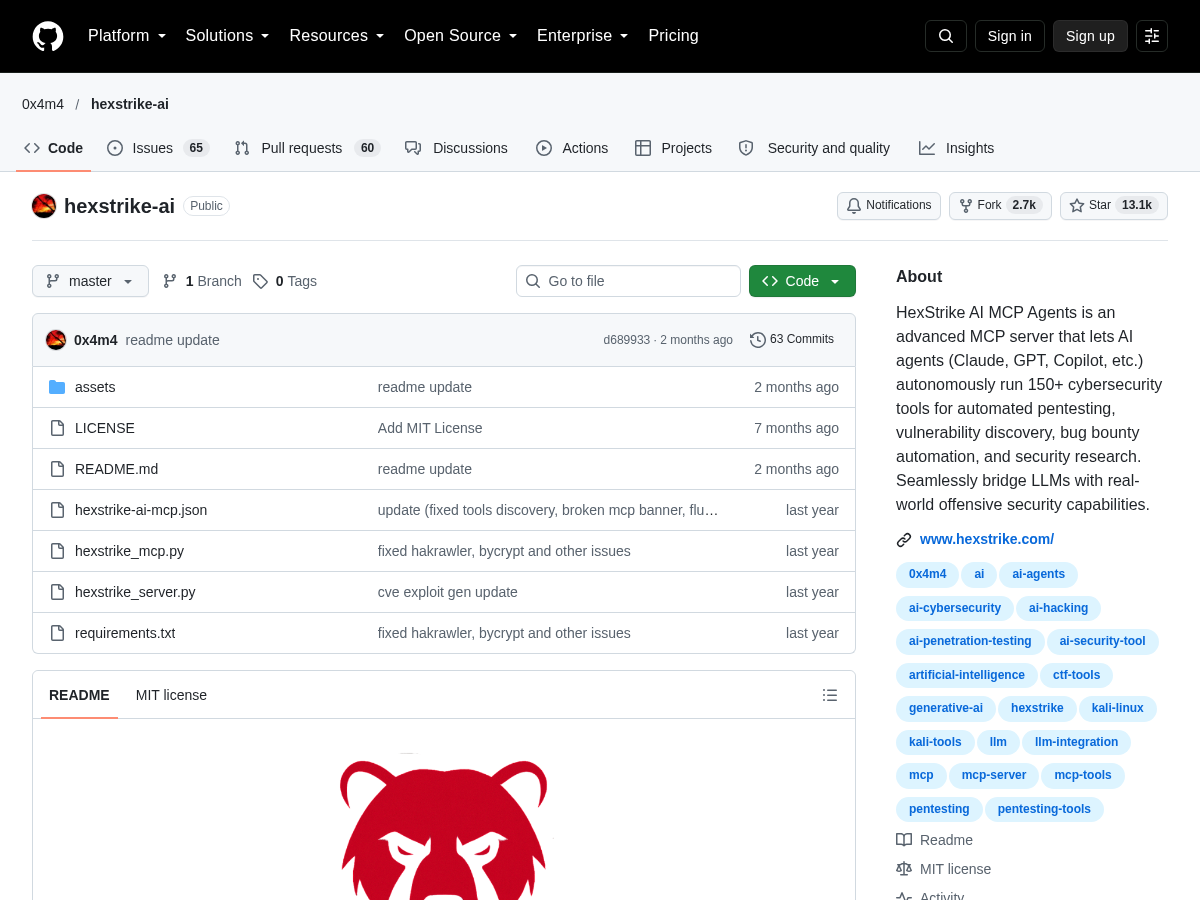
Screenshot of Hexstrike Ai
Hexstrike Ai
AI Agents Open Source

HexStrike AI MCP Agents is an advanced MCP server that enables AI agents, such as Claude, GPT, and Copilot, to autonomously run over 150 cybersecurity tools for automated pentesting, vulnerability discovery, bug bounty automation, and security research. This platform seamlessly bridges Large Language Models (LLMs) with real-world offensive security capabilities, providing a comprehensive solution for cybersecurity automation. The project is owned and developed by OTT Cybersecurity LLC and is available on GitHub under the MIT license. The repository contains various files, including a README, LICENSE, and several Python scripts, demonstrating a well-structured and actively maintained open-source project. With its focus on AI-powered cybersecurity automation, HexStrike AI MCP Agents offers a unique solution for security researchers, pentesters, and organizations seeking to enhance their security posture.

Solves

The primary problem solved by HexStrike AI MCP Agents is the automation of cybersecurity testing and vulnerability discovery. By leveraging AI agents to run a wide range of security tools, this platform streamlines the pentesting process, reducing the time and effort required to identify vulnerabilities and weaknesses in systems and applications. This is particularly beneficial for organizations with limited security resources or those seeking to enhance their security testing capabilities. Additionally, the integration of LLMs with real-world offensive security capabilities enables more effective and efficient security research, bug bounty automation, and security testing.
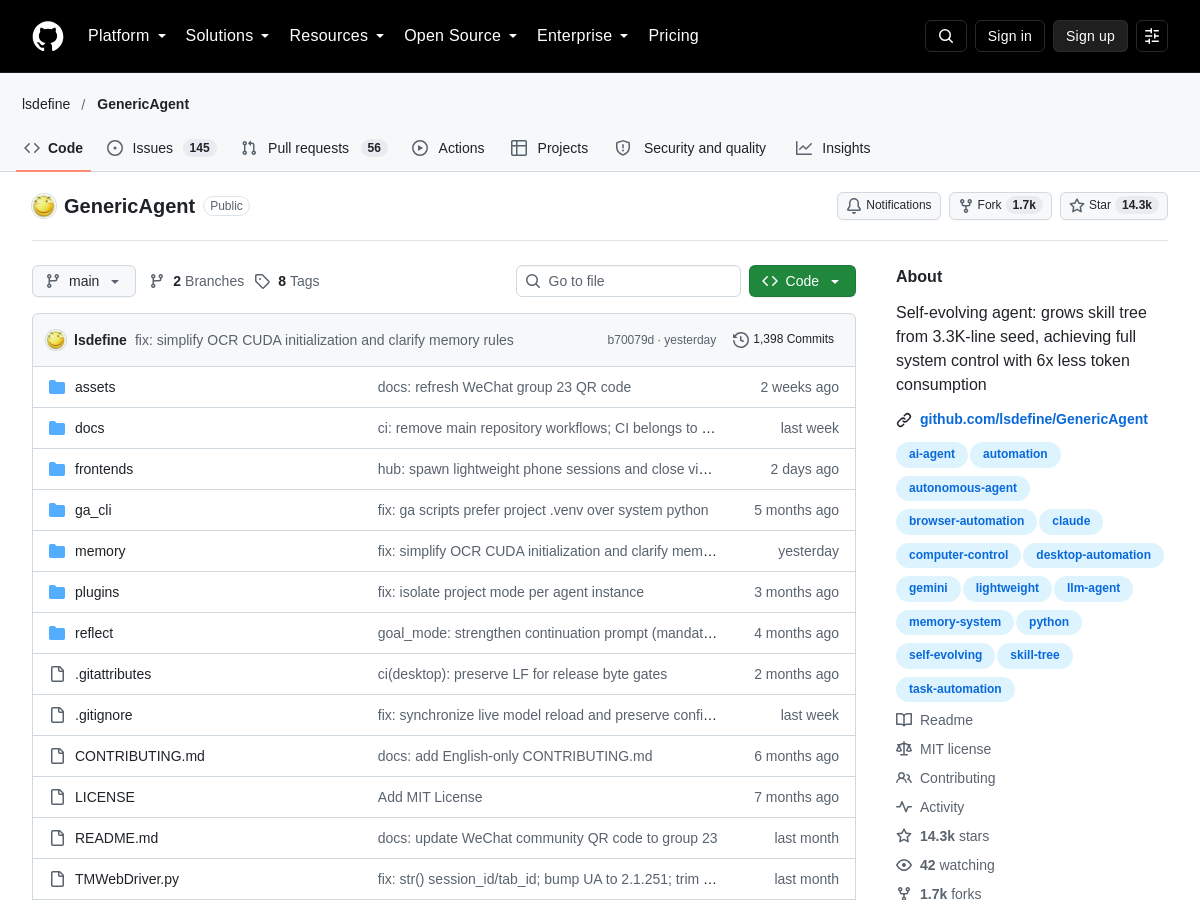
Screenshot of Everest | AI Calendar & Scheduling Assistant

Everest is an AI calendar and scheduling assistant delivered as a SaaS web application. It connects Google Calendar and Microsoft 365/Outlook accounts, provides a unified calendar view, and reads free/busy availability across connected calendars so users can see and manage personal, work, and client schedules in one place. Users can add Everest's assistant email address to any email thread by CC. Everest then proposes meeting times, negotiates the back-and-forth by email, books the meeting on the correct connected calendar, reschedules when conflicts arise, and follows up if a contact goes quiet. The homepage states that no inbox access is required and that Everest only acts on threads where it is explicitly CC'd. To reduce double-booking, Everest mirrors commitments as private "Busy" blocks across connected calendars. It also remembers people, email addresses, and time zones per workspace, so returning contacts are recognized and times can be proposed in their local zone. Everest is free to start and does not require a credit card according to the homepage.

Solves

Professionals who run multiple calendars—personal, work, and client-specific—struggle with fragmented availability, manual scheduling email threads, and double-booking. Everest addresses this by unifying calendars, reading free/busy across accounts, and using an AI assistant to propose times, negotiate, and book meetings so users avoid the repeated back-and-forth of manual scheduling.

Screenshot of Movie Maker Edit
Movie Maker Edit
Video editing Free

Movie Maker Edit is a video editing tool from Iacoletti Software designed to turn collections of short clips—especially AI-generated clips from tools like Grok Imagine, Veo, or Gemini—into finished movies, ads, TV shows, or films. It is available in two editions: a free Web Edition that runs in any modern browser on Windows, Mac, iPad, or Android, and a paid Pro Desktop Edition for Windows priced at $149.99 one-time. The Web Edition requires no installation, account, watermark, or export limit, and can import clips in virtually any format, trim with resealed cuts, set blur or hard-cut transitions, manage soundtracks, and export MP4 or MOV files. Both editions are built around a folder-based workflow: point the app at a folder of clips, press start, and it reads every clip, orders them, applies transitions, renders the movie, and levels audio to -16 LUFS. Projects live in real folders on the user's device, footage never leaves the device, and state is written before every stage so interrupted runs resume where they left off. The Pro edition uses native FFmpeg with hardware encoding on NVIDIA, Intel, or AMD GPUs and streams to disk, allowing long films beyond 150 minutes and fast exports. When connected to an xAI or Google API key, the tool adds AI features: AI Review of Clips detects visual inconsistencies such as scrambled text, morphing faces, or color changes; AI Review of Movie scores the finished cut; Narration provides word-level timings and speaker labels; Spoken voice reads typed lines; and Add Captions burns subtitles into the video. Every AI job quotes its price before sending, and a full feature can cost under $1.00 in API token usage. Without a key, it remains a complete editor.

Solves

Movie Maker Edit solves the tedious workflow of assembling many short video clips into a single polished, exportable movie. Instead of manually importing, ordering, trimming, transitioning, and leveling audio in a traditional editor, users point the app at a folder of clips and it automatically produces a finished MP4 or MOV, with optional AI review and narration for AI-generated footage.

Screenshot of Team Pulse
Team Pulse
Project management Free

Team Pulse is a SaaS work management platform that combines project management and CRM capabilities in a single workspace. It provides boards, task lists, calendars, time tracking, chat, docs, dashboards, and automation features, while also offering sales pipelines for tracking deals, revenue, win rates, and team performance. The tool emphasizes simplicity, with a drag-and-drop interface and no complex setup, positioning itself as an alternative to tools like Asana. It includes AI-powered insights for quickly understanding project status and completed work. Team Pulse offers a free forever plan with no credit card required and is accessible via web browser at goteampulse.io. The platform also features portfolios, dependencies, custom fields, permissions, reminders, workflows, and Gantt charts. Team Pulse is ranked #9 trending on TAAFT (There's An AI For That) and markets itself as 'teamwork that finally feels simple' by surfacing real-time team activity, bottlenecks, and closing deals in one place.

Solves

Team Pulse solves the problem of tool fragmentation by uniting project management and CRM in one simple workspace, so teams can plan, track, collaborate, and close deals without switching between multiple apps or enduring a steep learning curve.

Screenshot of Are you found by AI?
Are you found by AI?
AI visibility Free

Are you found by AI? is a SaaS platform that measures and improves a business's visibility in AI-generated answers. It checks whether AI assistants such as ChatGPT, Claude, Gemini, Perplexity, Grok, DeepSeek, and Google AI recommend your website when users ask relevant questions. The platform provides live measurements across seven answer engines, tracking named mentions, citations, and competitor recommendations. It offers an AI Visibility score and AI Readiness score, along with a list of sources that feed AI answers, helping users identify where their brand is missing and what fixes are needed. The service includes a free 60-second scan that checks two engines and counts as the first measurement if continuing to a 14-day trial. Paid monitoring continuously tracks AI answers, alerts users to changes, and provides actionable steps to become recommended and defend the position.

Solves

Businesses often know their search engine rankings but remain unaware of whether AI assistants mention them in answers. This tool solves the problem of AI invisibility by measuring how often a brand is named by AI, identifying gaps in online presence, and providing specific fixes to improve generative engine optimization (GEO) and answer engine optimization (AEO).